
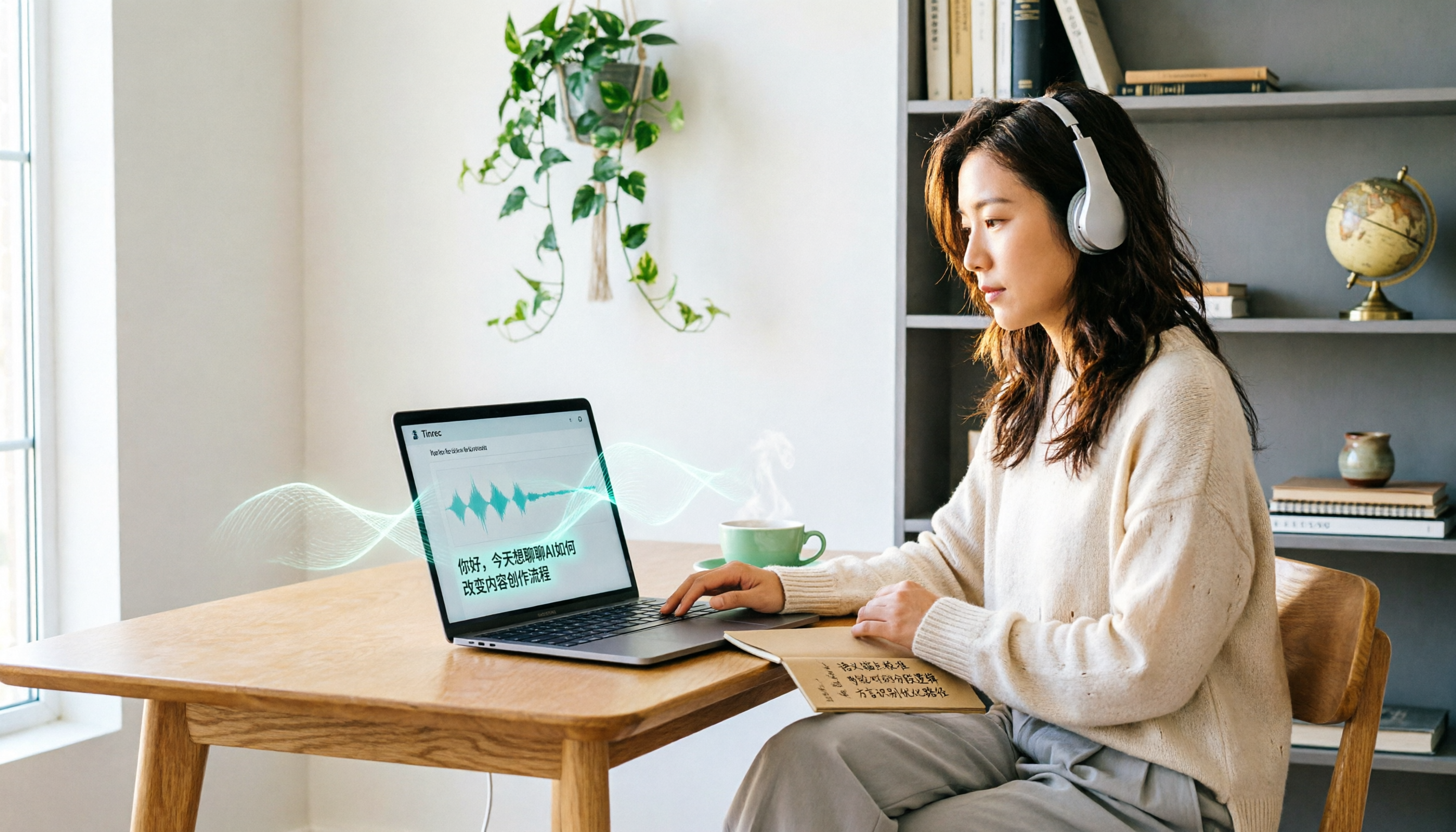
Turn recordings into transcripts and summaries in minutes
Upload audio or video for multilingual transcription, AI notes, and action items
Many people search for Notta tutorials and pricing to learn how to use this AI speech-to-text tool and whether it's worth paying for. But before you decide, I want to introduce you to another tool that can handle meetings, lectures, and interviews: Tinrec.
Tinrec is an AI recording and audio/video organization tool that supports real-time recording-to-text, audio file transcription, and web video link transcription. It also automatically generates summaries, chapters, and to-do lists. The free version includes basic transcription credits, making it suitable for users who want to try it out first.
What Can Tinrec Do for You?
Many people think such tools only convert recordings to text, but Tinrec truly solves the problem of "what to do after transcription."
Scenario 1: Meeting Minutes in 5 Minutes After the Meeting
Previously, after a two-hour meeting, you might spend another hour organizing the minutes. Now with Tinrec, the moment the meeting ends, the AI has already generated summaries, conclusions, and to-do items, clearly showing who is responsible for what and the deadlines.
Scenario 2: Turning Lecture Recordings into Review Notes
Students often fear long lecture recordings because they don't have time to listen again. Tinrec can automatically split long audio files into chapters and extract key points, so you can quickly review by just looking at the summary and structured notes.
Scenario 3: Automatically Organizing Interview Recordings into Citable Material
Journalists or researchers no longer need to listen and type transcripts after interviews. Tinrec transcribes the audio, identifies speakers, and you can even ask it directly: "What was the interviewee's attitude towards pricing?"
Scenario 4: Turning YouTube Videos into Text Material
Paste a public video link, and Tinrec can extract text, summaries, and subtitles, making it convenient for content creation or data collection.
What Are Tinrec's Core Capabilities?
Real-Time Transcription
Text appears as you record, not after the recording ends. During meetings or classes, you can watch the text in real time to ensure you don't miss key points.
AI Semantic Summarization
It doesn't just condense the transcript into a paragraph; it organizes it structurally—meeting topics, discussion conclusions, to-do items, and responsible persons are listed separately.
AI Conversational Query
After transcription, you can ask Tinrec questions directly—"Who mentioned the budget in the meeting?" "What was the client's feedback?"—and it will answer based on semantic understanding.
Multi-Source Organization
Besides real-time recording, you can upload audio files, video files, or paste web video links. You don't need to decide in advance whether it's a meeting, lecture, or video material; as long as it's audio/video content, Tinrec can organize it.
Export and Post-Processing
The organized results can be exported in various formats, or you can have the AI continue to generate meeting minutes, reports, tables, and other deliverables, directly integrating into your workflow.
Practical Use Cases
Meeting Minutes
Turn on Tinrec for real-time recording during meetings, and check the summary and to-dos afterward. If you have a recording file, you can also upload it for transcription.
Classes and Lectures
Stop organizing recordings by hand
Upload audio or video and automatically get a transcript, summary, and action items
Record the teacher's lecture, and Tinrec will split the long audio into chapters and extract key points, so you don't need to listen to the entire recording again.
Interviews and Research
After transcribing interview recordings, use AI Q&A to quickly find key viewpoints, then export them as documents for further organization.
Content Creation
Paste Podcast or YouTube video links into Tinrec to get transcripts, summaries, and subtitles, accelerating re-creation.
5 Steps to Consider When Choosing an AI Transcription Tool
Step 1: Check Free Credits First, Don't Rush to Pay
Notta's free version offers 120 minutes per month, but each recording is limited to 3 minutes; Tinrec's free version also has basic credits, so you can try both. Test accuracy with your own recordings before deciding whether to pay.
Step 2: Confirm Post-Transcription Processing Capabilities
Getting a transcript is just the first step. Tinrec's AI summaries, chapters, to-dos, and Q&A features help turn content into truly usable material.
Step 3: Evaluate Language Support and Chinese Scenarios
If you often handle Chinese meetings, lectures, or interviews, Tinrec is friendly for organizing Chinese content; Notta supports multiple languages, but its post-transcription features are slightly different.
Step 4: Check if Input Sources Are Diverse
Notta excels at online meetings and file transcription; Tinrec additionally supports web video link transcription, which is more friendly for content creators.
Step 5: Calculate Long-Term Costs
Notta Pro costs about $8.17/month billed annually, and Business costs about $16.67/month billed annually. Tinrec offers a free version and various paid plans, so you can choose based on usage frequency without committing to a high-priced plan upfront.
Frequently Asked Questions
Q: What's the difference between Notta and Tinrec?
A: Notta is comprehensive in meeting transcription and translation; Tinrec emphasizes post-transcription organization and usage, including AI Q&A, chapters, to-dos, export, and post-processing. If you need to turn recordings into a long-term reusable database, Tinrec is more suitable.
Q: Is Tinrec's free version sufficient?
A: The free version includes basic transcription credits, allowing you to experience real-time recording, file import, and web video parsing. If you use it occasionally, you can start with the free version.
Q: What languages does Tinrec support?
A: Tinrec clearly covers Chinese, Traditional Chinese, and multilingual scenarios, suitable for organizing Chinese meetings, lectures, and interviews. Actual transcription quality may be affected by audio quality, accents, and technical terms.
Q: How much does Notta cost?
A: According to public information, Notta's free version offers 120 minutes per month, Pro costs about $8.17/month billed annually, and Business costs about $16.67/month billed annually. However, we recommend trying it first to confirm the features meet your needs before paying.
Q: Can Tinrec handle YouTube videos?
A: Yes. Paste a public video link, and Tinrec can extract text, summaries, and subtitles, suitable for content organization and re-creation.
Conclusion
There is a lot of information online about Notta tutorials and pricing, but whether a tool is suitable ultimately depends on your use case. If you need more than just transcripts—if you want to organize meetings, lectures, interviews, and web videos into searchable, summarizable, exportable material—Tinrec is an alternative worth trying. We recommend starting with the free version and transcribing a few of your own recordings to see how the AI helps you organize content.
References
Turn every recording into actionable outcomes
Get 60 free transcription minutes when you sign in. No credit card required.
Related Reading
You might also like

How to Use Notta for Chinese Translation? 2026 Test of 3 Tools: Tinrec Offers More Comprehensive Chinese Organization
Wondering how to use Notta for Chinese translation? This student's hands-on comparison of Notta, Otter.ai, and Tinrec reveals that Tinrec goes beyond transcription, offering Chinese audio organization, Q&A, and export features, making it better suited for students organizing lecture notes and reviewing.

2026 Tested: 5 Speech-to-Text Tools Compared—Tinrec's Chinese Summarization Surprised Us
After testing multiple speech-to-text tools, we found Tinrec stands out in Chinese content summarization, AI Q&A, and cross-platform use. This article shares buying tips, hands-on insights, and a guide to avoid common pitfalls, helping you find the best tool for your needs.

Tinrec Review 2026: AI Transcription for Chinese Meetings, Q&A Summaries
Tinrec (Miao Ting Lu Yin) is an AI recording and audio/video organization tool that supports Chinese meeting minutes, AI Q&A, and web video transcription. This hands-on guide covers how to use it and compares it with Notta, Otter, and other tools.
2026 AI Recording Tools Compared: Notta Tutorial & Pricing vs Tinrec for Students
A student's hands-on comparison of Notta and Tinrec for classroom recording and review. We break down Notta's tutorial and paid plans, assess whether the free tier is enough, and give real-world recommendations for students.

2026 Tested: 3 Best Recording-to-Text Tools Compared – Notta vs Tinrec vs Otter.ai
We tested three recording-to-text tools, addressing PTT users' discussions about Notta, and compared Notta, Tinrec, and Otter.ai in terms of features, pricing, and use cases, with recommendations.

2026 Hands-On Comparison of 4 AI Transcription Tools: Notta Pricing and Dcard Reviews Explained
Still searching Dcard for Notta pricing and user reviews? This article tests 4 AI transcription tools—Tinrec, Notta, Otter, and Fireflies—covering free tier limits, paid plans, and ideal use cases to help you find the best value.

5 Best Voice-to-Text Apps of 2026 Compared: Is Tinrec (Miao Ting Lu Yin) a Worthy Notta Alternative?
People on Dcard often ask if there's a better voice-to-text tool than Notta. This article tests 5 popular apps, comparing input sources, AI summarization, Chinese support, and pricing, to show why Tinrec (Miao Ting Lu Yin) might be a more comprehensive choice.

Notta vs Granola in 2026: How to Choose? A 5-Step Complete Comparison Guide
Notta and Granola serve very different purposes: one is cloud-based transcription, the other is an invisible meeting notes app for Mac. This article walks you through a 5-step comparison and introduces Tinrec, a more comprehensive third option, to help you find the best meeting notes tool for your needs.

3 Best Meeting Note Tools in 2026: Notta Pricing and Value Analysis
We tested Notta, Tinrec, and Otter to compare costs, free tiers, and core features, helping you avoid the 3-minute per recording trap and find the right choice for Chinese speakers.