
Turn recordings into transcripts and summaries in minutes
Upload audio or video for multilingual transcription, AI notes, and action items
The most time-consuming part of making videos is often not editing, but adding subtitles. Whether you run a YouTube channel, create course videos, or organize meeting recordings, traditional manual transcription is not only time-consuming but also prone to frustration with timeline alignment. If you've ever had to work overtime because you couldn't hear clearly or translation was too slow, then you need an efficient AI video subtitle generator.
This article rounds up 9 popular subtitle tools on the market in 2026. We evaluate them based on Chinese recognition accuracy, multilingual translation capability, ease of use, and free tier limits.
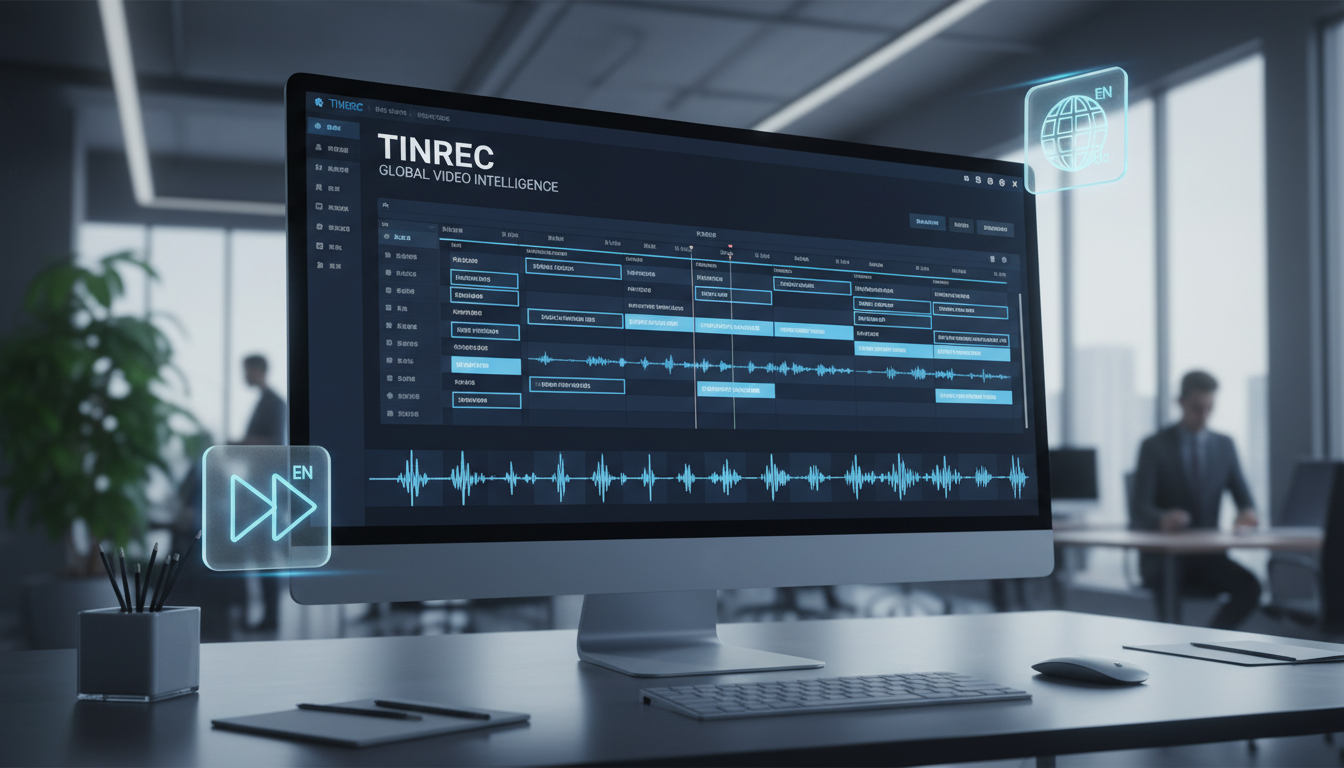
Quick Menu:
- For mobile short-form video effects: Go with CapCut or RecCloud.
- Need accurate transcripts, summaries, and searchable content: Try Tinrec (Miao Recorder) or iFLYREC.
- Professional post-production and special effects: Consider Aegisub or NetEase Sight.
2026 Recommended: 9 Popular Video Subtitle Generators Reviewed
Based on market presence and hands-on testing, here are solutions spanning free, paid, mobile, and desktop options:
1. Tinrec (Miao Recorder) — Video Content Understanding & Transcript Specialist
Tinrec is more than just a voice-to-text tool; for subtitle needs, it offers powerful video-to-text and link parsing features. Unlike traditional subtitle software, Tinrec focuses on converting video content into editable, searchable, and actionable text, ideal for creators handling interviews, courses, or long videos.
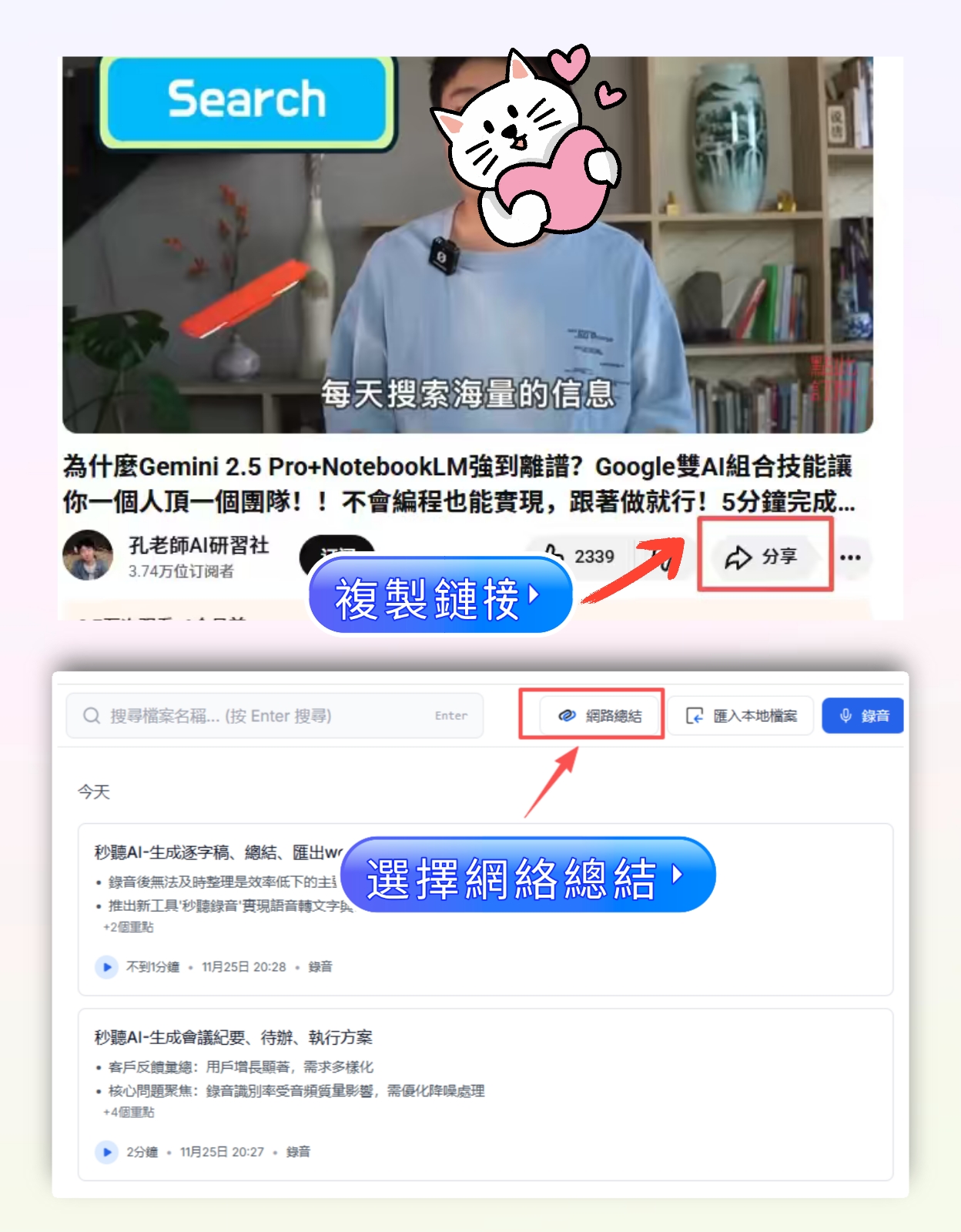
- Core Advantages: Supports uploading audio/video files or directly pasting YouTube/TikTok links to generate transcripts. Recognizes 10 languages including Chinese, English, Japanese, and Korean, and features AI Q&A to query specific information from the video.
- Best For: Organizing interview transcripts, converting YouTube content into articles, creating multilingual subtitle files (SRT export).
- Limitations: Free plan offers 100 minutes per month; more time requires upgrade.
2. RecCloud — Multilingual Subtitle Generator All-Rounder
- Core Advantages: Supports AI translation and subtitle generation for 99 languages including Chinese, English, and Japanese; toggle between single and bilingual display. Offers 30+ preset styles with customizable fonts and position. Exports SRT or embeds directly into video.
- Best For: Quick subtitling for Vlogs, multilingual video production.
- Feedback: Cross-platform (Web/Win/iOS/Android) with high bilingual subtitle accuracy.
3. FlexClip — Marketing Video Asset Library
- Core Advantages: Boasts 4M+ assets combined with AI subtitle features. Supports 140 languages, ideal for creating subtitled ads and promos.
- Best For: E-commerce ads, social media promo videos.
- Feedback: Rich templates for quick output, but cloud rendering for large files is slightly slow.
4. iFLYREC Subtitles — Professional-Grade Accuracy
- Core Advantages: Powered by iFLYTEK's speech model with dual modes (machine transcription + manual proofreading); supports batch import of multiple videos.
- Best For: News media, documentaries, commercial videos requiring extremely high accuracy.
- Feedback: Highly accurate Chinese recognition, but may require queueing during peak batch processing.
5. CapCut — National Short-Form Video Powerhouse
- Core Advantages: Auto-recognizes subtitles and aligns with timeline; features filler word removal; one-click addition of trendy text and effects.
- Best For: TikTok/Reels/Shorts creation.
- Feedback: Smooth mobile operation, but long videos over 10 minutes may cause overheating or crashes; recommend splitting.
6. VEED — Online Collaborative Editor
- Core Advantages: Browser-based, no download needed. Supports translation for 140 languages; visual editor for fine-tuning font outlines.
- Best For: YouTube creators, remote team collaboration.
- Feedback: Free exports have watermarks; paid subscription.
Stop organizing recordings by hand
Upload audio or video and automatically get a transcript, summary, and action items
7. NetEase Sight — Professional Editing Workflow Integration
- Core Advantages: High Chinese recognition rate; generates XML subtitle tracks readable by Premiere or Final Cut for professional post-production.
- Best For: TV quick editing, professional film post-production.
- Feedback: Outdated interface; large files require queuing; suited for professionals, not beginners.
8. GhostCut — Cross-Border E-commerce De-duplication Tool
- Core Advantages: Focuses on video de-duplication + subtitle translation; can auto-detect and erase original subtitles; generates multilingual subtitles (English, Japanese, Korean, etc.).
- Best For: Cross-border e-commerce live stream clips, overseas ad campaigns.
- Feedback: Highly automated; occasional mobile layout issues; recommend fine-tuning on desktop.
9. Aegisub — Open-Source Effects Subtitle Powerhouse
- Core Advantages: Completely free and open-source; extremely precise subtitle effects and timeline control; can create karaoke color-changing subtitles.
- Best For: Anime fansubbing, MV production.
- Feedback: Powerful but retro interface; steep learning curve; no cloud collaboration.
Tool Comparison Table: Feature Differences at a Glance
To help you decide quickly, we've organized the tools by key dimensions:
| Tool | Core Strength | Languages Supported | Output Format / Feature | Best For |
|---|---|---|---|---|
| Tinrec | Video Content Understanding + Link Parsing | 10 (Chinese/English/Japanese/Korean etc.) | SRT/TXT/PDF, AI summary & Q&A | Learners, meeting records, interview organization |
| RecCloud | Bilingual subtitle display | 99 | Hard subtitles/SRT | Vloggers, multilingual creators |
| CapCut | Mobile editing effects | Mainly Chinese/English | Direct video output | Short-form video creators |
| iFLYREC | Extreme accuracy | Multilingual | SRT/Manual proofreading | Media professionals |
| NetEase Sight | Professional software integration | Chinese/English | XML/SRT | Professional editors |
| VEED | Online cloud editing | 140 | MP4 (online editing) | Remote collaboration teams |
| Aegisub | Effects and fine-tuning | Unlimited (manual) | ASS/SSA | Fansubbing, MV production |
Hands-On Tutorial: How to Quickly Generate Video Transcripts with AI
If you don't need fancy show fonts but just want a text file or standard SRT subtitle file quickly, using a tool with semantic understanding (like Tinrec) is more efficient than traditional editing software. Here are the general steps:
Step 1: Import Video Source
Most modern AI tools support two import methods:
- Upload File: Directly upload MP4/MOV video files from your phone or computer.
- Link Parsing: A feature unique to tools like Tinrec; just paste a YouTube, TikTok, or Podcast URL to avoid downloading the video.
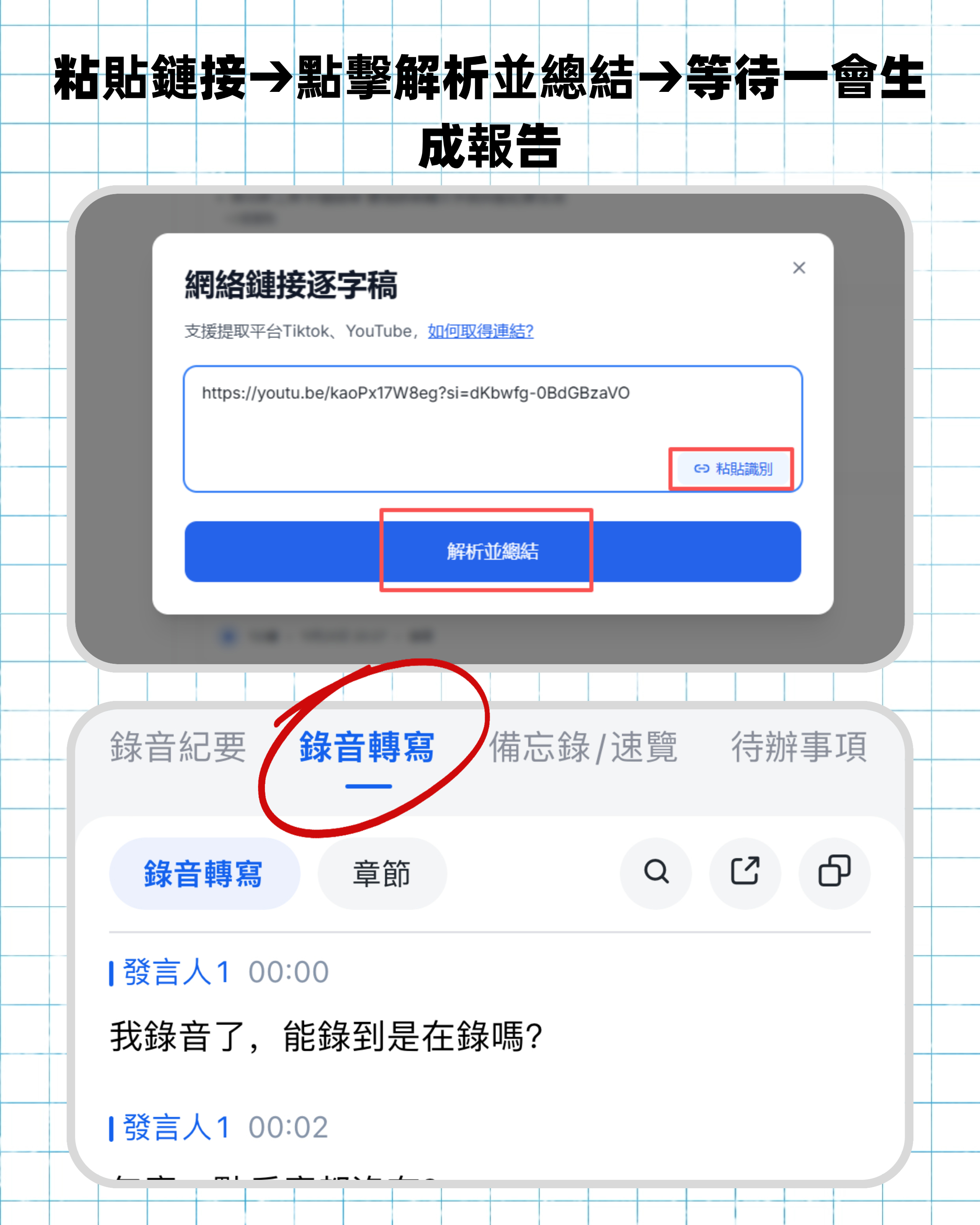
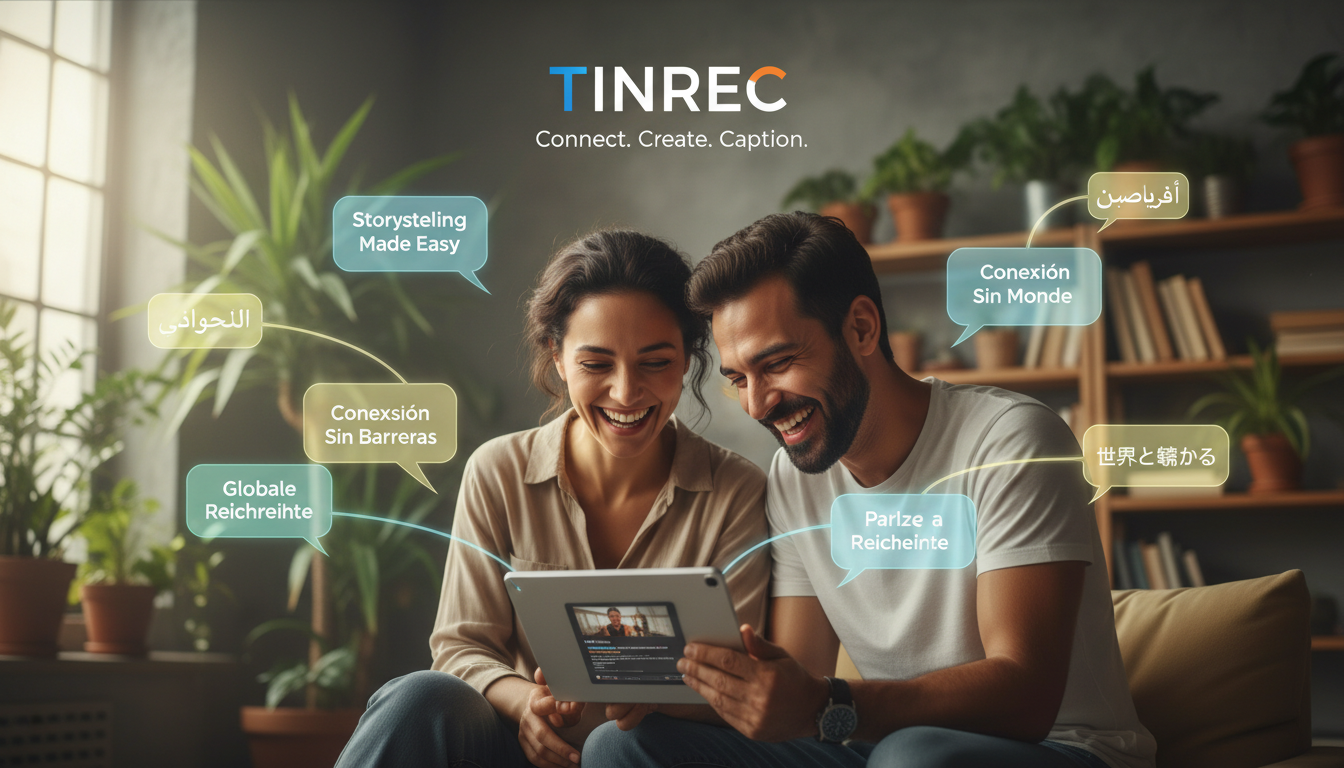
Step 2: Choose Language and Start Transcription
Select the original language of the video (e.g., Chinese or English). If the tool supports speaker diarization, enable it—it's very helpful for interview-style videos.
Step 3: AI Summary and Proofreading
After transcription, you can browse the generated transcript. Advanced tools like Tinrec automatically generate an AI summary and action items, helping you quickly grasp key points without rewatching the entire video.
Step 4: Export Subtitle File
Once you confirm the text is correct, choose an export format:
- SRT / VTT: For uploading as CC subtitles on YouTube or importing into Premiere/CapCut for post-production.
- TXT / Word: For articles, scripts, or notes.
Frequently Asked Questions
Q1: How accurate are AI-generated subtitles?
Current AI models (e.g., those behind Tinrec, iFLYREC, CapCut) typically achieve over 95% accuracy in clear Chinese speech. However, accuracy may drop if background music is too loud, dialects are used, or multiple people talk over each other. We recommend choosing a tool that supports speaker diarization for easier edits.
Q2: Can I generate subtitles directly from iPhone-recorded videos?
Yes. Tinrec, CapCut, and RecCloud all offer iOS apps that can directly access your camera roll for transcription. For web-based tools, it's better to transfer the video to a computer or upload via mobile browser.
Q3: What are common limitations of free tools?
Most tools use a free trial + paid subscription model. Common limitations include: video length cap (e.g., 60–100 minutes per month), watermarked exports (e.g., VEED), or inability to use advanced export formats (e.g., SRT). Choose a plan based on your monthly production volume.
Q4: What's the difference between transcription and subtitle generation?
Subtitle generation focuses on precise timeline alignment and concise text; transcription aims to record all spoken content completely. Tools like Tinrec excel at both—they can export time-coded subtitle files and also organize easy-to-read notes and summaries.
Q5: Can these tools translate foreign videos without subtitles?
Yes. You can first transcribe the foreign language (English/Japanese/Korean) using a tool like Tinrec or GhostCut, then use the built-in AI translation to convert to Chinese. This is very helpful for learning languages or watching raw foreign videos.
Q6: How do I use an exported SRT file?
SRT is a standard subtitle format. You can:
- Upload it to YouTube Studio's subtitles section to boost SEO exposure.
- Load it in a media player like VLC to display subtitles.
- Import it into editing software (PR, Final Cut, CapCut desktop) to burn in subtitles.
Turn every recording into actionable outcomes
Get 60 free transcription minutes when you sign in. No credit card required.
Related Reading
You might also like
2026 Complete Guide to vocol ai: Turn Meeting, Class, and Interview Recordings into Actionable Data
A comprehensive guide for knowledge workers on vocol ai voice-to-text tools. Using Tinrec as an example, learn how AI can automatically transform meetings, classes, interviews, and online videos into searchable, summarized, and queryable structured data. Includes key buying considerations and a step-by-step walkthrough to help you stop drowning in audio files.

2026 Real-World Comparison of 3 Notta Alternatives: Which Performs Better for Chinese Meetings and AI Q&A?
Still looking for a Notta alternative? We tested Tinrec, Plaud Note, and Otter.ai across transcription quality, AI features, and pricing to help you pick the best voice-to-text tool for your needs.
2026 Review of 3 Transcription Apps for Students: Notta Isn't the Top Pick—Here's Why
A senior student tests three speech-to-text tools for lectures and group discussions, comparing free minute limits, Chinese accuracy, and AI features of Notta, Otter.ai, and Tinrec to find the best fit for students.
2026 Real-World Comparison of 4 Notta Alternatives: Which Saves the Most Time for Chinese Meeting Minutes?
What are the alternatives to Notta? This article tests 4 recording-to-text tools including Tinrec, evaluating Chinese transcription, AI summaries, multi-platform support, and pricing to help you choose the best app for meetings, classes, and interviews.
2026 Hands-on Comparison of 3 AI Recording & Transcription Tools: Which Works Best for Chinese Meetings and Learning?
It's not just about transcribing audio to text; it's about organizing it into usable knowledge. This article hands-on tests three tools: Tinrec, Notta, and Fireflies, evaluating them on Chinese accuracy, AI summarization, multi-source support, and real-world experience to help you find the best AI recording assistant for meetings, courses, and online videos.

2025 Hands-On Review of 3 AI Recording Tools for Students: Tinrec's Free Tier Is the Most Surprising
A senior student tested these tools for a semester, comparing Tinrec, Notta, and Otter.ai on free tiers, AI summarization, cross-platform support, and student plans. Find out which one is best for lecture recording and exam review.
2026 Four Transcription Tools Tested and Compared: From Plaud Note Pro to Tinrec, My Journey to Choosing the Right One
After seeing heated discussions about Plaud Note Pro on Dcard, I actually tested four transcription tools. This article shares my trial journey from hardware recorders to software solutions, and why I ultimately chose Tinrec as my productivity core.

2026 Hands-On Comparison of 3 Speech-to-Text Apps: A Time-Saving Tool for Recording Natural Gas and Propane Prices in Nottawa
When comparing natural gas and propane prices in Nottawa, the most time-consuming part is recording calls and organizing quotes. This article tests three speech-to-text apps—Tinrec, Otter.ai, and Notta—evaluating Chinese recognition, AI summaries, cross-platform use, and free tiers to help you choose the best tool for recording supplier quotes and service details.

2026 Comparison of 4 Speech-to-Text Apps: Notta AI Not the Best? This App is the Top Pick
Hong Kong office workers test 4 speech-to-text tools including Notta and Tinrec to see which one offers the best Cantonese recognition, most useful AI features, and biggest time savings. Read this review before deciding.