
Turn recordings into transcripts and summaries in minutes
Upload audio or video for multilingual transcription, AI notes, and action items
Have you ever spent 3 to 4 hours repeatedly listening and typing to produce a verbatim transcript from a 1-hour Cantonese or Taiwanese Hokkien recording? Dialect recognition has always been a technical challenge, involving the complex context of Chinglish and the pain of converting colloquial speech to written language. However, with the maturity of AI technology in 2026, today's tools can not only "transcribe" but also "understand" and "summarize."
This article conducts a multi-dimensional review of 6 mainstream tools (including Tinrec, Subanana, Adobe Premiere Pro, etc.). Whether you need to create video subtitles or organize meeting and lecture notes, after reading this article you will quickly find the answer based on "accuracy," "real-time performance," and "functional scenarios."
Quick Navigation Conclusions:
- If you are a YouTuber or video editor needing precise subtitles and timestamps → check out Subanana or Premiere Pro.
- If you are an office worker or student needing meeting notes, interview transcripts, and AI key takeaways → prioritize Tinrec (Instant Transcription).
2026 Face-off: 6 Major Cantonese and Taiwanese Hokkien AI Recognition Tools
We aggregated the latest test data and selected 6 most representative tools for a cross-comparison based on two major needs: "video subtitle creation" and "meeting/study recording."
Contestant Overview
- Tinrec (Instant Transcription): An all-in-one AI recording assistant supporting Cantonese, Taiwanese Hokkien, and 10 other languages. Its highlights are "real-time speech-to-text" and "AI chat with audio," ideal for meetings and study scenarios requiring quick conclusions.
- Subanana: Developed by a Hong Kong team, specializing in Cantonese video subtitles with a unique "colloquial-to-written" conversion feature, a powerful tool for video creators.
- Adobe Premiere Pro: Built-in functionality in professional editing software, suitable for editors already in the Adobe ecosystem.
- ArcTime: A cross-platform subtitle tool for users who need extreme detail adjustment of timestamps.
- Taption: An online tool developed in Taiwan with a simple, intuitive interface.
- pyTranscriber: An open-source free software based on Google API, suitable for budget-conscious users with technical skills.
Detailed Specification Comparison: Which One Saves Your Time?
To give you a clear view, we compare accuracy, functionality, and use cases, with special attention to dialect (Cantonese/Taiwanese Hokkien) processing capabilities:
| Dimension | Tinrec (Instant Transcription) | Subanana | Adobe Premiere Pro | pyTranscriber | Taption |
|---|---|---|---|---|---|
| Core Focus | Meeting notes and note-taking assistant | Video subtitle creation | Professional video post-production | Free open-source tool | Online subtitle tool |
| Dialect/Multilingual Accuracy | Excellent (supports Cantonese/Taiwanese Hokkien/Chinglish) | Outstanding (97.5% for Cantonese) | Average (about 89.4%) | Average (about 89.8%) | Lower (about 85.3%) |
| Real-time Recording Transcription | Supported (transcribes while recording) | Not supported (requires file upload) | Not supported | Not supported | Not supported |
| Colloquial-to-Written Conversion | AI summary can assist conversion | Supported (exclusive feature) | Not supported | Not supported | Not supported |
| AI Intelligence Features | AI chat query, meeting minutes | None | None | None | None |
| System Requirements | iOS/Android/Web multi-platform sync | Web (browser) | High (requires powerful computer) | Medium (requires installation) | Web (browser) |
| Pricing Model | Free / Subscription | Basic free / Paid upgrade | Subscription | Completely free | Free tier / Paid |
Data Note: Accuracy data for Subanana, Premiere Pro, etc., are sourced from relevant test reports (test scenario: Chinglish tech press conference).
Scenario Analysis: How to Choose the Right Tool?
Choosing a tool shouldn't only depend on transcription accuracy but also on whether the subsequent workflow is smooth.
Stop organizing recordings by hand
Upload audio or video and automatically get a transcript, summary, and action items
Scenario 1: Meeting Minutes, Interview Transcription, and Lecture Notes
If your goal is not video subtitles but recording meeting content, organizing lecture notes, or transcribing interviews, traditional subtitle tools (like Subanana or Premiere Pro) may not meet your needs because they lack "real-time" and "action-oriented" features.
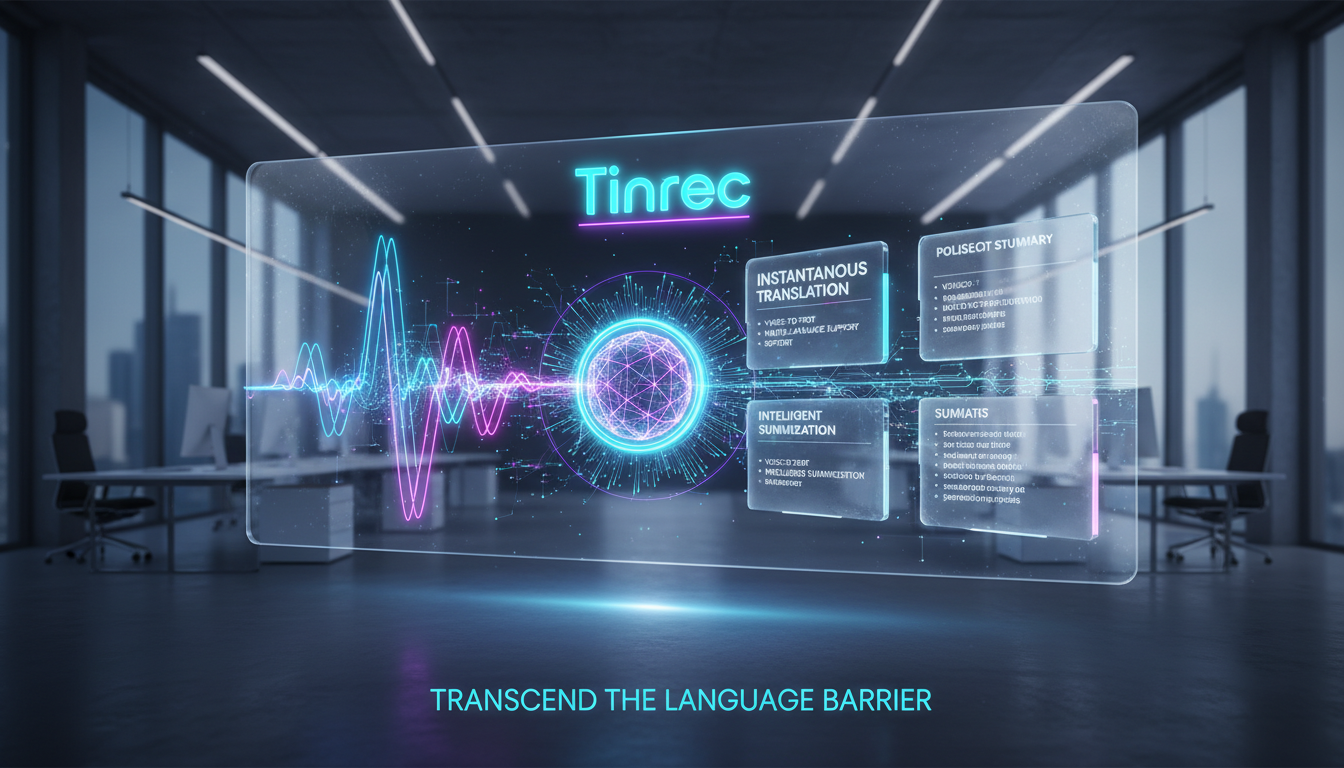
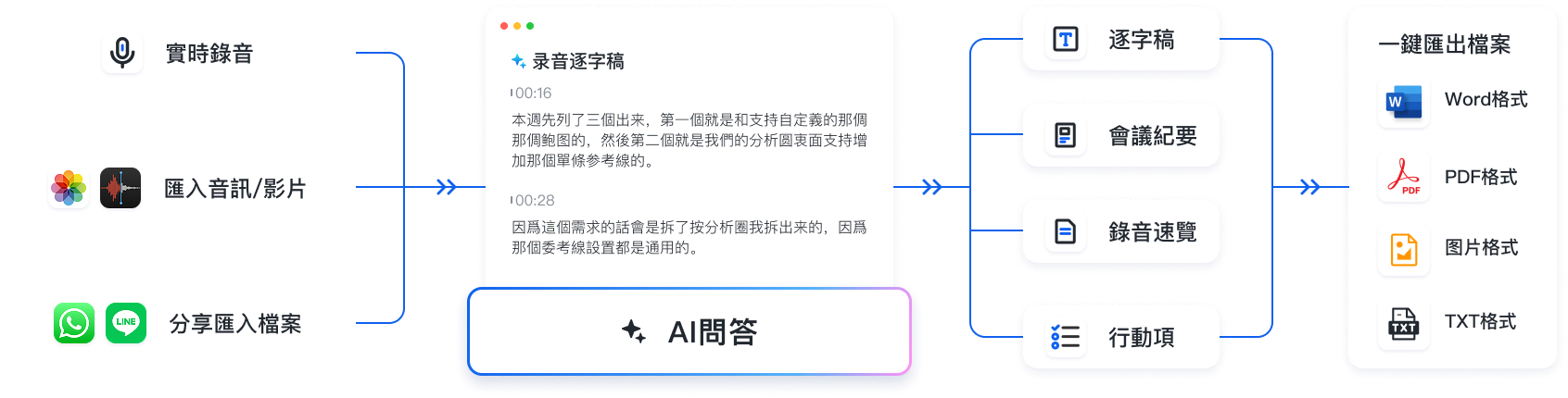
Tinrec (Instant Transcription) solves the pain points of traditional recorders—"high review cost" and "difficulty in information retrieval"—upgrading the workflow from mere "transcription" to "Record → Understand → Act."
- Real-time Transcription While Recording: Unlike subtitle software that requires finishing recording and uploading, Tinrec transcribes in real-time on your phone. By the time the meeting ends, the transcript is also ready.
- AI Chat with Audio: For a 2-hour Cantonese or Taiwanese Hokkien meeting recording, you don't need to search for keywords; instead, you can directly ask the AI: "What was the manager's conclusion about the budget?" The system will answer based on the recording content.
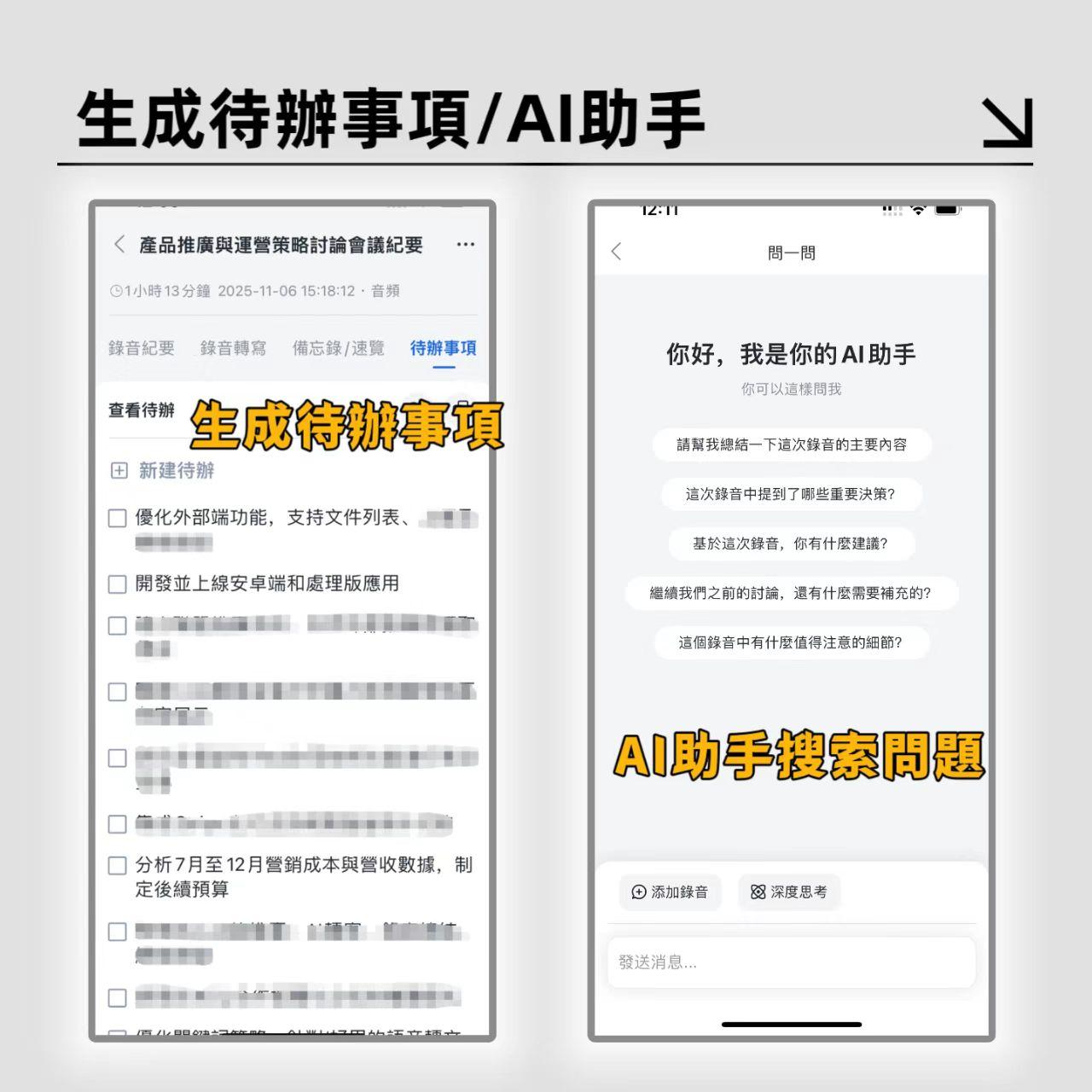
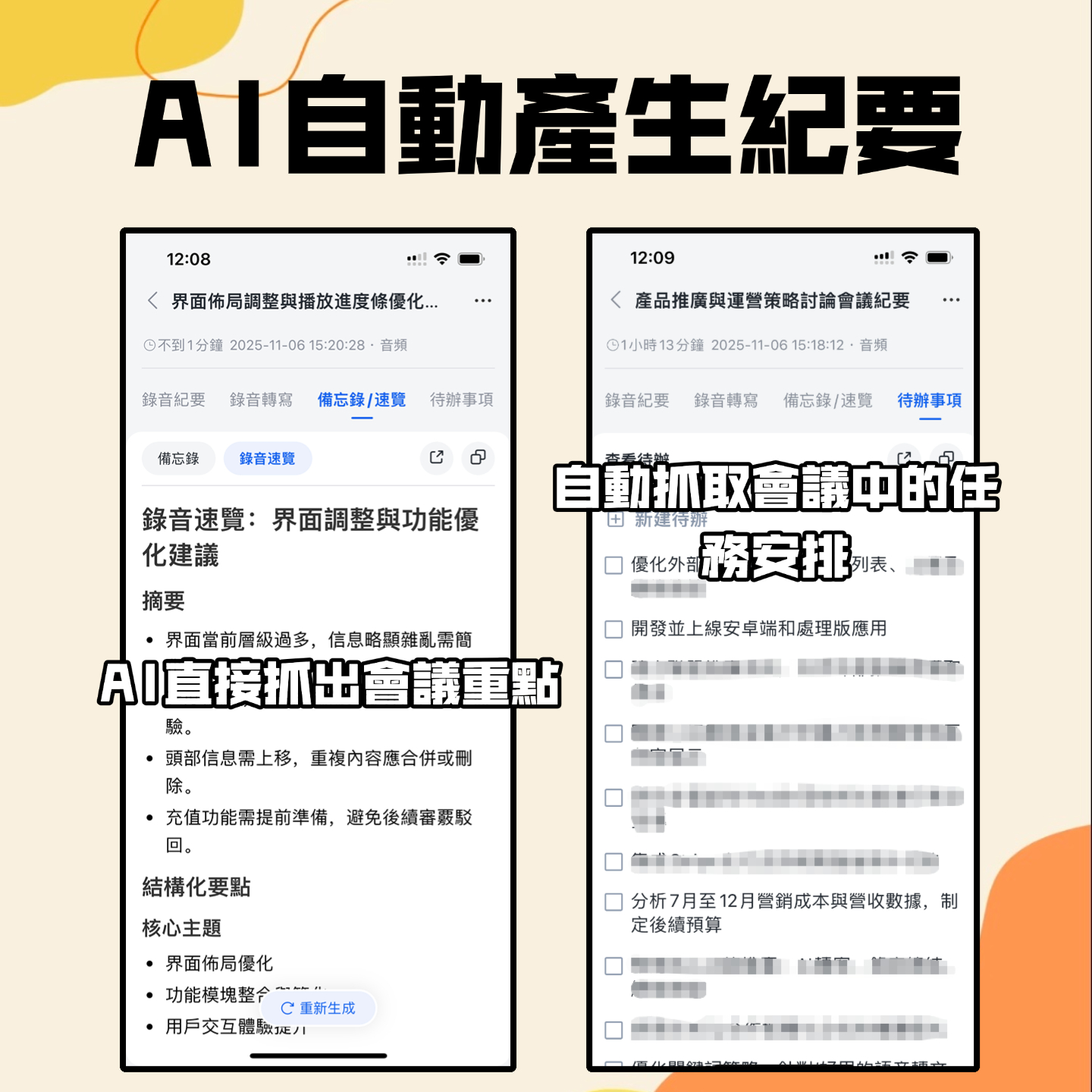
- Auto-Generate Action Items: Automatically analyze the recording, extract summaries, conclusions, and to-do items (Action Items).
Scenario 2: Video Subtitle Creation (YouTube/Commercial Videos)
If your goal is to create video subtitles (SRT files), you need to focus on "timestamp accuracy" and "colloquial polishing."
- Subanana: According to tests, its accuracy in Cantonese with Chinglish reaches 97.5%. Its strongest feature is the "direct conversion from Cantonese colloquial to written Chinese" (e.g., automatically converting "係唔係" to "是不是"), greatly saving post-production polishing time.
- Adobe Premiere Pro: Its advantage lies in "workflow integration." If you're already an Adobe user, completing transcription directly within the editing software is the most convenient, though noise resistance is slightly weaker; the benefit is no need to switch software.
Practical Tutorial: Use AI Tools to Turn Audio into High-Value Notes
Below we use Tinrec (Instant Transcription) as an example to demonstrate how to quickly convert a meeting in Cantonese or Taiwanese Hokkien into an action list. This workflow applies to most AI-summarization-supported tools:
Step 1: Start Recording or Import a File
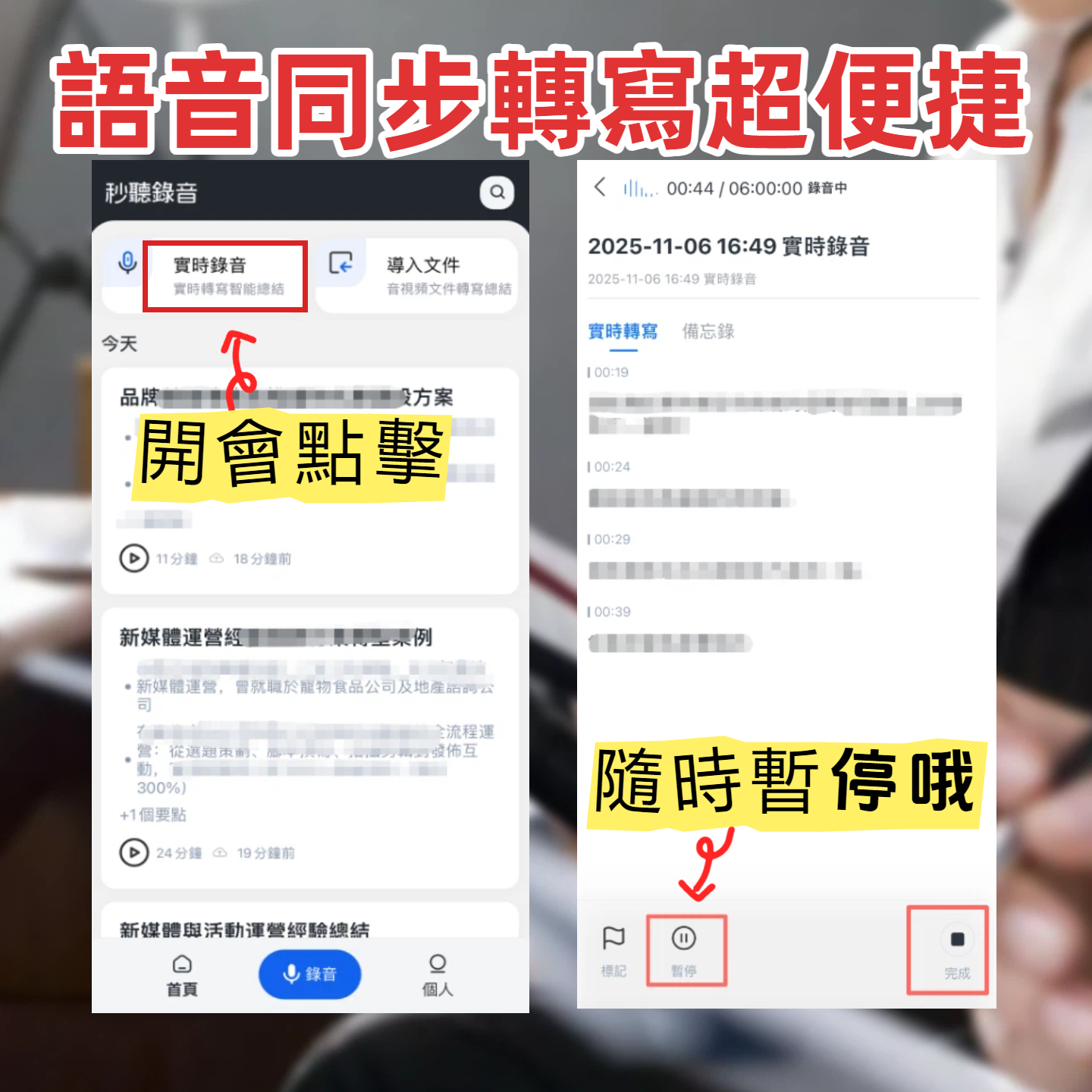
- Live Meeting: Open the app, tap "Real-time Transcription" on the home page. The system will instantly recognize the language (supports Cantonese, Taiwanese Hokkien, Chinese, etc.) and display text.
- Existing File/Video: If you have a recording file or a YouTube link, use the "Audio File to Text" or "Podcast/Online Video to Text" feature to import.
Step 2: Mark Key Points in Real Time
During recording, if you hear important decisions or data, tap the "Mark Key Point" button on the interface. This helps the AI more accurately capture core content when generating summaries later, preventing omissions.

Step 3: Use "Chat with Audio" with AI
After the meeting, there's no need to read the entire verbatim transcript. Enter the "AI Chat Query" function, type your question, e.g., "What was the decision about the marketing budget in this meeting?" The AI will immediately summarize the relevant paragraphs. This is very effective for long interviews or courses.
Step 4: Export and Take Action
Review the auto-generated "Action Items". Once confirmed, you can copy or export to TXT, PDF, or Word format with one click, and share with team members, completing the loop from voice to action.
Frequently Asked Questions (FAQ)
Q1: Which tool handles "Cantonese mixed with English (Chinglish)" best?
For video subtitles, Subanana performs best, with automatic translation of some brand names. For meeting minutes and notes, Tinrec also supports multilingual mixed recognition and smoothly handles workplace code-switching.
Q2: Do these tools support Taiwanese Hokkien recognition?
Tinrec (Instant Transcription) explicitly supports Taiwanese Hokkien, catering to Taiwan users' local needs. Other tools like Google-based pyTranscriber have basic support but are less optimized for meeting scenarios.
Q3: Can I record on my phone and get an instant transcript?
Yes. Tinrec supports both iOS and Android, plus a web version. It is one of the few tools that supports "transcribe while recording" on mobile, perfect for on-the-go interviews or meetings.
Q4: What is Tinrec's "AI Chat Query" feature?
This is a semantic understanding feature. Traditional tools only allow keyword search (Ctrl+F), but Tinrec lets you "ask questions" in natural language. The AI understands the context of the entire recording to answer you, just like asking a secretary who attended the meeting.
Q5: Do these tools cost money? Is there a free version?
- Completely free: pyTranscriber (open source).
- Free tier available: Tinrec (monthly free recording minutes, basic features usable), Subanana (basic free), Taption (first 15 minutes free).
- Paid subscription: Adobe Premiere Pro.
Q6: Can these tools import YouTube video links?
Yes, both Tinrec and Subanana support direct pasting of YouTube links for transcription, eliminating the need to download the video file first—very convenient for content organization.
Turn every recording into actionable outcomes
Get 60 free transcription minutes when you sign in. No credit card required.
Related Reading
You might also like
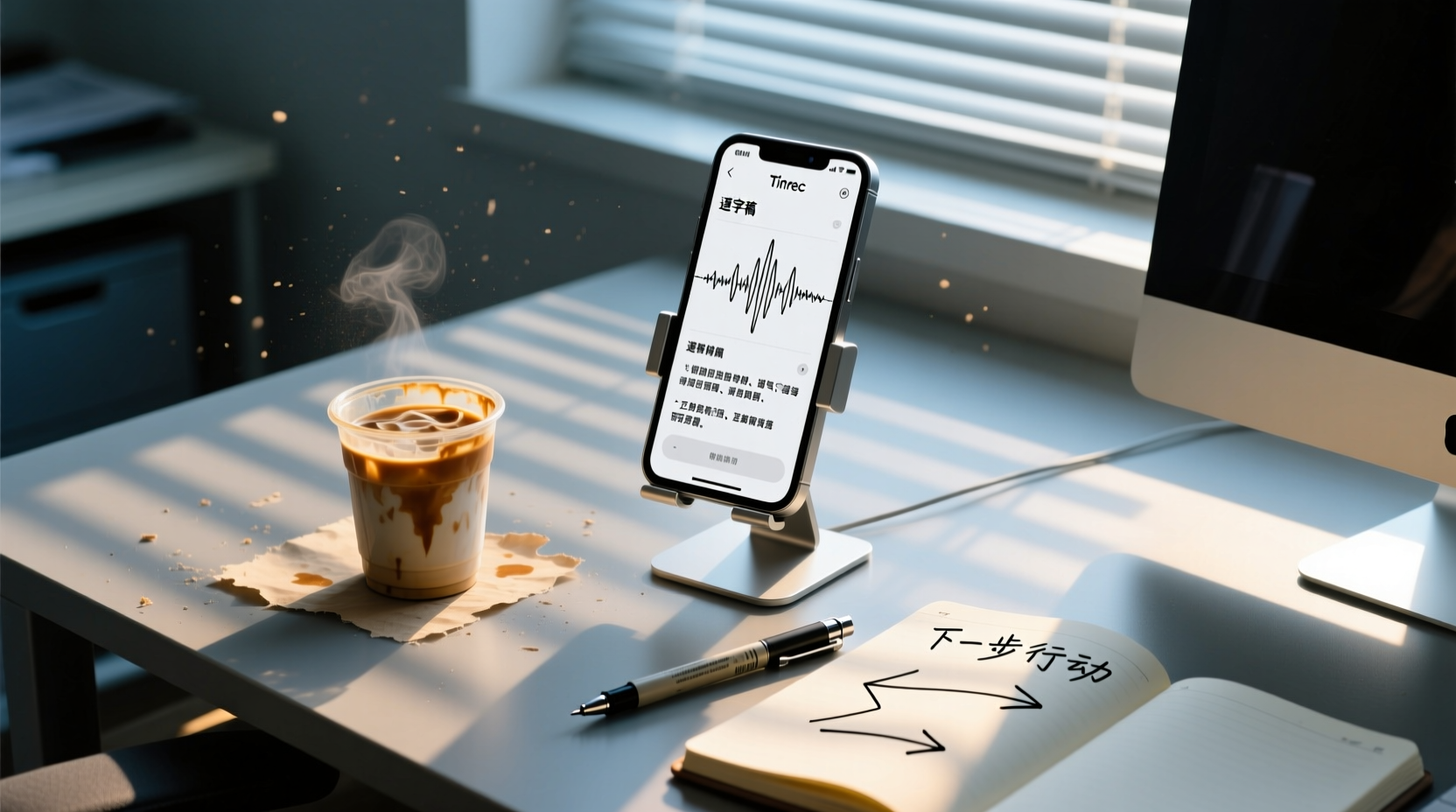
Speech-to-Text App Recommendations: A Buying Guide from Meeting Types, Chinese Language Needs to Team Collaboration
This article starts from mobile usage scenarios, comparing mainstream speech-to-text apps such as Tinrec, Otter, Notta, TurboScribe, Granola, and PLAUD, analyzing dimensions like real-time recording, file import, Chinese language experience, and post-meeting outputs, and provides selection suggestions for different groups such as sales, product/R&D, and institutional staff, helping you master the complete process from recording to actionable meeting materials.

Which Speech-to-Text Tool Is Best? A Practical Comparison and Buying Guide for Traditional Chinese Users
Compare Tinrec, Otter, Fireflies, Granola, and more across four dimensions: Traditional Chinese transcription quality, bot-free recording, post-meeting outputs, and team collaboration, to help professionals in Taiwan and Hong Kong choose the best speech-to-text solution.
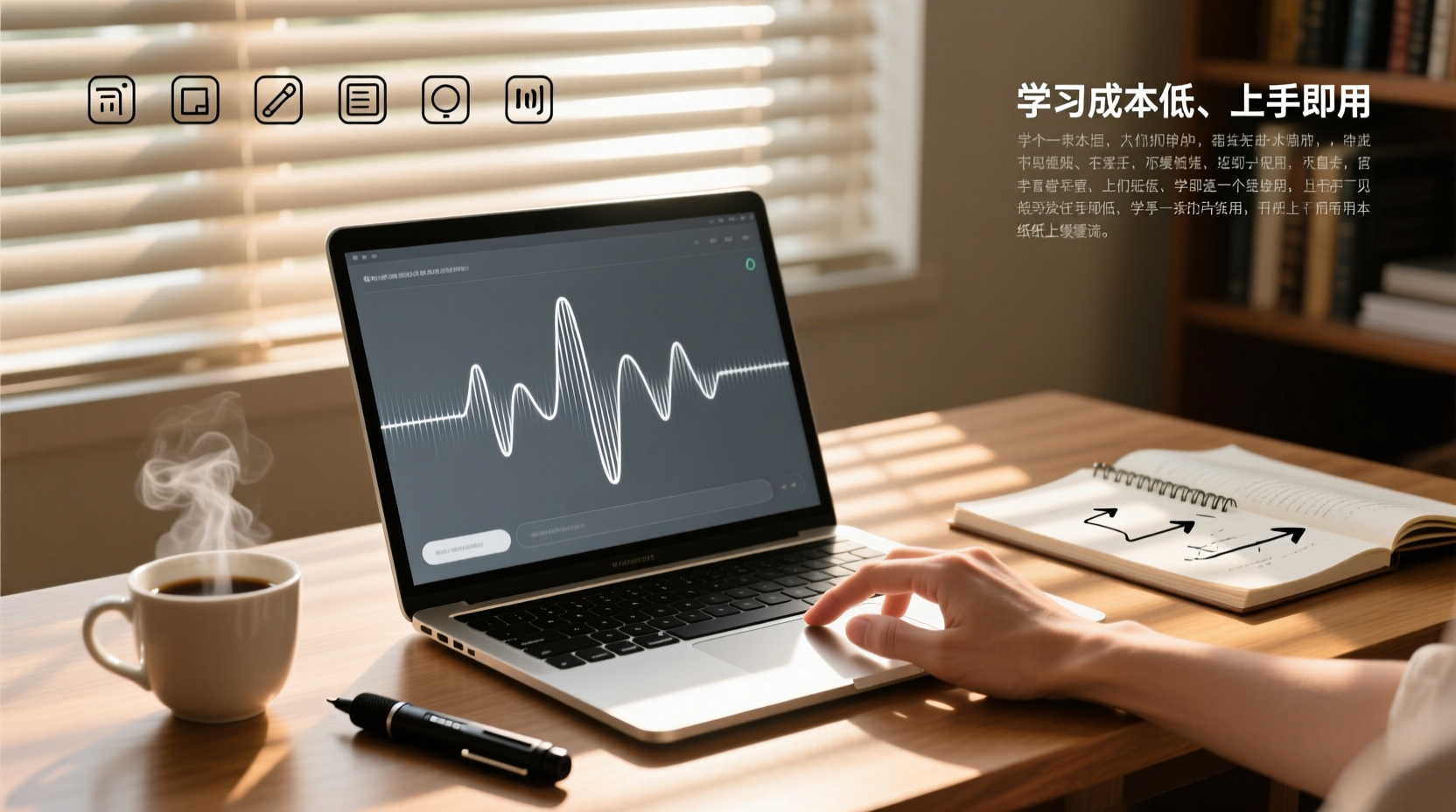
Which Speech-to-Text Tool Is Easiest to Learn? A Guide Based on Learning Curve
Compare the ease of learning of popular speech-to-text tools from a learning cost perspective, and get a complete workflow from recording to usable meeting notes to help sales, product development, and government employees get started quickly.

How to Choose the Best Recording-to-Text Tool in 2026: A Complete Guide from Transcripts to Actionable Meeting Minutes
This article compares the leading recording-to-text tools in 2026, covering capture methods, Chinese language support, post-meeting outputs, and team collaboration. It helps sales, business, and product development professionals select the most suitable tool based on meeting type and team size, and master the complete workflow from recording to actionable meeting minutes.
Which Speech-to-Text Tool Is Easiest to Learn? Choosing the Most Beginner-Friendly Option Based on Learning Cost
Looking for an easy-to-learn speech-to-text tool? This article starts from learning cost, compares the ease of learning of mainstream tools, breaks down the key steps to get started quickly, and provides recommendations for different groups such as sales, product R&D, and government employees, helping you learn and start using a tool in the least amount of time.

How to Choose the Best Recording-to-Text Tool in 2025: From Transcripts to Actionable Meeting Minutes
Meeting recording-to-text tools are no longer just about transcription. This article compares Tinrec, Otter, Fireflies, Notta, Granola, and other mainstream tools in terms of capture methods, Chinese language support, and post-meeting outputs, and explains how to generate action items from transcripts and build team knowledge, helping you choose the right tool for your meeting scenarios.

2026 Free Speech-to-Text Solutions: 5 Tools Compared
PTT hotly discusses speech-to-text apps. We tested Tinrec and 4 other tools, comparing free quotas, Cantonese accuracy, and AI features to help you save time on meeting notes.

4 Best Recording-to-Text Tools in 2026: How to Choose Based on Free Credits and AI Features
We tested the latest 4 recording-to-text tools in 2026, from free credits to AI Q&A and bot-free recording, to help you find the most time-saving option.

Tinrec vs Otter.ai in 2026: A 5-Dimension Comparison for Chinese Users
We tested Tinrec and Otter.ai for Chinese meetings, bot-free recording, AI Q&A, cross-platform support, and team collaboration to help you choose the right transcription tool and save overtime hours.