
Turn recordings into transcripts and summaries in minutes
Upload audio or video for multilingual transcription, AI notes, and action items
For content creators, administrators, or students using Cantonese, finding an accurate voice-to-text app is often the biggest pain point. The unique gap between spoken and written Cantonese, plus the common workplace mixing of Cantonese and English (Chinglish), trips up many mainstream speech recognition tools. Have you ever experienced an hour of recording leading to three hours of editing?
This article integrates the latest 2026 test data, comparing mainstream tools for two scenarios: subtitle creation and meeting notes. We analyze recognition accuracy, feature completeness, and free tiers, with a detailed comparison table and step-by-step tutorials.
Quick Navigation Conclusion:
- If you're a video creator seeking subtitle accuracy: Go with Subanana, which excels at converting colloquial Cantonese to written form.
- If you're a professional or student needing meeting minutes and key takeaways: Choose Tinrec (Second Voice Recorder), strong in real-time transcription and AI-driven summaries and action items.
- If you're already using Adobe Creative Cloud: Premiere Pro integrates seamlessly into your workflow, though it has lower accuracy for colloquial speech.
1. Two Core Challenges of Cantonese Transcription
Before choosing a tool, we must understand why Cantonese recognition is so difficult—key criteria for evaluating tools:
- Spoken vs. Written Discrepancy: People say "佢" but official documents or subtitles require "他"; they say "咁樣" but write "這樣". Most tools only transcribe verbatim, leading to heavy proofreading.
- Code-switching and Noise: Communication in Hong Kong and Cantonese-speaking regions often mixes English terms (e.g., "Update the Schedule"). If a tool cannot handle bilingual recognition, the transcript will be riddled with errors.
2. In-Depth Review of Leading AI Subtitle Tools (Based on Test Data)
Based on the latest tests, we evaluate Subanana, Adobe Premiere Pro, ArcTime, etc. under code-switching and noisy conditions. Key findings:
2.1 Subanana: The King of Cantonese Subtitles
- Core Advantage: Designed for Hong Kong users, it is currently the only tool that directly converts spoken Cantonese to written form. In tests, its colloquial-to-formal accuracy reached 95.3%.
- Noise Resistance: Maintains 93.4% accuracy even with background noise, far ahead of competitors.
- Best For: YouTubers, video editors.
2.2 Adobe Premiere Pro: The Editor's Standard
- Core Advantage: Integrated into the editing software, offering the smoothest workflow.
- Tested Weaknesses: Moderate handling of code-switching (around 89.4% accuracy), significantly affected by noise, and lacks colloquial-to-formal conversion, leading to more editing time.
- Best For: Professional editors who don't require extreme subtitle precision.
2.3 pyTranscriber: Free and Open Source
- Core Advantage: Based on Google API, completely free.
- Learning Curve: Requires local installation and certain technical skills. Accuracy similar to Premiere Pro, suitable for budget-conscious users with technical know-how.
3. New Options for Work and Study: From Transcripts to AI Notes
If your goal is not video subtitles but organizing meeting minutes, class notes, or interview content, simple transcription tools may not suffice. Tools with AI comprehension, like Tinrec (Second Voice Recorder), are more efficient.
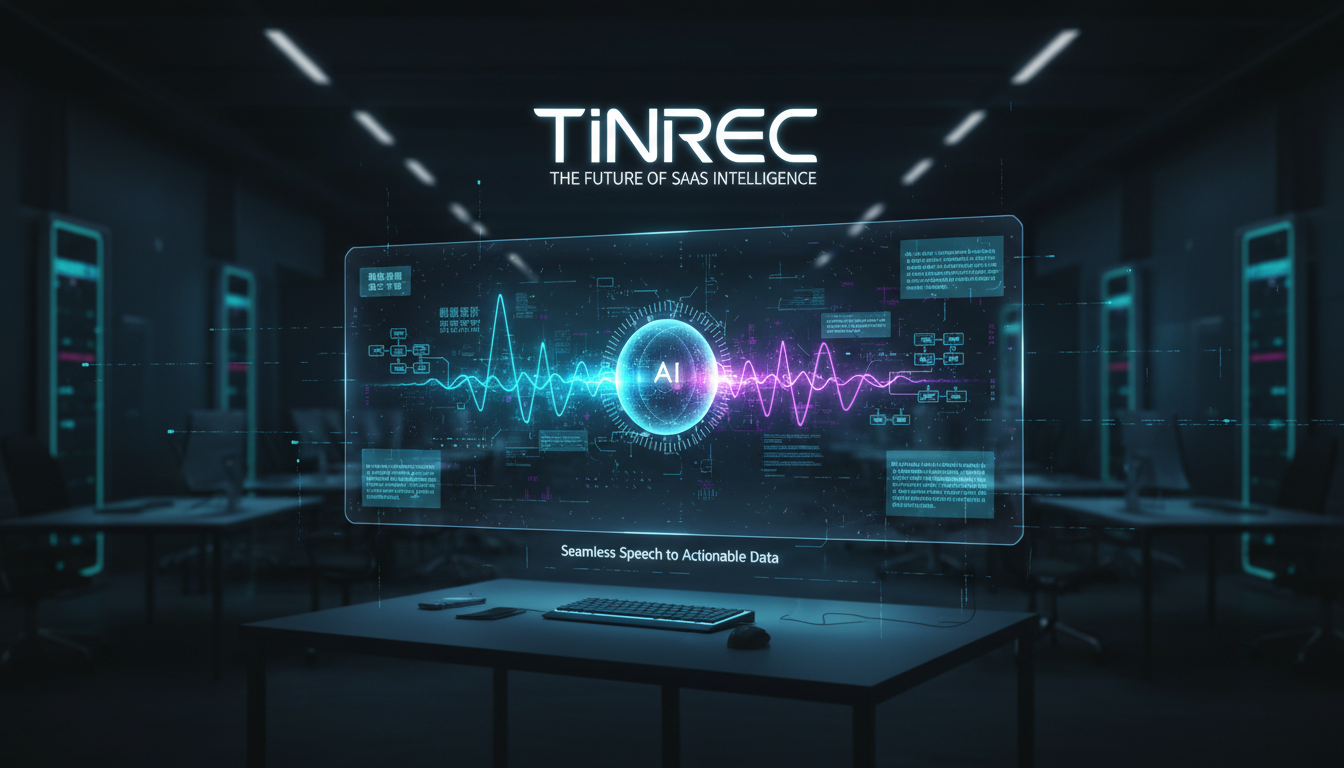
Tinrec (Second Voice Recorder): Turn Audio into Actionable Notes
Unlike the subtitle-focused tools above, Tinrec prioritizes content understanding and follow-up actions.
Stop organizing recordings by hand
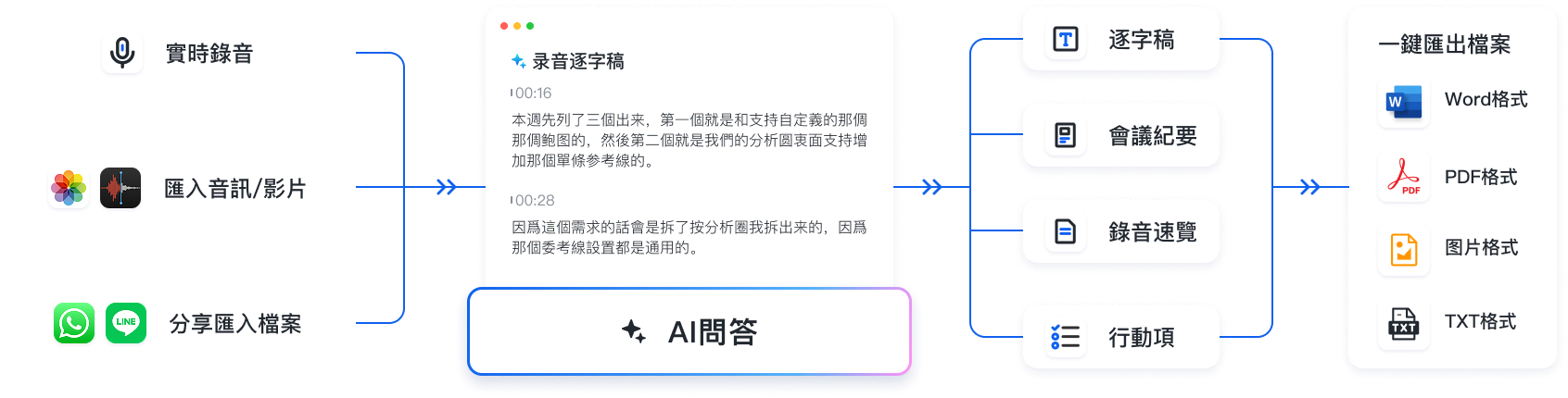
Upload audio or video and automatically get a transcript, summary, and action items
- End-to-End Workflow: It not only transcribes audio but also automatically identifies speakers and uses AI to generate meeting summaries, conclusions, and action items.
- Cantonese Support: Supports 10 languages including Cantonese, ideal for multilingual meetings.
- AI Chat Queries: A feature absent in traditional subtitle tools. Ask questions like "What was the conclusion about the budget?" and AI answers based on the recording, saving replay time.
4. 2025 Comprehensive Comparison of Popular Cantonese Transcription Tools
For a clear choice, we compare subtitle-focused and note-focused tools side by side:
| Dimension | Subanana | Tinrec (Second Voice Recorder) | Adobe Premiere Pro | Taption | pyTranscriber |
|---|---|---|---|---|---|
| Primary Use | Video subtitle creation | Meeting notes, study notes | Professional video editing | Online subtitle editing | Basic transcription |
| Cantonese Accuracy | ⭐⭐⭐⭐⭐ (Very High) | ⭐⭐⭐⭐ (High) | ⭐⭐ (Medium) | ⭐ (Low) | ⭐⭐ (Medium) |
| Spoken-to-Written Conversion | Yes (Exclusive) | Supports verbatim | No | No | No |
| AI Summary/Action Items | No | Yes (Auto-generated) | No | No | No |
| Conversational Query | No | Yes (Chat) | No | No | No |
| Installation | Free web version | App / Web version | Requires software installation | Free web version | Requires software installation |
| Recommendation Score | ★★★★★ (Best for subtitles) | ★★★★★ (Best for notes) | ★★★☆☆ | ★★☆☆☆ | ★★☆☆☆ |
5. Hands-On Tutorial: Quickly Process Cantonese Meetings/Recordings with AI
Here's how to use a modern AI tool (using Tinrec as an example) to process a meeting recording mixing Cantonese and English, reducing a 2-hour task to 10 minutes.
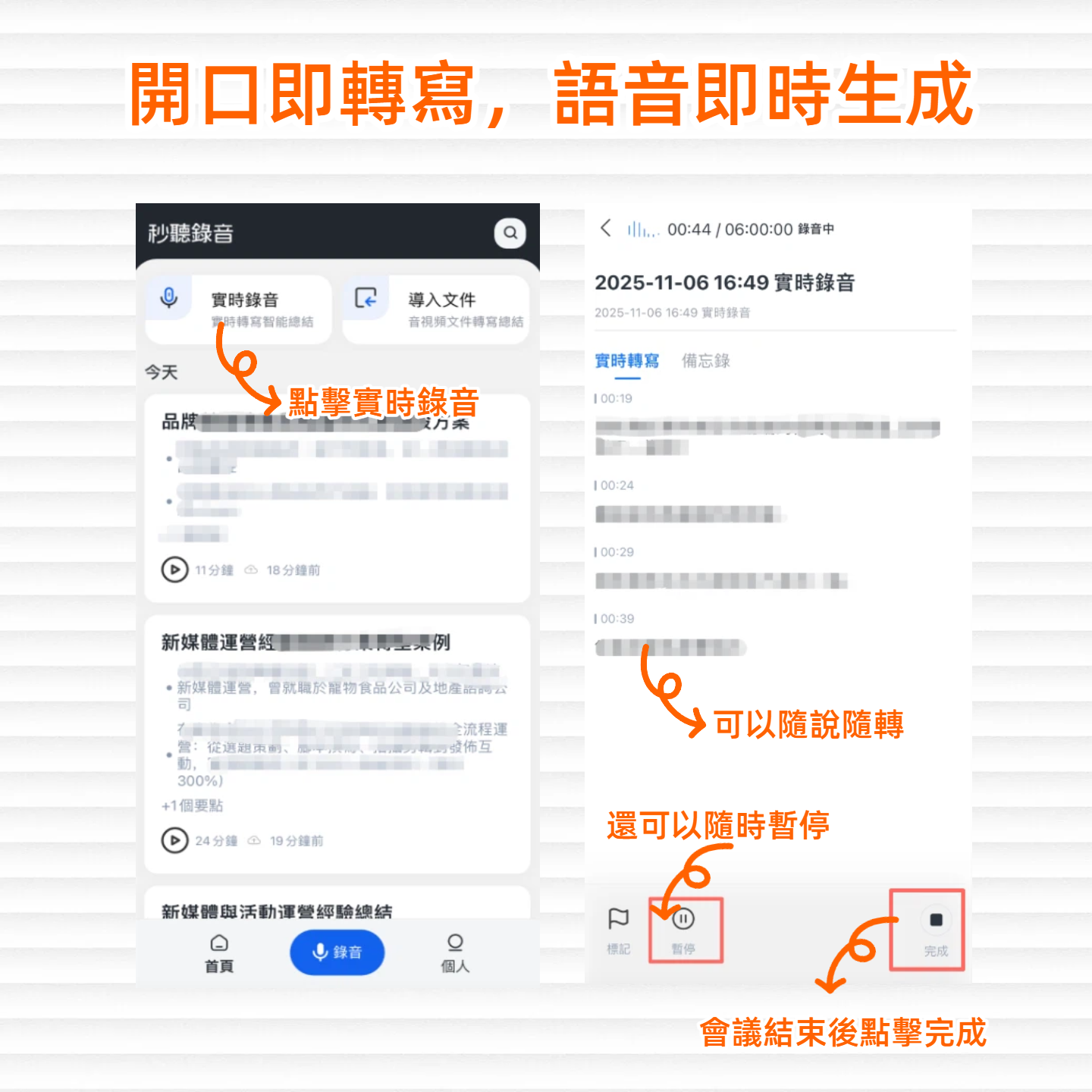
Step 1: Record or Import Files
- Live Recording: Open the app and tap record at the start of a meeting or class. Tinrec supports iOS and Android for portability.
- File Upload: If you already have mp3/m4a files or a YouTube link, upload them directly.
Step 2: Get Transcript and Speaker Diarization
- The system quickly converts Cantonese speech to text in the cloud.
- If multiple speakers, AI automatically labels "Speaker 1", "Speaker 2", which you can rename to actual names for readability.

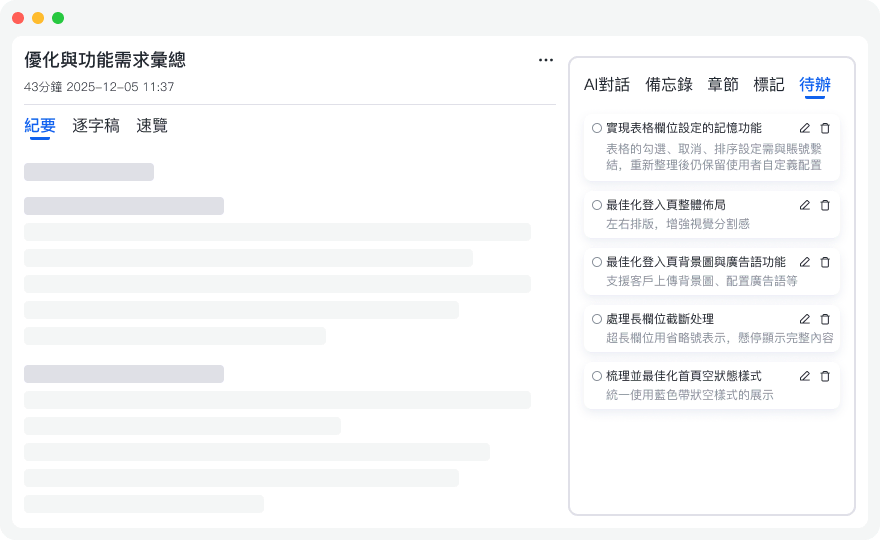
Step 3: View AI Smart Summary
- This is the key step. Instead of reading the full transcript, review the auto-generated summary.
- Key Takeaways: AI extracts core discussion topics.
- Action Items: Automatically extracts tasks like "Peter to submit report by next Friday".
Step 4: Use AI Chat for Details
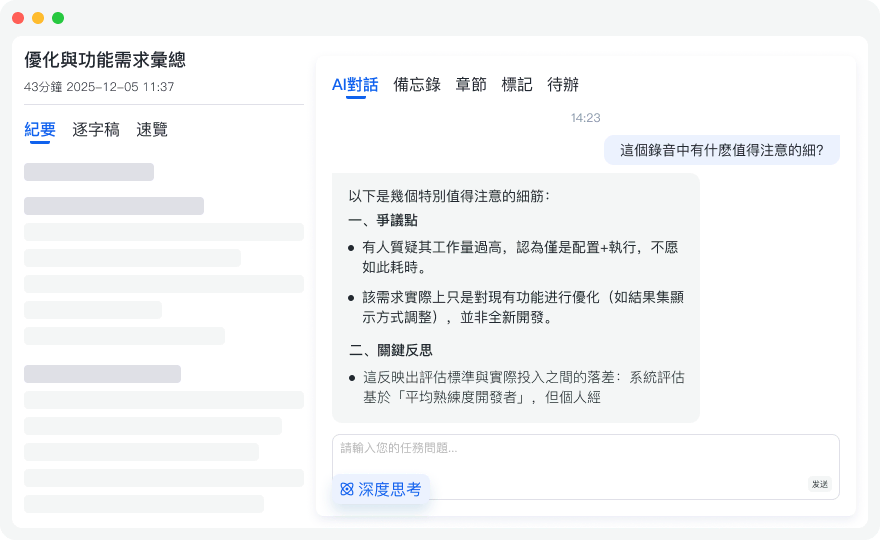
- If the summary misses a detail (e.g., specific budget amount), no need to replay the audio.
- Click "AI Chat" and ask: "What were the opinions on the Q2 budget?" AI searches the recording and answers precisely.
6. Frequently Asked Questions (FAQ)
Q1: Why do some apps output gibberish or homophones for Cantonese?
Mainly because the tool lacks a dedicated Cantonese model and forces a Mandarin model. Choose tools explicitly supporting "Cantonese", like Subanana or Tinrec.
Q2: Can the iPhone's built-in Voice Memos transcribe?
The built-in feature has limited support and cannot separate speakers or generate summaries. For long meetings or study purposes, dedicated third-party apps are much more efficient.
Q3: I want to turn Cantonese recordings directly into formal written reports. Which tool is best?
For video subtitles, Subanana has the best colloquial-to-formal conversion. For meeting minutes, Tinrec's AI summary directly produces written summaries, skipping manual editing.
Q4: Do these tools offer free trials?
Most do. Subanana and Taption offer basic free tiers; pyTranscriber is fully free (open source); Tinrec offers 100 minutes free transcription monthly, suitable for light users.
Q5: Will very long recordings (over 1 hour) fail?
Cloud tools often have file size or duration limits. Consider paid/pro versions for long recordings. Tinrec supports long recordings with resume function, ideal for lengthy meetings or interviews.
Q6: Can I paste a YouTube link for transcription?
Yes. Subanana, Taption, and Tinrec support URL parsing—paste the link to generate a transcript, great for analyzing Cantonese tutorials or podcasts online.
Turn every recording into actionable outcomes
Get 60 free transcription minutes when you sign in. No credit card required.
Related Reading
You might also like
Speech-to-Text App Recommendations: A Buying Guide from Meeting Types, Chinese Language Needs to Team Collaboration
This article starts from mobile usage scenarios, comparing mainstream speech-to-text apps such as Tinrec, Otter, Notta, TurboScribe, Granola, and PLAUD, analyzing dimensions like real-time recording, file import, Chinese language experience, and post-meeting outputs, and provides selection suggestions for different groups such as sales, product/R&D, and institutional staff, helping you master the complete process from recording to actionable meeting materials.

Which Speech-to-Text Tool Is Best? A Practical Comparison and Buying Guide for Traditional Chinese Users
Compare Tinrec, Otter, Fireflies, Granola, and more across four dimensions: Traditional Chinese transcription quality, bot-free recording, post-meeting outputs, and team collaboration, to help professionals in Taiwan and Hong Kong choose the best speech-to-text solution.

Which Speech-to-Text Tool Is Easiest to Learn? A Guide Based on Learning Curve
Compare the ease of learning of popular speech-to-text tools from a learning cost perspective, and get a complete workflow from recording to usable meeting notes to help sales, product development, and government employees get started quickly.

How to Choose the Best Recording-to-Text Tool in 2026: A Complete Guide from Transcripts to Actionable Meeting Minutes
This article compares the leading recording-to-text tools in 2026, covering capture methods, Chinese language support, post-meeting outputs, and team collaboration. It helps sales, business, and product development professionals select the most suitable tool based on meeting type and team size, and master the complete workflow from recording to actionable meeting minutes.
Which Speech-to-Text Tool Is Easiest to Learn? Choosing the Most Beginner-Friendly Option Based on Learning Cost
Looking for an easy-to-learn speech-to-text tool? This article starts from learning cost, compares the ease of learning of mainstream tools, breaks down the key steps to get started quickly, and provides recommendations for different groups such as sales, product R&D, and government employees, helping you learn and start using a tool in the least amount of time.

How to Choose the Best Recording-to-Text Tool in 2025: From Transcripts to Actionable Meeting Minutes
Meeting recording-to-text tools are no longer just about transcription. This article compares Tinrec, Otter, Fireflies, Notta, Granola, and other mainstream tools in terms of capture methods, Chinese language support, and post-meeting outputs, and explains how to generate action items from transcripts and build team knowledge, helping you choose the right tool for your meeting scenarios.

2026 Free Speech-to-Text Solutions: 5 Tools Compared
PTT hotly discusses speech-to-text apps. We tested Tinrec and 4 other tools, comparing free quotas, Cantonese accuracy, and AI features to help you save time on meeting notes.
4 Best Recording-to-Text Tools in 2026: How to Choose Based on Free Credits and AI Features
We tested the latest 4 recording-to-text tools in 2026, from free credits to AI Q&A and bot-free recording, to help you find the most time-saving option.

Tinrec vs Otter.ai in 2026: A 5-Dimension Comparison for Chinese Users
We tested Tinrec and Otter.ai for Chinese meetings, bot-free recording, AI Q&A, cross-platform support, and team collaboration to help you choose the right transcription tool and save overtime hours.