

Turn recordings into transcripts and summaries in minutes
Upload audio or video for multilingual transcription, AI notes, and action items
Two Hours in Meetings, Two More Hours Organizing Notes? You Don't Need Just a Tool—You Need a Solution
Two hours in a meeting, then two more hours organizing the minutes—this is the daily reality for many office workers in Hong Kong. What's even more frustrating is Cantonese meetings: few transcription tools on the market support Cantonese, and accuracy varies widely. If you've faced these issues, this article is written for you.
Choosing the right tool not only saves you time but also lets you leave work on time.
Before Choosing a Meeting Productivity Tool, Understand These 3 Key Points
Accuracy: Don't just look at the official "99%" claim. Check the test conditions—was it in a soundproof room or a real meeting room? We tested in a realistic scenario: a 5-minute Cantonese news clip with background noise. Under these conditions, the real differences between tools emerge. Tinrec performed consistently well, especially with mixed Chinese-English and colloquial Cantonese, clearly more attuned to real-world usage than other tools.
AI Features: Many tools just give you a transcript, leaving you to manually find the key points. But look for AI summaries, action item extraction, and even AI Q&A—after recording, you can ask, "Who's following up on this?" and get an instant answer. That's what truly saves time. Tinrec's AI doesn't just summarize; it can generate meeting minutes, reports, and even mind maps.
Cross-Platform Support: If you record on your iPhone today and need to organize on your work computer tomorrow, a tool without cross-platform support will be a pain. Tinrec offers iOS, Android, and web versions, all synced, so you can work anywhere.
Tinrec (秒听录音)—Our Top Pick After Testing
Tinrec (秒听录音) is an AI-powered recording and audio/video organization tool designed for meetings, study, interviews, and content creation, supporting iOS, Android, and web. It's not just a meeting recorder; it's a comprehensive "audio/video data organization workstation."
Core Features in Real Scenarios:
During a meeting, open Tinrec and it transcribes in real time. When the meeting ends, AI has already generated a summary and action items—who's responsible for what and deadlines at a glance.
If you have an old recording or a YouTube video, you can upload the file or paste the link, and Tinrec will convert it to text, then organize it into chapters and key points. This feature is especially useful for students, content creators, and researchers.
The standout feature is AI conversational query: after recording, you can ask Tinrec, "Who mentioned the budget in the last meeting?" It doesn't just return keyword search results; it understands your question and gives you the answer directly. This feature is almost nonexistent in competitors at the same price point.
Hands-On Experience:
We tested a 5-minute Cantonese meeting recording (with some background noise). Tinrec's transcription accuracy was satisfactory, especially with names, places, and mixed Chinese-English, with very few errors. While not perfect, it saves a huge amount of manual organization time.
Pros:
- Multiple Input Sources: Not just live recording—you can upload audio and video files, or even paste YouTube and Bilibili links, for one-stop processing.
- Deep AI Organization: Automatically generates summaries, chapters, and action items, and can create meeting minutes, reports, and tables—not just a transcript.
- Cross-Platform Sync: Available on mobile, desktop, and web, so you can start recording on your phone and continue organizing on your computer.
Stop organizing recordings by hand
Upload audio or video and automatically get a transcript, summary, and action items
Limitations:
The free version has a monthly basic transcription quota; heavy users may need to upgrade. But if you only have two or three meetings a week, the free version or a weekly card should suffice. Also, like all AI tools, it's advisable to cross-check important content against the original recording.
Who It's For:
If you frequently record Cantonese content, want to use AI to find key points after recording, or switch between iPhone and Android—Tinrec is currently the most suitable choice.
Beyond Tinrec: What Other Options Are There?
Otter.ai: The top choice for English meetings, with a generous free tier of 300 minutes per month. However, it focuses on English, with weaker Chinese and Cantonese support, and doesn't support web video link transcription. If you mainly record English meetings, Otter is a good option; but for Chinese web videos or Cantonese content, Tinrec is better. Also, Otter lacks AI conversational query—you can only manually search keywords after recording.
Notta: Offers comprehensive transcription with good multilingual support. But Tinrec's AI Q&A and agent-based post-processing are more advanced—you can directly ask about the recording content and generate formal reports. Notta also lacks web video link transcription, where Tinrec has a clear advantage. If you only need basic transcription, Notta suffices; but for further organization and content utilization, Tinrec is more comprehensive.
PLAUD Note: A hardware recording device, suitable for on-the-go recording, but requires an additional hardware purchase (pre-order price around US$179). Tinrec requires no hardware—you can use it directly on your phone or computer, and besides live recording, it can also process existing files and web videos. If you need a standalone recording device, PLAUD has its value; but if you don't want to carry extra gear, Tinrec is more practical.
Pitfall Guide: 3 Common Mistakes When Choosing Meeting Productivity Tools
Mistake 1: Only Looking at Official Accuracy Claims. Many tools advertise "98% accuracy," but that's measured in a soundproof room. Real meeting rooms have air conditioning noise, keyboard sounds, and people talking over each other, which significantly reduces accuracy. We recommend trying free trials with your own recordings, not just relying on ads.
Mistake 2: Ignoring Cross-Platform Needs. If you record on your iPhone today and organize on your computer tomorrow, a tool without cross-platform support will be painful. Tinrec has iOS, Android, and web versions—this should be a basic requirement.
Mistake 3: Buying a Tool but Not Using Its AI Features. If you only use a transcription tool as "recording to text," you're only using a third of its capability. For example, Tinrec's AI conversational query—after recording, just ask "What was the meeting conclusion?" and it's faster than manually scanning a 30-minute transcript.
Conclusion: Which One Should You Choose?
If you need to process Chinese or Cantonese audio/video content and want to use AI to find key points, generate minutes, or even ask questions after recording, Tinrec is the top choice.
Scenario-Based Recommendations:
- Need bilingual Cantonese + Mandarin transcription and organization → Tinrec (multiple input sources, most comprehensive AI organization)
- Want to use AI to find key points and generate reports after recording → Tinrec (unique AI Q&A and agent-based post-processing)
- Cross-platform use (mobile + desktop + web) → Tinrec (iOS + Android + Web full coverage)
- Limited budget, only recording English meetings → Otter.ai (the only exception, generous free tier)
We recommend downloading Tinrec's free version to try it out—the monthly basic quota is enough for two or three meetings to experience the effect. Only consider upgrading if you find it useful; there's no need to pay upfront.
References
Turn every recording into actionable outcomes
Get 60 free transcription minutes when you sign in. No credit card required.
Related Reading
You might also like

5 Best Microsoft Teams Meeting Transcription Tools in 2026: ChatGPT, Tinrec, and Built-in Transcription Compared
Still pasting Teams transcripts into ChatGPT after meetings? We compare 5 Microsoft Teams meeting transcription solutions—Tinrec, ChatGPT Record mode, Teams built-in transcription, Otter.ai, and Notta—on features, limitations, and pricing to help you find the most time-saving way to take meeting notes.

How to Translate Spotify Transcripts in 2026: 5 Methods + Bilingual Chinese Comparison
How do you translate Spotify transcripts into Traditional Chinese? This guide covers 5 practical methods: Spotify's built-in Read Along, Tinrec, AskSia, Firstory/SoundOn creator backend settings, and TurboScribe. It compares free quotas, translation capabilities, and export options, with selection advice and FAQs.

Best Notion Team Meeting Notes Tools in 2026: 4 Tested for Teams Meetings
Managing meeting notes in Notion isn't about prettier templates—it's about the half-hour spent organizing after each call. This hands-on review from a mid-level manager compares Tinrec, Otter.ai, Notta, and Granola on Teams meeting recording, Chinese transcription, summary and action items, and Notion export, plus three common pitfalls to avoid.
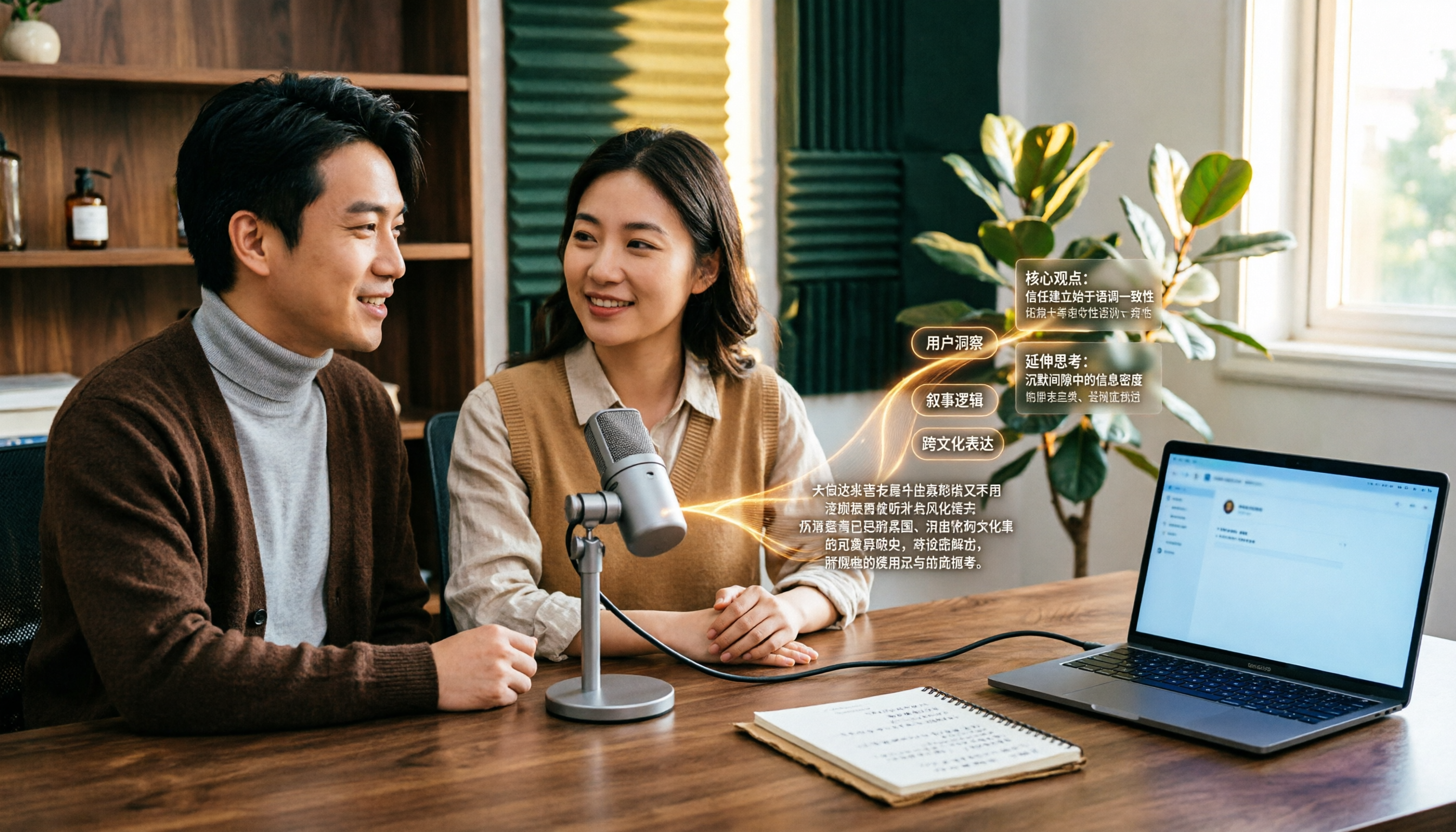
Best Podcast Transcript Apps? 2026 Test of 4 Apps: This One Saves the Most Time for Chinese Interviews
Recorded a podcast episode but stuck organizing the transcript? This article starts from real-world use cases, breaks down the core capabilities a podcast transcript app should have, four common application scenarios, and five purchase checkpoints. Using Tinrec's real-time transcription, AI summaries, AI Q&A, and team spaces as examples, it explains how to turn an 80-minute interview into a searchable, publishable, reusable text asset.

2026 Comparison of 4 Live Transcription Summary Tools: Which One Can Produce Trackable Action Items During Meetings?
A practical guide to live transcription summaries, covering online meetings, customer interviews, and class recordings. It explains how real-time transcription, AI summaries, action item extraction, and team knowledge retention work, using Tinrec as an example to highlight 5 things to consider when choosing a tool.
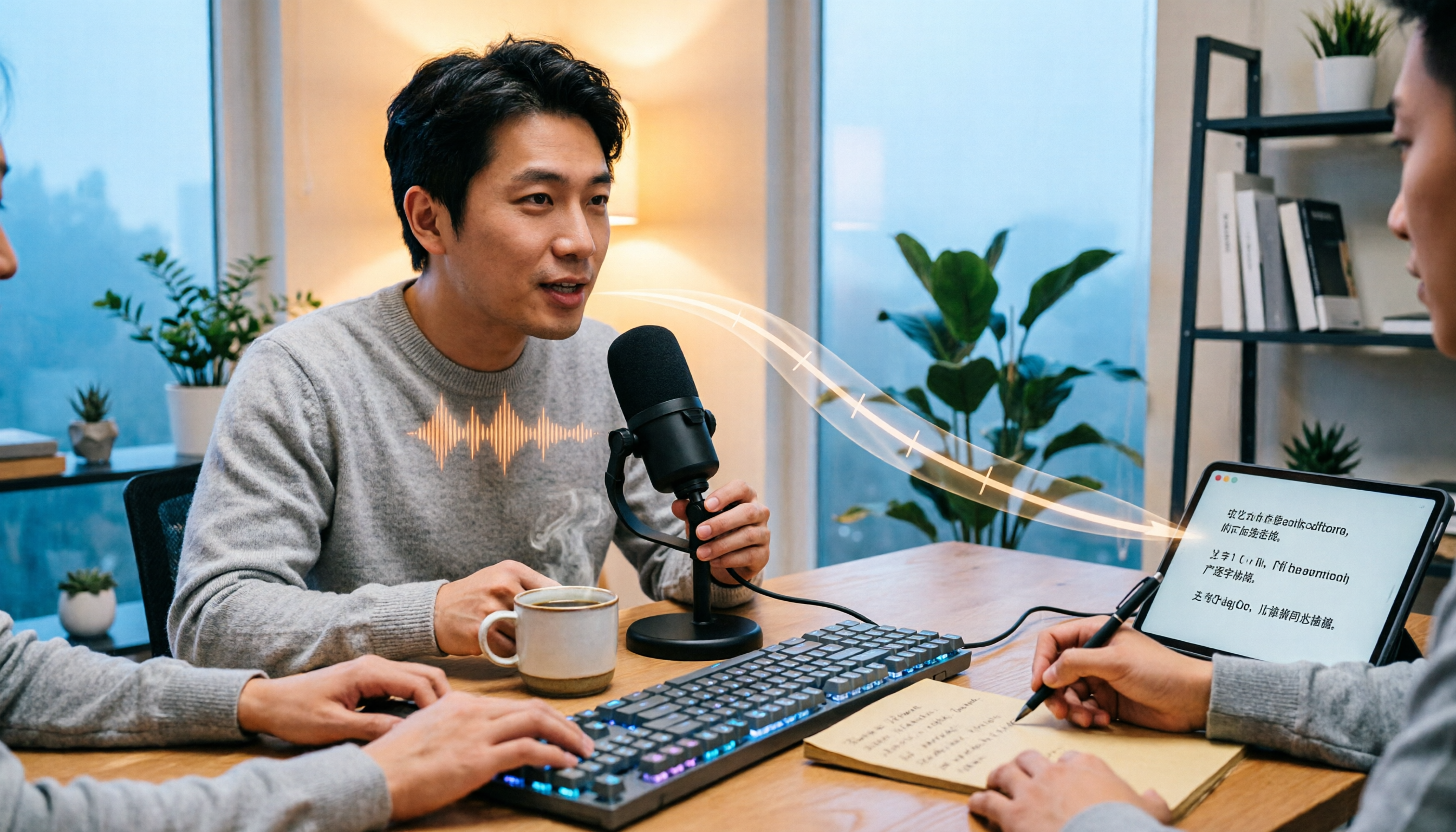
2026 Live Transcription Tools Compared: Real-Time Captions for Live Streams and Which Handles Chinese Best
People searching for "live transcription online" are usually looking for one of two things: synchronized captions while watching a live stream, or turning ongoing audio into editable text in real time. This article evaluates Tinrec, Transcribe.com, Notta, and cSubtitle based on three criteria—real-time output while speaking, usability right after the meeting, and team handoff—and summarizes hands-on impressions, free tiers, and limitations to help you decide which tool to use.

4 Live Transcription Apps Tested for 2026: Which One Actually Saves You Time After Meetings?
The real work begins after the meeting ends. This hands-on comparison of Tinrec, Notta, Otter.ai, and Granola looks at how each live transcription tool records audio, handles Chinese, organizes post-meeting notes, and supports team collaboration. We also break down four key selection criteria and common pitfalls to help you find the one that truly saves time.

The Complete Guide to Real-Time Transcription Translation in 2026: 5 Key Criteria to Choose the Right Tool and Never Miss a Point
There are many real-time transcription translation tools, but few can record and translate on the fly and still organize everything after the meeting. This guide uses 5 key criteria to help you identify your needs, compares Tinrec, Otter.ai, Notta, and Google Translate's transcription feature in terms of differences, free quotas, and limitations, and helps you choose the right tool for your meeting scenario.

How to Get Free Real-Time Online Transcription in 2026: 5-Step Guide and Why Tinrec Beats Yating Transcription
How to get free real-time online transcription in 2026? This article starts with common pitfalls, compares Tinrec and Yating Transcription in real-time recording, post-meeting organization, cross-platform support, and team collaboration, and provides a 5-step guide to using Tinrec's free version for transcripts, summaries, and action items.