

Turn recordings into transcripts and summaries in minutes
Upload audio or video for multilingual transcription, AI notes, and action items
What Can Meeting Productivity Tools Do for You?
The worst part of a meeting isn't the meeting itself—it's the follow-up work. In the past, a two-hour meeting might require another hour to re-listen to the recording, transcribe it, and pick out key points. Now, with AI meeting productivity tools, these tedious tasks can be handled by machines.
Take Tinrec, for example. It's an AI recording and audio/video organization tool that not only supports real-time transcription but also auto-generates summaries, chapters, and action items, and even lets you query meeting content through Q&A. In short, it turns meeting recordings into actionable data you can use immediately.
Scenario 1: Meeting Minutes Ready in 5 Minutes After the Meeting
As soon as the meeting ends, Tinrec has already generated the transcript, summary, and to-do list. Who is responsible for what, and when it's due—everything is clear at a glance. No need to re-listen to the recording or ask a colleague to help organize.
Scenario 2: Quick Search Through Historical Meeting Data
Past meeting recordings often pile up on hard drives, and finding a specific decision can take forever. With Tinrec, you can directly ask, "Who objected during the budget discussion last time?" or "What was the client's feedback on the new proposal?" The AI answers based on semantic understanding.
Scenario 3: Not Just Meetings—Also Useful for Lectures and Interviews
Although it's called a meeting productivity tool, Tinrec has broader applications. Students can turn lecture recordings into study notes, and researchers can organize interview recordings into citable material. As long as it's audio or video content, Tinrec can convert it into searchable, summarizable data.
What Are Tinrec's Core Capabilities?
After testing multiple tools, I found that Tinrec stands out in the "post-transcription organization." Many tools stop after transcribing, but Tinrec goes further to help you understand and use the content.
Real-Time Transcription
It transcribes as it records, with less than 1 second of delay. During meetings, you can watch the text in real time to ensure nothing is missed, and you can immediately copy and paste it into chats or documents.
AI Summaries and Chapter Organization
Instead of condensing the transcript into a single paragraph, it provides structured organization—meeting topic, discussion conclusions, action items, and responsible persons are listed separately. For a two-hour recording, Tinrec automatically divides it into titled chapters for quick browsing.
Action Item Extraction
It automatically identifies "who should do what" from the discussion. For example, a sentence like "Please have Xiao Ming submit the quote by Friday" is directly converted into a to-do item, so you don't have to search line by line.
AI Q&A
After transcription, you can ask follow-up questions about the recording as if querying a database. For example, "What risks were mentioned in the meeting?" or "What features does the client care about most?" It provides answers based on the entire content, not just keyword matching.
Multi-Format Export
The organized results can be exported as text files, PDFs, or synced to tools like Notion, Google Docs, and OneNote for further editing and archiving.
Practical Use Cases
Meetings: From Recording to Action List
Weekly team meetings, client communications, and cross-departmental coordination can all be handled with Tinrec. After recording, the summary and action items are sent directly to attendees, so no one has to wait for meeting minutes.
Stop organizing recordings by hand
Upload audio or video and automatically get a transcript, summary, and action items
Classrooms: Turning Long Audio into Notes
For a two-hour lecture, Tinrec transcribes it and automatically generates chapters and key points. When reviewing, you don't have to listen from start to finish—just read the summary or search for key concepts.
Interviews: Quickly Finding Quotable Material
Journalists or researchers can use Tinrec's AI Q&A to find key viewpoints from interviewees after recording, and even copy transcript excerpts directly as citations.
Content Creation: Turning Videos into Article Material
Paste a YouTube or Bilibili video link, and Tinrec can extract text and summaries. It's very convenient for making video notes, writing articles, or organizing ideas.
4 Things to Consider When Choosing a Meeting Productivity Tool
1. Accuracy
Don't just rely on official claims; test it with your own recordings. Tinrec performs well with clear audio, but accuracy drops with heavy background noise or multiple people speaking simultaneously. For important occasions, it's still advisable to cross-check with the recording playback.
2. AI Features
Transcription is just the first step; what matters is whether it can help you organize afterward. Tinrec's AI summaries, action item extraction, and Q&A features turn passive transcripts into proactive action lists.
3. Language Support
If you often have meetings in Chinese, make sure the tool supports Chinese well. Tinrec's interface and transcription are very friendly to Traditional Chinese, and it handles mixed Chinese-English content well.
4. Cross-Platform and Input Sources
Check that the tool supports the devices and meeting methods you commonly use. Tinrec has a mobile app and web version, and also allows uploading audio files or pasting video links, making it more versatile than pure meeting bots.
Frequently Asked Questions
Is Tinrec's Free Version Sufficient?
The free version includes a basic monthly transcription quota, suitable for occasional meetings or those who want to try it out. If you have more than three meetings per week, we recommend upgrading to the Pro plan for a larger quota.
What's the Difference Between Tinrec and a Regular Recording App?
A regular recording app only records; Tinrec goes further by transcribing, summarizing, extracting action items, and allowing you to query content via Q&A.
Does Tinrec Automatically Join Online Meetings?
Currently, Tinrec is not primarily designed to auto-join meetings, but you can record meeting audio on your computer and upload it to Tinrec for organization. Alternatively, you can use your phone to record in-person meetings.
Can Transcription Accuracy Reach 100%?
No tool can be 100% accurate. Tinrec performs well with clear audio, but accents, noise, and jargon can affect accuracy. For important decisions, it's recommended to refer to the original text or recording.
Are There Privacy Concerns with Meeting Recordings?
Tinrec's recording and transcription are done under your account. It's advisable to obtain consent from attendees before recording and to comply with company policies.
Conclusion
In 2024, meeting productivity tools are no longer just about transcription; they can turn meeting content into a searchable, queryable, and actionable database. If you have more than three meetings a week or often need to organize lecture or interview recordings, Tinrec is worth trying.
Download the free version of Tinrec and experience the workflow for one meeting to see how much time AI can save you.
References
- Top 5 Recommended Online Meeting Software to Boost Remote Work Efficiency | On-line to Know
- Top 5 Recommended Online Meeting Software to Boost Remote Work Efficiency! - EventX
- 2024 Top 5 AI Meeting Assistants – meetXcc
- Best AI Meeting Notes Tools Recommended to Make Your Team More Efficient - Consumer Life Navigation Station
- 2025 Review of 8 Mainstream Video Conferencing Software to Improve Meeting Efficiency! - Zhihu
Turn every recording into actionable outcomes
Get 60 free transcription minutes when you sign in. No credit card required.
Related Reading
You might also like

4 Best Teams Meeting Transcription Tools for 2026: Free to Paid
How to enable built-in Teams transcription and what are its limits? Based on real meeting scenarios, this article compares four solutions: Teams built-in transcription, Tinrec, Otter.ai, and Notta. It covers four key selection criteria, three common pitfalls, and scenario-based recommendations to help you save time on replaying recordings after meetings.

4 Teams Meeting Transcription Tools Tested: Can Transcripts Become Data Your Team Actually Uses?
A hands-on comparison of four approaches—Teams built-in transcription, Tinrec, Otter.ai, and Notta—covering recording methods, file storage, post-meeting organization, and team permissions to find a workflow that turns Teams meeting audio into searchable, queryable, collaborative data.

How to Use Notion Meeting Notes Templates in 2026: 5 Steps from Template to AI Summary
Notion meeting notes templates are free and easy to find, but most people download them and never use them. This guide covers the Notion official free meeting templates worth using in 2026, suggestions for building your own Database fields, and a 5-step workflow: record and transcribe first, then paste the summary and action items back into Notion. Turn your template from an empty shell into meeting data you'll actually refer back to.

2026 Teams Meeting Transcription Showdown: Is Built-in Good Enough?
After a Teams meeting, transcripts are often missing or never generated. This guide approaches the decision from a data-storage perspective, explains the two-layer permissions and storage limits of Teams' built-in transcription, and compares three external solutions: Tinrec, Otter.ai, and Granola. Includes four common pitfalls and selection advice.

6 Meeting Notes Tools Tested and Compared in 2026: Is Notion's Free Plan Enough?
Many people think having Notion means having meeting notes, but the free plan actually provides meeting templates plus trial AI credits, not unlimited automation. This article reviews 6 free and low-cost meeting notes solutions, from Tinrec, Notion, Notta, Otter.ai, Granola to TurboScribe, comparing recording methods, transcription, summarization, export, and pricing to help you decide which fits your meeting habits.

5 Best Microsoft Teams Meeting Transcription Tools in 2026: ChatGPT, Tinrec, and Built-in Transcription Compared
Still pasting Teams transcripts into ChatGPT after meetings? We compare 5 Microsoft Teams meeting transcription solutions—Tinrec, ChatGPT Record mode, Teams built-in transcription, Otter.ai, and Notta—on features, limitations, and pricing to help you find the most time-saving way to take meeting notes.

How to Translate Spotify Transcripts in 2026: 5 Methods + Bilingual Chinese Comparison
How do you translate Spotify transcripts into Traditional Chinese? This guide covers 5 practical methods: Spotify's built-in Read Along, Tinrec, AskSia, Firstory/SoundOn creator backend settings, and TurboScribe. It compares free quotas, translation capabilities, and export options, with selection advice and FAQs.

Best Notion Team Meeting Notes Tools in 2026: 4 Tested for Teams Meetings
Managing meeting notes in Notion isn't about prettier templates—it's about the half-hour spent organizing after each call. This hands-on review from a mid-level manager compares Tinrec, Otter.ai, Notta, and Granola on Teams meeting recording, Chinese transcription, summary and action items, and Notion export, plus three common pitfalls to avoid.
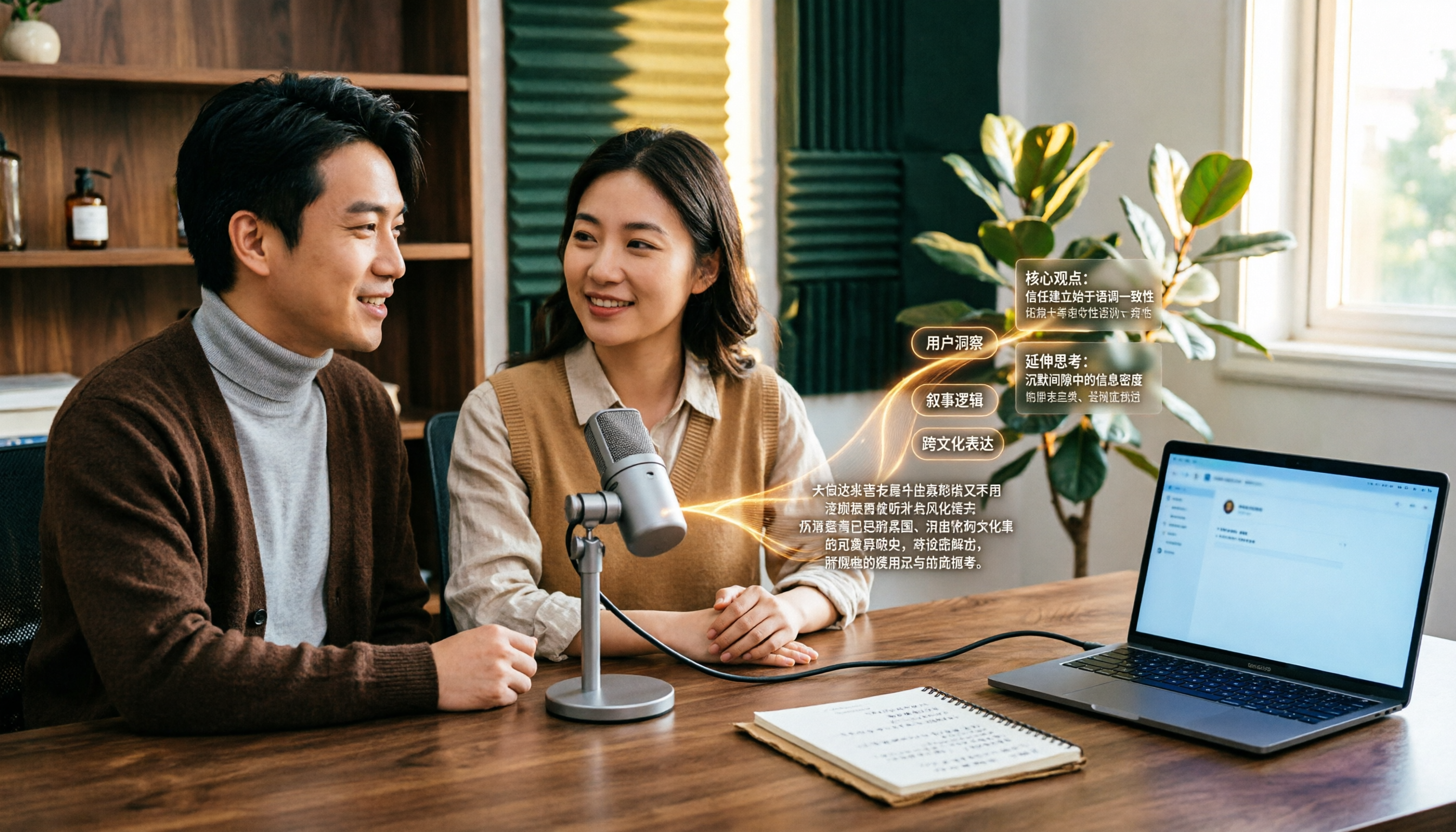
Best Podcast Transcript Apps? 2026 Test of 4 Apps: This One Saves the Most Time for Chinese Interviews
Recorded a podcast episode but stuck organizing the transcript? This article starts from real-world use cases, breaks down the core capabilities a podcast transcript app should have, four common application scenarios, and five purchase checkpoints. Using Tinrec's real-time transcription, AI summaries, AI Q&A, and team spaces as examples, it explains how to turn an 80-minute interview into a searchable, publishable, reusable text asset.