

Turn recordings into transcripts and summaries in minutes
Upload audio or video for multilingual transcription, AI notes, and action items
2026 Hands-On Comparison of 4 Meeting Productivity Tools: Why Tinrec Is the Top Choice for Notta Users?
Tinrec is an AI-powered audio and video transcription and summarization tool that supports mobile, desktop, and web versions, with a focus on Chinese content organization. The free version offers basic transcription credits, making it suitable for professionals and students who need to organize meetings, lectures, interviews, and online videos. If you're looking for an alternative to Notta, Tinrec might be a better fit for Chinese-language use cases.
Why Are People Looking for Alternatives to Notta?
Notta is a well-known transcription tool commonly used for meeting minutes, subtitles, and translation. It can quickly convert audio files into text, but after using it for a while, some users start looking for other options.
Common pain points include: the free plan's limited quota (120 minutes per month) runs out quickly; the tool focuses mainly on transcription, leaving post-transcription tasks like summarization, chaptering, and action items to be done manually; and support for non-meeting scenarios like online videos and course audio may be incomplete.
If you have similar needs, Tinrec is worth checking out.
Tinrec vs. Notta: What Are the Core Differences in User Experience?
1. Depth of Chinese Content Organization
Chinese users often care most about whether the transcribed text is ready to use. Notta's transcription is decent, but Tinrec emphasizes organization in Chinese contexts: automatic summaries, chapter segmentation, and action item extraction are optimized for Chinese language habits. For example, after a Chinese meeting, Tinrec can directly generate "meeting conclusions" and "who is responsible for what," saving you from manually going through the transcript.
2. Breadth of Input Sources
Notta mainly accepts audio files and some meeting platforms, while Tinrec adds a killer feature: online video links. Just paste a public video URL from YouTube, Bilibili, or Xiaohongshu, and Tinrec can transcribe it into text, summary, and chapters. This is a huge time-saver for those who need to organize online courses, interview videos, or competitor analysis.
3. Post-Transcription Processing Capabilities
Notta offers transcription, translation, and basic summaries, but Tinrec goes further: besides summaries, it can generate chapters, action items, mind maps, and even supports AI Q&A (just ask "What are the key points of the meeting?" and get an answer). Additionally, Tinrec can export results to tools like Notion and Google Docs for seamless workflow integration.
4. Free Plan and Pricing Flexibility
Notta's free plan offers 120 minutes per month, and the Pro plan costs about $8.17/month (billed annually) for 1,800 minutes. Tinrec's free plan also provides basic credits, but it stands out with weekly, monthly, and annual plans to suit different usage frequencies. If you only use it occasionally, the free plan is enough; if you need a short-term boost (e.g., exam week or project meetings), the weekly plan might be more cost-effective.
5. Coverage of Use Cases
Notta's core use cases are meetings and document transcription, but Tinrec expands to classrooms, interviews, podcasts, online videos, and historical data organization. For personal knowledge management, Tinrec acts more like an "audio-video data workbench" rather than just a transcription tool.
Overview of Tinrec's Core Features
Real-time Speech-to-Text: Open Tinrec, and text appears in real time as you record, with a delay of less than 1 second. During meetings, you can watch the text as you record to ensure you don't miss key points, and the transcript is ready the moment the meeting ends.
Audio/Video File Transcription: Upload existing audio or video files, and Tinrec converts them into text with one click. Old recordings, podcasts, and video materials can quickly become searchable content.
Stop organizing recordings by hand
Upload audio or video and automatically get a transcript, summary, and action items
Online Video Transcription: Paste a public video link, and Tinrec automatically organizes it into text and a summary. This is a personal favorite, especially for organizing online courses or interview shows.
AI Summaries and Chapters: Long recordings are automatically split into structured sections, with key summaries generated. A one-hour meeting can be distilled into core conclusions in 3 minutes.
AI Q&A: After recording, ask Tinrec directly, "What are the meeting's conclusions?" or "Who is responsible for what?" It provides answers based on semantic understanding, saving you from manually flipping through 30 pages of transcript.
Practical Use Cases
Meetings: Record, transcribe, and automatically generate minutes and action items. No more spending 30 minutes after meetings to organize; export directly to Notion or Google Docs and share with your team.
Classrooms: Record lectures, and after class, Tinrec automatically generates chapters and key points. Review structured notes instead of listening to the entire recording—much more efficient.
Interviews: Researchers or journalists record interviews, and Tinrec transcribes them and extracts key insights for easy reference and writing.
Content Creation: Convert YouTube videos or podcasts into text, quickly organizing them into article drafts or subtitles, saving hours of manual transcription.
Key Considerations When Choosing a Transcription Tool
Multi-Source Support: Besides audio files, does it support online videos and real-time recording? Tinrec supports all three input types, offering high flexibility.
Post-Transcription Organization: Don't just look at transcription; see what it can generate. Summaries, chapters, action items, Q&A—these are what truly save time. Tinrec excels in this area.
Chinese Language Experience: If your content is primarily in Chinese, test the quality of Chinese summaries and chapters. Tinrec is optimized for Chinese use cases, which is one of its strengths.
Export Options: The organized data should be portable. Tinrec supports export to Notion, Google Docs, OneNote, and other common tools, making it easy to integrate into your workflow.
Pricing Flexibility: Consider free plan quotas, short-term plans, and long-term plans. Tinrec offers weekly and annual plans, allowing you to choose based on usage frequency without being forced into a full-year subscription.
Conclusion: Is Tinrec Worth Trying?
If you're looking for an alternative to Notta and need to handle not just meeting recordings but also courses, interviews, online videos, and other multi-source audio-video content, Tinrec is one of the few options on the market that combines "multi-input + deep organization + Chinese optimization." Its AI Q&A and online video transcription features, in particular, are hard to give up once you've tried them.
We recommend downloading the free version of Tinrec and testing it with your own recordings or videos—this is more direct than reading any review.
Frequently Asked Questions
Q: What's the difference between Tinrec and Notta? A: Notta focuses on quick transcription and subtitles, while Tinrec emphasizes post-transcription organization, such as summaries, chapters, action items, Q&A, and export. Additionally, Tinrec supports transcription from online video links, a feature Notta lacks.
Q: Is the free version of Tinrec sufficient? A: The free version provides basic transcription credits, suitable for occasional use or testing. If you have meetings or classes weekly, consider a paid plan.
Q: What platforms does Tinrec support? A: Tinrec supports mobile, desktop, and web versions, with no need for additional hardware.
Q: How accurate is Tinrec? A: With clear audio and common scenarios, Tinrec provides high-quality transcription, but actual results may vary depending on recording quality, noise, accents, and technical terms. For important content, we recommend cross-checking with the original.
Q: Can I use Tinrec to transcribe YouTube videos? A: Yes, just paste the public video link to get text and a summary. Please comply with platform rules and copyright requirements.
References
- 8 Free Interactive Tools to Level Up Your Online Meetings!
- [Meeting Efficiency] The Complete Guide to Ending Ineffective Meetings: 7 Symptoms + 15 Practical Tips
- AI Meeting Minutes Software Recommendations: 5 Apps Tested and Compared, Auto-Transcription Makes Meetings Effortless!
- ePrice Mobile
- [Question] Contrast @Computer Applications Discussion - Bahamut
Turn every recording into actionable outcomes
Get 60 free transcription minutes when you sign in. No credit card required.
Related Reading
You might also like

4 Best Teams Meeting Transcription Tools for 2026: Free to Paid
How to enable built-in Teams transcription and what are its limits? Based on real meeting scenarios, this article compares four solutions: Teams built-in transcription, Tinrec, Otter.ai, and Notta. It covers four key selection criteria, three common pitfalls, and scenario-based recommendations to help you save time on replaying recordings after meetings.

4 Teams Meeting Transcription Tools Tested: Can Transcripts Become Data Your Team Actually Uses?
A hands-on comparison of four approaches—Teams built-in transcription, Tinrec, Otter.ai, and Notta—covering recording methods, file storage, post-meeting organization, and team permissions to find a workflow that turns Teams meeting audio into searchable, queryable, collaborative data.

How to Use Notion Meeting Notes Templates in 2026: 5 Steps from Template to AI Summary
Notion meeting notes templates are free and easy to find, but most people download them and never use them. This guide covers the Notion official free meeting templates worth using in 2026, suggestions for building your own Database fields, and a 5-step workflow: record and transcribe first, then paste the summary and action items back into Notion. Turn your template from an empty shell into meeting data you'll actually refer back to.

2026 Teams Meeting Transcription Showdown: Is Built-in Good Enough?
After a Teams meeting, transcripts are often missing or never generated. This guide approaches the decision from a data-storage perspective, explains the two-layer permissions and storage limits of Teams' built-in transcription, and compares three external solutions: Tinrec, Otter.ai, and Granola. Includes four common pitfalls and selection advice.

6 Meeting Notes Tools Tested and Compared in 2026: Is Notion's Free Plan Enough?
Many people think having Notion means having meeting notes, but the free plan actually provides meeting templates plus trial AI credits, not unlimited automation. This article reviews 6 free and low-cost meeting notes solutions, from Tinrec, Notion, Notta, Otter.ai, Granola to TurboScribe, comparing recording methods, transcription, summarization, export, and pricing to help you decide which fits your meeting habits.

5 Best Microsoft Teams Meeting Transcription Tools in 2026: ChatGPT, Tinrec, and Built-in Transcription Compared
Still pasting Teams transcripts into ChatGPT after meetings? We compare 5 Microsoft Teams meeting transcription solutions—Tinrec, ChatGPT Record mode, Teams built-in transcription, Otter.ai, and Notta—on features, limitations, and pricing to help you find the most time-saving way to take meeting notes.

How to Translate Spotify Transcripts in 2026: 5 Methods + Bilingual Chinese Comparison
How do you translate Spotify transcripts into Traditional Chinese? This guide covers 5 practical methods: Spotify's built-in Read Along, Tinrec, AskSia, Firstory/SoundOn creator backend settings, and TurboScribe. It compares free quotas, translation capabilities, and export options, with selection advice and FAQs.

Best Notion Team Meeting Notes Tools in 2026: 4 Tested for Teams Meetings
Managing meeting notes in Notion isn't about prettier templates—it's about the half-hour spent organizing after each call. This hands-on review from a mid-level manager compares Tinrec, Otter.ai, Notta, and Granola on Teams meeting recording, Chinese transcription, summary and action items, and Notion export, plus three common pitfalls to avoid.
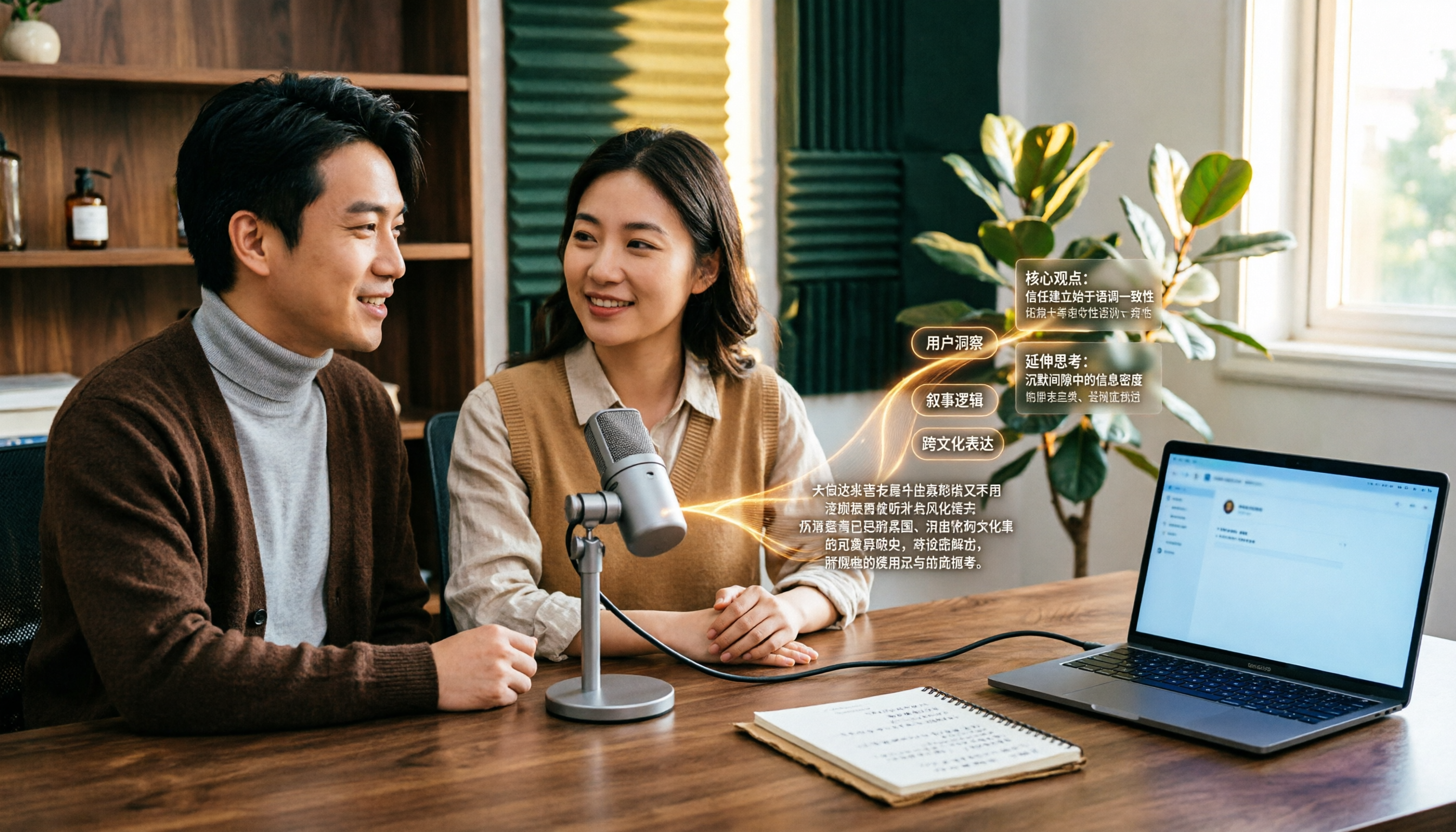
Best Podcast Transcript Apps? 2026 Test of 4 Apps: This One Saves the Most Time for Chinese Interviews
Recorded a podcast episode but stuck organizing the transcript? This article starts from real-world use cases, breaks down the core capabilities a podcast transcript app should have, four common application scenarios, and five purchase checkpoints. Using Tinrec's real-time transcription, AI summaries, AI Q&A, and team spaces as examples, it explains how to turn an 80-minute interview into a searchable, publishable, reusable text asset.