

Turn recordings into transcripts and summaries in minutes
Upload audio or video for multilingual transcription, AI notes, and action items
What Can Cantonese Transcription Tools Do for You?
Meetings can be exhausting, and the last thing you want is to listen to recordings and type out transcripts afterward. AI speech-to-text technology has become quite mature, and there are more and more tools specifically for Cantonese, saving you a lot of time.
Scenario 1: Meeting Minutes in Seconds Previously, a two-hour meeting might require another hour to organize. With AI transcription tools, you can get a text file within minutes of recording, with punctuation and paragraphs automatically added. Some tools can even generate meeting summaries and action items, so you don't have to go through everything yourself.
Scenario 2: Interview Recordings Instantly Turned into Text For journalists or researchers, transcribing interview recordings is tedious. AI transcription can quickly convert Cantonese audio into text, making it easy to quote and analyze, saving a lot of time.
Scenario 3: Automatic Class Notes Students can record lectures and use AI tools to convert them to text, ensuring they don't miss key points. Some tools support real-time transcription, allowing you to check if you missed anything immediately.
Core Capabilities of Cantonese Transcription Tools
When choosing a tool, don't just look at the marketing; consider actual performance. Here are key capabilities that directly affect user experience:
Cantonese Recognition Accuracy Cantonese has nine tones and six contours, quite different from Mandarin, and many tools struggle to recognize it accurately. Good tools are extensively trained on Cantonese, with word error rates as low as 10%. For example, cSubtitle focuses on Chinese and claims an accuracy rate of over 94%, but actual performance can be affected by accents and background noise.
Real-time Transcription Speed Real-time transcription is important, especially when you want to know immediately if you missed key points during a meeting. Some tools claim to produce transcripts in as fast as 3 minutes, but processing longer recordings may take more time.
AI Post-Processing Transcription is just the first step; whether the tool can help you organize afterward is crucial. Some tools integrate AI models like GPT-5 and Gemini Pro, allowing one-click generation of structured summaries, mind maps, and even automatic meeting minutes. Plaud Note is a representative in this area, supporting up to 112 languages, ideal for international meetings.
Multiple Output Formats It's best to export to Word, TXT, subtitle files (.srt/.vtt), for use in different contexts. Both cSubtitle and UniScribe support multiple export formats and include timestamps for easy proofreading.
Practical Use Cases
Meetings In Central offices, meetings happen daily. Using AI transcription tools, you can record and transcribe simultaneously, and get meeting minutes right after. If the tool supports AI summaries, it can automatically list decisions and responsible persons, saving you from typing everything manually.
Stop organizing recordings by hand
Upload audio or video and automatically get a transcript, summary, and action items
Interviews Journalists record interviews and use AI tools to transcribe them back at the office, quickly finding key points and quoting without misrepresentation. Cantonese interviews especially require high-accuracy tools; otherwise, errors can be frustrating.
Classes Students record lectures and convert them to text notes, making revision clear. Some tools even allow keyword search, jumping directly to relevant sections.
Content Creation For YouTube or Podcast creators, subtitles are essential. AI transcription tools can automatically generate subtitle files, saving time during video editing. cSubtitle focuses on video subtitling, supporting .srt and .vtt formats.
4 Points to Consider When Buying Cantonese Transcription Tools
1. Cantonese Support Level Not every tool supports Cantonese, and even if they do, accuracy can vary greatly. It's recommended to test with your own recordings rather than relying solely on official claims. iFlytek (Xunfei) has high accuracy in Chinese (including Cantonese) and excels in professional fields.
2. Transcription Speed and Formats How long does it take to process a one-hour recording? Can it handle batch processing? Are the output formats suitable for your needs? cSubtitle supports batch processing, allowing you to convert multiple files at once, ideal for company use.
3. Are AI Features Practical? After transcription, does the tool help you organize? Some tools only provide text, while others include summaries, key point highlighting, or even Q&A features. Plaud Note has strong AI organization capabilities but comes at a higher price.
4. Cost-Effectiveness and Free Quotas Most tools offer free trials, but with limited quotas. You need to calculate your monthly usage and see which plan is most cost-effective. UniScribe claims to transcribe one hour of audio in under a minute, but be aware of free version limitations.
Frequently Asked Questions
Q: Are Cantonese transcription tools accurate? A: It depends on the tool and recording quality. Most tools can achieve over 90% accuracy with clear recordings. Accuracy may decrease with background noise or accents. It's recommended to choose tools specialized in Cantonese.
Q: Are free tools sufficient? A: Free versions typically have time or word limits, suitable for occasional use. If you have meetings daily, a paid plan is more cost-effective. cSubtitle offers a free trial to test its performance.
Q: Can AI transcription tools replace manual transcription? A: In most cases, yes, but if you need 100% accuracy (e.g., for legal documents), manual proofreading is recommended. Use AI tools for the initial draft, then refine it.
Q: How can I improve Cantonese transcription accuracy? A: Use an external microphone, reduce background noise, and speak clearly. Some tools support custom vocabulary, allowing you to add company names, people's names, and other proper nouns.
Conclusion
Cantonese transcription tools are nothing new, but choosing the right one can save you a lot of overtime. If you frequently handle Cantonese audio, try several tools to see which suits you best. Don't just rely on word of mouth; test them yourself.
Options like cSubtitle, Plaud Note, iFlytek, and UniScribe each have their strengths. The key is to identify your needs: speed, accuracy, AI organization, or cost? Once you choose the right one, you won't have to stay up late typing transcripts.
References
- AI Speech-to-Text: Fast Audio to Text, Transcripts and Video Subtitles - Free Trial - cSubtitle
- Top 5 Voice-to-Text Tools in Hong Kong: Accurate Cantonese Recognition, Boost Meeting and Interview Efficiency!
- [2026 Edition] Free Cantonese Text-to-Speech! Learn Efficiently with AI Voice for Beginners | Text-to-Speech Software Ondoku
- Transcribe Chinese (Cantonese) Audio to Text for Free in Seconds
- Online AI Speech, Video, and Audio to Text - Free Trial - cSubtitle
Turn every recording into actionable outcomes
Get 60 free transcription minutes when you sign in. No credit card required.
Related Reading
You might also like

2026 Comparison of 4 Smart Meeting Collaboration Platforms: From Free to Team Plans
A tutorial-style side-by-side comparison of Tinrec, Otter.ai, Notta, and Granola—covering meeting recording, transcripts, summaries, action items, AI Q&A, team seats, and pricing—to help you decide which fits your meeting workflow.

How to Choose Smart Meeting Collaboration Tools in 2026: A Complete 5-Step Evaluation Guide
Use 5 steps to build evaluation criteria for smart meeting collaboration: from meeting scenarios, capture methods, post-meeting workflows, team governance to total cost of ownership. Using Tinrec as an example, learn how to validate with a real meeting and choose the right tool within budget.
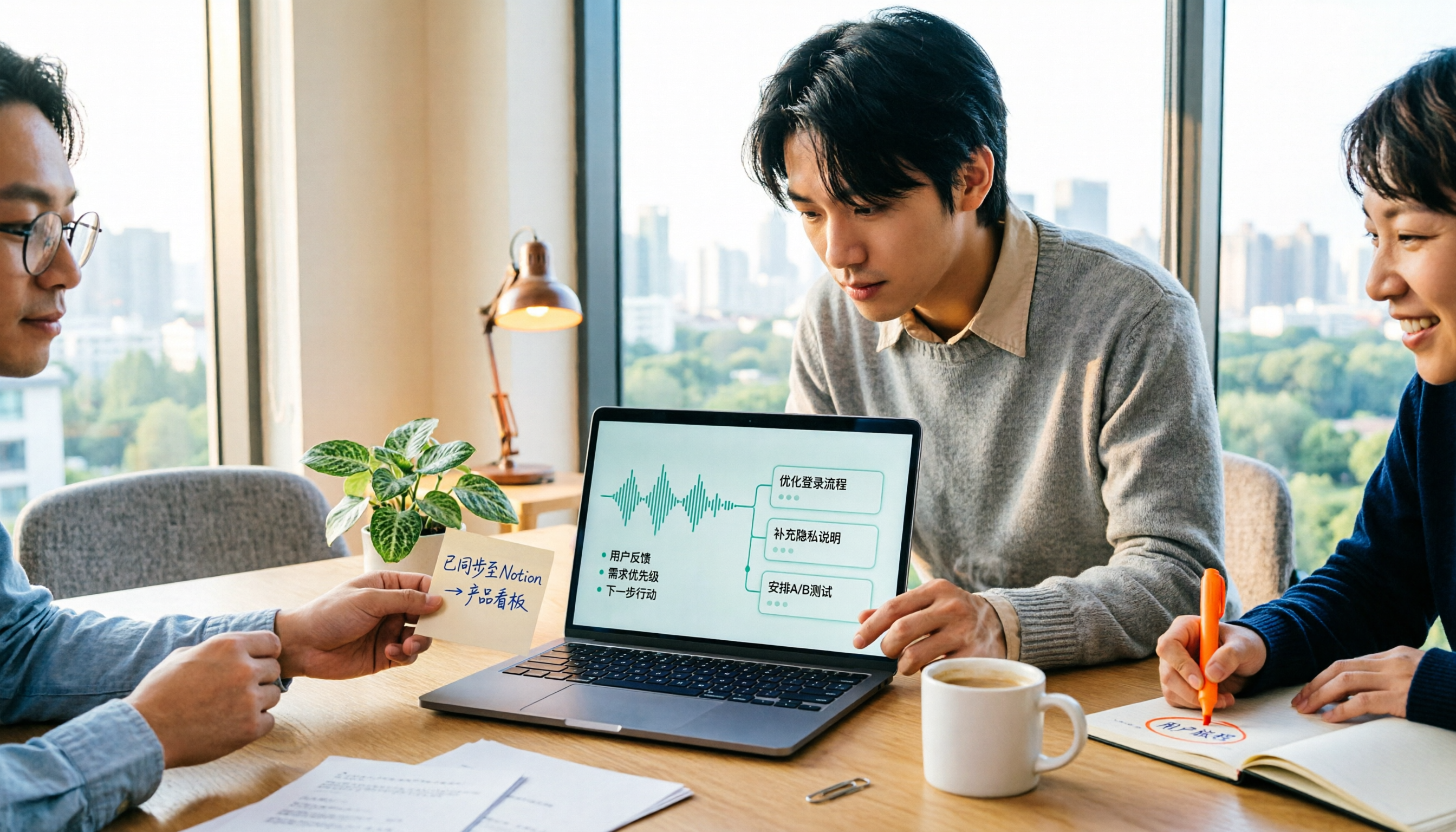
2026 Smart Meeting Collaboration Tool Comparison: From Recording to Action Items, Which One Really Handles Post-Meeting Work?
Starting from the common misconception of 'putting the entire budget into the meeting moment,' this article breaks down how to choose a smart meeting collaboration toolbox: how meetings are captured, what can be done after transcription, where data ultimately resides, and how team roles and seats are allocated. It compares Tinrec, built-in platform transcription, Otter.ai, and PLAUD recording hardware, with a pitfall guide and scenario-based selection advice.

2026 Review of 5 Smart Meeting Collaboration Platforms: Tinrec vs Otter.ai – Which Should Chinese-Speaking Teams Choose?
Starting from the three most common pitfalls when choosing a meeting tool, this hands-on comparison examines Tinrec and Otter.ai across six dimensions: meeting capture, Chinese transcription, post-meeting output, audio retention, team governance, and pricing. It helps you decide how to choose a smart meeting collaboration platform and whether the free version is sufficient.

How to Choose Smart Meeting Collaboration Tools in 2026: 5 Steps from Recording to Team Database
The real trouble starts after the meeting ends: transcripts are buried in audio files, action items go unrecorded, and cross-platform meetings are left unorganized. This article walks you through a 5-step selection process—from needs assessment and 4 key purchasing criteria, to hands-on observations of Tinrec, positioning differences among Otter.ai, Notta, and Granola, plus a comparison table—and concludes with clear recommendations based on budget and use case.

2026 Review of 4 Smart Meeting Collaboration Platforms: Which Saves More Time for Chinese Meetings and Team Knowledge Retention?
Evaluating Tinrec, Otter.ai, Notta, and Granola from the perspective of whether meeting data can be reused by the team after the meeting ends. We break down input sources, post-meeting outputs, Chinese-language experience, and team governance to help you determine which platform fits your meeting workflow.

2026 Comparison of 4 Online AI Meeting Collaboration Platforms: No Meeting Bots Required, Yet Searchable Meeting Records
Meeting notes are never finished—the problem often isn't the meeting itself, but that the content isn't captured as usable data. This article breaks down 4 online AI meeting collaboration platforms from meeting capture methods, post-meeting outputs, Chinese language support, team governance, to pricing logic, and explains which teams Tinrec, Otter.ai, Notta, and Google Meet's built-in features are best suited for.

2026 Comparison of 3 AI Meeting Collaboration Platforms: No Meeting Bots—Which One Actually Gets Post-Meeting Work Done?
A mid-level manager leading a 10-person team with over a dozen meetings per week tests 3 AI meeting collaboration platforms, breaking down everything from how meetings are recorded to who owns post-meeting data, and shares hands-on experience and limitations of Tinrec's desktop bot-free recording, AI Q&A, team roles, and seat governance.

2026 Smart Meeting Collaboration Tools Comparison: Tinrec vs. Zoom — Which Turns Meetings into Action Items?
Starting from common misconceptions about 'smart meetings,' this article compares Tinrec and Zoom's built-in meeting features from a mid-level manager's practical perspective across six dimensions: meeting capture, post-meeting follow-up, action item extraction, export, Chinese language support, and team governance. It includes a real-world tutorial example from a 40-minute weekly meeting to help you decide which approach best turns meeting content into actionable data.