

Turn recordings into transcripts and summaries in minutes
Upload audio or video for multilingual transcription, AI notes, and action items
Why You Need LINE Call Recording?
Many people think that recording LINE calls requires buying a voice recorder or rooting your phone. I thought so too at first, and ended up wasting money on a voice recorder that I barely used. Later, I discovered smarter ways, especially for students like us. Important conversations—classes, group discussions, online interviews—often happen on LINE, and recording them for later review is super useful. This article shares 6 LINE call recording methods I tested this semester, from free to paid, to help you figure out which one suits you best.
Tinrec (Miao Ting Lu Yin) — The Most Complete AI Recording Assistant
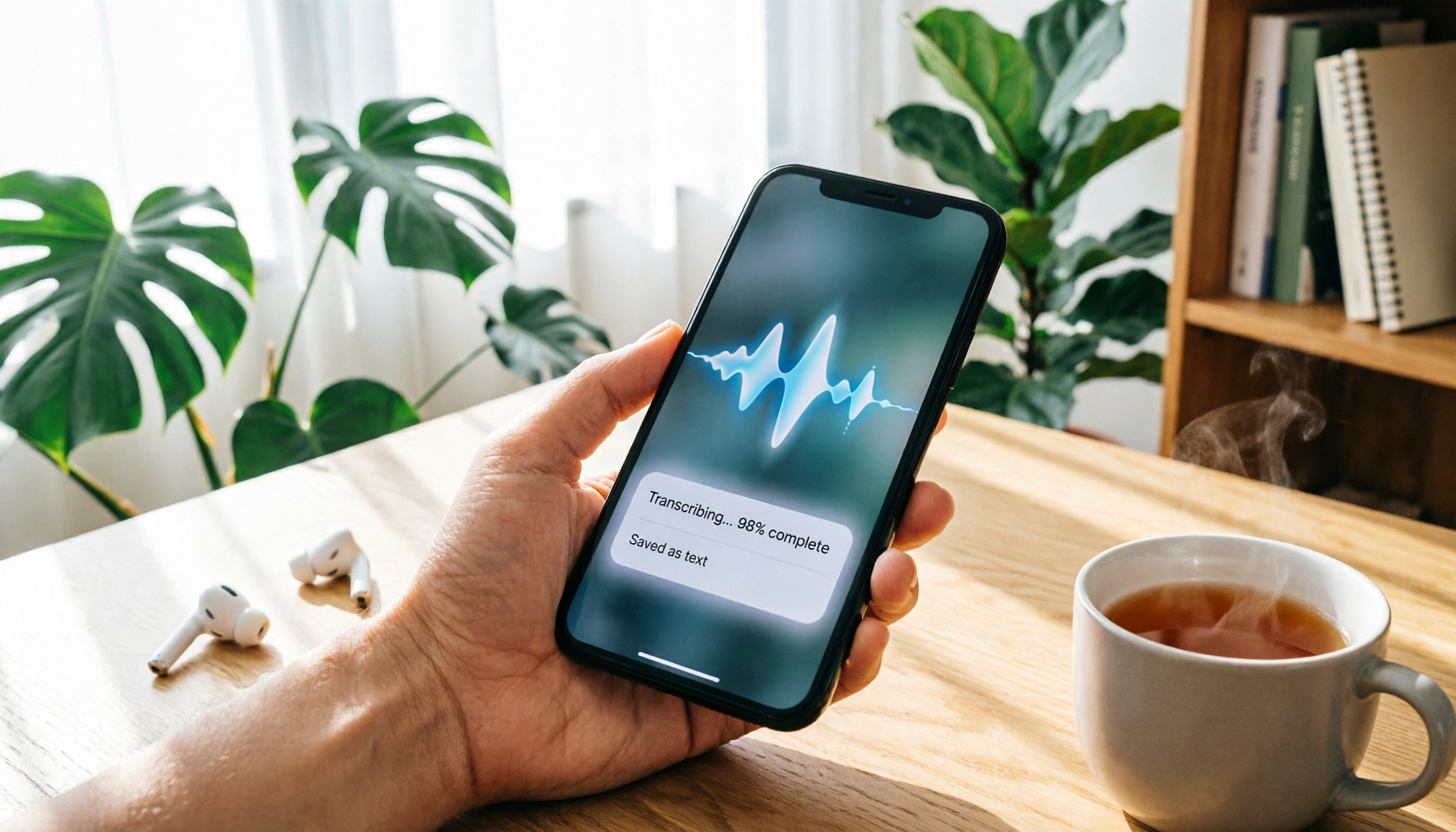
While other solutions just "record," Tinrec "turns recordings into highlights." My current workflow: record LINE calls on my computer or phone, then upload the audio to Tinrec. If I'm using LINE on my desktop, I directly use Tinrec's desktop version—it captures system audio without needing extra bots, and transcribes in real time.
Tinrec's standout feature is its post-recording AI. You can ask it things like "What were the key points of the meeting?" or "Did it mention the exam scope?" It finds answers in the transcript and auto-generates summaries, chapters, and to-do lists. Before finals, I uploaded all semester's online discussion recordings, and the AI organized key points for each presentation—saving me tons of time.
The free version offers basic credits, enough for students recording occasional classes or discussions. I upgraded to Pro because I needed to process many interview recordings; it's much cheaper than a voice recorder and doesn't require carrying hardware. It's perfect for any student who needs to record LINE calls and wants to skip the re-listening grind.
iPhone Built-in Integrated Call Recording (iOS 18+) — Official Solution Without Extra Apps
If you use an iPhone and have updated to iOS 18, this is the most straightforward method. Go to LINE Settings → Calls, enable "Integrate with iPhone Calls." LINE calls will then use the iPhone's phone interface, and a record button appears in the top-left corner during calls. Tap it to record two-way audio via Voice Memos.
Pros: completely free, no extra app needed, and recordings save directly to Voice Memos. Cons: iPhone-only and requires iOS 18 or later—older phones won't work. Recording quality depends on the call environment, but it's generally sufficient. Best for iPhone users who don't want to spend money.
Android Recording App (Cube ACR) — Flexible Choice for Android Users
Android is more open, so you can install recording apps like Cube ACR to record LINE calls. Setup requires allowing VoIP call recording, and compatibility varies by phone brand—you might need to tweak settings.
The free version usually has ads or time limits, but it's fine for everyday use. It suits Android users willing to spend time on setup. However, you'll need to transcribe recordings yourself, making it better for simply storing audio files.
Physical Voice Recorder (Magmo Recorder) — Hardware Solution for Those Who Avoid Settings
If you don't want to deal with software settings at all, consider the Magmo recorder. It's a MagSafe accessory that attaches to the back of an iPhone. Flip the switch to record—no internet needed—and transfer files via Lightning cable to your computer.
But it's pricey and only records; you'll still need other tools for transcription. I bought one before, but later realized I still needed Tinrec for organizing. So if you're on a budget, just record with your phone and use Tinrec to organize—saving the hardware cost.
Stop organizing recordings by hand
Upload audio or video and automatically get a transcript, summary, and action items
Online Computer Recording Tool (VEED.IO) — Lightweight Option for LINE on Desktop
If you use LINE on your computer, you can use browser-based recording tools like VEED.IO to capture system audio. It's free, no installation, but basic—you get an audio file that you'll need to transcribe manually.
It's fine for occasional recordings without installing software. But if you record frequently, I recommend Tinrec's desktop version, which transcribes as it records and makes organizing easier.
Screen Recording or Voice Memos (Totally Free) — Emergency Use Only, Not for Long-Term
Phone screen recording can capture LINE call audio, but on iPhone, it might only record your voice clearly, with the other party's voice faint. Voice Memos is also one-way, requiring speakerphone. These methods are completely free and okay for emergency notes, but audio quality and post-processing efficiency are poor.
How to Choose Among These Options?
- Want the most complete AI organization (transcription + summary + AI Q&A + to-dos) → Tinrec, the only option with all these features
- Need Chinese and mixed Chinese-English transcription, and often search for key points in recordings → Tinrec, AI Q&A helps you locate them
- Use iPhone with iOS 18, just want simple two-way recording → iPhone built-in integrated call recording
- Use Android, don't want to spend money, and record occasionally → Cube ACR free version
- Don't want to touch software settings and have a sufficient budget → Magmo voice recorder
- Only record LINE calls on computer, and not frequently → VEED.IO online recording
- Pure emergency, zero budget → Screen recording or Voice Memos
Overall, if you're a student like me, and your goal isn't just archiving but also organizing, reviewing, or creating reports, Tinrec is definitely worth trying first. The free version lets you experience AI organization, and you can consider paid plans when you have heavy needs.
4 Things to Know Before Recording LINE Calls
- Inform the other party first: In the U.S., recording calls without consent may have legal implications, so it's polite to ask first, especially for group discussions or interviews.
- Audio quality depends on environment: Regardless of method, a quiet environment and clear microphone improve transcription accuracy. Tinrec's transcription is affected by background noise, but typical classrooms or coffee shops are okay.
- Back up your recordings: If using built-in recording, transfer files to cloud or computer to avoid losing them if your phone dies. Tinrec's cloud storage is convenient, accessible from both computer and phone.
- Free limits apply: Both Tinrec and Cube ACR free versions have usage limits. If you record several hours weekly, consider Tinrec's Pro monthly or annual plans, which are affordable for students.
Conclusion
LINE call recording isn't just about buying a voice recorder. Free system features, cheap recording apps, and even AI organization tools can do the job. This semester, I switched from a voice recorder to Tinrec, cutting my recording organization time in half. Before finals, AI Q&A helped me pinpoint key points—it was a lifesaver. If you're still unsure, download Tinrec's free version and try it with a recording. You'll see why I've recommended it to three classmates.
References
- How to Record Phone and LINE Calls? iPhone and Samsung Call Recording App Recommendations
- 5 Best LINE Call Recording Apps (2026): Must-Haves for Business and Interview Professionals - Miao Ting Lu Yin Blog
- LINE Call Recording Guide: Android, iPhone, Computer All Covered! – AirDroid
- 2026 Workplace Essential: Can You Record LINE Calls? 4 Ways to Bypass Limits and Tinrec Transcription Guide - Miao Ting Lu Yin Blog
- LINE Finally Supports Call Recording! No Extra Hardware Needed, Use iPhone Built-in Features
Turn every recording into actionable outcomes
Get 60 free transcription minutes when you sign in. No credit card required.
Related Reading
You might also like
2026 Tested Comparison of 3 Ways to Fix LINE Voice Messages That Can't Be Downloaded: Tinrec Is the Most Reliable Way to Save Them
Struggling with LINE voice messages that can't be downloaded? This article cuts through common misconceptions, tests 3 solutions, and explains why Tinrec is the reliable tool that truly saves important voice messages, and can also transcribe and summarize them.

2026 Tested: 3 Tinrec Plans for Recording LINE Calls on PC – Free, Pro, or Team?
LINE doesn't have built-in call recording, but if you use LINE on your computer for meetings or calls, Tinrec desktop can directly capture system audio and turn it into transcripts, summaries, and action items in real time. This article compares Tinrec Free, Pro, and Team plans for LINE recording scenarios to help you choose the best option.

How to Record LINE Calls in 2026: No Root Needed + AI-Powered Organization
LINE doesn't have built-in call recording, but you can use iOS 26's native capture or Android screen recording to save the audio, then use Tinrec to automatically transcribe, summarize, and create to-do lists. This guide walks you through the entire process from recording to organizing, and compares tools like Otter and Notta to help you choose the right solution.

What to Do After Downloading LINE Voice Messages in 2026: Turn Audio Files into Searchable Meeting Notes with Tinrec
Downloaded LINE voice messages but don't know how to organize and use them? This article shows you how to use Tinrec to transcribe LINE voice messages, generate summaries and to-dos, and turn them into searchable team meeting records.

How to Record LINE Calls on iPhone in 2026? 5 Steps with Tinrec for Recording and Transcription
Can't record LINE calls with iPhone's built-in call recorder? This article, based on a student's hands-on experience, shows you how to use Tinrec's bot-free desktop recording to record LINE calls, transcribe them, generate AI summaries, and create to-do lists in 5 steps. It also compares alternatives like Otter and Notta to help you save time from re-listening to recordings.

2026 Hands-On Comparison of 3 LINE Call Recording Post-Processing Tools: Tinrec Turns Recordings into To-Do Lists
iPhone users can now record LINE calls with the built-in iOS 26 feature, but the recording is just the first step. This article tests how Tinrec quickly converts LINE call recordings into transcripts, summaries, and to-do items, and organizes them into searchable team resources. From individuals to teams, learn how to use AI to save time re-listening to recordings.

2026 Tested Comparison of 3 LINE Call Recording Methods: Why Tinrec Helps You Organize Better?
Recording LINE calls for work is common, but the real challenge starts after recording—Tinrec turns your recordings into searchable, organized meeting notes.

5 Best Speech-to-Text Tools Tested in 2026: Good Tape vs. Tinrec for Chinese Users
This article compares 5 speech-to-text tools, including Good Tape and Tinrec, across four key areas: accuracy, AI-powered organization, cross-platform support, and team collaboration. It explains why Tinrec is the top choice for Chinese meeting notes and which lightweight needs Good Tape suits.

2026 Test: 4 Speech-to-Text Tools Compared – Which Is Best for Chinese Meetings and Team Knowledge?
This article tests 4 speech-to-text tools for Chinese meetings, no-bot recording, and team knowledge management. It recommends Tinrec (Miao Ting) and analyzes differences with Otter, Notta, TurboScribe, plus key pitfalls to avoid.