

Turn recordings into transcripts and summaries in minutes
Upload audio or video for multilingual transcription, AI notes, and action items
Meetings, interviews, client calls: LINE conversations always slip away
Many important work conversations happen over LINE calls: a supervisor assigning tasks on the fly, a client verbally agreeing to a quote, or key points from a remote interview. But LINE itself has never had a built-in recording feature, so most people have had to rely on a second phone, a voice recorder, or risky third-party apps that notify the other party.
Until 2026, when iPhone's iOS 26 update introduced the 'Local Capture' feature, finally allowing you to record LINE calls directly, with no notification to the other party. Android users can achieve the same goal with apps like Cube ACR. This article breaks down both mainstream methods and tells you how to download, save, and avoid common pitfalls.
Before choosing a LINE call recording solution, understand these 4 key points
1. Will the other party be notified?
Privacy is the biggest concern. iPhone's 'Local Capture' is a system-level feature that doesn't emit a tone or notification during recording; Android's Cube ACR also doesn't notify the other party, but some phone brands may require extra settings due to system restrictions.
2. Is the recording quality clear?
Regardless of the method, it's recommended to enable speakerphone during calls. Tests show that without speakerphone, both voices can sound muffled, especially since iPhone's 'Local Capture' currently requires speakerphone to accurately capture both audio tracks.
3. Where are recordings stored? Can they be downloaded?
On iPhone, 'Local Capture' recordings are saved directly to the Voice Memos app, which can be exported via AirDrop, cloud services, or by connecting to a computer. On Android, Cube ACR lets you set a storage path and share or upload recordings directly to the cloud.
4. Do you need cross-platform use?
If you have both iPhone and Android devices, consider the compatibility of recordings. iPhone recordings are in m4a format, while Android recordings are often mp3 or m4a; both can be played on computers, but management differs.
iPhone solution: iOS 26 'Local Capture' tested—no notification, no installation
If your iPhone is updated to iOS 26 or later, this is the simplest and most recommended method. It requires no app installation and can be started directly from the Control Center.
Setup steps (set once, use forever)
- Go to LINE → Home → Settings → Calls, and enable 'Voice Call Feature' and 'Integrate with iPhone Calls'.
- Then go to iPhone Settings → Phone → Incoming Calls, and change to 'Full Screen'.
- Swipe down from the top-right corner to open Control Center, find the 'Local Capture' icon (if not visible, add it in Settings > Control Center).
Recording steps
- Make or answer a LINE call.
- During the call, pull down Control Center and tap 'Local Capture'.
- If you only want to record audio (not screen), long-press the 'Local Capture' icon and check 'Audio Only'.
- After the call ends, the recording is automatically saved to Voice Memos.
Test results and limitations
- Pros: Completely free, no installation, invisible to the other party, stable recording quality.
- Limitations: Currently requires speakerphone to clearly capture both voices; avoid letting the screen go to sleep during recording, as the system may interrupt recording to save power.
- Best for: All iPhone users, especially those who value privacy and don't want to install extra apps.
How to download recordings
After recording, open Voice Memos → find the recording → tap the share button at the bottom left → you can 'Save to Files' or AirDrop to a computer, or upload directly to iCloud, Google Drive, etc.
Android solution: Cube ACR tested—supports multiple messaging apps
Android users, due to different system openness, need third-party apps for LINE call recording. Currently, the most stable, free, and root-free option is Cube ACR.
Stop organizing recordings by hand
Upload audio or video and automatically get a transcript, summary, and action items
Installation and setup
- Download 'Cube ACR' from Google Play Store.
- Open the app and grant microphone, storage, and other permissions.
- Follow the prompts to enable 'Accessibility Service' or 'Notification Access' so the app can detect LINE calls.
Recording steps
- Make a LINE call.
- Cube ACR will automatically detect and start recording (or you can start manually).
- After the call ends, the recording is saved in the app, where you can play, rename, or share it.
How to download recordings
In Cube ACR's recording list, find the file, tap 'Share' → choose 'Save to Files' or upload directly to Google Drive, Dropbox, etc.
Test results and limitations
- Pros: Free, automatic detection, supports LINE, WhatsApp, Messenger, and other messaging apps.
- Limitations: Some Chinese phone brands (like Xiaomi, OPPO) may require manually adding Cube ACR to the whitelist due to battery-saving mechanisms; speakerphone is also recommended during recording.
- Best for: Android users, especially those who need to record multiple messaging apps simultaneously.
Other options: Screen recording and external recording devices
Screen recording (works on both iPhone and Android)
If you don't want to use the above methods, you can also use built-in screen recording. But note: iPhone's screen recording does not capture external audio by default; you must long-press the record button and enable the 'Microphone'. On Android, you need to select 'Microphone sound' in the recording settings. The downside is larger files and the need for additional conversion or editing after recording.
External voice recorder or second phone
This is the most traditional method: put the call on speaker and use a voice recorder or another phone placed nearby. Pros: simple, no installation needed. Cons: poorer audio quality, more background noise, and manual file management.
Pitfall guide: 4 common mistakes in LINE call recording
Pitfall 1: Not using speakerphone, resulting in only your voice being recorded Both iPhone's 'Local Capture' and Cube ACR need speakerphone to capture the other party's voice. If you're using earphones or not on speaker, the other party's voice will be very faint or absent.
Pitfall 2: Screen auto-lock interrupts recording Especially on iPhone, locking the screen may cause the system to pause background operations. It's recommended to set auto-lock to 'Never' or manually keep the screen on during recording.
Pitfall 3: Recordings stored in the app, then the app is deleted When using Cube ACR, be sure to regularly export recordings to the cloud or computer. Uninstalling the app or clearing data will result in loss of recordings.
Pitfall 4: Ignoring legal and privacy issues In Taiwan, the Communications Protection and Surveillance Act requires at least one party's consent for recording; but if it involves others' privacy or trade secrets, it's advisable to obtain consent first. Company use should also comply with labor and personal data protection laws.
Summary: Which solution should you choose?
| Your needs | Recommended solution |
|---|---|
| iPhone user, don't want to install apps, invisible to the other party | iPhone 'Local Capture' (iOS 26+) |
| Android user, need free and automatic recording | Cube ACR |
| Occasional recording, don't want setup | Screen recording (remember to enable microphone) |
| Can't use phone software, or need highest audio quality | External voice recorder + speakerphone |
If you're an iPhone user, after upgrading to iOS 26, try 'Local Capture' first—it's completely free, intuitive, and recordings go straight to Voice Memos, making sharing and downloading easy. Android users can rely on Cube ACR's stability.
Final reminder: Regardless of the method, make sure recording is allowed in your context before recording, and develop the habit of backing up immediately after recording, so important content doesn't disappear from your phone.
References
- LINE finally supports call recording! No external tools or devices needed, just use iPhone's built-in system feature
- [Phone Tips] LINE call recording is now possible! iPhone built-in call recording trick without notifying the other party! | Jyes Communication~Challenge the lowest price in the phone market
- LINE Call Recording Tutorial: 4 Methods to Record LINE Calls, Personally Tested! [2025]
- Achieving Cube ACR for LINE call recording
- How to record phone calls and LINE calls? Recommended call recording apps for iPhone and Samsung
Turn every recording into actionable outcomes
Get 60 free transcription minutes when you sign in. No credit card required.
Related Reading
You might also like

2026 Good Tape Review: No Bot Meeting Recording, AI Q&A More Practical
This article compares Good Tape and Tinrec, two speech-to-text tools, focusing on bot-free recording, AI Q&A, team collaboration, and pricing, to help you decide which is better for meeting notes and data organization.

4 V-Taper Workout Methods Compared in 2026: Which One Really Enhances Broad Shoulders and a Narrow Waist?
Achieving a V-taper physique isn't just about training your side delts or lats. This article examines overall strength, shoulder-back-waist balance, and common mistakes, analyzing the pros and cons of different training methods to help you avoid ineffective workouts and find the best approach for a V-taper body.

2026 Hands-On Comparison of 3 AI Transcription Tools: Beyond Good Tape, How Tinrec Solves Traditional-Simplified Chinese Conversion and Team Collaboration Pain Points
Based on real-world usage, this article compares Good Tape and Tinrec in terms of post-transcription organization, team collaboration, and Chinese language experience, offering a practical workflow to help you turn meetings into usable data, not just transcripts.

How to Record LINE Calls on iPhone in 2026: Built-in Local Capture + Tinrec AI Transcription
Learn how to record LINE calls on your iPhone using the built-in 'Local Capture' feature in iOS 26, then use Tinrec to transcribe, summarize, and extract action items. We also compare other options like Magmo and Cube ACR to help you choose the right solution.

Best Line-in Voice Recorders? 2026 Hands-on Test of 2 Options: Tinrec Wins for Meeting Notes
Still looking for a voice recorder with line-in? This article compares Tinrec and PLAUD Note from a mid-level manager's perspective across four dimensions: meeting notes, AI post-processing, team collaboration, and cost, to help you decide whether to buy hardware or switch to an AI software solution.

2026 Free LINE Call Recording Solutions: 4 Tools Compared
LINE doesn't have built-in call recording, but you can use iPhone screen recording, Android Cube ACR, a voice recorder, or Tinrec. This article reviews 4 free solutions and recommends Tinrec as the top choice for recording-to-text, letting you generate meeting minutes directly after recording.

Tinrec vs Tenorshare 2026: 5-Dimension Comparison for Organizing Downloaded LINE Voice Messages
Downloading LINE voice messages is easy, but organizing them afterward is the real challenge. This article compares Tinrec and Tenorshare across 5 dimensions to help you find the best solution for saving and organizing your recordings.
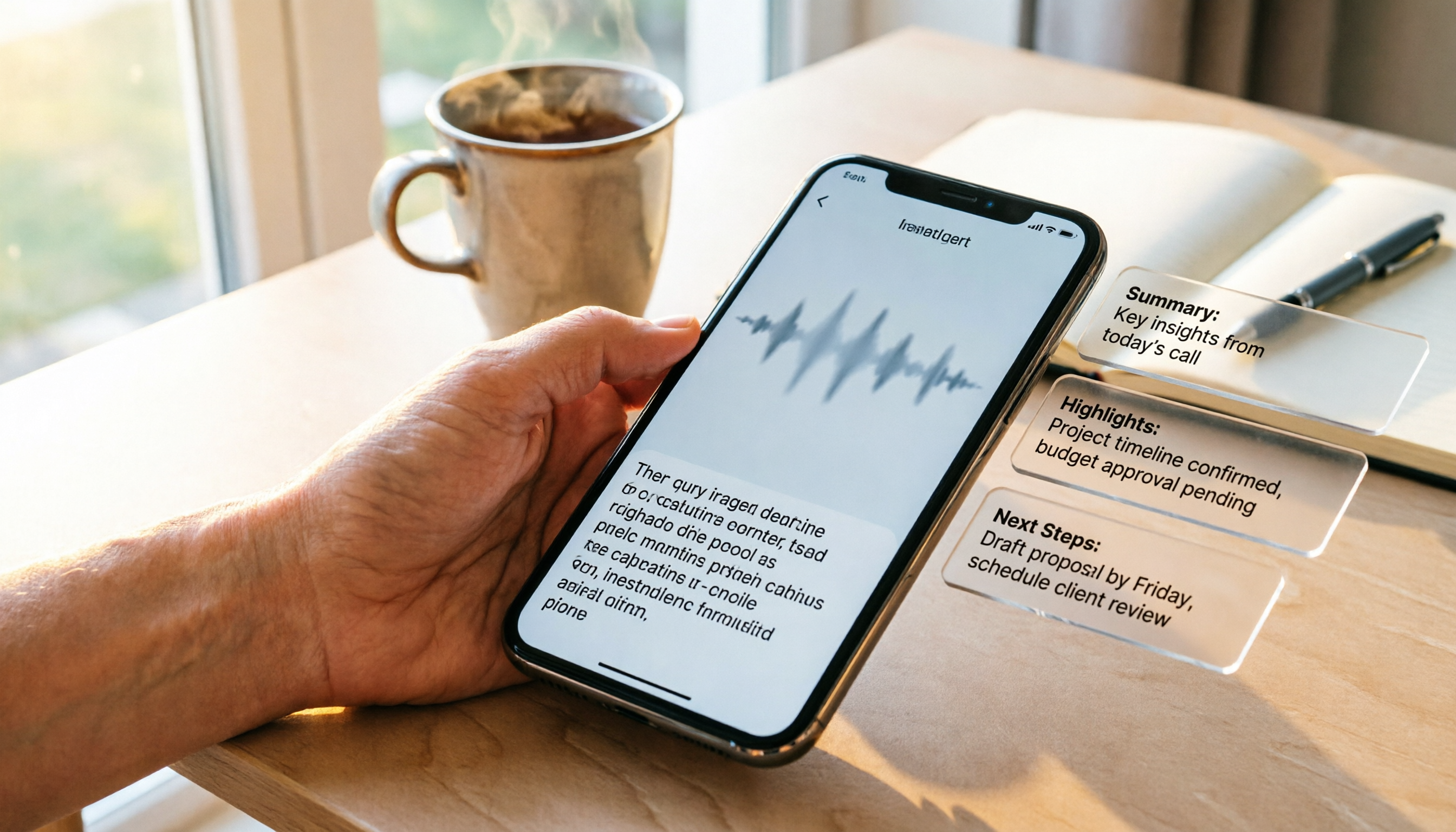
2026 iPhone LINE Call Recording Test: Built-in Local Capture vs Tinrec AI Transcription
iPhone can finally record LINE calls! This article teaches you how to use the iOS 26 built-in 'Local Capture' to record, then compares Tinrec's AI transcription, summarization, and to-do extraction, so you don't just end up with an audio file.

How to Download LINE Voice Messages in 2026: 3 Tested Methods for iPhone, Android, and PC
LINE voice messages lack a direct download button. This article tests three methods—Keep, Share to Files, and third-party tools—comparing steps, formats, and use cases to help you permanently save LINE recordings to your phone or computer.