

Turn recordings into transcripts and summaries in minutes
Upload audio or video for multilingual transcription, AI notes, and action items
Many people think that choosing a transcription tool is all about accuracy.
But in my experience over the years, accuracy is just the baseline; what really saves you time is the organization and collaboration workflow after transcription.
This year, I tested three tools hands-on: Good Tape, Yating, and Tinrec.
I realized I had also fallen into a trap before: focusing only on which tool transcribed more accurately, while ignoring "what to do after transcription."
So in this article, I want to share my hands-on insights from a workflow perspective, and why I ultimately moved my main workflow to Tinrec.
Why Are People Looking for Good Tape Alternatives?
Good Tape is a speech-to-text tool based on OpenAI Whisper, supporting over 100 languages. Many journalists and podcasters use it to process interview recordings.
Its strengths are simplicity: upload a file, specify the language, and get a transcript. It also handles mixed Chinese-English content reasonably well.
However, since the second half of 2026, some users have reported that Good Tape tends to suddenly switch to Simplified Chinese in the middle of transcripts, disrupting editing.
Additionally, its features are relatively limited—it lacks audio editing capabilities—and its pricing is not particularly low for individual users.
If you're also starting to feel that "just getting a transcript isn't enough," Tinrec is worth checking out.
Tinrec vs. Good Tape: What's Different in Core Experience?
No-Bot Meeting Recording
Online meeting notes typically follow two approaches: inviting a bot to join the meeting, or directly recording the computer's system audio.
Good Tape primarily follows the file-upload route, while Tinrec's desktop version can directly capture system audio without needing to invite a bot to join Zoom, Google Meet, or Teams meetings.
This offers a more natural experience for those who prefer not to have unfamiliar participants in their meetings.
Post-Transcription Organization
A transcript is just the first step; the real time sink lies in organizing key points, action items, and summaries.
Good Tape provides basic transcription, but most of the follow-up organization has to be done manually.
Tinrec, in addition to transcription, automatically generates summaries, chapters, key points, and action items. You can even use AI Q&A to directly ask, "What was the meeting's conclusion?" or "Who is responsible for what?"
This effectively hands the task of "organizing meeting notes" to the tool, rather than having you manually sift through the transcript.
Chinese Language Experience and Traditional-Simplified Conversion
In my actual tests, Good Tape performed well on mixed Chinese-English recognition, but the Traditional-Simplified conversion issue did disrupt workflow.
Tinrec specifically emphasizes the Chinese meeting experience, supporting Traditional Chinese, mixed Chinese-English content, as well as real-time translation and bilingual comparison.
For users in Taiwan, this is more direct than manually converting between Traditional and Simplified after the fact.
Team Collaboration and Knowledge Retention
For individual use, having transcripts stored in your own account is not a big deal.
But for teams, meeting recordings, transcripts, and action items should be shareable, searchable, and transferable.
Good Tape's capabilities in this area are relatively limited.
Tinrec offers team spaces where meeting data belongs to the team. Members can view historical meetings, share access rights, and admins can allocate seats, monitor usage, and view audit logs.
This is a practical governance need for departments or project teams.
Tinrec's Core Features at a Glance
Tinrec's positioning is not just "audio-to-text," but turning meetings into searchable, collaborative, and actionable team knowledge.
Here's how I commonly use it:
Real-Time Transcription: Open Tinrec, and text appears as you record, with less than 1 second latency. During meetings, you can follow along to ensure no key points are missed, and the transcript is ready the moment the meeting ends.
Stop organizing recordings by hand
Upload audio or video and automatically get a transcript, summary, and action items
No-Bot Online Meeting Recording: The desktop version captures system audio directly, so you don't need to add a bot to your meeting. This is useful for those who need privacy or don't want to disrupt the meeting flow.
AI Summaries and Action Item Extraction: After recording a one-hour meeting, Tinrec automatically generates a summary, breaks the long meeting into chapters, and lists action items. I usually do a quick scan to ensure no important action items are missed.
AI Q&A: This is my personal favorite. I can directly ask Tinrec, "What specific requirements did the client mention in this meeting?" or "Was there any mention of budget?" It provides answers based on the meeting content, saving me from manually flipping through 30 pages of transcript.
Multi-Format Export and Post-Processing: Organized content can be exported to tools like Notion, Google Docs, and OneNote, or further processed via agents to generate reports, tables, or documents. This connects meeting outcomes directly to your existing workflow.
Team Spaces and Management: For team use, you can create dedicated spaces, invite members, and assign roles and seats. Meeting data belongs to the team, so it won't be lost if a member leaves.
Real-World Use Cases
Journalist Interviews
In the past, I dreaded transcribing interviews. Now I use Tinrec for real-time recording, and I get the transcript and summary as soon as the interview ends.
Then I use AI Q&A to quickly extract key quotes from the interviewee, and export to Google Docs to start writing.
The time saved allows me to interview two more people.
Project Meetings
For weekly project meetings, I open Tinrec's desktop version to record the online meeting without adding a bot.
After the meeting, summaries and action items are automatically listed. I directly paste the action items into project management tools and assign them to owners.
Meeting notes are no longer solely my job.
Online Courses and Lectures
When listening to online courses, I use Tinrec to record system audio, convert it to text, and then use AI Q&A to review key points.
If I encounter a confusing section, I can ask Tinrec for an explanation without replaying the entire recording.
Personal Notes and Idea Organization
Occasionally, when I have ideas on the go, I record them on my phone and later upload to Tinrec to convert to text.
Then I use the summary feature to quickly review and put useful ideas into my note-taking app.
This way, I don't have to worry about fleeting inspirations.
Key Considerations When Choosing an Audio-to-Text Tool
When choosing a tool, pay attention to the "post-transcription" experience, not just accuracy.
First, does it support no-bot meeting recording? If you frequently have online meetings, this directly affects your willingness to use it.
Second, does it offer automatic summaries, chapters, and action items? These features determine how much time you'll spend on organization later.
Third, is team collaboration comprehensive? If data is only stored in personal accounts, team sharing and management become painful.
Fourth, how is the Chinese language experience? Traditional-Simplified conversion, mixed Chinese-English, and professional terminology all affect real-world usage.
Fifth, are pricing and free tiers reasonable? Trying the free version and testing with your own recordings is more direct than reading any review.
Conclusion: Is Tinrec Worth Trying?
If you're looking for a tool that supports no-bot meeting recording, automatically organizes key points after transcription, and can consolidate meeting data into team spaces—Tinrec is one of the few options on the market that meets all three criteria.
Especially for users in Taiwan, Tinrec's design for Chinese language experience and team collaboration is closer to real-world workflows than simple transcription tools.
I recommend downloading Tinrec's free version and testing it with your own recordings and meetings.
Quick Start Checklist:
- Download Tinrec and create an account.
- Use real-time recording or upload an old recording to experience transcription and summarization.
- Try asking a question about the meeting content to experience AI Q&A.
- If you're on a team, create a team space and invite members.
- Establish a consistent meeting workflow: record, transcribe, summarize, action items, export.
Test step by step, and you'll gradually master this approach.
References
- Good Tape Features, Pros and Cons, Pricing, and Tutorial at a Glance! [2024 Update]
- Yating, Good Tape, Vocol.ai Hands-On: Which AI Transcription Software Offers the Best Value? | BusinessNext
- Surpassing Yating, Journalists in Tears: What Makes Good Tape So Amazing? | CommonWealth Magazine
- Hands-On Review: Unboxing Good Tape, Yating, and Vocol.ai—Which AI Transcription Software Is Best? | Future Commerce
- Why I Chose GoodTape Over MacWhisper? My Real Experience After Writing 500 Blog Posts
Turn every recording into actionable outcomes
Get 60 free transcription minutes when you sign in. No credit card required.
Related Reading
You might also like

Good Tape 2026 Review: 40+ Language Transcription Tool Loved by Journalists
This article compares Good Tape and Tinrec across five dimensions: language support, meeting recording, AI organization, team collaboration, and pricing, to help you decide which is better for your speech-to-text and meeting notes needs.

How to Tell a Good Taper Fade from a Bad One in 2026: A 5-Step Guide
This article teaches you how to distinguish a good taper fade from a bad one by examining five dimensions, including gradient transition, side treatment, and face shape matching, so you can avoid ending up with a haircut that looks like terraced fields.

2026 Hands-On Comparison of 3 Recording-to-Text Tools: Tinrec for Chinese Meetings, Good Tape for Privacy but Slow
This article compares three recording-to-text tools—Tinrec, Good Tape, and Otter.ai—focusing on transcription accuracy, speed, Chinese language support, and AI summarization features to help you choose the best option for meeting notes.

Tinrec vs Good Tape 2026: No Bot Recording + Team Meeting Notes in One Place
This article compares Tinrec and Good Tape from a practical purchasing perspective, explaining common misconceptions, core features, use cases, and selection criteria to help you decide between privacy-focused transcription and post-meeting workflows.

2026 Hands-On Comparison of 4 AI Meeting Recorders: Which Is More Practical for Bot-Free Recording and Team Collaboration?
Spending two hours in a meeting and another two hours writing up the notes? This article tests four AI meeting note tools—Tinrec, Otter.ai, Fireflies.ai, and Notta—covering bot-free recording, Chinese transcription, AI Q&A, and team spaces to help you find the best meeting data management solution.

2026 Good Tape Review: No Bot Meeting Recording, AI Q&A More Practical
This article compares Good Tape and Tinrec, two speech-to-text tools, focusing on bot-free recording, AI Q&A, team collaboration, and pricing, to help you decide which is better for meeting notes and data organization.

4 V-Taper Workout Methods Compared in 2026: Which One Really Enhances Broad Shoulders and a Narrow Waist?
Achieving a V-taper physique isn't just about training your side delts or lats. This article examines overall strength, shoulder-back-waist balance, and common mistakes, analyzing the pros and cons of different training methods to help you avoid ineffective workouts and find the best approach for a V-taper body.

How to Record LINE Calls on iPhone in 2026: Built-in Local Capture + Tinrec AI Transcription
Learn how to record LINE calls on your iPhone using the built-in 'Local Capture' feature in iOS 26, then use Tinrec to transcribe, summarize, and extract action items. We also compare other options like Magmo and Cube ACR to help you choose the right solution.
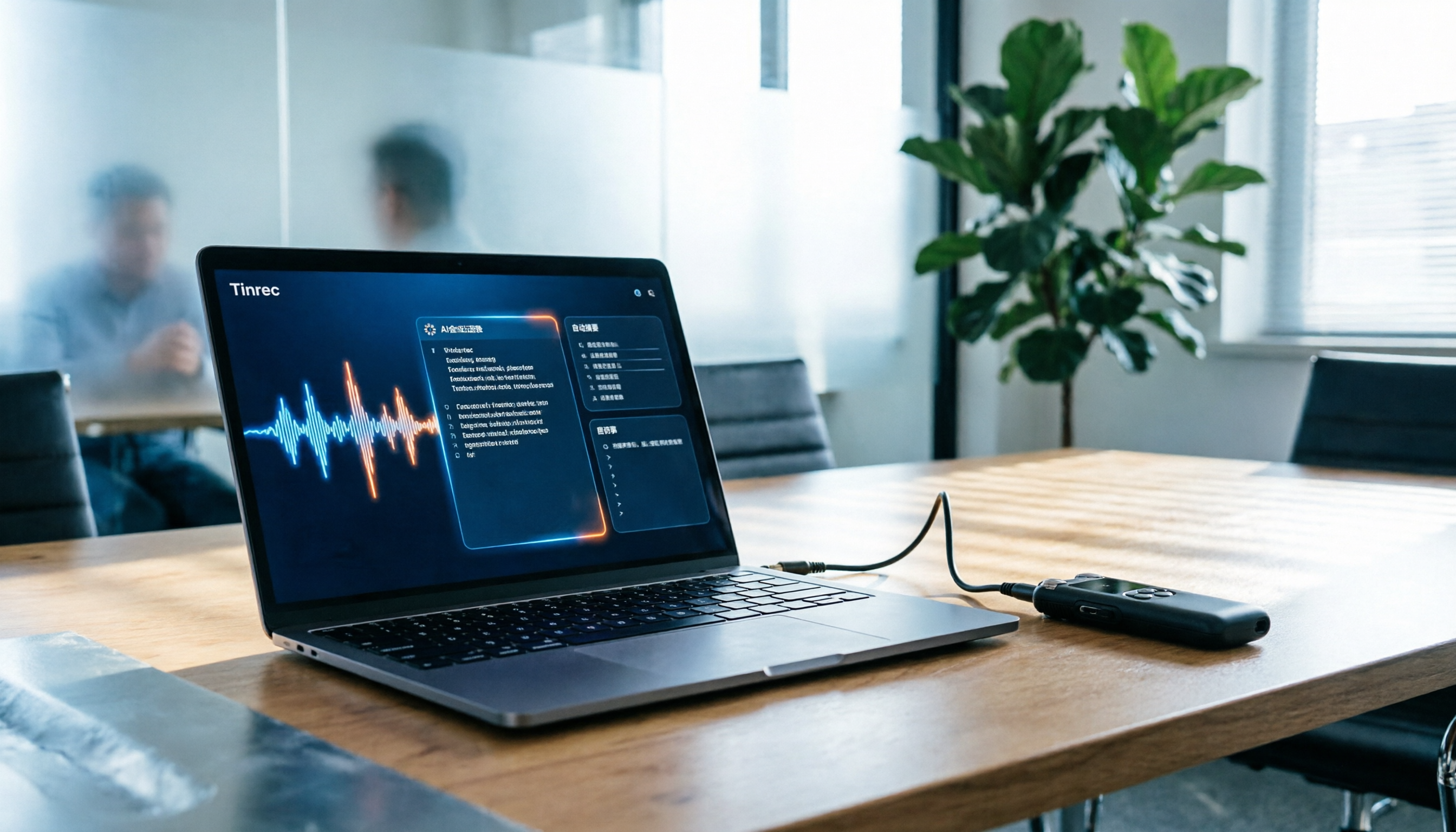
Best Line-in Voice Recorders? 2026 Hands-on Test of 2 Options: Tinrec Wins for Meeting Notes
Still looking for a voice recorder with line-in? This article compares Tinrec and PLAUD Note from a mid-level manager's perspective across four dimensions: meeting notes, AI post-processing, team collaboration, and cost, to help you decide whether to buy hardware or switch to an AI software solution.