
Turn recordings into transcripts and summaries in minutes
Upload audio or video for multilingual transcription, AI notes, and action items
How to Tell a Good Taper Fade from a Bad One in 2026: A 5-Step Guide
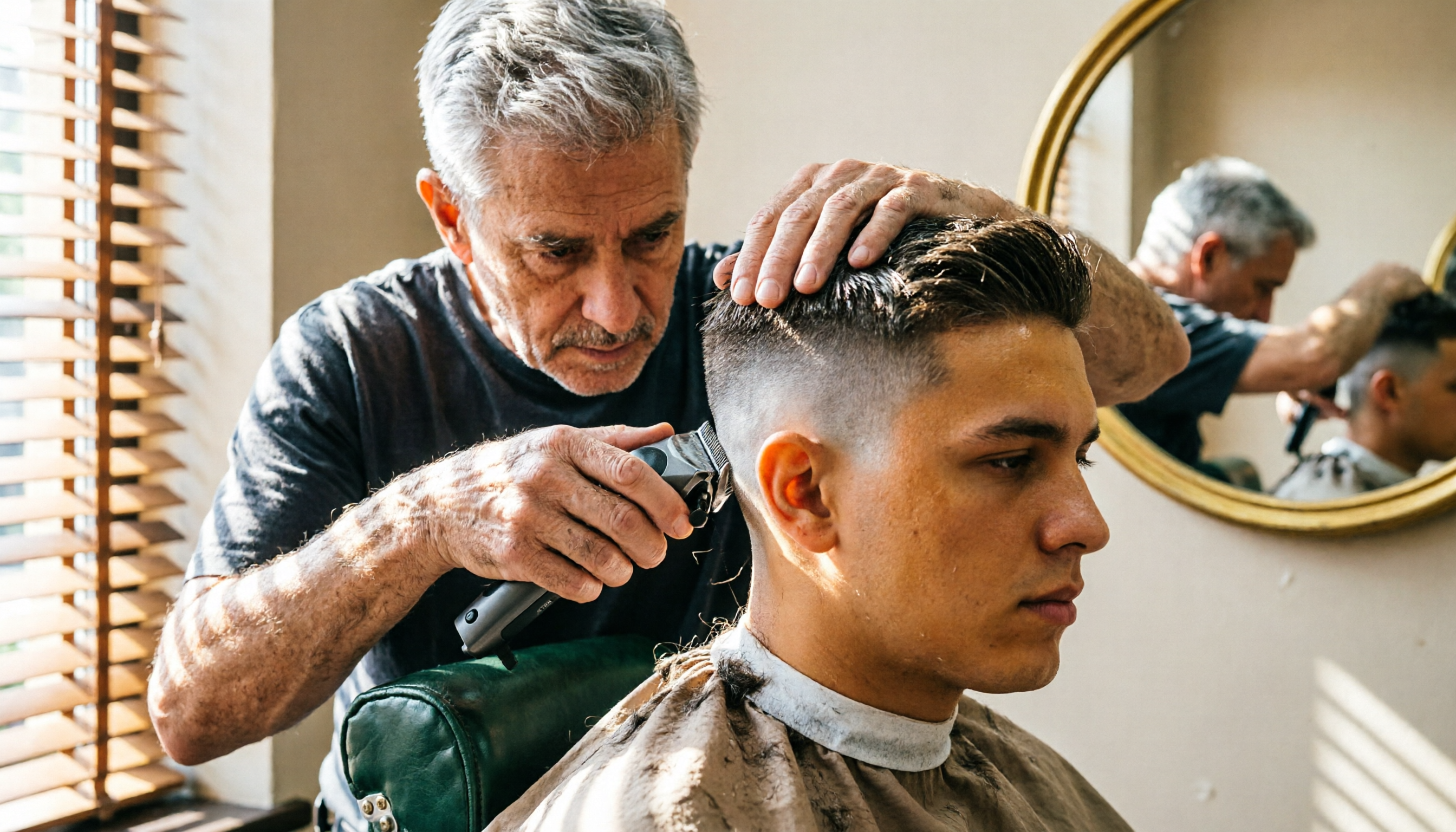
Imagine walking into a barbershop in Mong Kok and telling the barber, "I want a taper fade, with a natural gradient." But when the cut is done, the sides look choppy, like terraced fields. At that moment, you realize: even with the same taper fade, the difference between good and bad can be night and day. Here are 5 steps to help you spot the difference with your own eyes, so you're prepared before your next haircut.
Good Taper Fade vs. Bad Taper Fade: A Quick Overview
A taper fade is essentially hair that gradually transitions from long to short, but the quality lies in whether the transition is smooth and the proportions are balanced. A good version: natural transition, fits the head shape, and lasts 4-6 weeks; a bad version: harsh lines, too much contrast, and starts to look off within two weeks. Here's a comparison across five dimensions.
Dimension 1: Is the Gradient Transition Natural?
The most common problem with a bad taper fade is an uneven transition. The barber might just use clippers to push up, leaving a visible line that makes it look like you're wearing a hat. A good taper fade uses multiple guard lengths to gradually adjust the length, creating a smooth gradient from short to long, so you can barely tell where it starts to get shorter.
→ Conclusion: A smooth gradient is the most basic requirement for a good taper fade; you can tell the difference at a glance.
Dimension 2: Side Length and Skin Treatment
A bad fade might overdo the "skin fade," shaving down to the skin but lacking layered texture, making the head look flat. A good taper fade retains some length (usually #1 to #2 guard), providing natural shadow and enhancing the head shape. Especially for Asian head shapes, which tend to be rounder, keeping a bit of length looks better.
→ Conclusion: A good fade doesn't have to be shaved to the skin; retaining texture is key.
Dimension 3: Face Shape and Head Shape Matching
A bad taper fade ignores your face shape and always goes for a high fade, making round faces look rounder and long faces look longer. A good version adjusts the fade start point based on your face shape: low fade for round faces, high fade for square faces, and avoid too high for long faces. A professional barber will look at your front and side profiles before deciding where the fade line should be.
→ Conclusion: A fade that suits your face shape is a good one; blindly following trends will only lead to disappointment.
Stop organizing recordings by hand
Upload audio or video and automatically get a transcript, summary, and action items
Dimension 4: Maintenance Cycle and Durability
A bad taper fade, because it's shaved too short, will show stubble in the skin area after two weeks, creating a stark contrast with the longer hair on top, instantly turning into a "messy mop." A good taper fade has a gradual transition, so even if you don't get a haircut, it can still look natural for 4-6 weeks without suddenly looking off. This is why many working professionals choose a taper over a skin fade.
→ Conclusion: A good fade can last until your next haircut; a bad fade needs a touch-up within two weeks.
Dimension 5: Detail Work (Neckline and Sideburns)
Bad details: a neckline that's cut in one straight line, sideburns that are too square or too round, not matching the overall look. Good details: a neckline that fades or naturally tapers, sideburns that keep a bit of length to blend, looking clean but not harsh. These subtle details are where a barber's skill really shows.
→ Conclusion: The devil is in the details; well-handled neckline and sideburns instantly elevate the overall look.
What Are the Unique Advantages of a Good Taper Fade?
- Natural Transition: No visible lines, and it doesn't look awkward as it grows out.
- Enhances Head Shape: Uses gradient to adjust the visual, making the head look rounder or longer.
- Long-Lasting: Can last over a month, so you don't have to worry about it looking off at work or meetings.
- Versatile Style: Works for business, casual, and sporty looks, unlike a skin fade which is more bold.
What Are the Unique Advantages of a Bad Taper Fade?
- Cheap and Fast: Usually done by budget quick-cut shops or novice barbers, using minimal time to shave, and the price might be half. But the trade-off is you'll need another cut in two weeks, which ends up costing more in the long run.
Summary: Which Should You Choose?
- If you want to look good right after the cut and don't want to turn into a mess in two weeks → Good Taper Fade
- If you need to meet clients, attend meetings, and maintain a professional image → Good Taper Fade
- If you want to avoid the hassle and only get a haircut every four to five weeks → Good Taper Fade
- If you purely want cheap and don't mind frequent touch-ups → Bad Taper Fade (but not recommended)
In one sentence: One good taper fade is better than three bad ones. Next time you enter a barbershop, remember to use the 5 steps above to check, so you don't end up with a haircut that looks like terraced fields.
References
- Taper vs. Fade: A Guide For Your Next Cut - StyleSeat
- Taper vs Fade Haircut: What's the Difference? (2026 Guide) - SAYKI
- Which is better, taper or fade | Refine Blog - Hair Salon Barber
- Taper Vs Fade – Which Haircut Makes You Look More Stylish?
- Taper vs Fade vs Taper Fade | Which Cut Suits You? — NAAMZA
Turn every recording into actionable outcomes
Get 60 free transcription minutes when you sign in. No credit card required.
Related Reading
You might also like

2026 AI Meeting Assistant Comparison: 4 Tools Tested — What It Is and How to Choose
An AI meeting assistant is more than just recording and transcription. This article explains in one sentence what an AI meeting assistant is and which post-meeting pain points it solves, then compares Tinrec, Otter.ai, Granola, and Notta across four key dimensions: meeting capture method, Chinese-language experience, post-meeting output, and team data ownership. It also covers four common purchasing mistakes to help you pick the right tool.

2026 Speech-to-Text Tools Compared: Which Free Version Is Actually Good Enough?
A hands-on comparison of the latest free speech-to-text tools in 2026, focusing on four key aspects: free quota calculations, post-meeting organization capabilities, online meeting recording methods, and Chinese language performance. We compare the free plans and limitations of Tinrec, Otter.ai, Notta, and TurboScribe, and highlight four common purchasing mistakes to help you decide which free version is truly sufficient.

6 AI Meeting Assistants Tested for 2026: How to Actually Save Time After Meetings
Many people dump meeting recordings into AI and expect miracles, only to get a transcript nobody wants to read. Based on a mid-level manager's real usage across 15 meetings a week, this article compares the positioning, pricing, and ideal use cases of 6 AI meeting assistants, and explains how to use them to truly save time.

2026 AI Meeting Assistant Comparison: Tinrec vs Otter.ai — How to Use and Which Saves More Time
Starting from the workplace pain point of 'no one remembers what was assigned after the meeting,' this hands-on test compares Tinrec and Otter.ai AI meeting assistants. It breaks down five dimensions: recording methods, Chinese meeting organization, post-meeting follow-up questions, export workflows, and team knowledge retention, with practical steps and selection advice.

Best AI Meeting Assistants in 2026: 5-Step Hands-On Selection Guide
There are countless AI meeting assistants, but which one is actually useful? This guide walks you through 5 hands-on steps to filter them: how they capture meetings, post-meeting outputs, Chinese transcription performance, AI Q&A capability, and team data ownership. We also hands-on test and compare Tinrec, Otter.ai, Notta, and Granola to help you find the tool that fits your meeting habits.

4 AI Meeting Assistants Tested for 2026: Which Free Version Is Actually Enough?
The meeting ends, but the real work begins. This hands-on comparison of Tinrec, Otter.ai, Notta, and Granola looks at how meetings are captured, what happens after transcription, whether audio is retained, and how team licensing works. We break down each tool's free tier, limits, and best-fit scenarios so you can decide which one truly saves you post-meeting cleanup time.

2026 AI Meeting Assistant Comparison: Which Type Actually Saves Post-Meeting Time?
AI meeting assistants aren't just about turning speech into text. This article starts from real mid-level manager meeting scenarios, breaks down the differences between meeting bots, built-in platform transcription, and bot-free desktop recording, and uses Tinrec to demonstrate the complete workflow from transcripts and summaries to action items, AI Q&A, and team knowledge retention. It also includes 5 key buying criteria and FAQs.

2026 AI Meeting Assistant Comparison: 4 Tools Tested from Recording to Minutes—Which Saves the Most Time?
How can you use an AI meeting assistant without wasting time? Starting from real meeting scenarios, this article breaks down how AI meeting assistants capture audio, what they produce after the meeting, their Chinese-language performance, and differences in quotas. It also walks through the complete Tinrec workflow—from recording, transcription, and summary action items to AI Q&A and team sharing—while briefly reviewing when Otter.ai, Notta, and Granola are suitable.

2026 AI Meeting Assistant Free Plans Compared: 5 Options at a Glance
Which AI meeting assistant is best? Instead of comparing feature tables, first determine what level you actually need. This article uses Tinrec's five plans—Free, Weekly Pass, Pro Monthly, Pro Annual, and Team—to break down the capabilities to look for, real-world use cases, and purchasing considerations, helping you decide if the free version is enough and when to upgrade.