

Turn recordings into transcripts and summaries in minutes
Upload audio or video for multilingual transcription, AI notes, and action items
Recording on Mac: Most People Get Stuck After the Recording
Many people think recording on a Mac is simple: open Voice Memos or QuickTime, hit the red button, and you're done. But the real pain point comes later—after recording a two-hour meeting, you have to listen to it all over again, manually transcribe it, and organize the key points, which often takes more time than the meeting itself.
If you only occasionally record a personal note, the built-in tools are sufficient. But if you frequently record online meetings, interviews, or courses and want to get text transcripts, summaries, and action items directly after recording, you need a more complete solution.
4 Key Points to Understand Before Choosing a Mac Recording Solution
1. Can it record system audio? The built-in Voice Memos can only record from an external microphone and cannot capture sound playing on your computer. QuickTime requires additional virtual sound card software like Soundflower to record system audio. If you want to record Zoom or Google Meet meetings, this is a major limitation.
2. Does it offer automatic transcription? Pure recording tools only give you an audio file; you have to handle the text yourself. AI recording tools can generate transcripts in real time while recording, saving you a lot of time.
3. Can you organize the content directly after recording? Good tools automatically generate summaries, chapters, and action items, and even let you search the recording content using Q&A, instead of forcing you to manually replay.
4. Does it support team collaboration? If you are a team leader and need to centrally manage meeting materials and allow members to share and search, a personal recording app won't be enough.
Tinrec (秒听录音) — The Top Choice for Automatic Post-Recording Organization
Tinrec is an AI meeting notes and collaboration tool that supports Mac, iPhone, Android, and web. It doesn't just record; it turns audio files into searchable, queryable, and collaborative team assets.
Real-world use case: When you start an online meeting, open the Tinrec desktop app, and it will directly capture your computer's system audio—no need to invite a meeting bot. During the meeting, the transcript appears on screen in real time. As soon as the meeting ends, the AI has already generated a summary, chapters, and action items. You can even ask it, "Who mentioned the budget in the last meeting?" It will give you a direct answer based on semantic understanding, not just keyword search results.
Hands-on experience: We tested Tinrec with a 5-minute Chinese meeting recording (MacBook Pro, quiet indoor environment). The transcription error rate was significantly lower than manual transcription, and the summary and action item extraction were very accurate. It also supports real-time translation, handling mixed Chinese-English meetings smoothly.
Pros:
- Records online meetings without bots, so you don't have to worry about unwanted accounts joining.
- Automatically generates summaries, action items, and mind maps after recording, ready for meeting minutes.
- AI Q&A lets you quickly review past recordings, much faster than manually scanning transcripts.
- The team plan allows centralized management of members, seats, usage, and audit logs, ideal for departmental collaboration.
Stop organizing recordings by hand
Upload audio or video and automatically get a transcript, summary, and action items
Limitations: The free plan has usage limits; heavy users need to pay. But for those who have 2-3 meetings per week, the free plan is sufficient.
Who it's for: If you need to record online meetings, interviews, or courses and want usable text material right after recording, Tinrec is currently the most time-saving choice.
Other Recording Options on Mac Besides Tinrec
Voice Memos: Built into macOS, with a simple interface, suitable for quickly recording personal notes or ideas. However, it can only record from an external microphone, cannot record system audio, and has no AI transcription or summary features. If you want to search content or automatically organize after recording, Voice Memos can't do it.
QuickTime Player: Also a built-in tool that can record audio and video, but to record system audio, you must install plugins like Soundflower, which is a hassle. After recording, you only get an audio file—no transcript, summary, or AI Q&A, so all post-processing is manual.
Otter.ai: A mature choice for English meetings, with a generous free plan of 300 minutes per month. However, its support for Chinese and Cantonese is not as good as Tinrec, and it mainly focuses on online meetings without Tinrec's comprehensive team knowledge management capabilities. If you primarily record English content, consider it; for Chinese meeting organization, Tinrec is more suitable.
Pitfall Guide: 3 Common Mistakes in Mac Recording
Pitfall 1: Only recording, not organizing. Many people record a bunch of audio files but never listen to them again, making the recording pointless. When choosing a tool, make sure it can automatically transcribe and generate summaries; otherwise, the recording just takes up hard drive space.
Pitfall 2: Ignoring the need to record system audio. If you want to record online meetings or web courses but only use Voice Memos, you'll find you can't capture the other person's voice. Make sure the tool can directly record system audio, or choose a solution like Tinrec's desktop app that captures system sound directly.
Pitfall 3: Treating transcription tools as pure text output. Many people think AI recording tools just turn speech into text, but their real value lies in post-recording organization: summaries, action items, AI Q&A, and team sharing. If you only use them for transcription, you're using only a fraction of their features. With Tinrec's AI Q&A, you can ask "What was the meeting conclusion?" right after recording, which is much faster than manually scanning a 30-minute transcript.
Summary: How to Choose a Mac Recording Solution?
If you only occasionally record personal notes, the built-in Voice Memos or QuickTime is enough. But if your needs involve recording meetings, courses, or interviews and you want to get text transcripts, summaries, and action items directly after recording, Tinrec is currently the most complete choice.
- Just need personal voice memos → Voice Memos (free, simple)
- Need to record system audio without installing plugins → Tinrec desktop app (directly captures system audio, no bots)
- Want automatic transcripts, summaries, and AI Q&A after recording → Tinrec (excellent Chinese support, complete team collaboration)
- Only record English meetings and have zero budget → Otter.ai free plan (but doesn't support Chinese)
We recommend downloading the Tinrec free version to try it out, record a meeting or two with the basic quota, and experience the automatic organization before deciding whether to upgrade to a paid plan.
References
- Make a recording on Mac - Apple Support (Taiwan)
- 4 Best Mac Recording Software Recommendations [2025]
- 2026 MacBook Recording Guide: 5 Practical Tool Reviews and AI Transcription Tutorial - Tinrec Blog
- Record and transcribe audio in Notes on Mac - Apple Support (Taiwan)
- 6 Ways to Record on Mac (Including Mac Recording Software Recommendations) - EaseUS
Turn every recording into actionable outcomes
Get 60 free transcription minutes when you sign in. No credit card required.
Related Reading
You might also like

4 Mac Recording Tools Tested in 2026: Why Tinrec Is the Top Notta Alternative?
Can you record audio on a Mac? Of course, but the real pain point is what comes after. From a mid-level manager's perspective, this article compares Mac's built-in recording, Notta, and Tinrec, explaining why Tinrec is better suited for professionals who need meeting minutes and team collaboration.

Tinrec vs iPhone Voice Memos in 2026: A 5-Dimension Showdown for Singers—Which Saves You More Time?
Tired of piling up voice recordings on your iPhone after singing sessions, only to struggle finding the important bits? This article, from a mid-level manager's hands-on perspective, compares Tinrec and iPhone Voice Memos across 5 key differences in recording organization, showing you how to turn creative sparks into searchable, trackable digital assets.
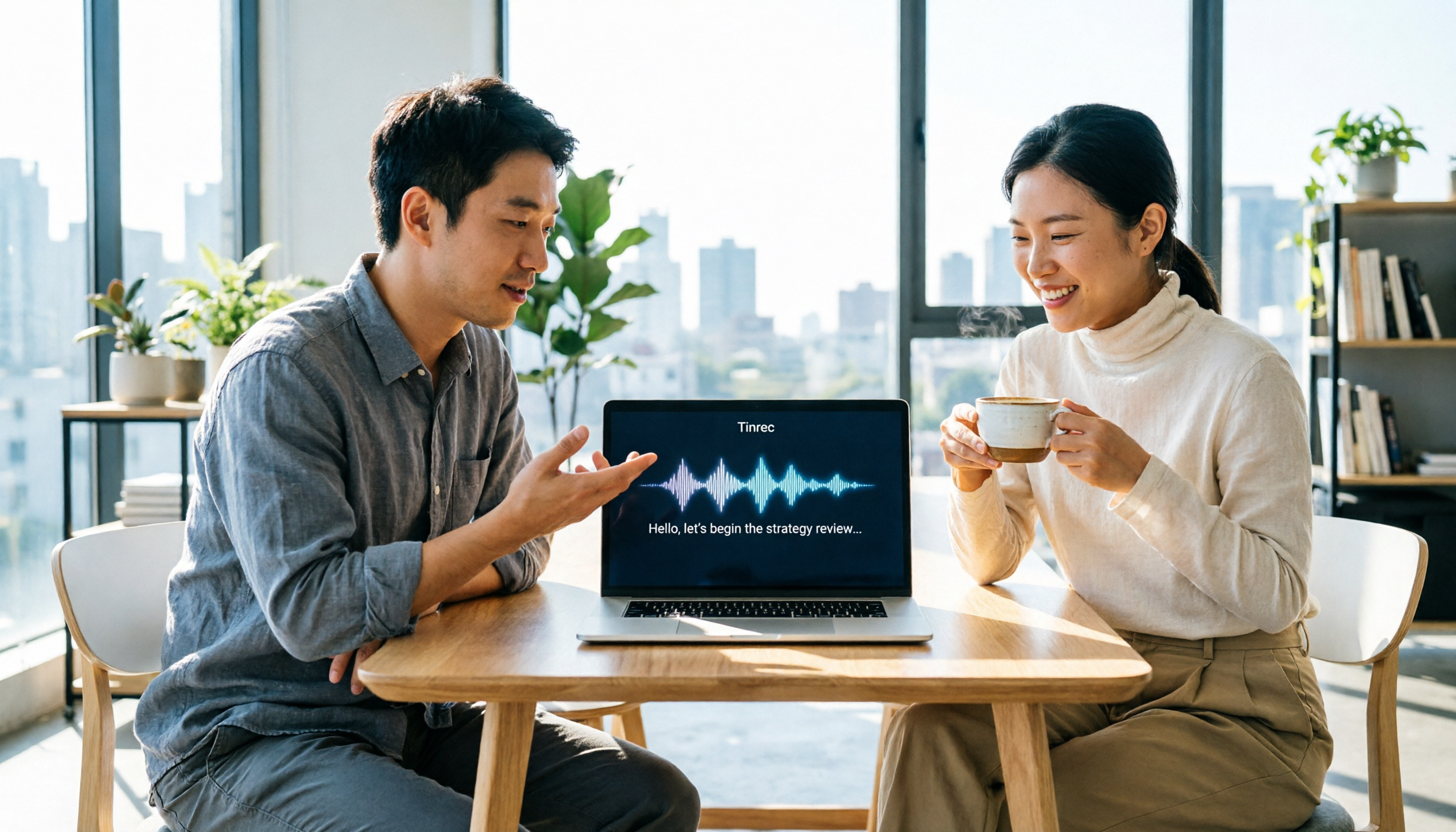
2026 Mac Recording Tools Compared: Tinrec AI Meeting Notes Save the Most Time
Can you record audio on a Mac? Yes, but how do you record smartly? We tested Tinrec, QuickTime, and Voice Memos to tell you which one saves the most time.

2026 iPhone Call Recording Apps Compared: Does Tinrec, the AI Transcript Tool Hailed on PTT, Really Save Time?
iPhone call recording is limited by iOS, and PTT users often ask how to record both sides of a conversation. This article tests iOS 18's built-in feature, external devices, and AI tools like Tinrec, Otter, and Notta, showing you how to quickly convert recordings into transcripts, summaries, and to-dos, avoiding the nightmare of relistening to calls.

2026 iPhone Voice Recording Interruption Fix: 4 Alternative Apps Tested – Which One Offers Stable Recording and Auto-Organization?
Tired of iPhone voice memos cutting out? We tested 4 alternative recording apps, comparing stability, cross-platform support, AI organization, and free tiers to help you find the best choice.

How to Use iPhone Call Recording in 2026? 5-Step Complete Guide
iPhone's built-in call recording has finally arrived, but it comes with many limitations. This article teaches you 5 steps to activate iOS 18 call recording and compares it with Tinrec across 5 dimensions, revealing which one truly helps Hong Kong professionals with meeting notes.

How to Use Tinrec to Organize iPhone Call Recordings in 2026: Auto-Generated Transcripts and To-Do Lists
iPhone's built-in call recording only gives you a transcript, but Tinrec can turn recordings into searchable, trackable meeting notes. This article teaches you how to import iPhone call recordings into Tinrec to automatically generate summaries, to-do lists, and use AI Q&A to quickly find key points—perfect for busy professionals with back-to-back meetings.
The Complete 2026 Guide to Plaud Recording: A 5-Dimension Comparison with Tinrec and Buying Advice
From a student's perspective, this guide compares Plaud recording hardware with Tinrec recording software across five key dimensions: recording methods, online meetings, transcription accuracy, AI organization, and pricing—helping you decide whether to buy a voice recorder or use a free app.
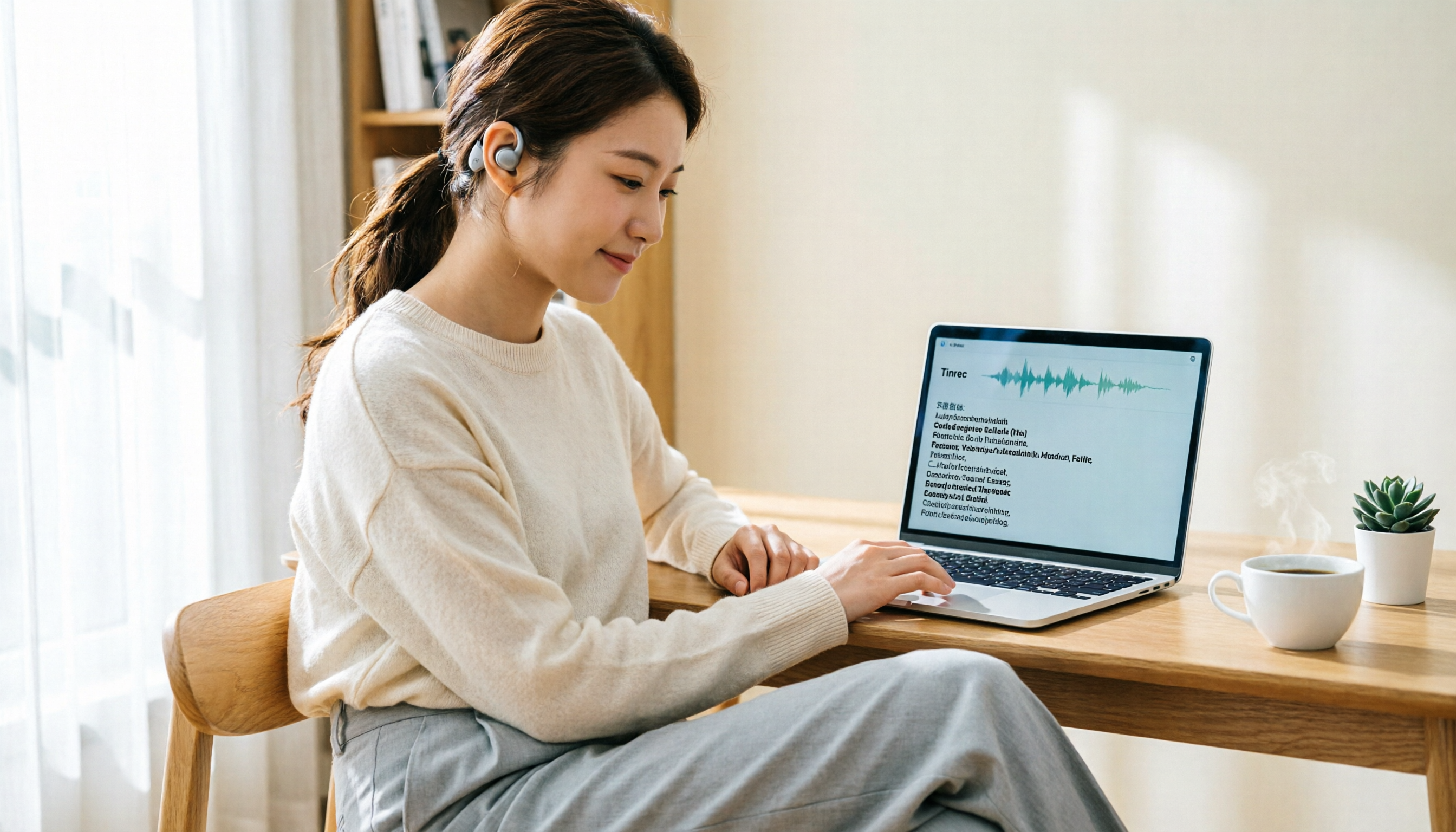
2026 Mac Free Recording Software Comparison: Which Wins for Recording + AI Transcription?
On Mac, free recording is possible with built-in QuickTime and Tinrec's free version, but one just records while the other helps you organize. This comparison across 5 key aspects helps you decide which suits meetings, interviews, and daily recording needs.