
Turn recordings into transcripts and summaries in minutes
Upload audio or video for multilingual transcription, AI notes, and action items
Struggling with long lectures, you might have faced this dilemma: too busy to take notes in class, so you record on your phone, but then staring at hours of audio with no time to replay? Or even if you replay, it's hard to quickly find the professor's "exam key points" or "assignment deadlines."
This is classic "information hoarding" rather than "knowledge absorption." As AI matures, today's tools are more than just "voice recorders"—they're "smart assistants" that understand content. This article takes a practical approach, reviewing several mainstream tools and showing you how to use them to auto-generate structured class notes.
Quick Purchase Conclusion:
- If you mainly rely on PDF handouts and literature: prioritize NotebookLM.
- If you have all-English lectures and value web collaboration: Otter.ai is the veteran.
- If you need mixed Chinese-English recognition, mobile recording, and want to generate action items (To-Do) directly: Tinrec (Miao Ting Recorder) is a more balanced choice.
Why Traditional Recorders No Longer Fit Modern Classrooms?
Before diving into tool reviews, let's clarify the pain points. The biggest problem with traditional recorders or built-in phone recorders is the "black box effect":
- High information retrieval cost: To find a specific concept, you have to drag the timeline like searching for a needle in a haystack.
- No structure: Audio can't be "scanned"; you can't see the lecture structure at a glance.
- Lack of action guidance: The recording won't tell you next week's homework unless you listen fully.
Next-gen AI note tools solve the core problem: turning "unstructured audio" into "visual, searchable, actionable text" instantly.
2026: 5 Mainstream AI Classroom Recording Tools Reviewed
Based on learning scenarios and features, here are 5 noteworthy tools.
1. Tinrec (Miao Ting Recorder): Best for Multilingual Classes & Mobile Learners
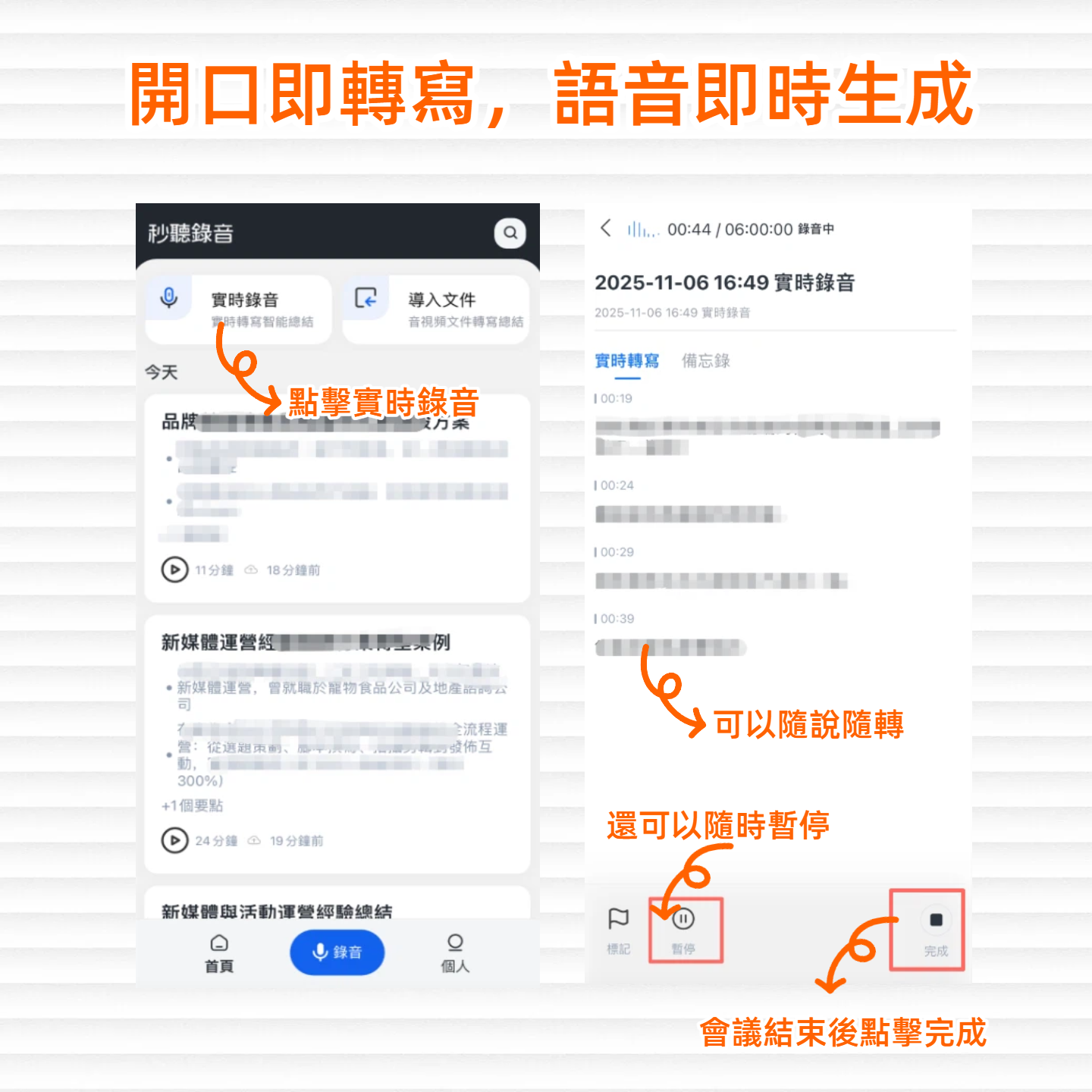
Tinrec's design philosophy goes from "recording" to "understanding" to "action." For students, its biggest advantage is supporting mixed recognition of 10 languages including Chinese, English, Japanese, etc., solving the poor Chinese support of many foreign tools.
- Core Strengths: Besides real-time transcription, it automatically generates "meeting minutes/class summaries" and "to-do action items." This means spoken assignments are automatically extracted into a list.
- Best For: General education courses, language learning, lectures needing quick key points.
2. NotebookLM: Google Ecosystem's Research Assistant
NotebookLM by Google is more than a recording tool; it's a "database understanding tool." Recently integrated with Gemini, its strength lies in uploading massive PDF courseware and papers, then asking questions based on that data.
- Core Strengths: Excellent document understanding, completely free (Google ecosystem dependent).
- Limitations: More of a document reader than a real-time transcription tool; less immediate.
3. Otter.ai: The Transcription King for English Courses
If your lectures are entirely in English (e.g., studying abroad or language departments), Otter.ai's recognition accuracy remains top-tier. It precisely differentiates speakers.
- Core Strengths: Extremely high English recognition, integrates with Zoom/Teams.
- Limitations: Chinese support is relatively average; free plan has many restrictions (e.g., export formats).
4. Notion AI: The Final Stop for Knowledge Management
Notion itself is a note app; with AI, it can polish notes and summarize. Many students paste transcripts from other tools into Notion for secondary processing.
Stop organizing recordings by hand
Upload audio or video and automatically get a transcript, summary, and action items
- Core Strengths: Powerful formatting and database features, great for building long-term knowledge systems.
- Limitations: Native recording and transcription are weak; usually needs pairing with other recording tools.
5. Obsidian + AI Plugins: The Geek's Local Solution
For privacy-conscious tech-savvy science students, Obsidian with AI plugins (e.g., Text Generator) enables fully local note management.
- Core Strengths: Data fully under your control; knowledge graph features are powerful.
- Limitations: Steep learning curve, requires configuring API; not for plug-and-play users.
In-Depth Feature Comparison Table
For a more intuitive choice, here's a core dimension comparison:
| Dimension | Tinrec (Miao Ting Recorder) | Otter.ai | NotebookLM | Notion AI |
|---|---|---|---|---|
| Core Focus | Recording to Action | English Meeting Transcription | Document Understanding & Q&A | Note Polishing & Writing |
| Chinese Support | Excellent (Supports EN/JP/KR etc.) | Weak (Primarily English) | Excellent (Google engine) | Excellent |
| Live Recording Transcription | Yes (App/Web) | Yes (Strong suit) | No (Requires upload) | No (Requires typing/pasting) |
| AI Summary/Action Items | Auto-generates to-do and summary | Summary & keywords | Document summary | Polishing & expansion |
| Unique Feature | AI chat to query recording content | Accurate speaker separation | Source citation traceability | Knowledge base linking |
| Free Tier | 100 min/month | 300 min/month (English only) | Fully free (currently) | Trial then paid |
Practical Tutorial: How to Auto-Generate Class Review Notes with Tools
Once you've chosen your tool, how to integrate it into your learning workflow? Here we use Tinrec as an example to demonstrate the standardized process from "recording" to "review." This workflow can reduce note-taking from 2 hours to 15 minutes.
Step 1: In-Class Live Recording & Marking
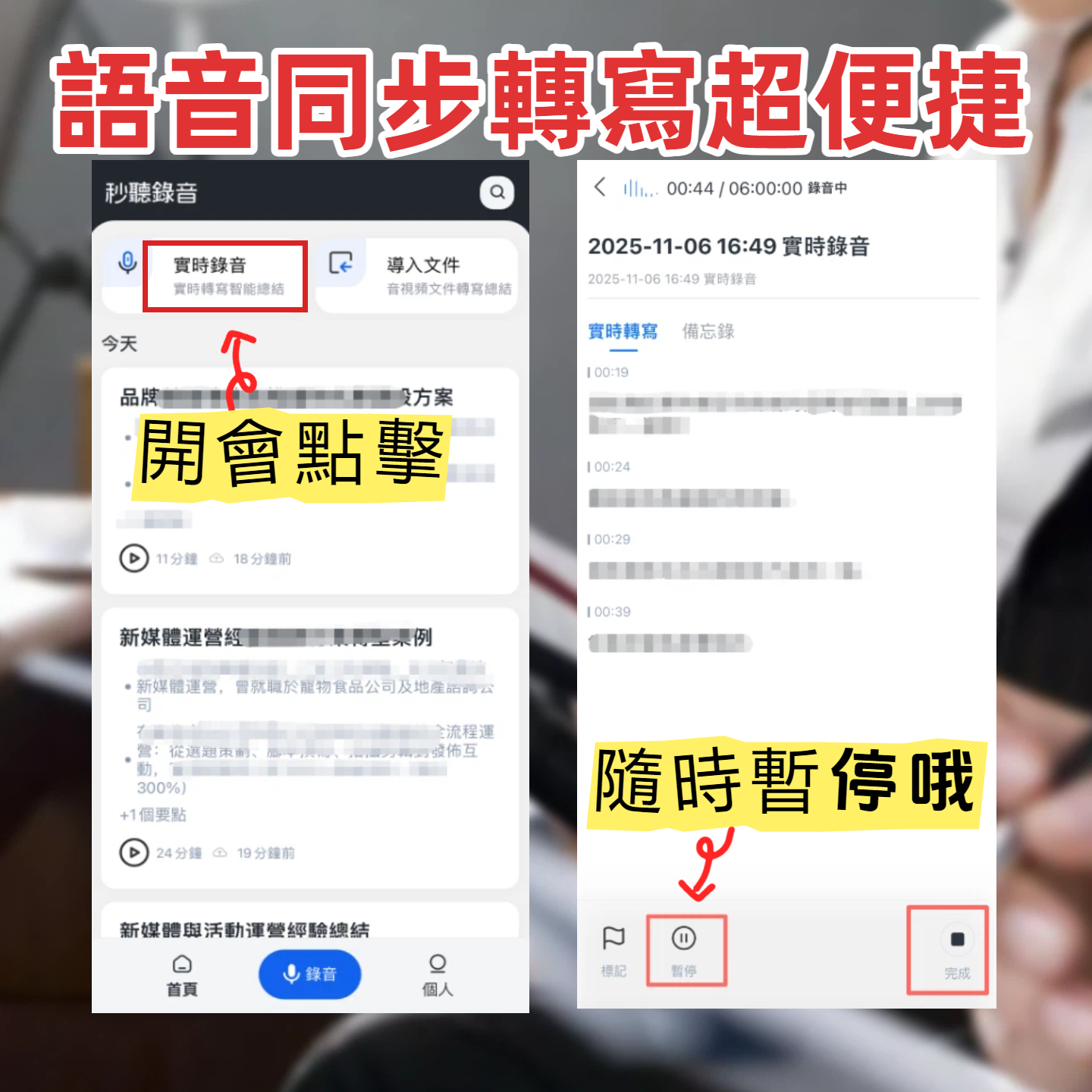
At the start of class, open the mobile app or web version to record. Unlike traditional recording, you see text appear in real time. If the professor mentions keywords (e.g., "will be on the exam," "important"), you can mentally note them.

Step 2: Auto-Generate Structured Summary
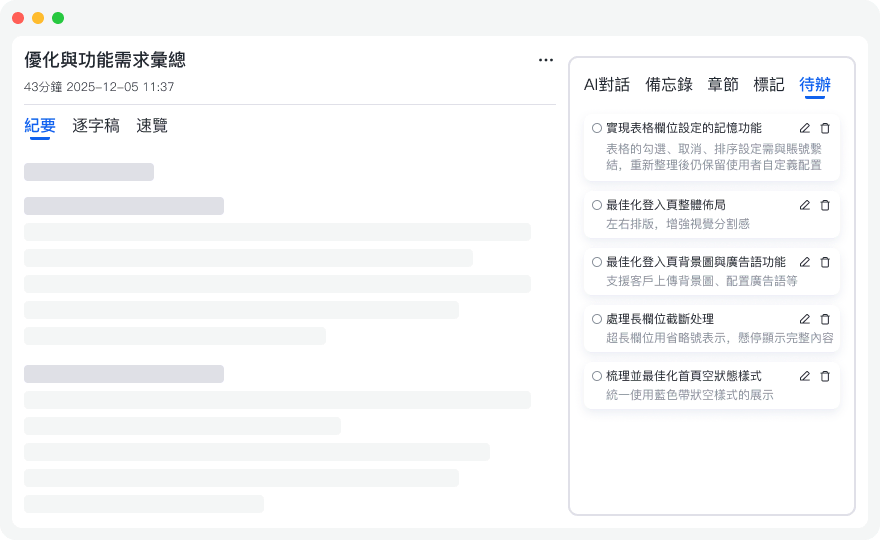
After class, stop recording. The system processes the audio automatically. You get a full transcript, but more importantly, the "AI Summary" on the right.
- Check summary: Ensure the AI-captured chapter key points cover the entire lecture outline.
- View action items: Tinrec automatically extracts To-Do items like "submit report next Wednesday," "read Chapter 3." This is a lifesaver for students.
Step 3: Targeted Review via AI Chat
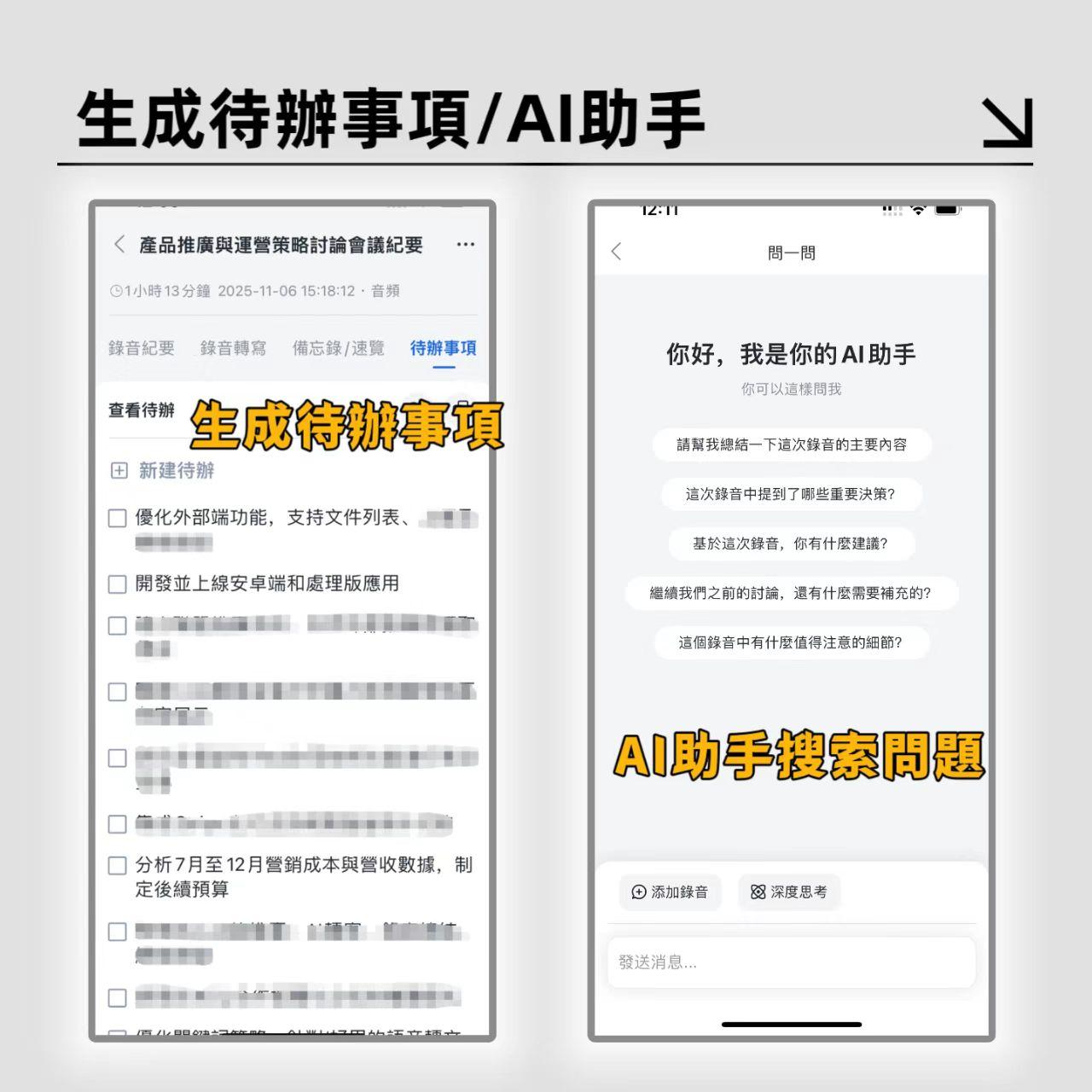
This is the biggest difference from traditional tools. If you forget a specific concept, no need to replay.
- Action: Enter the "AI Chat" feature.
- Sample questions: "What did the professor say about the midterm scope?" "Summarize three key points about quantum mechanics."
- Result: AI answers based on the recording, with timestamps.
Step 4: Multi-Format Export & Organization
Finally, export your organized key points as PDF or Markdown, and save them in your Notion or Obsidian for a permanent knowledge base. Tinrec supports multiple export formats for easy integration.
Frequently Asked Questions (FAQ)
Q1: What is the typical transcription accuracy? In a quiet classroom, mainstream tools (e.g., Otter, Tinrec) often achieve over 90% accuracy. However, noisy environments or heavy accents can reduce accuracy. Keep your recording device (phone/laptop) as close to the podium as possible.
Q2: Do these tools support iPhone or Android? Yes, Tinrec and Otter.ai offer iOS and Android apps for on-the-go use. NotebookLM is primarily web-based.
Q3: Can I use them for online courses (e.g., Zoom/Meet)? Yes. You can use web tools to record system audio, or Otter.ai integrates via plugins into meetings. Tinrec supports importing video links (e.g., YouTube tutorials) to convert into notes.
Q4: Is the free plan enough? Depends on your course load. Tinrec offers 100 free minutes/month, suitable for key courses; Otter offers 300 minutes (English only). For all-day recording, subscribing to a pro plan (e.g., Tinrec Pro 1200 min/month) is more cost-effective than hiring a transcriber.
Q5: Is recording privacy secure? Reputable AI note tools (like those mentioned) use encrypted transmission and storage. Tinrec and Otter.ai have clear privacy policies. Avoid recording highly sensitive personal financial info, but academic and general work scenarios are safe.
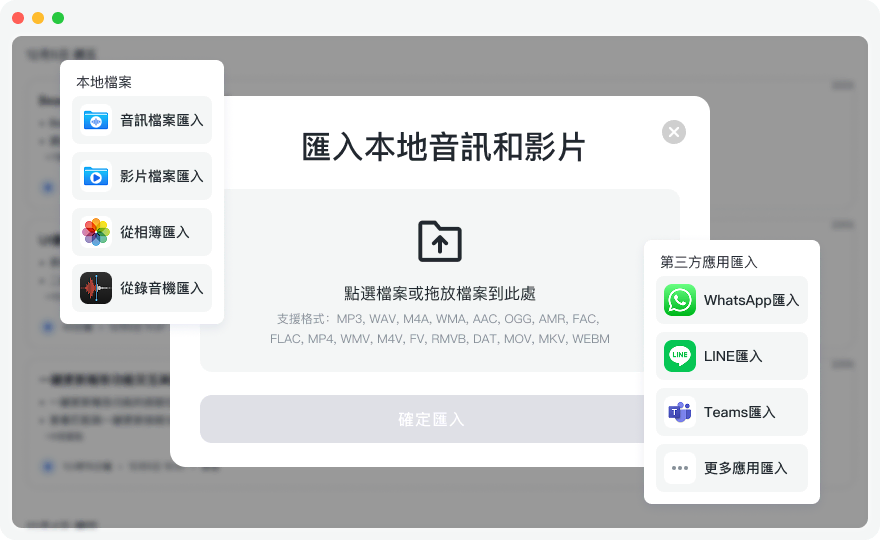
Q6: Can I import previously recorded audio files? Yes. Tinrec and Otter both support "audio file import." If you have backlogged recordings, upload them directly for transcription and summarization.
Turn every recording into actionable outcomes
Get 60 free transcription minutes when you sign in. No credit card required.
Related Reading
You might also like

How to Transfer iPhone Voice Memos to Computer in 2026: 3 Methods + AI Auto Transcription
Learn 3 practical ways to transfer iPhone voice memos to your computer, including iTunes File Sharing, iCloud Drive, and Documents wireless transfer. Plus, discover how to use Tinrec to automatically turn recordings into transcripts, summaries, and action items.
iPhone Microphone Locations in 2026: Where Are the 3 Mics? How to Choose a Recording Organizer
Where exactly are the iPhone microphones? This guide shows the actual locations of the three mics—bottom, earpiece, and rear—explains what each one captures, and compares recording organizers. From Voice Memos to Tinrec, see the full workflow from recording to transcript, summary, and action items.
3 Ways to Transfer iPhone Recordings to a Computer in 2026: How Tinrec Turns Audio into Meeting Materials
We tested 3 ways to transfer iPhone recordings to a computer and compared traditional file transfer with Tinrec: instead of just moving an m4a file to your computer, Tinrec turns recordings into transcripts, summaries, action items, and AI Q&A—ideal for mid-level managers and teams with frequent weekly meetings.
How to Choose an AI Meeting Notes App in 2026: 5 Steps from Recording to Team Data
How do you choose an AI meeting notes app? This article first highlights three common pitfalls, then outlines four key purchasing factors, and uses Tinrec as an example to demonstrate a 5-step workflow from recording, transcription, summary and action items, to team workspace storage. It also compares the use cases and pricing limitations of Otter.ai, Notta, and PLAUD to help you decide based on your budget and meeting style.
Best Way to Transfer iPhone Voice Memos to Windows PC: 3 Methods Tested in 2026, This One Saves the Most Time
Struggling to transfer iPhone voice memos to a Windows PC? We tested 3 transfer and organization methods, broke down common mistakes, and recommend Tinrec for instant transcription and summaries after transfer—no more overtime listening.
Best Way to Transfer iPhone Voice Memos to Windows in 2026: 4 Tools Tested, This One Works Best for Chinese
Struggling to transfer iPhone voice memos to Windows due to format and transfer issues? We tested 4 tools, comparing transfer methods, cross-platform support, and post-meeting organization, and listed the 4 most common mistakes.
2026 iPhone Recording Organization: 3 Methods Compared — What to Know Before Replacing Voice Memos
The 'Replace' feature in iPhone Voice Memos only patches audio clips; the real time sink is organizing recordings afterward. This article examines the decision factors for recording organization, explains how Tinrec turns recordings into transcripts, summaries, and action items, and covers buying considerations and FAQs.
4 iPhone Recording Management Tools Compared in 2026: Solve the Problem of Missing or Unfinished Recordings
iPhone recordings going missing actually falls into three different situations: files can't be found, found but can't be listened to completely, or wanted to record but didn't. This article first explains the limitations of native iPhone recording and file locations, then compares 4 recording management tools side by side, and summarizes the key points and common pitfalls to note when choosing.
2026 Comparison of 3 iPhone Recording Tools: Voice Memos Not Saving? Tinrec Ensures You Never Miss a Recording
iPhone recordings not saving is a common pain point. This article focuses on decision-making, comparing iPhone's built-in Voice Memos with Tinrec. It explains why Tinrec's bot-free recording, real-time transcription, AI summaries, and team spaces are better suited for those who need reliable recording storage.