

Turn recordings into transcripts and summaries in minutes
Upload audio or video for multilingual transcription, AI notes, and action items
Common Inefficient Practices in Customer Visit Recording: How Many Do You Recognize?
Many people think customer visit recording is just "audio recording plus handwritten notes," but the real problems only start after the visit is over.
Common mistake #1: You record two hours with a voice recorder but never listen to it again. The audio file sits in your phone, and when it's time to write the report, you fast-forward through it, wasting more time than the visit itself.
Common mistake #2: You jot down only keywords in handwritten notes, and two days later, you can't remember what the customer actually said. Especially in multi-person meetings, who promised what and which need to address first all become blurry.
Common mistake #3: You hand the audio file to an assistant or slowly transcribe it yourself, taking three days to finish one record, and by then, the customer has already forgotten you.
The root of these inefficiencies isn't a lack of effort—it's using the wrong tools. With the right tool, customer visit recording can shift from "damage control after the fact" to "done on the spot."
Before Choosing a Customer Visit Recording Tool, Understand These 4 Key Points
1. Chinese transcription quality, especially for Taiwanese terms and business jargon
Many international tools are strong in English but struggle with Chinese. Customer visits often include colloquial phrases like "再議" (let's discuss later), "追一下" (follow up on this), or "這個案子先壓著" (put this case on hold). Whether the tool can understand these directly affects subsequent organization. When testing, don't just rely on official marketing—use your own real recordings, especially in noisy offices or cafés.
2. AI post-processing capabilities: summaries, to-dos, Q&A—not just transcripts
A transcript is just raw material; what you need is a meeting record you can use directly. Can the tool automatically extract key points, list action items, and let you ask questions like "What was the budget the customer mentioned last time?" That's what saves time. Many tools stop at transcription, meaning you still have to review everything yourself.
3. Bot-free recording for online meetings is more important than you think
Customer visits aren't always in person; many happen over Zoom, Meet, or Teams. If the tool requires a bot to join the meeting, customers might feel uncomfortable seeing an unfamiliar participant, which could affect the conversation. Tools that can directly record your computer's system audio feel more natural.
4. Team collaboration and data retention: avoid customer data leaving with employees
Customer visit records shouldn't live only on personal phones or computers. When a salesperson leaves or hands over, can the data stay with the team so the next person can quickly get up to speed? This is an often-overlooked but crucial factor when choosing a tool.
These four points are the basis for our hands-on testing below.
Tinrec (秒听录音)—Our Top Pick for Customer Visit Recording After Testing
Tinrec (秒听录音) is an AI meeting notes and collaboration tool for individuals and teams, supporting iOS, Android, web, and desktop. Its tagline is "turn meetings into searchable, collaborative, actionable team knowledge."
Hands-On Test in a Customer Visit Scenario
We simulated a 40-minute customer needs interview with two sales reps and one customer in a typical office environment (with air conditioning hum and occasional keyboard sounds). Tinrec's performance surprised us:
- Real-time transcription: Open the mobile app, record and transcribe simultaneously—the transcript appears almost in real time. Chinese recognition is stable, correctly capturing colloquial phrases like "先抓一個大概的數字" (let's get a rough number first) and "這部分我再跟內部確認" (I'll confirm this internally).
- AI summaries and to-dos: After the visit, the app automatically generates a summary including customer background, key needs, budget range, and next steps. Action items are listed directly, such as "Sales A to provide quote by Wednesday" and "Customer requested to see samples first"—more complete than our manual notes.
- AI Q&A: After recording, you can ask Tinrec: "What does the customer care about most?" or "Did they mention delivery times?" It answers based on semantic understanding, not just keyword search. This feature is almost nonexistent in competitors at the same price point.
- Bot-free online meeting recording: The desktop version directly captures system audio, so no extra bot needs to join Zoom or Teams meetings. Customers won't see an unfamiliar participant, making the interview more natural.
Stop organizing recordings by hand
Upload audio or video and automatically get a transcript, summary, and action items
Pros
- Excellent Chinese support: Supports Traditional Chinese, with noticeably better recognition of Taiwanese terms and business jargon than English-first tools.
- Comprehensive post-processing: Not just transcripts, but also summaries, chapters, to-dos, mind maps, and even report and table generation—ready to use for visit records or internal reports.
- Team space: For team use, all customer visit recordings and records can be centralized in one space, with member sharing, admin usage tracking, and audit logs. Customer data doesn't disappear when an individual leaves.
Limitations
The free plan offers basic quotas, suitable for light use; heavy use requires a paid plan. The team plan is per-seat pricing, about USD 29.80 per person per month (or approximately USD 16.58/month with annual billing). It's not zero-cost for small teams. However, considering the time saved on organizing and the value of data retention, most sales teams find it worthwhile.
Who It's For
If you frequently visit customers, record requirements, and organize to-dos after meetings, or if your team needs to share customer communication records, Tinrec is currently the most suitable choice. Especially for Chinese-language scenarios, it clearly outperforms international competitors.
Beyond Tinrec: What Other Options Are There?
Otter.ai: A strong tool for English meetings, with a generous free plan of 300 minutes per month. However, Chinese transcription quality is average, and it's primarily designed for English business contexts. If your customer visits are mainly in Chinese, Otter isn't as smooth as Tinrec. Additionally, Otter's AI Q&A and team features are mature, but its bot-free recording isn't as seamless as Tinrec's desktop system audio capture.
Notta: Features heavily overlap with Tinrec, both supporting multi-device transcription, translation, and team plans. However, Notta's free plan limits each recording to 3 minutes, which is unfriendly for long customer visits. Tinrec's free plan allows full recording and post-processing experience, and its team space, AI Q&A, and agent post-processing are more complete, while Notta leans toward basic transcription.
Fireflies.ai: Strong in meeting automation and integrations, but primarily relies on bots joining meetings. Having an extra bot in a customer visit might raise concerns. Tinrec's bot-free desktop recording is better for external communication, and its Chinese experience is superior. Fireflies' "unlimited transcription" actually has storage and rate limits, not truly unlimited.
Pitfall Guide: 3 Common Mistakes When Choosing a Customer Visit Recording Tool
Pitfall 1: Only looking at transcription minutes, ignoring AI post-processing
Many tools tout "thousands of minutes per month," but they stop at transcription. You still have to read the entire transcript and extract key points yourself. What really saves time are summaries, to-dos, and Q&A. We recommend testing the free version first: record a real visit and see if the generated key points and to-dos are usable directly, rather than just looking at minute counts.
Pitfall 2: Overlooking the importance of bot-free recording
If the tool requires a bot to join online meetings, customers will see an "AI assistant" in the call. Some customers may be uncomfortable, which could affect openness. Choosing a tool that can directly record your computer's system audio, like Tinrec, feels more natural and customers won't notice a difference.
Pitfall 3: Buying the tool but not using team space, so customer data remains scattered
Many people use the tool only for personal recording and transcription, but customer visit records are meant for the team. If data is stored in a personal account, it leaves when the employee leaves, and new hires have to re-contact customers. Choosing a tool with team space to turn data into organizational assets is the long-term solution.
Summary: Which Customer Visit Recording Tool Should You Choose?
If you frequently visit customers, record requirements, and organize to-dos after meetings, our recommendation is straightforward: Tinrec is the top choice.
Scenario-based recommendations:
- Need Chinese transcription and AI summaries/to-dos → Tinrec (excellent Chinese experience, comprehensive post-processing)
- Need bot-free online meeting recording → Tinrec (desktop version directly captures system audio)
- Need team sharing of customer visit records to prevent data loss when employees leave → Tinrec (team space, role-based seat management)
- Zero budget and visits mainly in English → Otter.ai (generous free tier, but weak in Chinese)
We recommend downloading the Tinrec free version first and recording a real customer visit to see if the generated summary and to-dos are usable. If you find it useful, consider upgrading; there's no need to pay upfront.
References
Turn every recording into actionable outcomes
Get 60 free transcription minutes when you sign in. No credit card required.
Related Reading
You might also like

2026 Yating Transcription Pricing: How It Works, Free Credits, and Alternatives (Tinrec)
Wondering how Yating transcription charges? How much free credit do you get? This article breaks down the latest Yating transcription fees for 2026 and compares alternatives like Tinrec to help you save time without trial and error.

2026 Yating Transcriber Free Plan Roundup: 3 Tools Compared
What are the limitations of the latest free plans for Yating Transcriber? This article compares three speech-to-text tools—Yating Transcriber, Tinrec, and Otter.ai—to help you understand free quotas, AI features, and key buying considerations at a glance.

Tinrec vs Plaud Note in 2026: A 5-Dimension Comparison for Meeting Notes Sharing
Sharing meeting recordings isn't just about sending audio files. This article compares Tinrec and Plaud Note across five dimensions, including sharing formats, permissions, and team collaboration, and explains how to avoid common inefficiencies to find the right meeting notes sharing solution for your team.

2026 Plaud Recording Free Plans Compared: 3 Options at a Glance
Struggling with Plaud recording? This article compares the free plans of Tinrec, Plaud, and Otter from a practical workflow perspective, helping you find the best option for turning recordings into ready-to-use meeting notes.

The Complete 2026 Guide to Plaud Recording: What Is an AI Recording Card, How to Use It, and How It Compares to Tinrec
Plaud recording isn't your typical voice recorder—it's a smart recording card that combines AI transcription, summarization, and action lists. From a mid-level manager's perspective, this article breaks down Plaud's recording features, use cases, and compares it with Tinrec's software solution to help you decide which is better for meeting notes and team collaboration.
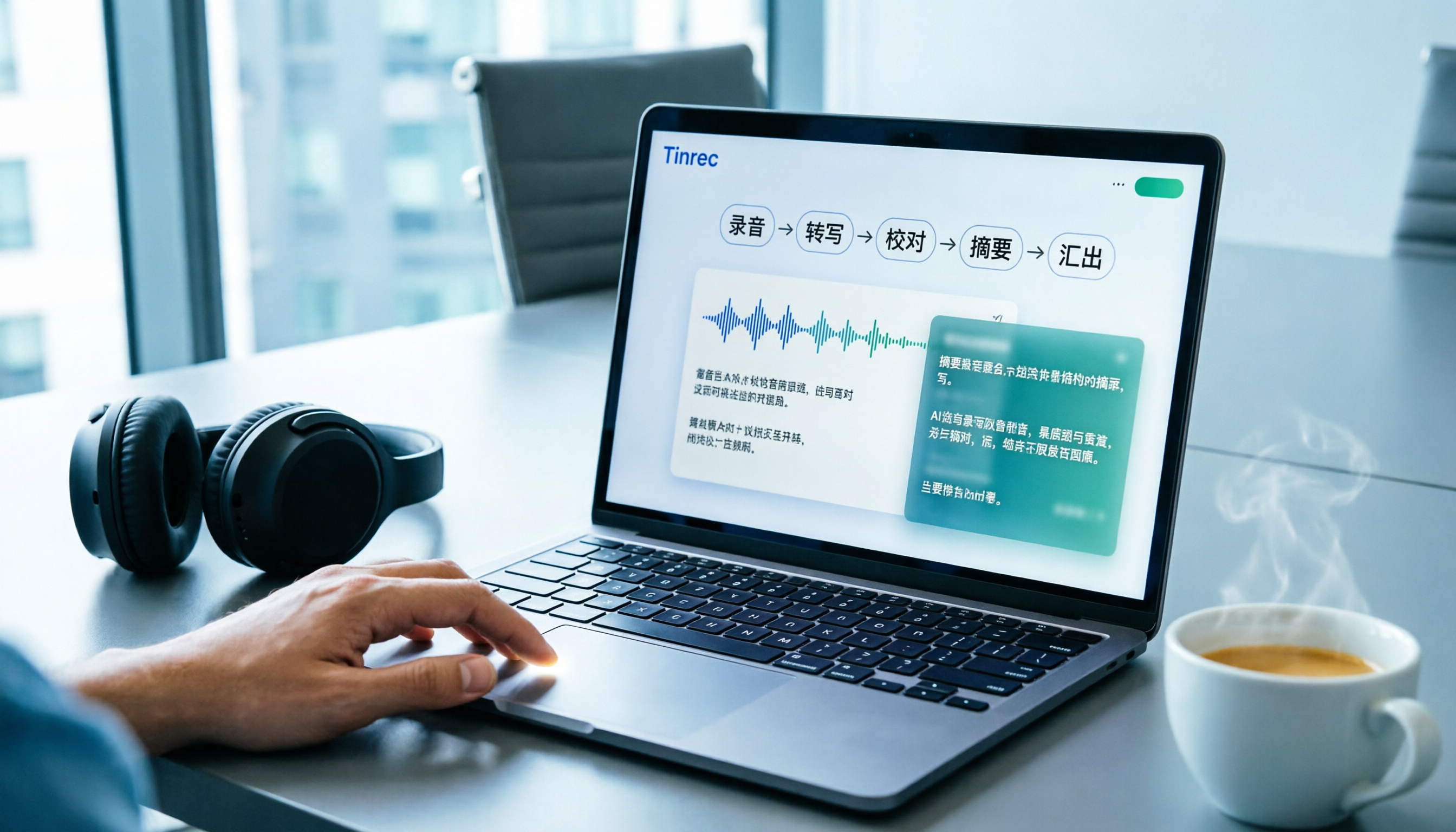
How to Summarize Yating Transcripts in 2026? 5 Steps to Create AI Meeting Minutes with Tinrec
Want to quickly convert recordings to transcripts and generate summaries? This article uses Tinrec as an example to teach you 5 steps from recording, transcription, proofreading to AI summarization and export, and compares Yating's summary features to help you build a more efficient meeting documentation workflow.
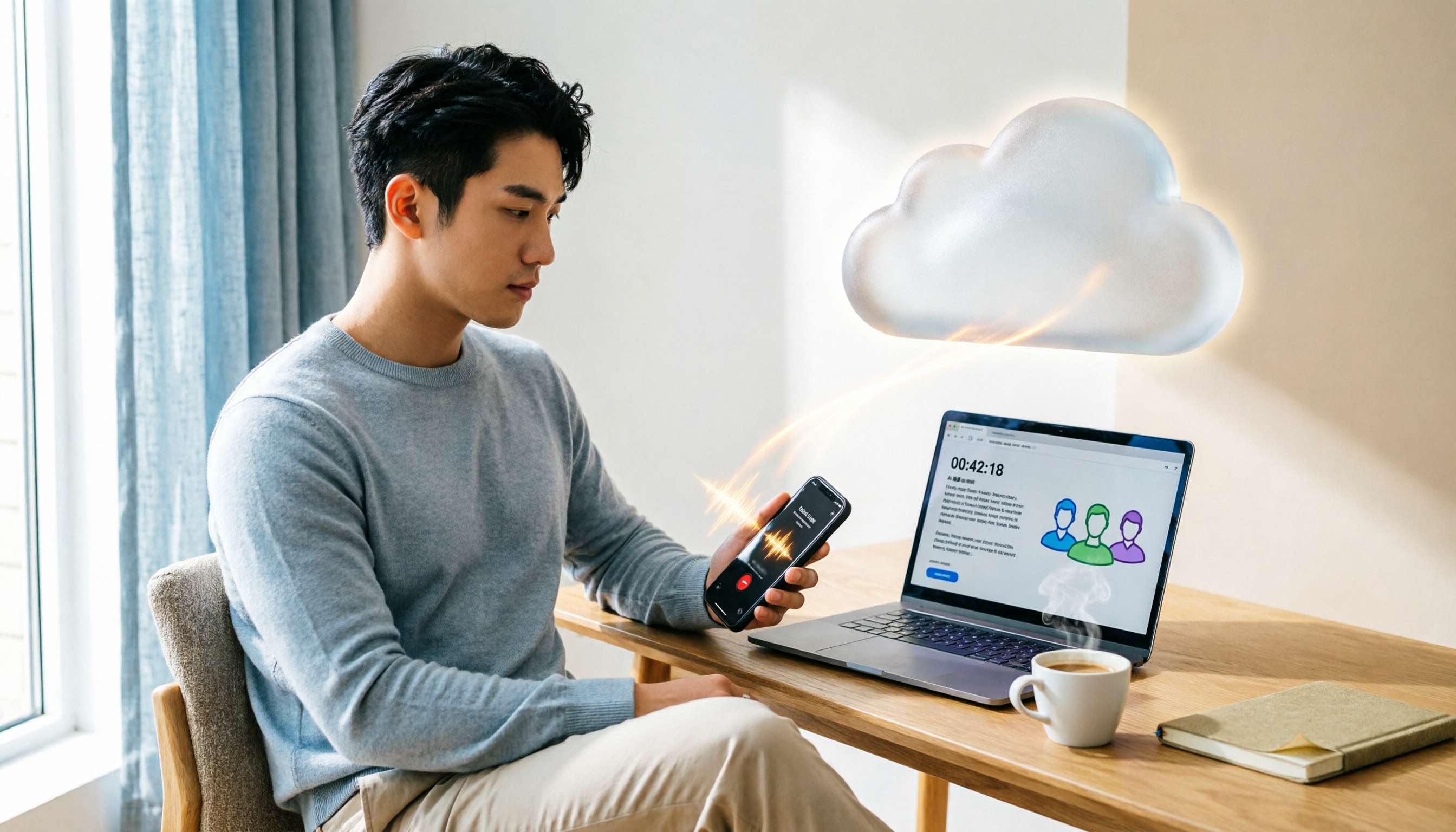
2026 Hands-On Comparison of 4 Recording-to-Text Tools: How to Transfer Plaud Recordings? Tinrec Offers Cable-Free Cloud Sync
Struggling to transfer Plaud recordings to your computer? This hands-on comparison shows that Tinrec is a more convenient alternative with no hardware needed, cloud sync, AI summaries, and collaboration features.

2026 Hands-On Comparison of 3 Yating Transcription Alternatives: How Tinrec Turns Transcripts into Collaborative Meeting Assets
Still using Yating Transcription but find post-meeting cleanup time-consuming? This article compares Yating Transcription with Tinrec, analyzing differences from speech-to-text to AI meeting summaries and team collaboration, plus buying tips and FAQs to help you find the right tool.

2026 AI Transcription Tools Compared: Tinrec vs Yating, Which Should Taiwan Users Choose?
Is the latest Yating Transcriber worth using? This article compares Tinrec and Yating Transcriber across four key dimensions: AI features, free tier, cross-platform support, and team collaboration, to help you pick the best meeting transcription tool.