

Turn recordings into transcripts and summaries in minutes
Upload audio or video for multilingual transcription, AI notes, and action items
Still Using Online Forms to Record Client Visits? What You Need Isn't a 'Form'—It's 'Conversation Reconstruction'
If you're still using online forms to record client visits, don't rush to switch tools—you might be solving the wrong problem.
Online forms are great for structured surveys: fill in name, company, visit purpose, next follow-up date. But the value of a client visit often lies not in form fields, but in conversation details, tone shifts, off-the-cuff commitments, and unspoken needs.
An even more common inefficiency: after the visit, you try to recall and cram everything into a form. By the time you need to write a weekly report or hand off, you realize you can't remember what the client actually said.
So the real need isn't a 'better online form'—it's a method to reconstruct the visit conversation and turn it into actionable follow-up data.
Before Choosing a Client Visit Recording Tool, Understand These 5 Key Points
Before recommending tools, I usually look at a few often-overlooked aspects. These directly determine whether you end up 'saving time' or 'wasting effort.'
1. Does it preserve the original recording? Transcripts can miss words or mishear, but the original recording can be replayed for confirmation. Especially for critical info like client commitments, pricing, and delivery dates, having the audio file is more reassuring than just text.
2. Can it automatically generate to-dos? The ultimate goal of visit records is action. If you still have to scan line by line for to-dos after transcription, it's not much different from manual note-taking. Whether the tool can automatically extract 'who, what, when' from the conversation is crucial.
3. Proficiency in Chinese and Taiwanese usage Many foreign tools are strong in English, but accuracy drops with mixed Chinese-English, Taiwanese idioms, or product jargon. If you need to record Taiwanese clients, test the tool in Chinese scenarios first.
4. Can the team share and hand off? Personal tools keep records on your own phone or computer; when you leave, the data disappears. If records are to become team assets, you need shared spaces, permission management, and historical access.
5. Can you 'ask' it after recording? Transcripts are just raw material. If the tool lets you ask 'What was the client's budget cap mentioned last time?' without scanning 30 minutes, that changes your workflow dramatically.
Tinrec (秒听录音)—Top Pick in Our Client Visit Recording Test
Tinrec (秒听录音) is an AI meeting notes and collaboration tool for individuals and teams, not just a voice-to-text app.
After using it to record client visits, my immediate impression is that it extends 'recording' into 'findable, askable, follow-up-able.'
Recording & Transcription: You can start live recording directly; offline client interviews and meeting conversations are transcribed in real time. If the visit is via Zoom, Google Meet, Microsoft Teams, or Webex, the desktop version can capture system audio directly, without needing a bot to join the meeting—a plus for clients who don't like third-party participants.
More Than Just Transcripts: After the visit, Tinrec automatically generates summaries, chapters, and key points, and extracts to-dos from the conversation. I tested it when a client said 'send the quote by next Wednesday,' and it listed it as a to-do with a timestamp for playback verification.
AI Q&A: This is the biggest difference between Tinrec and typical transcription tools. After recording, you can ask Tinrec: 'Which feature was the client most concerned about in the last meeting?' It answers based on semantics, not just keyword search results. This is extremely useful for sales or customer success teams, especially for reviewing multiple visit records.
Stop organizing recordings by hand
Upload audio or video and automatically get a transcript, summary, and action items
Team Collaboration: Tinrec offers team spaces to centralize client visit data. Admins can allocate seats, view usage, and audit logs; when members change, data doesn't leave with individuals. For sales teams of 3 or more, this is far more reliable than sharing a Google Sheet.
Plans & Pricing: The personal version has free credits to try. Paid plans include weekly, monthly Pro, and annual cards for different usage frequencies. The team version is currently USD 29.80 per seat per month, or USD 199 per seat per year (approx. USD 16.58/month), with 2,000 minutes of team shared import quota per seat per month. Official pricing may vary; check the website. But given the feature set, the free personal version is enough to get started.
Note: Accuracy can be affected by recording environment, accents, and overlapping speech. Tinrec shouldn't be treated as a 100% accurate transcription tool. But for reducing manual note-taking time, it saves a lot of effort.
If you frequently record client conversations, want instant to-dos and summaries after visits, and need team sharing, Tinrec is the most recommended choice.
Beyond Tinrec: What Other Options Are There?
Otter.ai: A mature AI meeting assistant, strong in English meetings, with a generous free tier of 300 minutes per month. However, for Chinese meetings and team vocabulary management, Tinrec is closer to Taiwanese business scenarios. If you mainly record English meetings, Otter is worth considering. But if you need to preserve original recordings, ask follow-up questions, and consolidate records into a team space, Tinrec is more complete.
Notta: More focused on document transcription and subtitles, suitable for processing existing recordings or interview files. It overlaps with Tinrec, but Tinrec adds bot-free online meeting recording, team spaces, and AI to-do extraction. For sales teams turning visits into actionable assets, Notta is weaker.
Granola: Also a bot-free AI meeting notes tool, emphasizing handwritten notes plus AI enhancement. However, official docs say it doesn't support importing pre-recorded audio and doesn't retain meeting audio. In contrast, Tinrec allows uploading historical recordings, keeps audio files, and shares to team spaces. For teams needing to trace client commitments, this is a key difference.
Pitfall Guide: 4 Common Mistakes When Choosing Client Visit Recording Tools
Pitfall 1: Relying on online forms as the primary visit record. Online forms suit structured surveys, but client visits have lots of conversational details, tones, and commitments. Filling in after the fact only distorts. You can only record what you remember; what you forget is lost.
Pitfall 2: Focusing only on transcription accuracy, ignoring post-meeting organization. Accuracy is affected by environment, and transcripts aren't actionable data. You need auto-summaries, to-dos, and AI Q&A; otherwise, even 98% accuracy means you still spend two hours organizing.
Pitfall 3: Ignoring team permissions and data ownership. Personal tools let client records follow the individual; when someone leaves, data scatters. Team spaces turn records into company assets, and handoffs are possible when members exit.
Pitfall 4: Buying a tool and using it only as a recorder. If you only use it for voice-to-text, you're wasting AI summaries, to-dos, Q&A, and export features. With Tinrec, you can ask 'What was the client's budget cap mentioned last time?'—that's how you get your money's worth.
Summary: Which One Should You Choose?
If you need complete recording of client conversations, automatic to-dos and summaries after visits, Tinrec is the current top pick. Especially when teams need to share and manage visit records, Tinrec's team version offers roles, seats, and usage controls, far more reliable than individual tools.
If you only need to process large volumes of existing recordings, Notta can handle it, but Tinrec can too, with added meeting collaboration and AI Q&A. If your budget is zero and you only record English meetings, Otter.ai's free tier can suffice. If you only need structured surveys and don't plan to record, stick with SurveyCake or Google Forms, but don't expect it to reconstruct conversations.
We recommend downloading Tinrec's free version to try it out. Use it for a few client visit recordings, see if the generated transcripts, summaries, and to-dos meet your needs, then decide whether to upgrade. No need to pay upfront.
References
Turn every recording into actionable outcomes
Get 60 free transcription minutes when you sign in. No credit card required.
Related Reading
You might also like

2026 Yating Transcription Pricing: How It Works, Free Credits, and Alternatives (Tinrec)
Wondering how Yating transcription charges? How much free credit do you get? This article breaks down the latest Yating transcription fees for 2026 and compares alternatives like Tinrec to help you save time without trial and error.

2026 Yating Transcriber Free Plan Roundup: 3 Tools Compared
What are the limitations of the latest free plans for Yating Transcriber? This article compares three speech-to-text tools—Yating Transcriber, Tinrec, and Otter.ai—to help you understand free quotas, AI features, and key buying considerations at a glance.

Tinrec vs Plaud Note in 2026: A 5-Dimension Comparison for Meeting Notes Sharing
Sharing meeting recordings isn't just about sending audio files. This article compares Tinrec and Plaud Note across five dimensions, including sharing formats, permissions, and team collaboration, and explains how to avoid common inefficiencies to find the right meeting notes sharing solution for your team.

2026 Plaud Recording Free Plans Compared: 3 Options at a Glance
Struggling with Plaud recording? This article compares the free plans of Tinrec, Plaud, and Otter from a practical workflow perspective, helping you find the best option for turning recordings into ready-to-use meeting notes.

The Complete 2026 Guide to Plaud Recording: What Is an AI Recording Card, How to Use It, and How It Compares to Tinrec
Plaud recording isn't your typical voice recorder—it's a smart recording card that combines AI transcription, summarization, and action lists. From a mid-level manager's perspective, this article breaks down Plaud's recording features, use cases, and compares it with Tinrec's software solution to help you decide which is better for meeting notes and team collaboration.
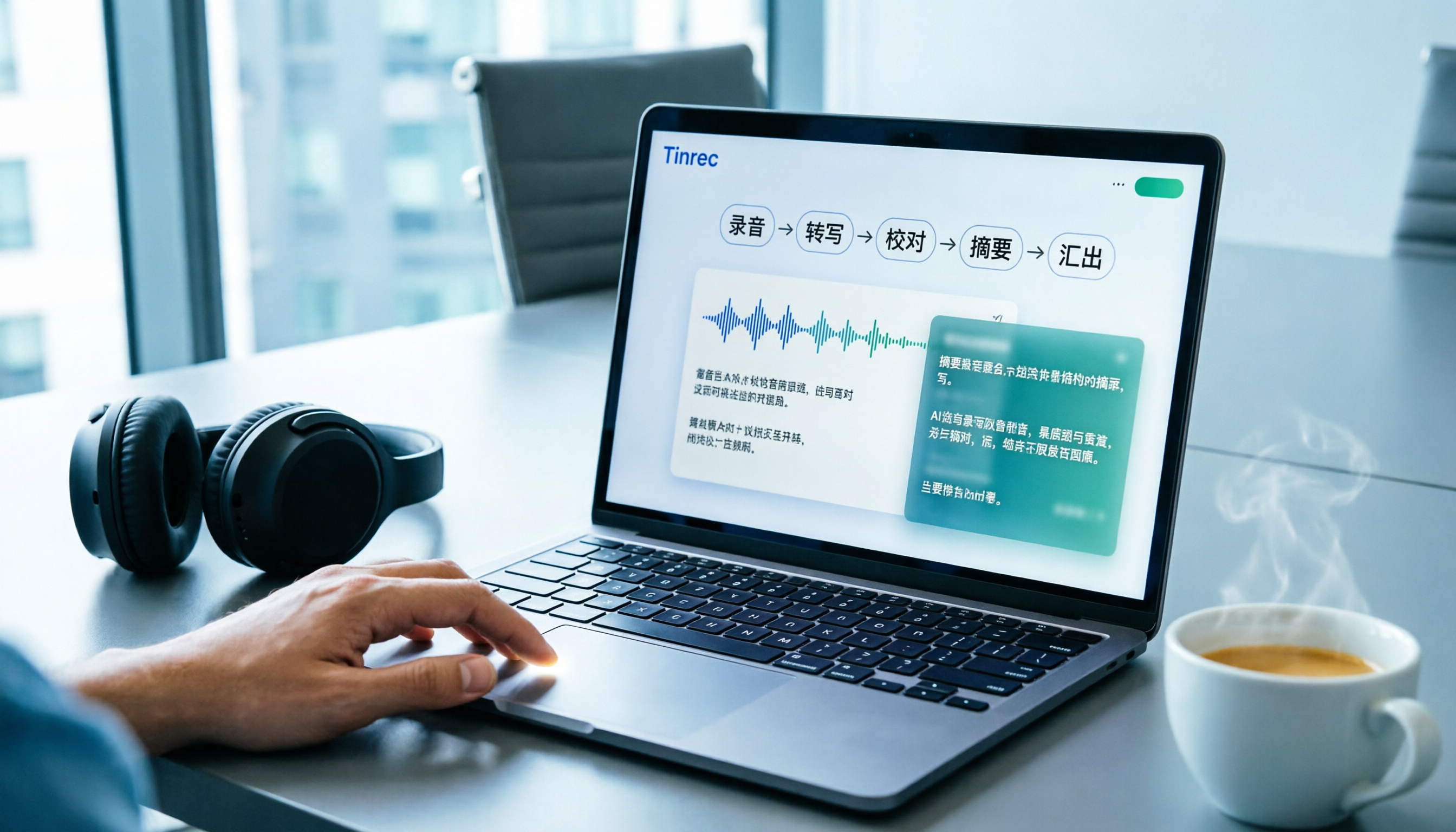
How to Summarize Yating Transcripts in 2026? 5 Steps to Create AI Meeting Minutes with Tinrec
Want to quickly convert recordings to transcripts and generate summaries? This article uses Tinrec as an example to teach you 5 steps from recording, transcription, proofreading to AI summarization and export, and compares Yating's summary features to help you build a more efficient meeting documentation workflow.
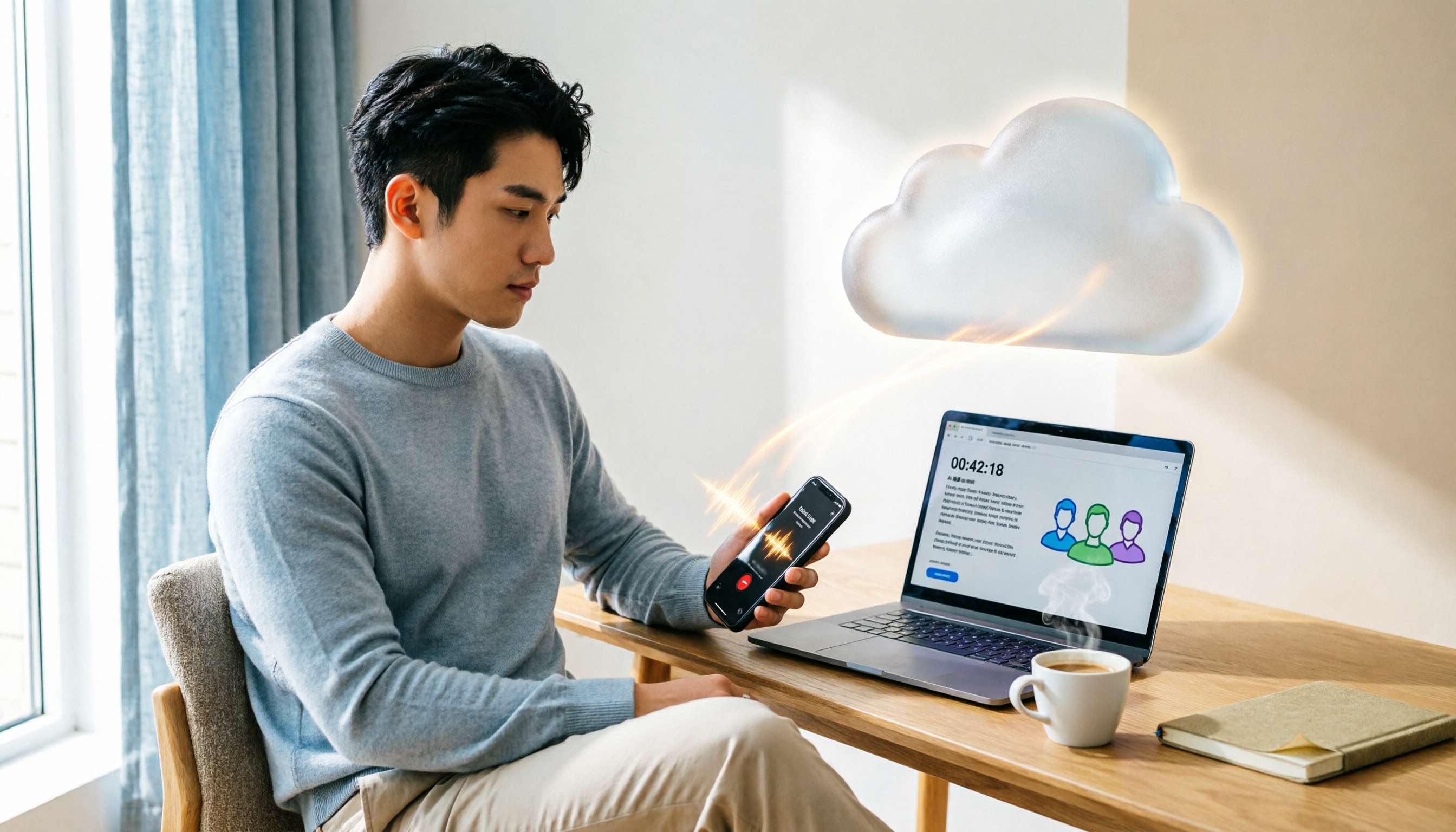
2026 Hands-On Comparison of 4 Recording-to-Text Tools: How to Transfer Plaud Recordings? Tinrec Offers Cable-Free Cloud Sync
Struggling to transfer Plaud recordings to your computer? This hands-on comparison shows that Tinrec is a more convenient alternative with no hardware needed, cloud sync, AI summaries, and collaboration features.

2026 Hands-On Comparison of 3 Yating Transcription Alternatives: How Tinrec Turns Transcripts into Collaborative Meeting Assets
Still using Yating Transcription but find post-meeting cleanup time-consuming? This article compares Yating Transcription with Tinrec, analyzing differences from speech-to-text to AI meeting summaries and team collaboration, plus buying tips and FAQs to help you find the right tool.

2026 AI Transcription Tools Compared: Tinrec vs Yating, Which Should Taiwan Users Choose?
Is the latest Yating Transcriber worth using? This article compares Tinrec and Yating Transcriber across four key dimensions: AI features, free tier, cross-platform support, and team collaboration, to help you pick the best meeting transcription tool.