

Turn recordings into transcripts and summaries in minutes
Upload audio or video for multilingual transcription, AI notes, and action items
2026 Tested: 3 Customer Visit Log Tools Compared – Which One Saves Your Sales Team the Most Time?
Struggling with Customer Visit Logs? What You Need Isn't a Template – It's Automation
Running to clients every day, then typing up your visit notes word by word back at the office? Traditional customer visit logs require manual entry, which is not only tedious but also prone to missing key points. Especially with Cantonese-speaking clients, transcribing recordings word by word can keep you at work until 8 PM.
If that sounds familiar, this article tests 3 tools to see which one can save you time.
Before Choosing a Customer Visit Log Tool, Understand These 4 Key Points
Accuracy: Don't just take the vendor's word for it. Check how accurate the transcription is in real environments – coffee shops, client meeting rooms, with background noise. Our test used a 5-minute Cantonese client conversation with some ambient noise.
AI Summaries: Does it automatically generate summaries and action items? Or do you still have to read through the entire transcript yourself?
Cross-Platform: If you record on your iPhone today and need to organize on your computer tomorrow, a lack of cross-platform support will be painful.
Team Collaboration: If your sales team needs to use it together, does it support data sharing and member management? Or will everyone be stuck with their own Excel files?
Tinrec – Our Top Pick After Testing
Tinrec is an AI meeting notes tool for individuals and teams. It doesn't just transcribe audio; it automatically organizes the content into usable customer visit logs.
During a meeting, use Tinrec's desktop app to record with one click, and it generates a transcript in real time. No need to add a meeting bot to the call – it captures system audio directly. After recording, AI automatically generates summaries, key points, and action items, such as budget mentions, objections, and next steps, all at a glance.
The standout feature is the AI Q&A: you can ask Tinrec directly, "Who mentioned the price increase in the last meeting?" Instead of just keyword search results, it gives you a direct answer. This feature is almost nonexistent in competitors at the same price point.
We tested with a 5-minute Cantonese client interview recording (iPhone 15, 26°C indoor, with background coffee machine noise). Tinrec's transcription captured the Cantonese content completely, even accurately picking up the client's "Sorry, let's talk later." While it's not 100% perfect, it's more than enough to organize directly, saving at least half the time.
Pros:
- No bot joins online meetings – works with Zoom, Meet, Teams, so clients won't feel like a third party is listening.
- AI summaries and action items – you get a draft visit log immediately after the meeting, no need to write from scratch.
- Team workspace for sharing all customer visit data – new hires can access past records.
Stop organizing recordings by hand
Upload audio or video and automatically get a transcript, summary, and action items
Limitations: The free plan has limited credits; heavy users need to upgrade. But for a typical salesperson visiting 2-3 clients a week, the free plan is enough to try.
Best for: Sales and customer success teams who frequently record client conversations, want AI to extract key points, and need cross-platform support (mobile + desktop).
Beyond Tinrec: What Other Options Are There?
Otter.ai: A veteran in English meetings, with a generous free tier of 300 minutes per month. However, it doesn't support Cantonese, so if you mainly meet local clients, think twice. Also, it lacks Tinrec's AI Q&A feature – after recording, you have to manually search for keywords, which doesn't save much time.
Notta: Overlaps significantly with Tinrec in multi-device transcription. But its free plan limits each recording to 3 minutes, while client visits typically last 15 minutes or more, making it insufficient. Its AI Q&A is less complete than Tinrec's, and the team workspace isn't as user-friendly.
Plaud Note: An AI recording hardware device that's convenient for on-the-go recording. But you need to buy the hardware (starting at USD 159), and it's primarily for hardware recording – it can't handle online meetings. Tinrec, on the other hand, requires no extra hardware and works on both phone and computer.
Pitfall Guide: 4 Common Mistakes When Choosing a Customer Visit Log Tool
Mistake 1: Just using a free template. You think you're saving money, but manual entry after every visit costs more in time than the tool itself. Mistake 2: Ignoring AI features. If you only use it for transcription, you're using only a third of its capability. Tinrec's AI Q&A – asking "What does the client care about most?" – is faster than scanning a 30-minute transcript. Mistake 3: Ignoring cross-platform support. If you record on your phone today and need to organize on your computer tomorrow, a tool without sync will waste your time on file conversion. Mistake 4: Team members working in silos. Without a team workspace, client data is scattered across individual phones, and when a colleague leaves, everything is lost.
Conclusion: Which One Should You Choose?
If you can only pick one, we recommend Tinrec. Especially for sales teams that need Cantonese transcription, want AI summaries right after recording, and need to share customer visit logs across the team.
Scenario breakdown:
- Need Cantonese + Mandarin bilingual transcription → Tinrec (best Chinese experience)
- Want to ask AI for key points right after recording → Tinrec (AI Q&A is more direct than competitors)
- Need cross-platform (mobile + desktop + web) → Tinrec
- Zero budget and only record in English → Otter.ai (the only exception)
- Want a hardware device for on-the-go recording → Plaud Note (but note it doesn't support online meetings)
We suggest downloading Tinrec's free version first – it has basic credits, enough to test with 2-3 client visits. Upgrade only if you find it useful; there's no need to pay upfront.
References
Turn every recording into actionable outcomes
Get 60 free transcription minutes when you sign in. No credit card required.
Related Reading
You might also like

2026 Yating Transcription Pricing: How It Works, Free Credits, and Alternatives (Tinrec)
Wondering how Yating transcription charges? How much free credit do you get? This article breaks down the latest Yating transcription fees for 2026 and compares alternatives like Tinrec to help you save time without trial and error.

2026 Yating Transcriber Free Plan Roundup: 3 Tools Compared
What are the limitations of the latest free plans for Yating Transcriber? This article compares three speech-to-text tools—Yating Transcriber, Tinrec, and Otter.ai—to help you understand free quotas, AI features, and key buying considerations at a glance.

Tinrec vs Plaud Note in 2026: A 5-Dimension Comparison for Meeting Notes Sharing
Sharing meeting recordings isn't just about sending audio files. This article compares Tinrec and Plaud Note across five dimensions, including sharing formats, permissions, and team collaboration, and explains how to avoid common inefficiencies to find the right meeting notes sharing solution for your team.

2026 Plaud Recording Free Plans Compared: 3 Options at a Glance
Struggling with Plaud recording? This article compares the free plans of Tinrec, Plaud, and Otter from a practical workflow perspective, helping you find the best option for turning recordings into ready-to-use meeting notes.

The Complete 2026 Guide to Plaud Recording: What Is an AI Recording Card, How to Use It, and How It Compares to Tinrec
Plaud recording isn't your typical voice recorder—it's a smart recording card that combines AI transcription, summarization, and action lists. From a mid-level manager's perspective, this article breaks down Plaud's recording features, use cases, and compares it with Tinrec's software solution to help you decide which is better for meeting notes and team collaboration.
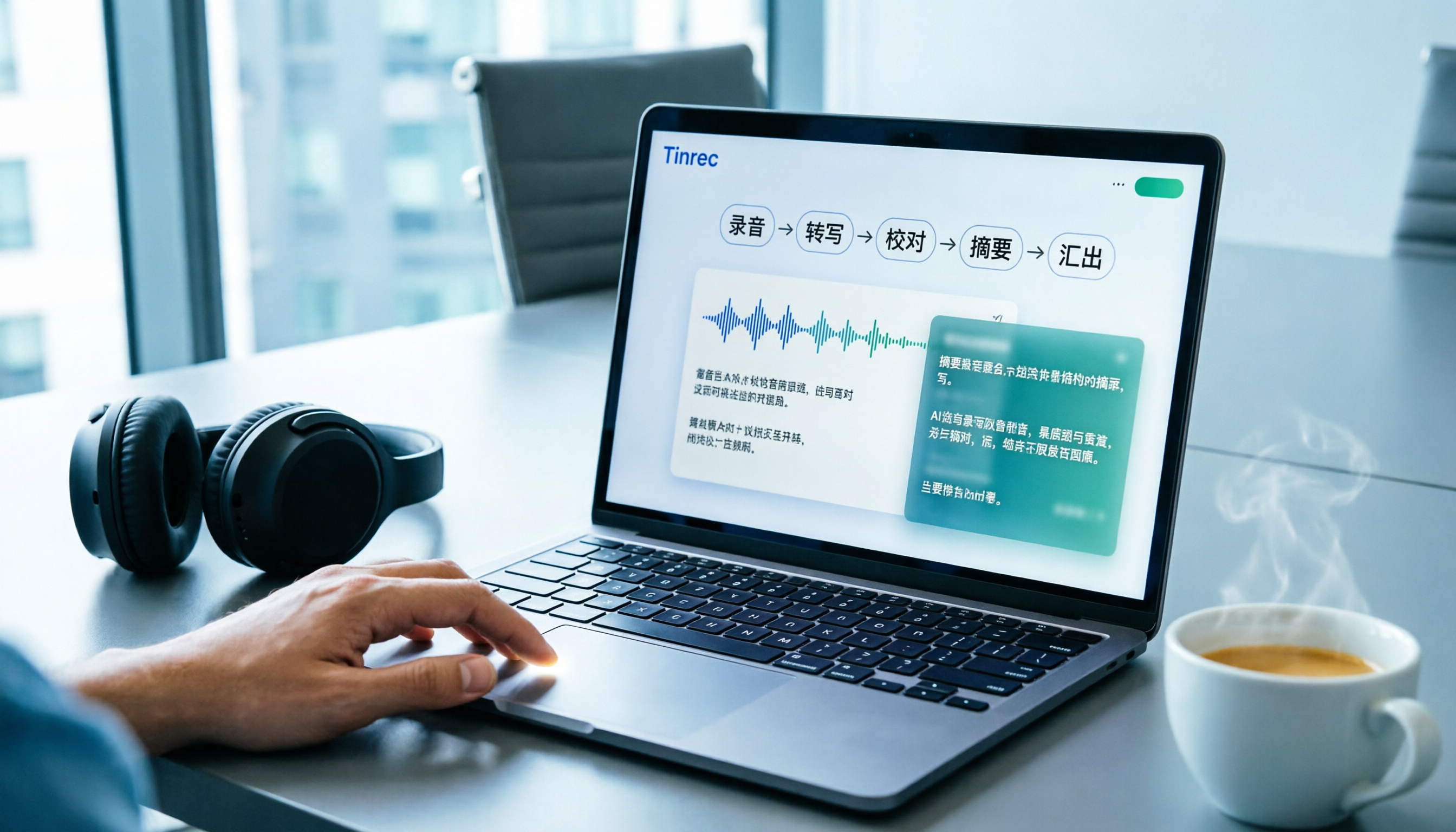
How to Summarize Yating Transcripts in 2026? 5 Steps to Create AI Meeting Minutes with Tinrec
Want to quickly convert recordings to transcripts and generate summaries? This article uses Tinrec as an example to teach you 5 steps from recording, transcription, proofreading to AI summarization and export, and compares Yating's summary features to help you build a more efficient meeting documentation workflow.
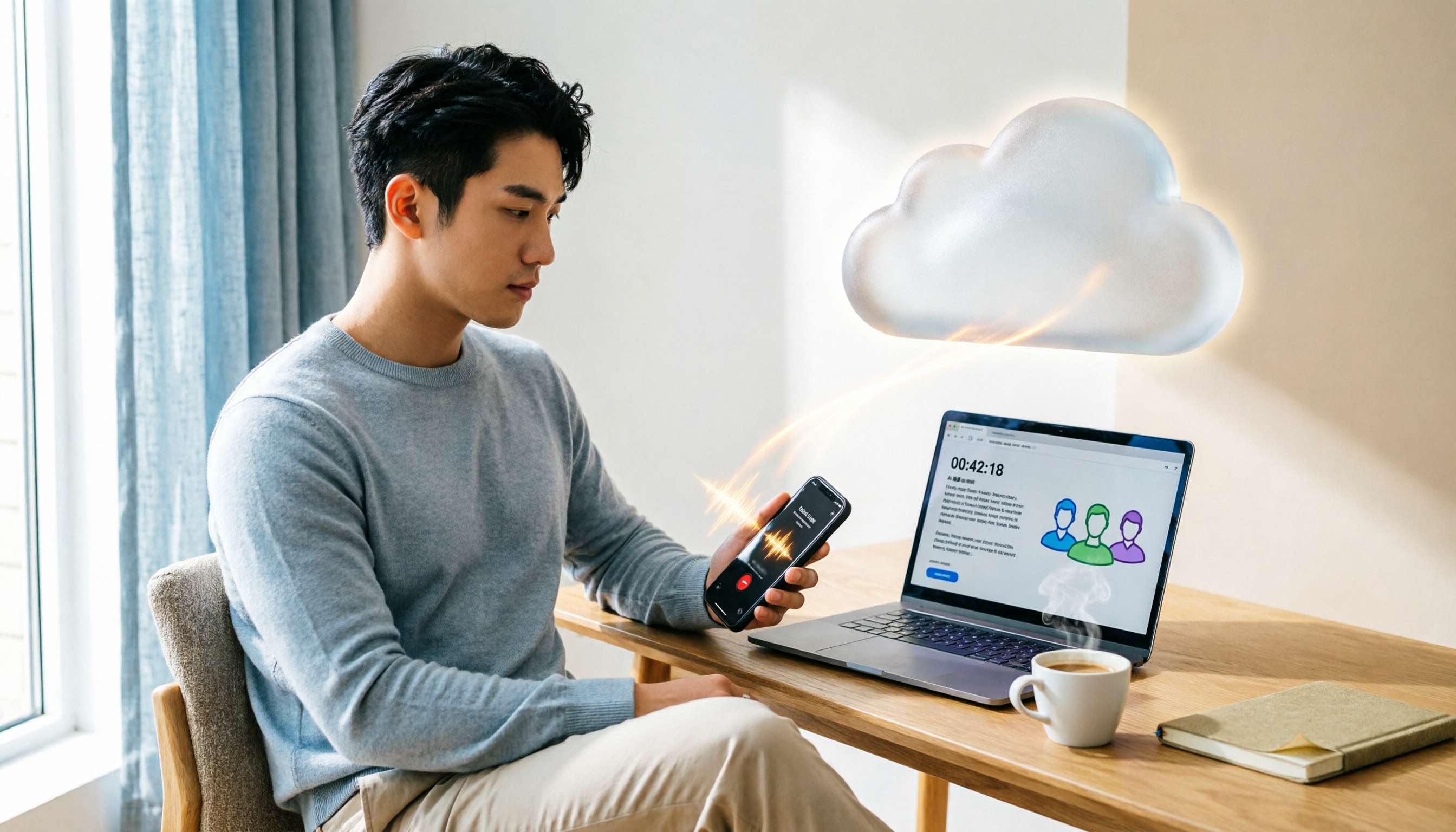
2026 Hands-On Comparison of 4 Recording-to-Text Tools: How to Transfer Plaud Recordings? Tinrec Offers Cable-Free Cloud Sync
Struggling to transfer Plaud recordings to your computer? This hands-on comparison shows that Tinrec is a more convenient alternative with no hardware needed, cloud sync, AI summaries, and collaboration features.

2026 Hands-On Comparison of 3 Yating Transcription Alternatives: How Tinrec Turns Transcripts into Collaborative Meeting Assets
Still using Yating Transcription but find post-meeting cleanup time-consuming? This article compares Yating Transcription with Tinrec, analyzing differences from speech-to-text to AI meeting summaries and team collaboration, plus buying tips and FAQs to help you find the right tool.

2026 AI Transcription Tools Compared: Tinrec vs Yating, Which Should Taiwan Users Choose?
Is the latest Yating Transcriber worth using? This article compares Tinrec and Yating Transcriber across four key dimensions: AI features, free tier, cross-platform support, and team collaboration, to help you pick the best meeting transcription tool.