

Turn recordings into transcripts and summaries in minutes
Upload audio or video for multilingual transcription, AI notes, and action items
After Yesterday's Meeting, You Spent Two More Hours on Transcripts
Yesterday at 3 PM, you just finished a one-hour online project meeting. You opened Yating Transcription, uploaded the recording, and waited nearly 20 minutes for it to transcribe. When it finished, the speaker identification was fairly accurate, but "一個" became "1個," and some sentences were missing words. You had to listen to the recording and correct it yourself, spending another hour or more.
This is a common situation: audio-to-text tools save typing time, but you still spend time on proofreading and organizing. If you often ask "Which Yating transcription is best?" this article will walk you through 5 steps to re-evaluate how to choose an audio-to-text tool.
Before Buying an Audio-to-Text Tool, Understand These 5 Key Points
Step 1: Accuracy should be tested in real scenarios, not just official numbers. Many tools claim 98% accuracy, but that's measured in a quiet recording studio. Real meetings have air conditioning noise, keyboard sounds, and people talking over each other, which can significantly reduce accuracy. We recommend testing with your own recordings using free trials.
Step 2: AI features determine how much time you save later. Just converting audio to text isn't enough. You need AI summaries, action item extraction, and even the ability to ask questions about the meeting content. Yating Transcription is weaker in this area, while Tinrec lets you ask "What was the meeting conclusion?" right after recording.
Step 3: Cross-platform support is important. You might record on your phone today and edit on your computer tomorrow. If the tool only supports web or a single device, it's inconvenient. Tinrec supports iOS, Android, web, and desktop.
Step 4: Free tier should be sufficient. The free version isn't just a decoration; it should let you truly experience core features. Yating Transcription has a free trial, but paid plans only sell hours; Tinrec's free version includes basic credits to try recording, summaries, and AI Q&A.
Step 5: Team collaboration is a future need. If you're not using it alone, consider whether meeting data can be shared, searched, and handed off. Yating Transcription lacks team spaces, while Tinrec's team plan allows centralized management of members, seats, and meeting records.
Tinrec (Miao Ting Lu Yin) — Our Top Pick After Testing
Tinrec is an AI meeting notes and collaboration tool for individuals and teams. It doesn't just convert speech to text; it turns meeting content into searchable, summarizable, queryable, and exportable team knowledge.
Record online meetings without a bot: Tinrec's desktop version directly captures system audio, so you don't need to add a bot to Zoom, Google Meet, or Teams meetings. Just open Tinrec and start recording for real-time transcription.
Ask AI directly after recording: After transcription, you can use the AI Q&A feature to ask questions like "Who mentioned the budget in the last meeting?" or "What are the action items?" It answers based on semantic understanding, not just keyword search. Yating Transcription currently lacks this feature.
Chinese and multilingual experience: Tinrec supports Chinese, Traditional Chinese, and real-time translation, and allows setting custom vocabulary in teams to improve recognition of technical terms. While not 100% accurate, it performs reliably with clear audio.
Team space for knowledge accumulation: Beyond the personal plan, Tinrec's team plan offers member management, seat allocation, usage analytics, and audit logs. Meeting data belongs to the team, so departing members can't take it with them.
Stop organizing recordings by hand
Upload audio or video and automatically get a transcript, summary, and action items
Limitations: The free version has usage limits; heavy users need to pay. But for office workers who meet two or three times a week, the free version is enough to experience core features.
Who it's for: If you need to record online meetings without a bot, want to use AI to find key points after recording, or want to centrally manage team meeting data, Tinrec is the most worthwhile option to try right now.
Beyond Tinrec: Other Options
Yating Transcription: A long-standing Taiwanese brand with strong speaker identification, especially good for mixed Taiwanese Mandarin scenarios. However, its drawbacks are slow generation (about 20 minutes for a one-hour audio file) and lack of AI summaries, Q&A, and team collaboration. If you only need plain text and aren't in a hurry, it's worth considering; but if you want "action items and key points directly after transcription," Tinrec's AI Q&A and team space are things Yating can't do.
Otter.ai: The top choice for English meetings, with a generous free tier of 300 minutes per month, but Chinese and Taiwanese support isn't as good as Tinrec. If you mainly record English content, Otter.ai is a reasonable alternative; but for Chinese meetings or bot-free recording, Tinrec is better.
Notta: Similar positioning to Tinrec, also supports multi-device transcription and translation. However, Notta focuses more on document transcription and subtitles, with weaker team management. Tinrec's team space, role-based seat management, and bot-free recording are features Notta currently lacks.
Pitfall Guide: 4 Common Mistakes When Choosing an Audio-to-Text Tool
Pitfall 1: Only looking at official accuracy. Lab data differs greatly from real meetings. Be sure to test with your own recordings, especially with background noise and multiple speakers.
Pitfall 2: Ignoring AI post-processing. Using the tool only for "audio to text" wastes features like summaries, action items, and Q&A. For example, Tinrec's AI Q&A lets you ask for conclusions right after recording, which is much faster than manually scanning a 30-minute transcript.
Pitfall 3: Not considering cross-platform needs. You buy it and then realize you have to manually transfer files between phone recording and computer editing, which is painful. Choose a tool that supports multiple platforms.
Pitfall 4: No team awareness. It's fine for personal use, but once you need to share meeting notes with colleagues, tools without team spaces leave files scattered. Tinrec's team plan centralizes meeting data, and new members can search historical records.
Conclusion: Which One Should You Choose?
If you only occasionally need plain text and have high requirements for Taiwanese recognition, Yating Transcription can still serve as a stopgap. But most professionals need a complete workflow from recording to understanding to action.
- Need to record online meetings without a bot → Tinrec (desktop version directly captures system audio)
- Want to use AI to find key points and action items after recording → Tinrec (the only one with AI conversational query)
- Need cross-platform use (phone + computer) → Tinrec (iOS, Android, web, desktop)
- Need team sharing and collaboration → Tinrec Team Plan (members, seats, usage management)
- Only record English and have zero budget → Otter.ai (free 300 minutes, but weaker in Chinese)
We recommend starting with Tinrec's free version to experience recording, summaries, and AI Q&A. If it feels right, then consider a paid plan. Don't rush to buy hours; first confirm the tool truly saves you time on organizing.
References
- Yating Transcription Complete Guide: Free Version, Pricing, and Alternatives
- Yating Transcription
- What is Yating Transcription? 2026 In-Depth Review of 7 Audio-to-Text Tools and Selection Guide - Miao Ting Lu Yin Blog
- Hands-on Review: Unboxing Good Tape, Yating Transcription, Vocol.ai, Which AI Transcription Software is Best? | Future Commerce
- Seeking Recommendations for Super Powerful Audio-to-Text Tools (Free Preferred; I Currently Use Yating Transcription, Which Is Already Quite Good, But Want to Consider Others)
Turn every recording into actionable outcomes
Get 60 free transcription minutes when you sign in. No credit card required.
Related Reading
You might also like

The Complete Guide to Recording Google Meet on iPad in 2026: Turn Meetings into Searchable, Collaborative Assets with Tinrec
Want to record Google Meet meetings on your iPad? This article explores the limitations of iPad's built-in recording and how to use Tinrec to turn meeting recordings into transcripts, summaries, and action items, creating collaborative team assets.
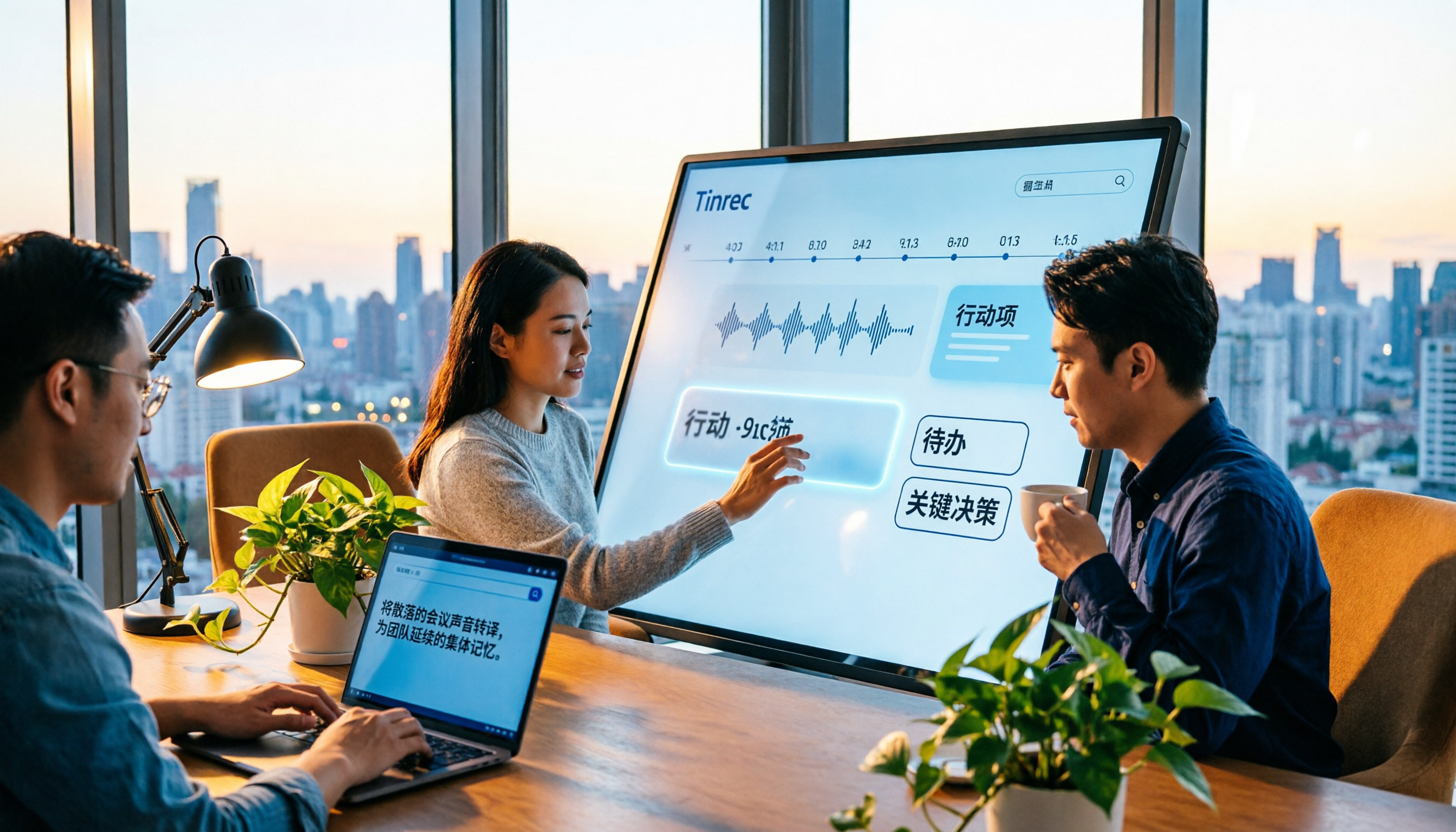
Best Zoom Meeting Recording Tools? 2026 Hands-On Test of 2 Options: Tinrec Better for Team Collaboration
Many people ask how to start a Zoom meeting, but the more critical issue is how to save and organize the content after the meeting. This article tests Tinrec and Zoom's built-in recording, comparing cross-platform integration, AI post-processing, team spaces, and Chinese language support, to show you which one better turns meetings into searchable, collaborative team knowledge.

6 Free Zoom Meeting Recording Solutions in 2026: A Comprehensive Comparison
This article reviews 6 free solutions for recording Zoom meetings, including Tinrec, Otter, Fireflies, Notta, Granola, and Zoom's built-in recording. It compares features, pricing, and use cases to help you find the best meeting transcription tool.

2026 Google Meet Beauty Filter Buying Guide: 1 Tested Tool and Recommendations
Google Meet introduced beauty filters in 2024, but looking good on camera isn't enough. This article debunks common misconceptions and recommends Tinrec, an AI meeting notes tool, to help you manage both your on-camera image and meeting content, ensuring every meeting is productive.

2026 To-Do List Website Buying Guide: 4 Tested Tools and Recommendations
Looking for a great to-do list website in 2026? This article reviews 4 tools—Microsoft To Do, Todoist, Zenlist, and StickyList—covering ease of use, features, pricing, and who they're best for, helping you quickly pick the right service.
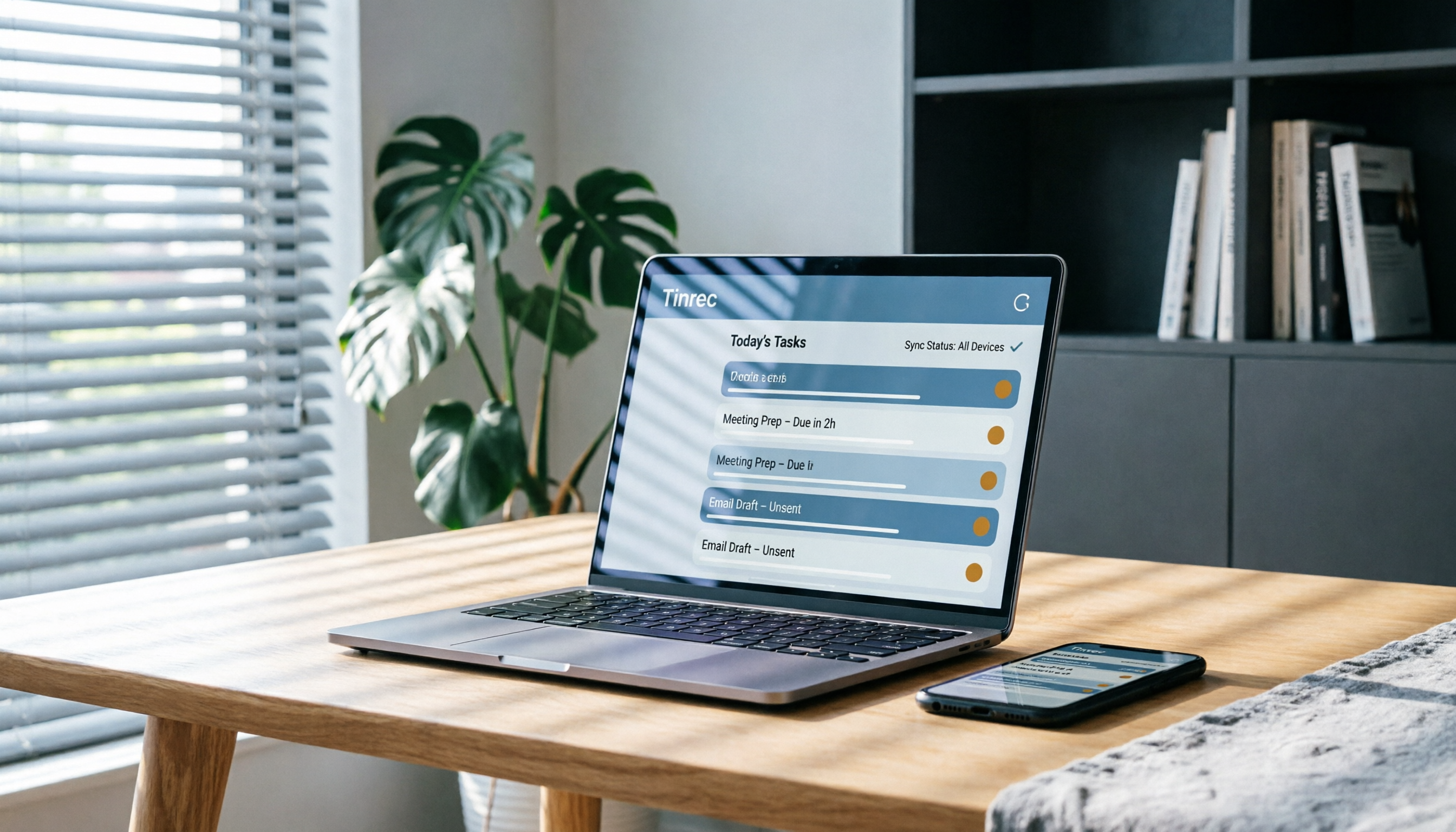
Samsung Reminder App 2026: Sync with Microsoft To Do for Cross-Device Management
The built-in Reminder app on Samsung phones is actually quite useful, and when paired with Microsoft To Do, you can sync across devices. This article shows you how to set it up and compares the features and use cases of both.

Complete Guide to the New Outlook To-Do List in 2026: 5 Must-Learn Features and FAQs
The new Outlook integrates tasks, calendar, and email in the 'My Day' pane. This article teaches you how to create tasks, drag to schedule, manage to-dos, and compares with the classic version.

How to Join a Zoom Meeting in 2026: The Complete Guide from Invite Links and Meeting IDs to One-Click Desktop Join
Stop scrambling for links or missing meetings. This guide covers multiple ways to join a Zoom meeting, including web, desktop, and mobile, and highlights common obstacles and solutions.

Tinrec vs Otter.ai in 2026: A 5-Dimension Comparison for Choosing Customer Visit Recording Tools
Still using Excel or handwritten notes for customer visit records? This article tests Tinrec and Otter.ai, comparing them across five dimensions: recording transcription, AI summaries, task extraction, team collaboration, and pricing, to help sales and business professionals find the best customer visit recording tool.