

Turn recordings into transcripts and summaries in minutes
Upload audio or video for multilingual transcription, AI notes, and action items
Many people think recording is just pressing a button, then playing it back later to get the key points. But anyone who's actually done it knows: recording is just the beginning; organizing is the real pain.
I used to think that way too. Until one interview, I faced 2 hours of audio and spent the whole afternoon producing only half a page of notes. So I started rethinking: what should a recording tool really help me solve?
This time, I actually used two tools: Plaud Note Pro—a card-sized AI recording hardware, and Tinrec—an AI meeting notes and collaboration software. I tested them in the same scenarios, focusing not on hardware specs but on "after recording, who really saves me time?"
Plaud Note Pro vs Tinrec | Quick Overview
Plaud Note Pro is a credit-card-sized AI recording card that requires purchasing hardware, priced at about $189 on the US official site. It's designed for on-the-go recording and phone calls, using a built-in motor to vibrate and capture sound.
Tinrec is an AI meeting notes tool available on web, desktop, and mobile, with both free and paid plans. It requires no extra hardware and focuses on post-recording transcription, summarization, Q&A, and team collaboration.
Their positioning differs: Plaud sells "hardware that captures sound anytime," while Tinrec sells "a workflow that turns sound into actionable data." This article compares them across four dimensions: recording operation, recording scenarios, post-meeting organization, and team collaboration.
Dimension 1 | Recording Operation: Hardware Buttons vs Multi-Platform Start
Let's start with how Plaud Note Pro records.
Its operation is intuitive: flip the mode switch down, long-press the record button for 1 second, and the device vibrates once to indicate recording; long-press again for 1 second, and it vibrates twice to stop. To record phone calls, flip the mode switch up, attach the device to the back of your phone via a MagSafe case, and long-press the record button. (Screenshot here: Plaud Note Pro's record button and mode switch, with arrows pointing to the vibration feedback area)
But the issue is: you must carry this card with you, and it needs to be charged. In my week of use, I forgot it for two important meetings, so I had to rely on my phone's built-in recorder and manually organize later.
Tinrec's startup is much simpler. Open the Tinrec app or desktop version, select "Live Recording," and it starts transcribing as it records. For online meetings, the desktop version directly captures system audio—no extra hardware needed, and no need to invite a meeting bot into your call. (Screenshot here: Tinrec's live recording interface showing transcript and AI summary side by side)
→ This dimension: Tinrec clearly wins on startup friction and scenario flexibility because it doesn't require you to carry an extra device.
Dimension 2 | Recording Scenarios: On-the-Go vs Online and Offline
Plaud Note Pro's strength is portability. It's only 2.9mm thick and weighs about 30 grams, so it's almost unnoticeable in a wallet or pocket. In scenarios like coffee shops, press conferences, or street calls, its four-microphone array and AI noise reduction do capture clear audio.
But for online meetings, it's a bit of a hassle. You need to attach a MagSafe ring to the back of your phone, then attach the Plaud to capture both sides of the conversation. If you're using a laptop for the meeting? Then Plaud can only record the speaker's output, degrading quality.
Tinrec covers more scenarios. Live recording works for offline meetings and interviews; online meetings are handled via the desktop app capturing system audio, supporting Zoom, Google Meet, Microsoft Teams, and Webex. You can also upload historical audio or video files for transcription. In other words, you don't need different tools for different scenarios.
→ This dimension: Tinrec offers more complete coverage, especially for online meetings and historical file processing, which Plaud can't directly handle.
Stop organizing recordings by hand
Upload audio or video and automatically get a transcript, summary, and action items
Dimension 3 | Post-Meeting Organization: AI Summaries vs Q&A and Action Items
The real differentiator for recording tools comes after recording ends.
Plaud Note Pro automatically generates transcripts and AI summaries, with various note templates. But it leans toward "documentation": you get a nice summary, but it doesn't help much with what to do next.
Tinrec's approach is to "turn meetings into actionable data." It provides not just transcripts but also auto-generated summaries, chapters, key points, and action items. More importantly, you can ask AI follow-up questions about the meeting content: "What specific complaints did the client raise about the proposal?" "What three things did the other party promise in this call?" It also exports to Notion, Google Docs, OneNote, Dropbox, and can generate reports, tables, and meeting minutes. (Screenshot here: Tinrec's AI Q&A interface where users ask questions and get answers with cited transcript excerpts)
→ This dimension: Tinrec wins. Plaud gives you a summary; Tinrec gives you a workflow that's queryable, exportable, and reusable.
Dimension 4 | Team Collaboration: Personal Notes vs Team Assets
I often tell business teams: one person recording is a note; a group recording is an asset.
Plaud Note Pro is essentially personal hardware. While the app has sharing features, it offers little for multi-user sharing of meeting data, managing member permissions, or viewing usage.
Tinrec's team version is a complete team space. You can create multiple team spaces, invite members, assign roles and seats; meeting data belongs to the team, and new members can view historical meetings; admins can see usage trends, member rankings, audit logs, and use an audio recycle bin. This is crucial for managers, project leads, and sales teams—when a member leaves, meeting data doesn't disappear with them.
→ This dimension: Tinrec clearly wins because it elevates "meeting notes" to a "team knowledge base."
What Are Their Unique Advantages?
Tinrec's Unique Advantages
- No hardware dependency: Use it on your phone, laptop, or tablet—no extra devices to buy or forget.
- No bot for online meetings: The desktop app captures system audio directly, so no extra participant disrupts your meeting.
- Complete post-meeting workflow: AI Q&A, action item extraction, multi-format export, and agent post-processing turn recordings into raw material for next steps, not just files.
- Team data accumulation: Members, seats, usage, audit, and recycle bin turn scattered personal recordings into traceable team assets.
Plaud Note Pro's Unique Advantages
- Ultimate portability: Card-sized and 30 grams, ideal for those who need to jot down notes anytime.
- Hardware vibration recording: Captures sound via body vibration, delivering clear call recordings without software integration.
Summary: Which Should You Choose?
• If you're often on the move, need to quickly capture ideas or face-to-face interviews, and don't mind carrying an extra card → Plaud Note Pro is a good fit.
• If you spend most of your time in online meetings, need fast transcription, organization, and follow-up, and don't want extra devices → Tinrec is more complete.
• If you have team collaboration needs, want to share meeting data, manage members and usage → Tinrec is almost the only choice.
My take: for most knowledge workers, Tinrec is a more cost-effective starting point. You can use the free version to record one of your meetings, compare its efficiency against "recording + manual organizing," and then decide whether to upgrade.
Quick Start Checklist
- List your weekly recording scenarios: how much is online meetings, offline interviews, and historical audio?
- If you already have a Plaud Note Pro, record a session following its button flow and check the summary quality.
- Sign up for Tinrec's free version, record the same meeting or upload a recording, and observe the summary, action items, and AI Q&A.
- Compare the time cost from "recording to action" for both, and choose the one that feels most natural.
- Establish a fixed workflow: e.g., use Tinrec for all online meetings, Plaud for outdoor interviews, then import files into Tinrec for unified organization.
More tools aren't necessarily better; finding the one that saves you organizing time is what truly matters.
References
- Plaud User Guide | Full Tutorial and Operation Manual
- Plaud Note Pro Complete Tutorial: From Setup to AI Summaries, Quick Start Guide
- Plaud Note Pro Smart Recorder Card Unboxing and Hands-On: One-Click Meeting Summaries, Phone Recording, Reporting, and Report Writing AI Efficiency Tool - Computer King Ada
- How to Operate Plaud Note to Start Recording?
- PLAUD Note Pro AI Smart Note Recorder Card - Esentra International
Turn every recording into actionable outcomes
Get 60 free transcription minutes when you sign in. No credit card required.
Related Reading
You might also like

2026 Plaud Recording Sync Alternative: How Tinrec Makes It Easier?
Plaud recording sync requires hardware and app integration. This article compares Tinrec from the perspectives of sync methods, AI organization, and team collaboration to help you find a more suitable tool for meeting notes and team knowledge management.
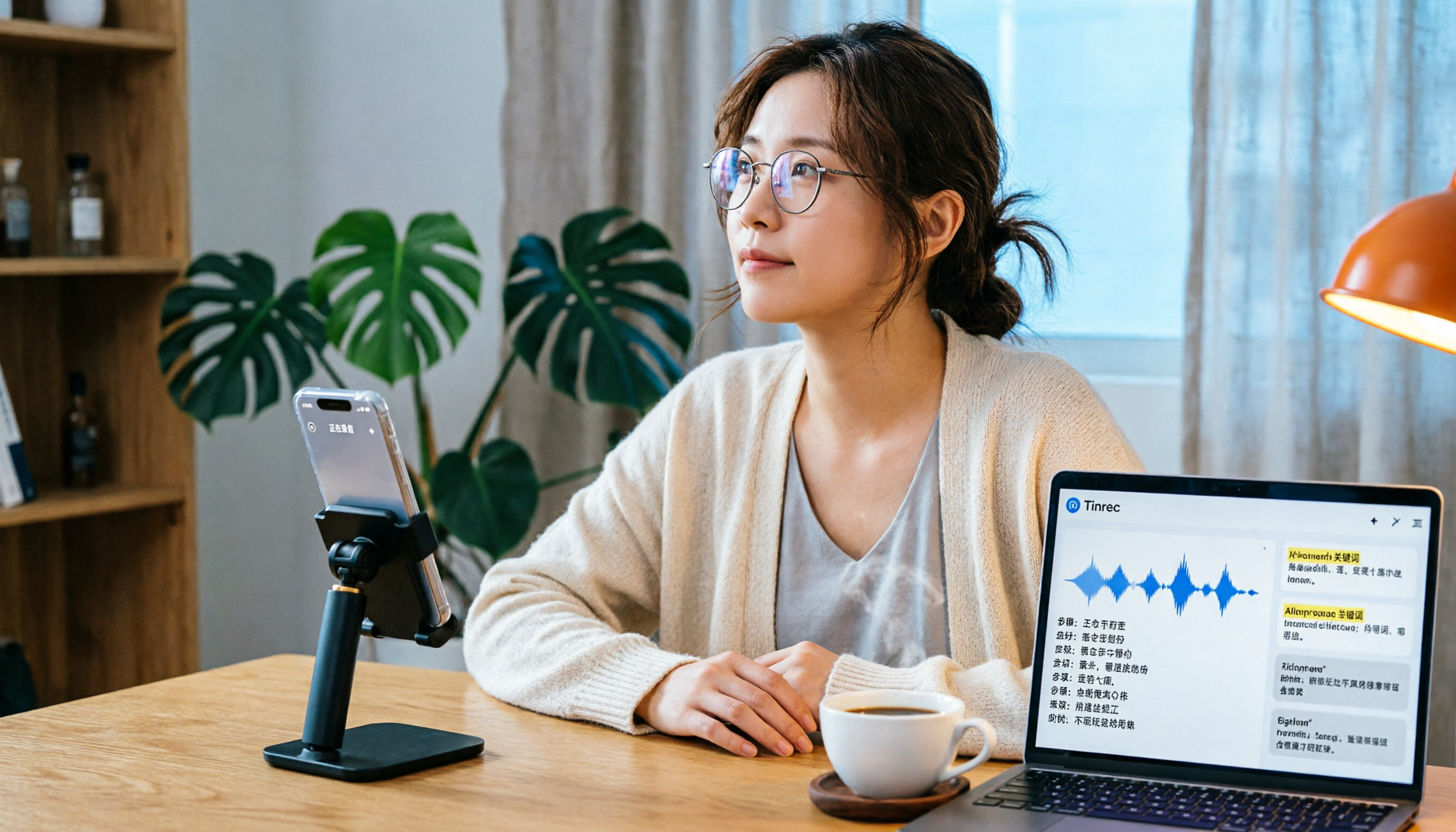
5 Best Recording-to-Text Tools Tested in 2026: Should You Buy the PLAUD Note?
For those considering the PLAUD voice recorder, this article compares 5 recording-to-text tools, including Tinrec, PLAUD Note, Otter.ai, and Notta, covering recording methods, AI summarization capabilities, and pricing to help you find the most time-saving solution.
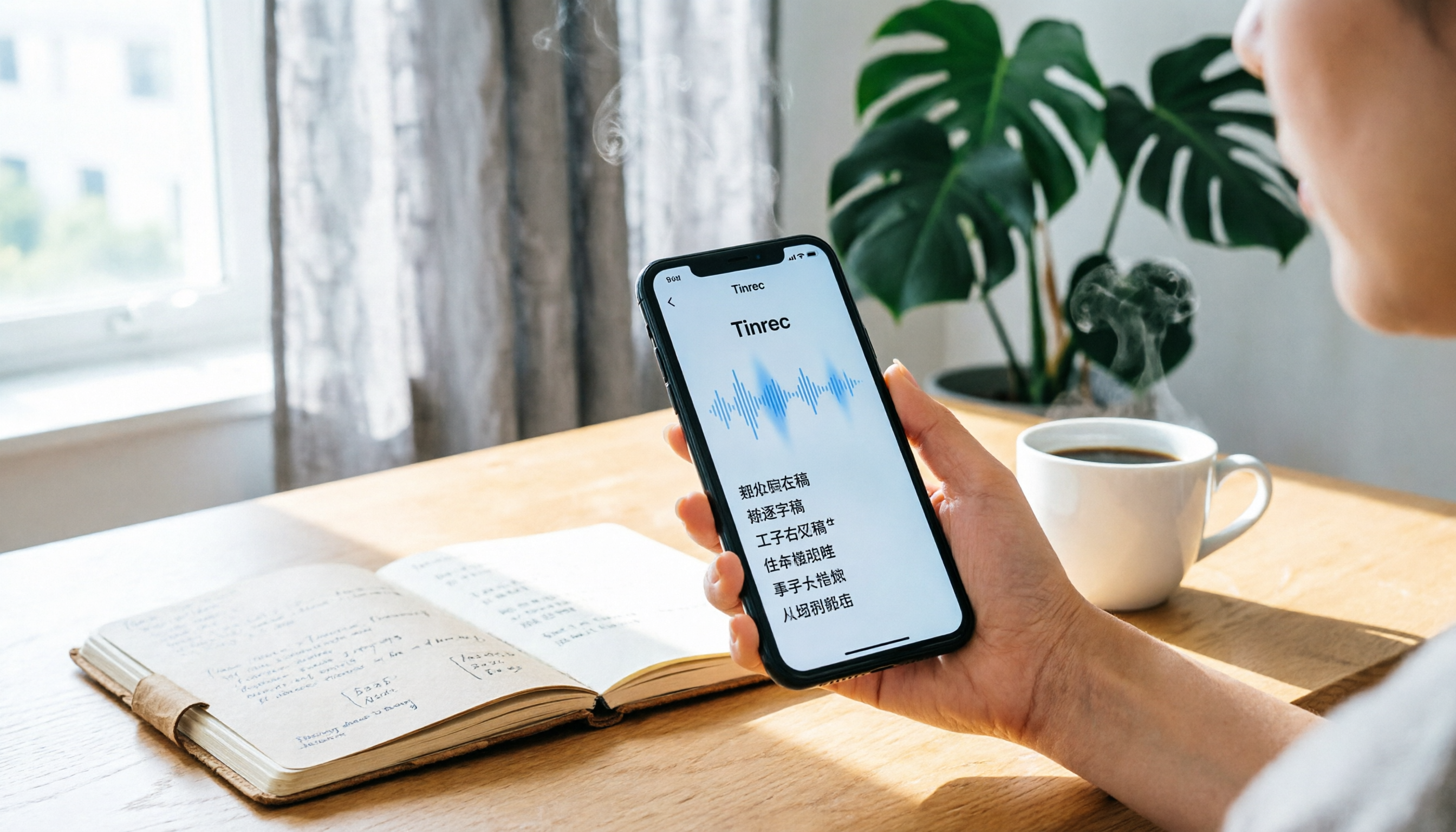
Plaud Voice Recorder Tutorial 2026: Dual-Mode Recording & AI Transcript Organization
Learn how to use Plaud Note, from switching recording modes and long-press recording to AI transcripts and key point summaries. We also compare tools like Tinrec to help you decide if you need extra hardware.

How to Use Plaud Voice Recorder in 2026: A Complete 5-Step Guide
This guide walks you through everything from unboxing, connecting the app, recording, to transcribing and organizing key points, helping you master the Plaud voice recorder, including common pitfalls and FAQs.

2026 Free Transcription Tools Roundup: 4 Options Compared
Searching for 'how to use Plaud recorder'? This article not only explains how to use Plaud but also reviews 4 AI transcription tools—Tinrec, Plaud, Otter, and Notta—to help you choose the best recording solution and share tips to boost your transcription workflow.

2026 Comparison of 3 Recording-to-Text Tools: A Practical Guide to Efficiently Organizing Plaud Recordings
Have Plaud recordings but don't know how to organize them quickly? This article tests three tools—Tinrec, Plaud, and Notta—covering hardware requirements, online meeting recording, AI summarization, and team collaboration to help you choose the best fit.
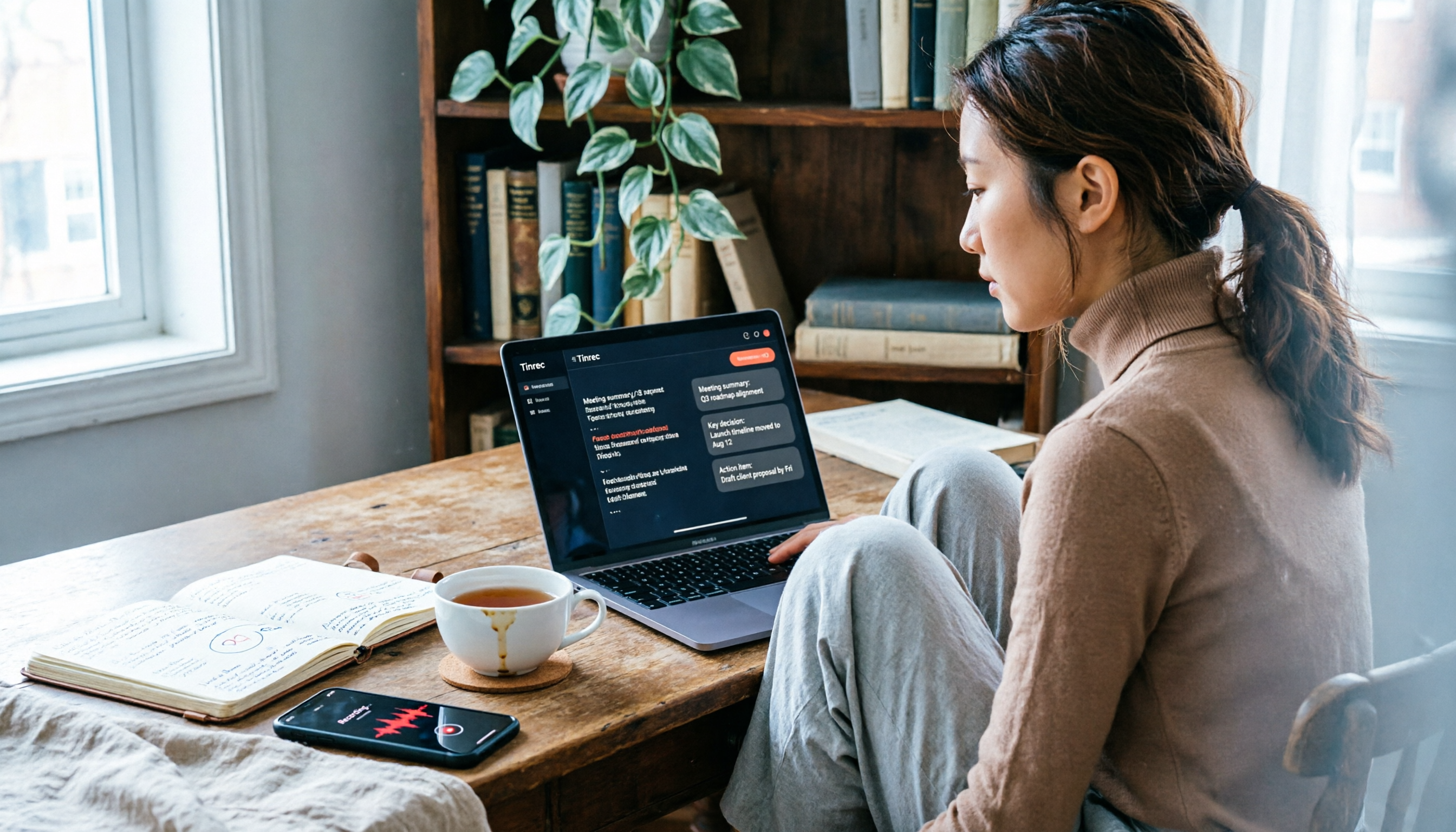
Yating Transcription 2026 Latest News: 5 Steps to Test Speech-to-Text and Key Summaries
Yating Transcription is an AI speech-to-text tool developed by a Taiwanese team, supporting Taiwanese Mandarin, Taiwanese Hokkien, Cantonese, Japanese, and mixed Chinese-English code-switching. This article provides a hands-on tutorial to guide you through recording, importing, proofreading, summarizing, and exporting, along with the latest features and FAQs.
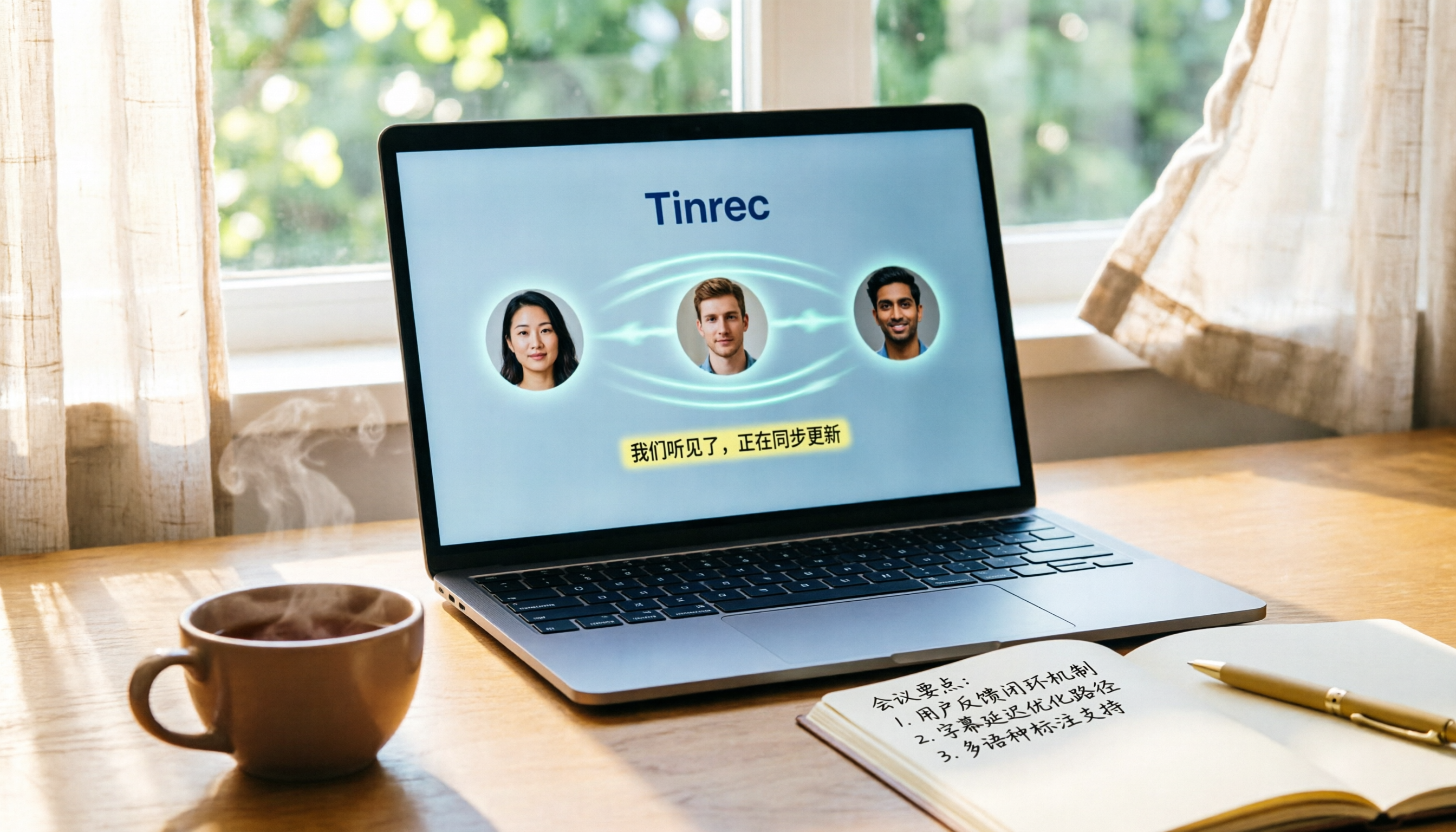
2026 AI Recording Solutions Compared: Plaud Voice Recorder vs Tinrec – Which Fits You Best?
Still figuring out how to use the Plaud voice recorder? This hands-on comparison explains why hardware-free Tinrec is better suited for online meetings, Chinese transcription, and team collaboration.

The Complete Guide to Managing Meeting Recordings in 2026: From Plaud Export to Tinrec AI Meeting Summaries
This article is for mid-level managers who want to turn meeting recordings into searchable, collaborative team assets. It compares tools like Plaud and Tinrec, highlighting common mistakes and best practices for recording management.