

Turn recordings into transcripts and summaries in minutes
Upload audio or video for multilingual transcription, AI notes, and action items
Two hours in a meeting, another two hours organizing notes—this is the daily reality for many professionals. What's worse, many people buy expensive AI voice recorders only to find they still have to replay audio, transcribe manually, and pick out key points. If this sounds familiar, this article is for you.
Before Choosing a Recording Tool, Understand These 4 Key Points
How to Evaluate Accuracy? Don't just look at official marketing claims. The real test is performance in real-world environments—office air conditioning, keyboard clicks, multiple people talking over each other. These all affect transcription quality. Instead of trusting ads, test with your own recordings.
Do AI Features Really Matter? Recording is just the first step; organizing is the real pain point. If a tool only gives you a transcript, you'll still spend time finding key points and listing action items. Tools that auto-summarize, extract action items, or let you ask questions to find answers are what truly save time.
Is Cross-Platform Support Sufficient? You might record on your phone today and edit on your computer tomorrow; sometimes you use an iPhone, sometimes Android. If a tool is locked to a single device, it'll be painful. Choose a solution that works on mobile, desktop, and web.
Is the Free Tier Enough? Many tools offer free versions, but limits vary widely. Some free plans only allow 3-minute recordings; others give you 300 minutes per month. Assess how many meetings you have each week before deciding whether to pay.
Tinrec (秒听录音) — My Top Pick After Testing
I've tried several recording tools, and the one I stuck with is Tinrec. It's an AI meeting notes and collaboration tool, not just a transcription app.
My Most-Used Scenario: Online Meetings. Previously, using meeting bots felt intrusive—like having an extra 'person' join the call. Tinrec's desktop app records your computer's system audio directly, no bot needed. I just open Tinrec, hit record, and it works quietly in the background.
During the meeting, the transcript appears in real time. I can listen while glancing at the text, especially helpful in bilingual meetings with Chinese and English; its real-time translation and bilingual display are a lifesaver.
After the Meeting, I Really Felt Its Value. No manual organizing needed—Tinrec automatically generates summaries, chapters, and action items. I often use the AI Q&A feature to ask, 'What was the conclusion of this meeting?' or 'Who is responsible for which action?' It answers based on the transcript, much faster than searching myself.
(Screenshot: Tinrec desktop app recording an online meeting, arrow pointing to the 'Start Recording' button, with real-time transcript displayed)
Three Reasons I Recommend It:
- Bot-Free Recording: No need to invite a bot to your meeting, which is especially important for privacy-sensitive discussions.
- Solid Chinese Support: Stable transcription quality, handles mixed Chinese-English meetings; team hotwords let you set custom terms to reduce recognition errors.
- From Individual to Team: The free plan is enough for light use, but if you're on a team, its team spaces centralize meeting data, and new members can search history—so you don't lose important discussions when colleagues leave.
Honest Limitations. The free tier has limits; heavy users need to pay. But if you have 2-3 meetings a week, the free plan is enough to experience core features.
Stop organizing recordings by hand
Upload audio or video and automatically get a transcript, summary, and action items
Who Is It For? If you frequently need to organize online or offline meetings, care about Chinese transcription quality, want to ask questions after recording, or need team sharing of meeting notes, Tinrec is the best choice right now.
What Other Options Are There Besides Tinrec?
Plaud Note: A Hardware Recorder Option. If you search 'how to use Plaud recorder,' it's simple: press the record button on the device, audio is saved; connect via the app to upload for transcription and summarization. It's great for on-the-go recording and phone calls, with a compact design. But note: Plaud requires purchasing hardware, and it lacks bot-free meeting recording, AI Q&A, and team spaces. Tinrec needs no hardware—works on phone and computer—and organizes everything after recording, with more complete features.
Otter.ai: Strong for English Meetings. Otter excels at English meeting transcription and summarization, and its free plan offers a generous 300 minutes per month. However, its Chinese support and bot-free recording aren't as good as Tinrec, and its AI Q&A depth is limited. If you mainly record in English, consider it; for mixed Chinese-English, Tinrec is smoother.
Notta: A Close Competitor. Notta also supports multi-device transcription, translation, and summarization, with 120 free minutes per month. But Tinrec's bot-free desktop recording and team space management stand out, and its AI Q&A and report generation are more complete. If you only need simple transcription, Notta works; but for a full workflow, Tinrec is better.
Pitfall Guide: 3 Common Mistakes When Choosing Recording Tools
Pitfall 1: Buying Hardware Only, Ignoring Software and Post-Processing. Many people spend a lot on recorders, only to find they still have to organize notes themselves. Don't just look at hardware; look at the app's features—auto-summarization, action item extraction, AI Q&A—these are what save time.
Pitfall 2: Overlooking Cross-Platform and Team Collaboration. If you record on an iPhone today and need to edit on a Windows PC tomorrow, but the tool doesn't support cross-platform, it's a nightmare. Especially for teams, centralized management and searchability of meeting data are crucial.
Pitfall 3: Treating Transcription Tools as Just 'Speech-to-Text.' Many people stop at getting the transcript, then manually search for key points. But modern AI tools can do much more. For example, Tinrec's AI Q&A lets you ask, 'Summarize the 3 key points and 5 action items from this meeting, output as a table,' and it gives you the answer instantly. That's way faster than manually scanning a 30-minute transcript.
Conclusion: Which One Should You Choose?
If you need Chinese meeting transcription, bot-free recording, want to ask questions after recording, or need team sharing of meeting notes, Tinrec is the top choice.
Scenario Breakdown:
- Need mixed Chinese-English meeting transcription → Tinrec (excellent Chinese support, bot-free recording)
- Want to use AI to find key points and list action items after recording → Tinrec (most complete AI Q&A and action item extraction)
- Need cross-platform (mobile, desktop, web) → Tinrec (full platform support)
- Only want a hardware recorder for on-the-go, don't care about post-processing → Plaud Note (but lower efficiency)
- Only record English meetings with zero budget → Otter.ai (generous free tier)
I recommend trying Tinrec's free plan first—it includes a monthly base allowance, enough to experience core features. If you like it, consider upgrading; there's no need to spend on hardware or premium plans upfront.
Quick Start Checklist:
- Download Tinrec and sign up for a free account.
- Install the desktop app on your computer and the mobile app on your phone.
- At your next online meeting, open Tinrec desktop, click 'Start Recording.'
- After the meeting, review the auto-generated summary and action items.
- Try the AI Q&A: 'What was the conclusion of this meeting?'
- If you need team sharing, create a team space and invite members.
Test step by step, and you'll master this workflow.
References
- Plaud Note │ The Smartest AI Voice Recorder
- Recording via Plaud App – Help Center
- Plaud Taiwan|Official Website|Leading AI Recording Device Brand
- Call Recording is Amazing! AI Voice Recorder 'PLAUD NOTE' with GPT-4o Review! A Great Companion for Business | Saiga NAK (Gaming and Tech News Media)
- PLAUD NOTE |AI Smart Recording Card|Free 300 Minutes of Transcription per Month - Esentra
Turn every recording into actionable outcomes
Get 60 free transcription minutes when you sign in. No credit card required.
Related Reading
You might also like

The Complete Guide to Recording Sharing in 2026: From Plaud to Team Collaboration, Making Transcripts and Summaries Truly Useful
It's not just about sharing audio files; it's about making them readable, searchable, and actionable. This guide shows you practical methods for sharing links with Plaud and how Tinrec turns sharing into team collaboration.

5 Best Speech-to-Text Tools Compared in 2026: Yating Transcriber Free Credits and Alternatives
Yating Transcriber's latest version supports Taiwanese accents, Taiwanese Hokkien, and code-switching, but its paid plans are based on duration with limited free credits. This article compares 5 tools—Tinrec, Yating Transcriber, Notta, Otter.ai, and TurboScribe—covering free versions, pricing, and use cases to help you find the best speech-to-text solution.
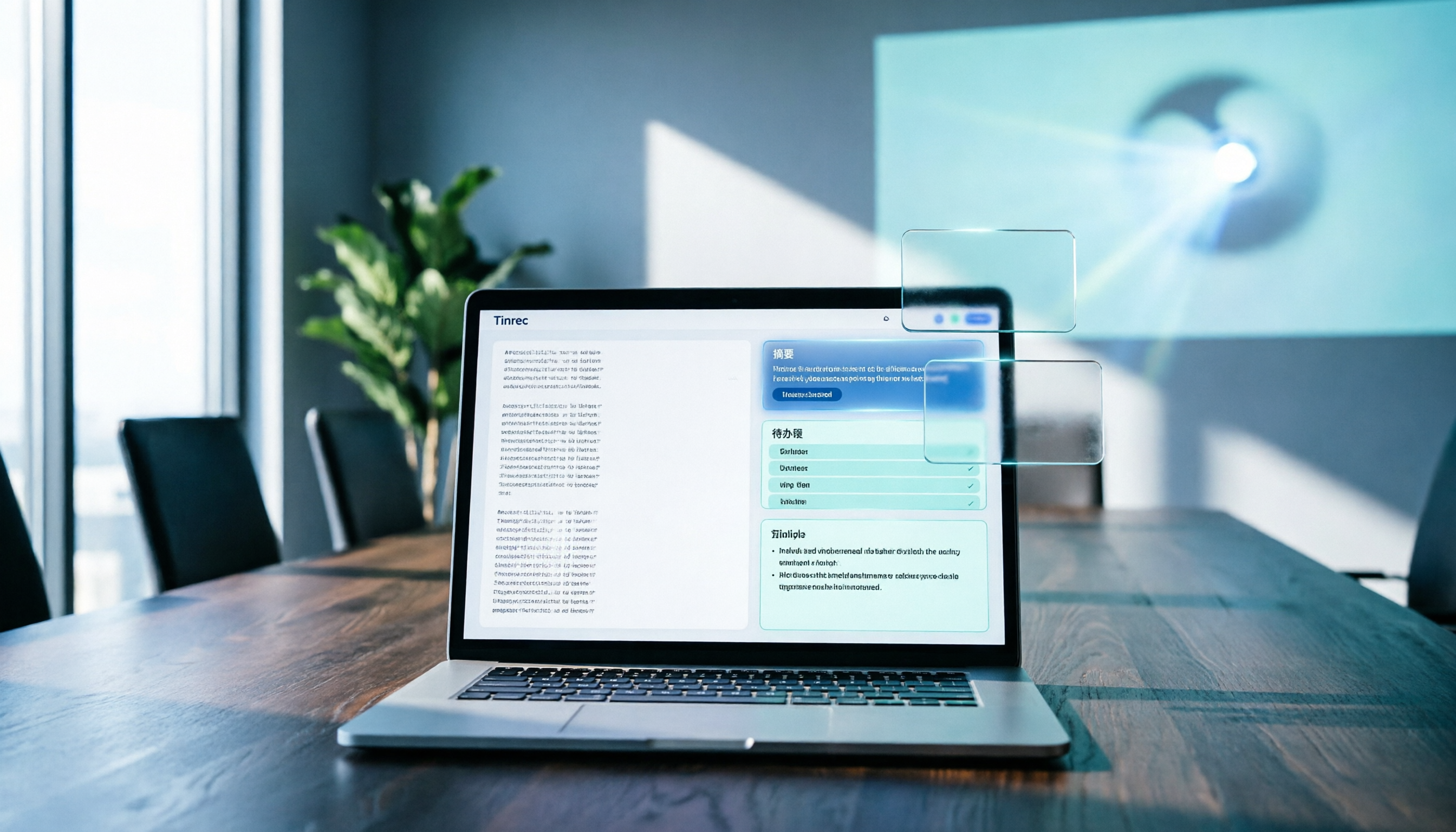
2026 Yating Transcript Summary Alternative: Tinrec Auto Summary + AI Q&A
Yating can transcribe audio to text, but the real time sink is post-processing. This article demonstrates, from a productivity methodology perspective, how to use Tinrec to turn transcripts directly into summaries, action items, and queryable meeting assets.

2026 Recording Transfer Tools Compared: Why Plaud Users Switch to Tinrec for Less Hassle
Struggling to transfer recordings from your Plaud voice recorder? This article compares the recording transfer workflows of Plaud and Tinrec in real-world scenarios, explains why Tinrec is a simpler and better fit for US users, and provides a full tutorial and FAQs.

2026 Hands-On Comparison of 3 AI Recording Tools: How Does Plaud Recording Work? Tinrec Offers a Hardware-Free, More Cost-Effective Alternative
Wondering how Plaud recording works? This article first explains the Plaud hardware recording process, then compares Tinrec's advantages of no hardware purchase, cross-device recording, and post-meeting organization. You can test it with the free version to see if it suits you.

2026 Plaud Recording Sync Alternative: How Tinrec Makes It Easier?
Plaud recording sync requires hardware and app integration. This article compares Tinrec from the perspectives of sync methods, AI organization, and team collaboration to help you find a more suitable tool for meeting notes and team knowledge management.
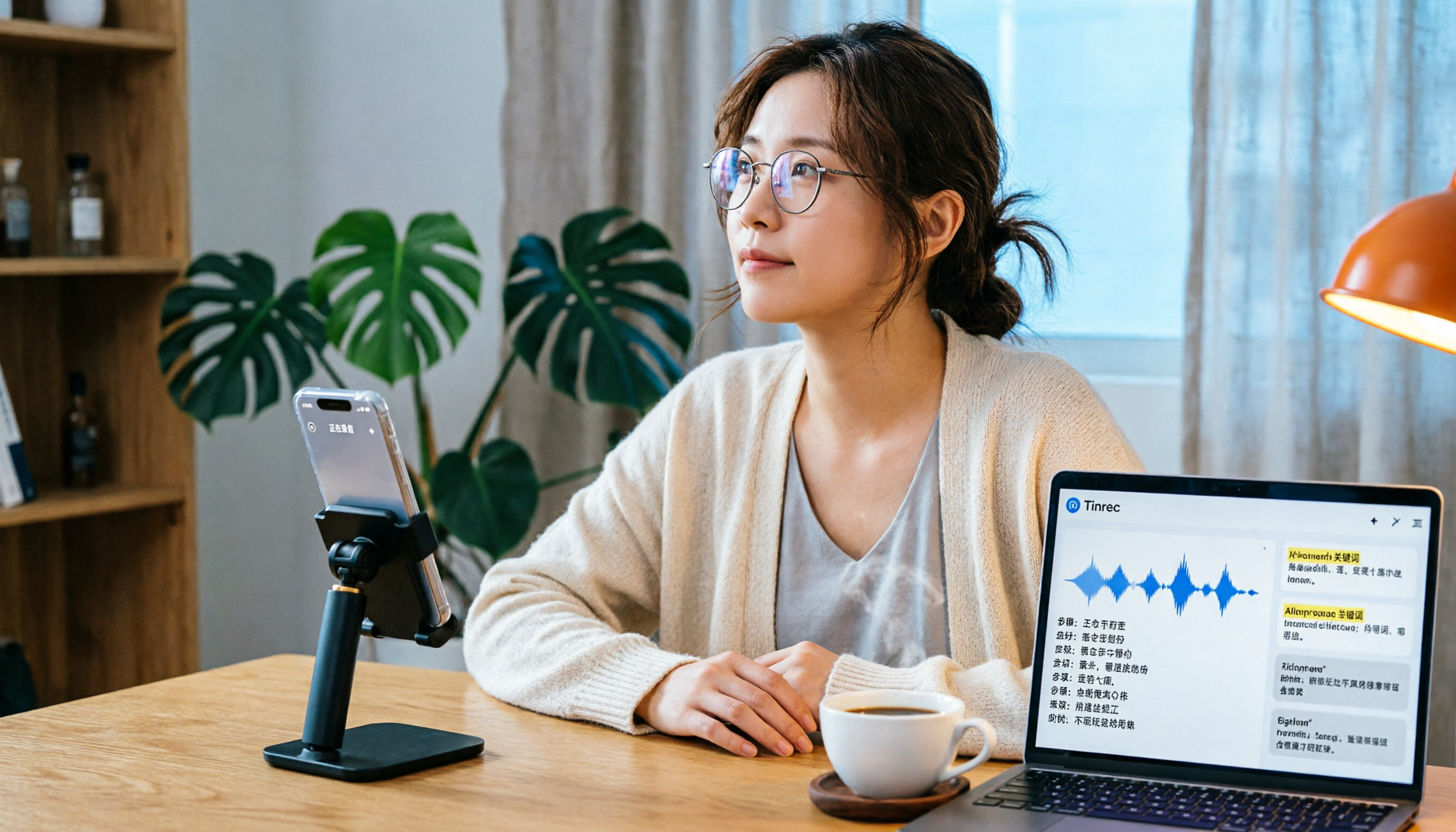
5 Best Recording-to-Text Tools Tested in 2026: Should You Buy the PLAUD Note?
For those considering the PLAUD voice recorder, this article compares 5 recording-to-text tools, including Tinrec, PLAUD Note, Otter.ai, and Notta, covering recording methods, AI summarization capabilities, and pricing to help you find the most time-saving solution.
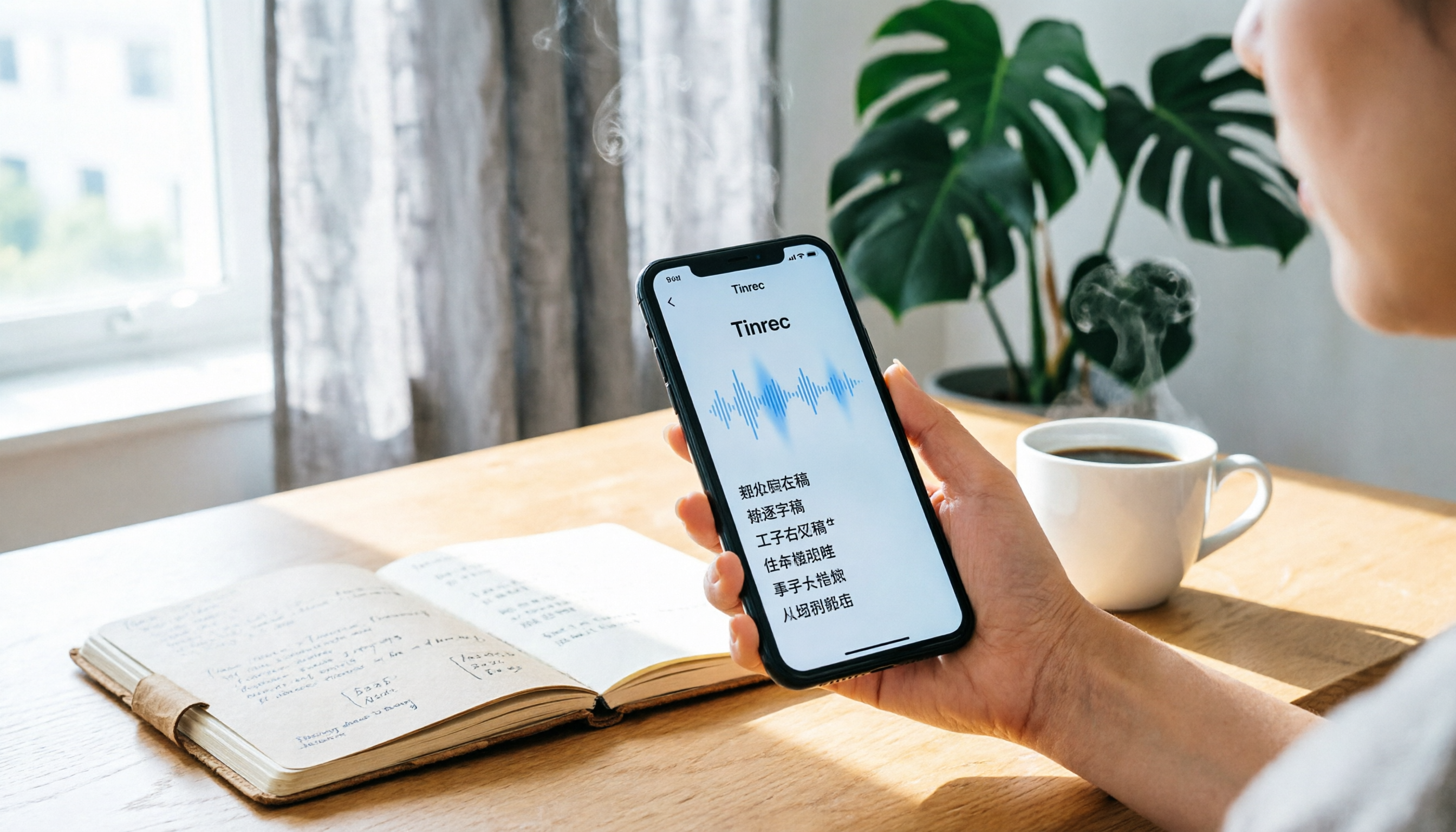
Plaud Voice Recorder Tutorial 2026: Dual-Mode Recording & AI Transcript Organization
Learn how to use Plaud Note, from switching recording modes and long-press recording to AI transcripts and key point summaries. We also compare tools like Tinrec to help you decide if you need extra hardware.

How to Use Plaud Voice Recorder in 2026: A Complete 5-Step Guide
This guide walks you through everything from unboxing, connecting the app, recording, to transcribing and organizing key points, helping you master the Plaud voice recorder, including common pitfalls and FAQs.