
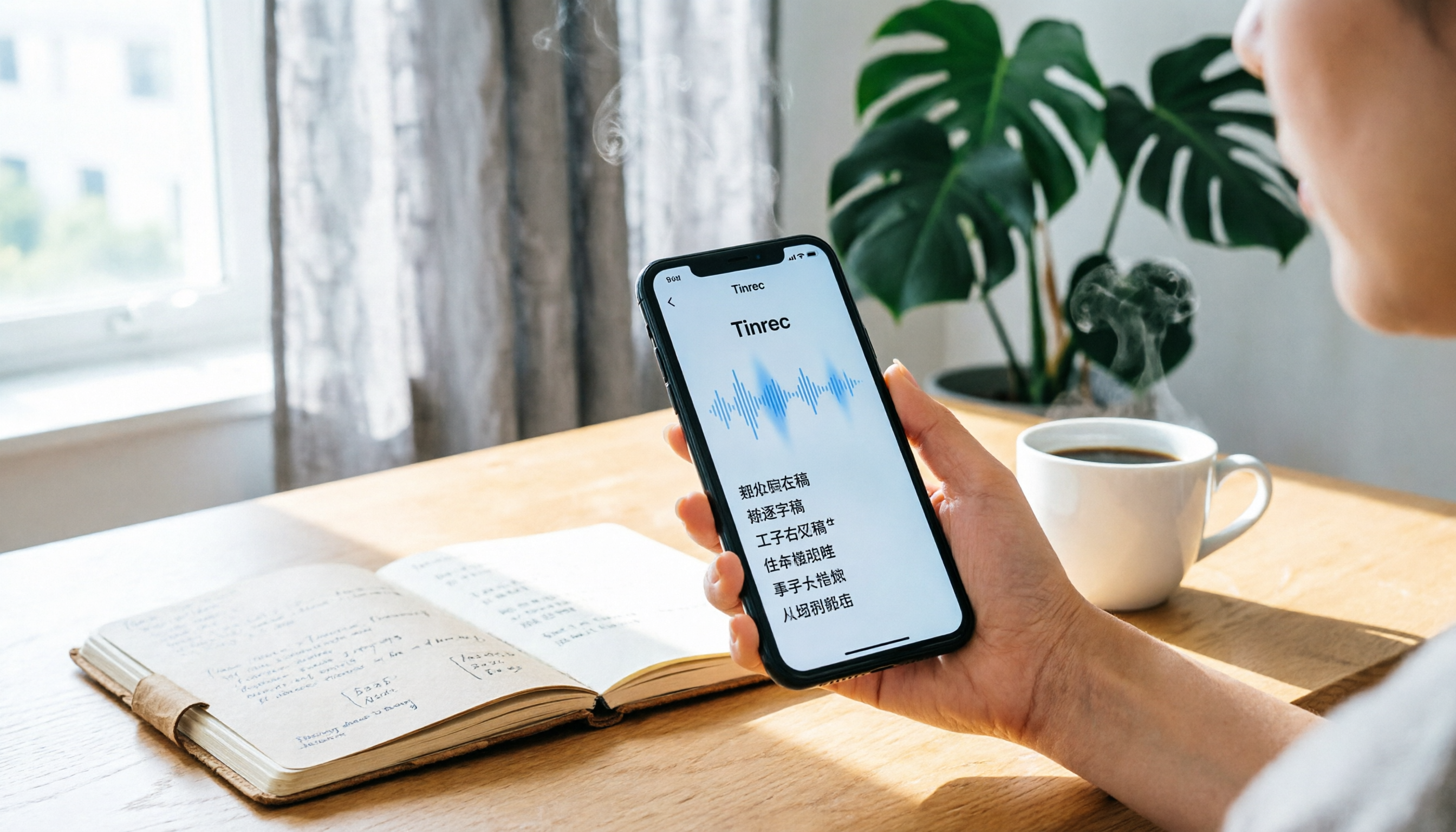
Turn recordings into transcripts and summaries in minutes
Upload audio or video for multilingual transcription, AI notes, and action items
During last Friday's department meeting, you sat through 90 minutes but only remember the boss saying, "We'll discuss this later." When you got home and tried to organize the meeting notes, you realized 27 minutes of the recording were spent just coordinating schedules. If you've ever used your phone to record, you know this pain.
Choosing the right AI recording tool can save you more than half your organizing time.
Spending too much time on meeting recordings and transcripts? You need a smarter approach
Traditional recording just stores audio; you still have to handle the transcript, key points, and action items yourself. Many office workers spend over 6 hours a week replaying recordings, typing transcripts, and summarizing conclusions.
If you frequently need to record meetings, interviews, client calls, or course content, this article is for you. Below, I'll first walk you through the key buying points, then introduce my top pick after hands-on testing—Tinrec—along with a Plaud Note tutorial and comparison.
Before choosing an AI recording note tool, understand these 4 key points
1. Recording modes How easily you can switch between ambient and call recording directly affects how often you use it. For example, Plaud Note uses a toggle switch, while Tinrec lets you select the source directly in the app or desktop version.
2. AI organization depth Just transcribing isn't enough; it should automatically generate summaries, action items, meeting minutes, and even let you ask questions to find key points. Tinrec lets you ask follow-up questions about the meeting content after transcription, which is more practical than many tools.
3. Multi-device and team collaboration If you sometimes join meetings on your computer and sometimes record on your phone while out, cross-device sync is important. If you also want your team to view meeting materials together, team spaces and permission management can't be ignored.
4. Price and free tier Hardware recorders usually require an extra purchase, while software tools depend on whether the free plan is sufficient. Starting with a free version or trial to confirm it fits before paying is the safest approach.
Tinrec (秒听录音) — Our Top Pick After Hands-On Testing
Tinrec is an AI meeting notes and collaboration tool that not only converts audio to text but also turns meetings into searchable, queryable, and collaboratively editable team resources.
If you often have online meetings, its desktop version can directly record your computer's system audio without needing to invite a meeting bot to Zoom, Google Meet, Teams, or Webex. After the meeting, transcripts, summaries, chapters, and action items are automatically generated—no manual organization needed.
Even more useful is the AI Q&A: you can ask, "Who mentioned the budget in the last meeting?" and Tinrec will answer directly based on the meeting content, rather than just throwing keywords at you. This is rare in typical voice recorders or pure transcription tools.
Stop organizing recordings by hand
Upload audio or video and automatically get a transcript, summary, and action items
We also tested uploading audio files and mobile recording; everything from transcripts to key point summaries was smooth. The free version lets you experience basic features, and only heavy users need a paid plan. If you need cross-device support, Chinese content, AI summaries, and team collaboration, Tinrec is highly polished right now.
Beyond Tinrec: What Other Options Are There? Plaud Note Tutorial and Quick Review
Plaud Note: A Portable Recording Hardware Ideal for users who don't want to record with their phone and need a portable device. Operation is intuitive: push the toggle down for note mode, long-press the button for 1 second until you feel one vibration to start recording; long-press again for 1 second until you feel two vibrations to stop. Push the toggle up to switch to call recording, but you'll need to place it in the dedicated MagSafe case and attach it to the back of your phone magnetically.
Each Plaud device includes 300 minutes of transcription per month, and recording battery life can reach 30 hours. The downside is that you need to buy the hardware separately, and it can't directly record computer system audio like Tinrec. Team collaboration and AI Q&A are also not as complete as Tinrec.
Otter.ai: Mature for English meetings, but Chinese experience may not be as smooth If you mainly record English meetings, Otter.ai's free plan with 300 minutes per month is sufficient. However, its Chinese transcription and integration with team data organization may not be as seamless for Taiwanese users as Tinrec.
Pitfall Guide: 3 Common Mistakes with AI Recording Notes
Pitfall 1: Only buying hardware, ignoring backend AI capabilities Some people spend money on a voice recorder but end up transcribing manually. We recommend comparing AI summaries, action item extraction, AI Q&A, and other features first, rather than just looking at recording quality or battery life.
Pitfall 2: Forgetting to get consent before recording Whether it's a meeting, interview, or call, you should inform participants and obtain explicit consent before recording to avoid legal and privacy issues.
Pitfall 3: Ignoring cross-device and team needs If you only record on your phone but need to organize on your computer, the workflow will be clunky. Tools like Tinrec's desktop and web versions seamlessly connect, and team members can share meeting materials—this makes a big difference in the long run.
Summary: Which One Should You Choose?
If you want a portable hardware device, prefer toggle operation, and don't mind carrying an extra device, Plaud Note is worth considering.
But if you need online meeting recording, audio transcription, AI summaries, AI Q&A, or team collaboration, Tinrec is a more complete choice. Especially since it requires no extra hardware and its desktop version directly records system audio, the time saved on organizing is very noticeable.
We recommend starting with Tinrec's free plan. If you already have a Plaud Note, you can also upload its audio files to Tinrec for organization—using both together is also a good approach.
References
- Plaud User Guide | Complete Tutorial and Operation Manual
- Plaud Taiwan | Official Website | Leading AI Recording Device Brand
- PLAUD NOTE | AI Smart Recording Card | Free 300 Minutes of Transcription per Month - Esentra International
- Recording Operation Guide | Plaud Taiwan
- Plaud Note Six-Month Usage Review – Hengyu Teacher's Life Tech
Turn every recording into actionable outcomes
Get 60 free transcription minutes when you sign in. No credit card required.
Related Reading
You might also like

4 Recording Sync Tools Compared in 2026: How Tinrec Achieves Seamless Cross-Device Sync Without Hardware?
How does Plaud recording sync work? This article compares 4 recording sync solutions, including hardware recorders and AI meeting tools, and explains how Tinrec replaces traditional file transfer with cloud sync, allowing you to access recordings, transcripts, and meeting notes anytime on your phone or computer.

2026 Hands-On Comparison of 2 AI Recording Tools: Plaud Note Pro vs Tinrec – Which One Is Right for You?
Many people think buying a Plaud Note Pro is a one-and-done solution, but the actual recording process has quite a few pitfalls. This week-long hands-on test compares Plaud Note Pro and Tinrec across five key dimensions: recording convenience, phone/online meetings, AI summarization, Chinese language experience, and team collaboration, to help you decide which one is worth your money.

2026 Comparison of 4 Recording-to-Text Tools: Plaud Recording Organization vs. AI Collaboration—Which Is More Practical?
A recording file is just the beginning; the real challenge is turning it into usable meeting materials. This comparison starts with Plaud recording operations and walks you through Tinrec, Plaud, Otter, and Notta to find the best AI recording-to-text and collaboration solution for your needs.

2026 Tinrec Recording-to-Text Tutorial: No Hardware Needed + AI Summaries in One Go
Still deciding between a Plaud recorder and a recording app? This tutorial starts from real-world scenarios, teaching you how to use Tinrec for recording, transcription, summaries, and to-dos, while comparing options like Plaud and Otter to help you find the best recording and organizing method for your needs.

How to Use Plaud for Recording Notes in 2026: A 5-Step Complete Guide
Learn how to use Plaud Note, from device pairing and switching recording modes to app transcription and AI-powered summaries. This guide covers all the steps and answers common questions.

The Complete Guide to Recording Sharing in 2026: From Plaud to Team Collaboration, Making Transcripts and Summaries Truly Useful
It's not just about sharing audio files; it's about making them readable, searchable, and actionable. This guide shows you practical methods for sharing links with Plaud and how Tinrec turns sharing into team collaboration.

5 Best Speech-to-Text Tools Compared in 2026: Yating Transcriber Free Credits and Alternatives
Yating Transcriber's latest version supports Taiwanese accents, Taiwanese Hokkien, and code-switching, but its paid plans are based on duration with limited free credits. This article compares 5 tools—Tinrec, Yating Transcriber, Notta, Otter.ai, and TurboScribe—covering free versions, pricing, and use cases to help you find the best speech-to-text solution.
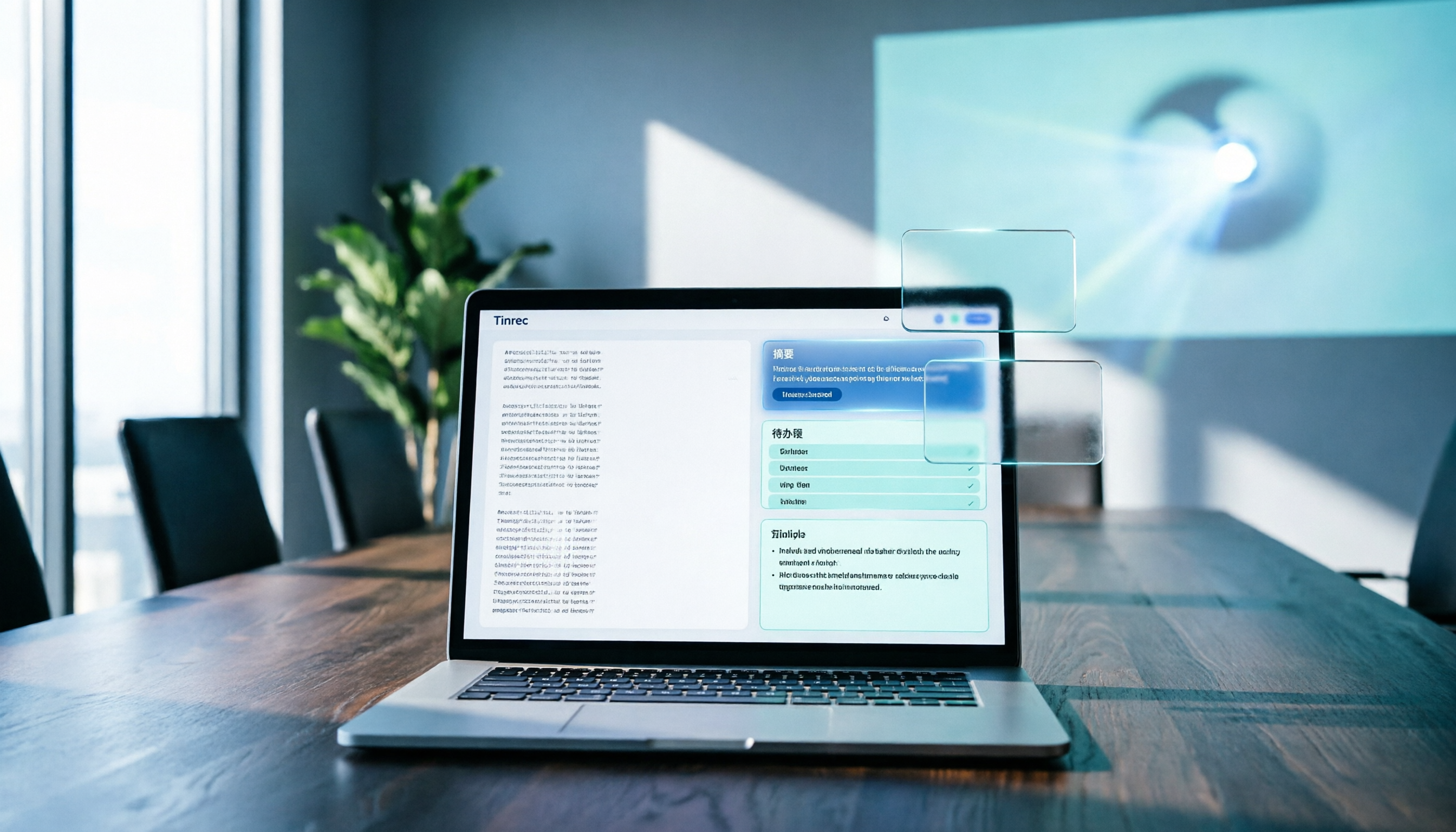
2026 Yating Transcript Summary Alternative: Tinrec Auto Summary + AI Q&A
Yating can transcribe audio to text, but the real time sink is post-processing. This article demonstrates, from a productivity methodology perspective, how to use Tinrec to turn transcripts directly into summaries, action items, and queryable meeting assets.

2026 Recording Transfer Tools Compared: Why Plaud Users Switch to Tinrec for Less Hassle
Struggling to transfer recordings from your Plaud voice recorder? This article compares the recording transfer workflows of Plaud and Tinrec in real-world scenarios, explains why Tinrec is a simpler and better fit for US users, and provides a full tutorial and FAQs.