

Turn recordings into transcripts and summaries in minutes
Upload audio or video for multilingual transcription, AI notes, and action items
2026 Tinrec Recording-to-Text Tutorial: No Hardware Needed + AI Summaries in One Go
Should you buy a hardware recorder or just use an app? This is a question I've been asked a lot lately. I've been through that hesitation myself: wanting a Plaud recorder for convenience, but then thinking about carrying an extra device, charging it, and managing files, and I start to doubt if it's really necessary.
In this article, I've put together my hands-on insights, starting not with tool features but with the angle of "what do you actually want to do after recording," to help you make a choice and teach you a truly efficient method for organizing recordings.
How to Choose Recording Equipment? You Don't Need a Machine; You Need a Method for Organizing Meetings
Two hours in a meeting, then two more hours writing up the minutes—that's a common routine for many professionals.
What's more, recording is just the first step. After recording, you need to transcribe, identify key points, and list action items—that's where the real time goes.
You might be tempted to buy a hardware recorder like the Plaud because of these pain points. It does solve the "capture" problem, but the subsequent organizing still falls on you.
What if there were a method that automatically gives you a transcript, summary, and to-dos after recording, and even lets you ask, "What was the meeting conclusion?" Wouldn't that be a better investment?
Choosing the right tool isn't about buying a machine; it's about building a workflow from capture to action.
Before Choosing a Recording Tool, Understand These 4 Key Points
Before deciding whether to buy hardware, there are a few dimensions worth considering. These aren't spec sheets but real trade-offs you'll encounter in daily use.
1. Do you need extra hardware?
Hardware recorders like Plaud need to be carried, charged, and you have to remember the cable. If you often forget them, your recording is interrupted.
Your phone and computer are already with you. Using an app to record eliminates the hassle of carrying and syncing.
2. Is cross-platform support important?
You might record on your phone in the meeting room and want to organize on your computer back at your desk. If the tool is locked to a single device, it'll be painful.
A tool that works on phone, computer, and web can truly integrate into your workflow.
3. Does it have AI to help you organize after recording?
Simple recording-to-text is no longer enough. You need automatic summaries, key point highlighting, action item extraction, and even the ability to ask questions.
If the tool only gives you a transcript, you still have to read through it all yourself.
4. Can you share it with your team?
If meeting data only lives on your personal device, team members have to ask you to share files.
A centralized space for storage and search is a long-term asset.
These four dimensions are what I care about most when choosing a tool. The Tinrec I'm about to introduce excels in these areas.
Tinrec (Miao Ting Lu Yin) — My Top Pick After Hands-On Testing
Tinrec is an AI meeting notes and collaboration tool that doesn't require extra hardware; it works on phone, computer, and web.
Here's how I use it:
During a meeting, I open the Tinrec app or desktop version, hit record, and it starts transcribing in real time.
(Screenshot placeholder: Tinrec desktop recording screen, arrow pointing to the start recording button)
When the meeting ends, the transcript is already generated, and the AI automatically organizes summaries, chapters, and key points. I can directly see the action items it extracted—who's responsible for what and deadlines at a glance.
(Screenshot placeholder: Tinrec's AI summary and to-do list, arrow pointing to action items)
What I find most convenient is the AI Q&A feature. After recording, I can ask it directly, "Who mentioned the budget in the last meeting?" It understands the semantics and gives me the answer, instead of making me search keywords in the transcript.
Stop organizing recordings by hand
Upload audio or video and automatically get a transcript, summary, and action items
(Screenshot placeholder: Tinrec's AI Q&A dialog box, arrow pointing to the question input)
For online meetings, the Tinrec desktop version can directly capture system audio, so you don't need to add a bot to the meeting. It works with Zoom, Meet, and Teams, which is cleaner than many tools that require meeting bots.
I've also tried uploading old interview audio files, and it transcribes and generates summaries, helping me quickly review past materials.
In my testing, in a typical meeting room with background noise, Tinrec's transcription quality is good enough for me to proceed with follow-up organization without extra proofreading. Of course, with heavy accents or overlapping speech, you still need to check against the original, but it significantly reduces manual work.
Pros:
- No hardware needed; record on phone or computer.
- Automatic summaries and to-dos after recording; no manual organizing.
- AI Q&A quickly finds meeting key points.
- Supports team spaces for shared access to meeting data.
Limitations:
- The free plan has limited credits; heavy use requires payment. But for those meeting two or three times a week, it's usually sufficient.
- The desktop version requires manually starting the recording; it doesn't automatically join calendar meetings.
Who is it for?
If you often need to organize meeting notes, don't want to carry extra recording hardware, want to use AI to find key points after recording, or need to share meeting data with your team, Tinrec is a very suitable choice right now.
Beyond Tinrec: What Other Options Are There?
Plaud Note / NotePin: Representative AI recording hardware, suitable for those who need portable recording and phone call recording. However, it requires purchasing additional equipment, is more expensive, and has limited transcription credits. Also, files need to be imported into the app for organizing, unlike Tinrec which does everything on the same platform. If you want a physical button recording experience, consider it; but if you want automatic summaries and Q&A after recording, Tinrec is more complete.
Otter.ai: A mature choice for English meetings, with generous free credits. But its experience with Chinese content isn't as good as Tinrec, and it doesn't emphasize bot-free desktop recording like Tinrec. If you mainly record in English, Otter is worth trying.
Notta: Overlaps significantly with Tinrec in features, but Notta leans more toward transcription and translation, and its post-meeting organization and team collaboration aren't as deep as Tinrec. If you need bulk transcription, Notta works; if you want meeting actionability, Tinrec is better.
Pitfall Guide: 3 Common Mistakes When Choosing a Recording Tool
Pitfall 1: Only looking at hardware design, ignoring post-processing.
Many people buy a recorder and then realize transcription and organizing still need separate handling. Hardware is just the first step; you need to think about the workflow after recording.
Pitfall 2: Ignoring cross-platform needs.
Record on your phone today, organize on your computer tomorrow. If the tool doesn't support cross-platform, transferring files alone wastes a lot of time.
Pitfall 3: Using the tool only as "recording-to-text."
If you record and leave it, you're only using a third of its capability. Make good use of AI summaries, to-dos, and Q&A to truly turn meetings into action.
Summary: Which One Should You Choose?
If you're still deciding between a Plaud recorder and an app, my advice is to first look at your core needs:
- Need portable recording and don't want to use your phone → Plaud NotePin is lightweight and convenient, but be prepared for follow-up organizing.
- Want automatic organizing after recording and no extra hardware → Tinrec is the most direct solution.
- Mainly record English meetings with zero budget → Otter.ai's free version is sufficient.
- Only need bulk transcription without meeting collaboration → Notta is worth considering.
But for most professionals, the point of recording is the follow-up action, not just capturing. Tinrec combines recording, transcription, summaries, to-dos, and team spaces in one, making it my top recommendation.
I suggest starting with the free plan, recording a meeting on your phone, and experiencing its automatic organizing. If it feels right, then consider upgrading—no need to spend money on hardware upfront.
Test gradually, and you'll find the recording and organizing method that works best for you.
References
Turn every recording into actionable outcomes
Get 60 free transcription minutes when you sign in. No credit card required.
Related Reading
You might also like

6 Yating Transcription Alternatives Compared in 2026: Which Handles Taiwanese Accent, Taiwanese Hokkien, and Code-Switching Best?
This article tests 6 alternatives to Yating Transcription, comparing free tiers, pricing, Taiwan-specific recognition, AI summaries, and team collaboration to help you find the best voice-to-text tool.

2026 Hands-On Comparison of 3 AI Recording Tools: Can You Get Good Lecture Transcripts Without Buying Plaud Hardware?
A student's hands-on comparison of AI recording tools, from traditional voice recorders to Plaud and Tinrec, explaining what Plaud recording is, why you don't need to buy hardware for good lecture transcripts, and tips on free vs. paid plans.

How Much Does Yating Transcription Cost in 2026? 5 Steps to Choose the Right Meeting Notes Tool
Yating transcription costs about NT$100 per hour, but the free tier is limited and lacks AI Q&A. This article walks you through 5 steps to compare costs, accuracy, and AI features, and recommends Tinrec as a better fit for workplace meeting notes based on hands-on testing.

How to Use Plaud Recording in 2026? Switch to Tinrec in 3 Steps for Higher Efficiency
Many people buy Plaud voice recorder cards but don't know how to organize recordings. This article teaches you a post-recording workflow: replace hardware dependency with Tinrec, automatically generate transcripts, summaries, and to-dos, and use AI Q&A to quickly find key points.

Tinrec vs Plaud Note 2026: 5-Dimension Comparison – Which Is the Better Buy?
Wondering how to use Plaud for recording? We tested Tinrec and Plaud Note side by side, comparing recording methods, transcription accuracy, AI features, cross-platform support, and price across 5 dimensions to tell you which one is the top choice for meeting notes among Hong Kong professionals.

4 Recording Sync Tools Compared in 2026: How Tinrec Achieves Seamless Cross-Device Sync Without Hardware?
How does Plaud recording sync work? This article compares 4 recording sync solutions, including hardware recorders and AI meeting tools, and explains how Tinrec replaces traditional file transfer with cloud sync, allowing you to access recordings, transcripts, and meeting notes anytime on your phone or computer.
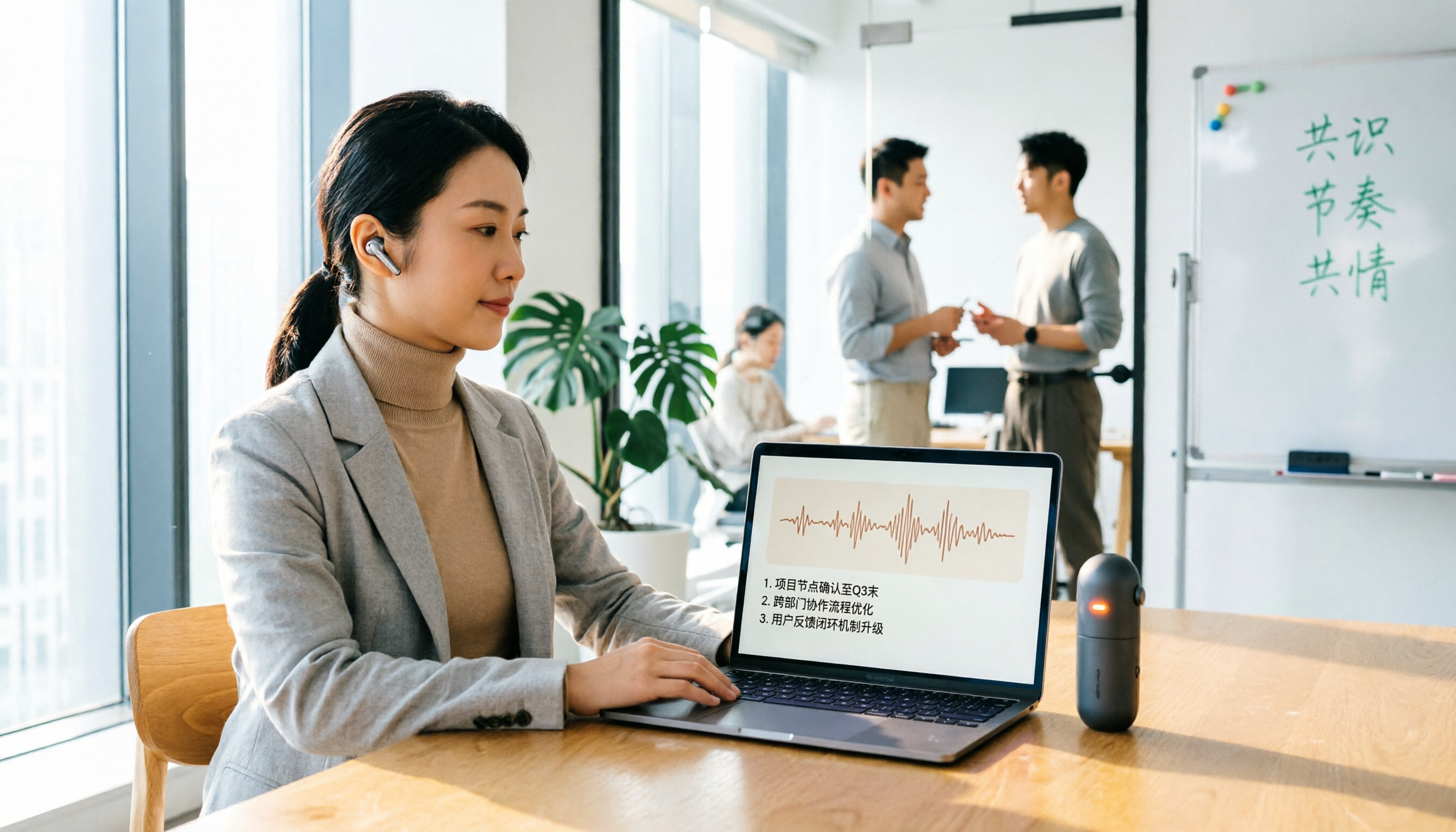
2026 Hands-On Comparison of 2 AI Recording Tools: Plaud Note Pro vs Tinrec – Which One Is Right for You?
Many people think buying a Plaud Note Pro is a one-and-done solution, but the actual recording process has quite a few pitfalls. This week-long hands-on test compares Plaud Note Pro and Tinrec across five key dimensions: recording convenience, phone/online meetings, AI summarization, Chinese language experience, and team collaboration, to help you decide which one is worth your money.

2026 Comparison of 4 Recording-to-Text Tools: Plaud Recording Organization vs. AI Collaboration—Which Is More Practical?
A recording file is just the beginning; the real challenge is turning it into usable meeting materials. This comparison starts with Plaud recording operations and walks you through Tinrec, Plaud, Otter, and Notta to find the best AI recording-to-text and collaboration solution for your needs.
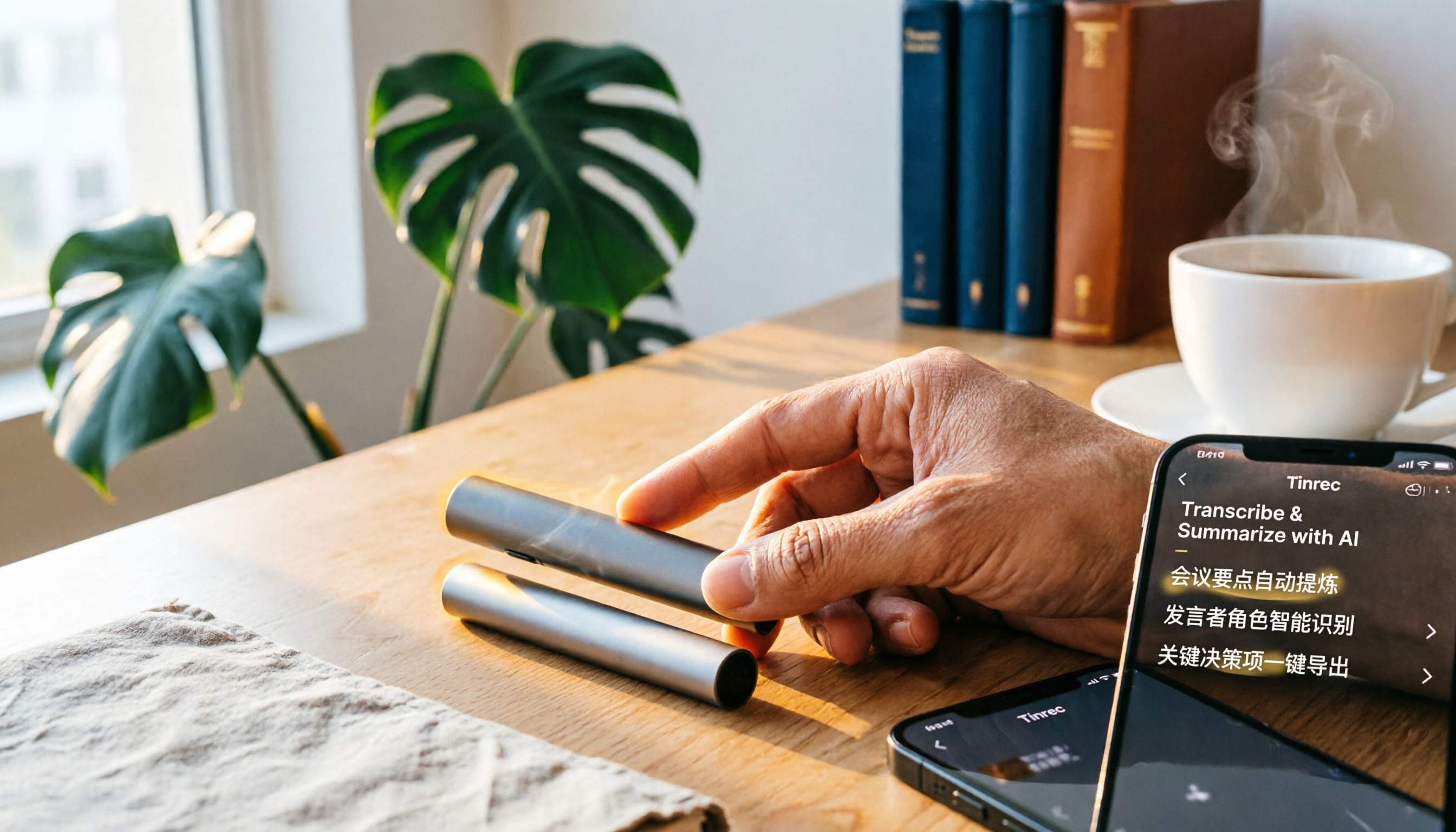
How to Use Plaud for Recording Notes in 2026: A 5-Step Complete Guide
Learn how to use Plaud Note, from device pairing and switching recording modes to app transcription and AI-powered summaries. This guide covers all the steps and answers common questions.