

Turn recordings into transcripts and summaries in minutes
Upload audio or video for multilingual transcription, AI notes, and action items
You might use Google Translate's transcription feature to record meetings, but after recording, you still have to manually organize key points and action items. Is there a tool that not only transcribes but also automatically summarizes, sections, and tracks actions? This article compares 4 speech-to-text tools to show you which one truly saves you time on post-meeting organization.
Honestly, Google Translate's transcription is great for quick fixes, but if you have meetings, interviews, or classes to record every week, just getting a transcript isn't enough. I'll use Tinrec as the main example to help you understand what capabilities a speech-to-text tool should have.
What Can Transcription Do for You?
Scenario 1: Meeting Notes Ready in 5 Minutes After the Meeting
In the past, after a two-hour meeting, you might spend another hour organizing meeting notes. Now, with AI transcription tools like Tinrec, by the time the meeting ends, it has already generated a summary, conclusions, and action items, showing who is responsible for what and deadlines at a glance.
Scenario 2: No More Repeatedly Re-listening to Interview Recordings
When conducting user interviews or expert interviews, the most painful part is replaying the recording to find key points. Tinrec supports uploading audio files for transcription, and you can directly ask it, "What pain points did the interviewee mention?" or "Which part mentioned the budget?" The AI answers based on the transcript, saving you a lot of time.
Scenario 3: Automatic Organization of Online Course Notes
Students or self-learners often need to record online course content. The Tinrec desktop version can directly capture computer system audio, so you don't need extra equipment to convert courses from Zoom, Google Meet, or Teams into text, and it automatically divides them into chapters for easy review.
Scenario 4: Real-Time Bilingual Comparison for Cross-Language Meetings
If you often have international meetings, Tinrec's real-time translation feature can display the original text, translation, or bilingual content during recording. Compared to Google Translate, which only offers simple audio-to-text transcription, Tinrec is better suited for those who need to see bilingual content while listening.
What Are the Core Capabilities of Speech-to-Text Tools?
1. Real-Time Transcription: Text as You Speak
Tinrec's real-time transcription has low latency, so during meetings, you can watch the text to confirm you haven't missed any key points. This is similar to Google Translate's transcription, but Tinrec's interface is better suited for long meetings and doesn't lag with too much information.
2. No Bot Required for Recording Online Meetings
Many AI meeting tools require inviting a bot to join the meeting, but Tinrec doesn't. You just open the desktop version, and it directly captures the computer's system audio, no extra participant needed. This is convenient for those who don't want unfamiliar accounts in their meetings.
3. AI Summaries and Chapters: Turning Long Meetings into Structured Content
Tinrec doesn't just condense the transcript into a paragraph; it automatically generates meeting topics, discussion conclusions, action items, and breaks long meetings into easy-to-browse chapters. Google Translate can't do this; it only transcribes.
4. Action Item Extraction: Tracking Follow-ups
The worst thing after a meeting is forgetting what you need to do. Tinrec extracts action items from the discussion, such as "Ming needs to reply to the client's quote by Friday," and organizes them into a list for easy tracking.
5. AI Q&A and Multi-Format Export
After transcription, you can directly ask Tinrec questions like "Who mentioned the budget in the meeting?" or "What was the client's feedback?" It answers based on semantic understanding. Additionally, you can export results to tools like Notion, Google Docs, OneNote, and continue your work.
Practical Use Cases
Meeting Notes: From Recording to Action List
Open the Tinrec desktop app or mobile app, select "Live Recording," and it will transcribe as it records. After the meeting, you'll see AI-generated summaries and action items next to the transcript. If you need to follow up, export the action items to your project management tool.
Stop organizing recordings by hand
Upload audio or video and automatically get a transcript, summary, and action items
Class Notes: Quick Review After Recording
Students can record lectures with their phones, upload them to Tinrec for transcription, and then use the AI Q&A feature, such as "What are the three theories the professor just mentioned?" to quickly find key points without re-listening to the entire class.
Interview Organization: Transcripts Become Reporting Material
Journalists or researchers upload interview audio to Tinrec, and after transcription, they use AI Q&A to find key quotes from interviewees. You can search for specific keywords and jump directly to that part of the transcript, reducing writing time.
Team Collaboration: Meeting Data Becomes Team Assets
If you're a manager, the Tinrec team version can centralize all meeting recordings, transcripts, and summaries in one space. When new members join, they can directly view past meeting records without needing a handover. If a member leaves, the meeting data remains with the team.
5 Things to Consider When Choosing a Speech-to-Text Tool
1. Accuracy: Don't Just Rely on Official Claims
Google Translate's transcription is sufficient for general conversations, but error rates rise with technical terms or mixed Chinese-English content. Tinrec supports Chinese, Traditional Chinese, and multiple languages, and allows you to set team-specific terms to improve recognition of professional jargon. We recommend testing with your own recordings.
2. Post-Transcription Organization: Google Translate Only Does Half the Job
Google Translate stops after converting speech to text, but organizing the transcript is the real time sink. Tinrec's AI summaries, action item extraction, and Q&A features give you not just text but also usable meeting notes.
3. Online Meeting Support: Do You Need a Bot?
Some tools require a bot to join the meeting, which might feel intrusive to participants. The Tinrec desktop version captures system audio without adding a bot, and it supports Zoom, Google Meet, Microsoft Teams, and Webex.
4. Language and Translation: Mixed Chinese-English Is Key
If you often have mixed Chinese-English meetings, Google Translate's transcription only allows one source language, making it difficult to handle mixed content. Tinrec performs better with mixed Chinese-English content and offers real-time translation and bilingual viewing.
5. Team Collaboration and Data Retention: Personal Tools vs. Team Spaces
Google Translate is a personal tool; transcripts are only visible to you. The Tinrec team version provides a dedicated space where you can set member roles, allocate seats, view usage, and audit logs, turning meeting data into sustainable team assets.
Frequently Asked Questions
Is Google Translate's Transcription Feature Sufficient?
If you only need to quickly convert a piece of audio to text, Google Translate can handle it. But if you want to further organize key points, track action items, or share with your team, we recommend using a professional tool like Tinrec.
How Much Quota Does the Tinrec Free Version Have?
The Tinrec free version provides basic trial quota, suitable for occasional recordings or testing features. For specific quota, please refer to the official website. If you have a large number of meetings in the short term, consider a weekly card; for long-term use, the Pro monthly or annual card is suitable.
Can Tinrec Record Online Meetings?
Yes. The Tinrec desktop version doesn't require a bot; it directly captures computer system audio to record online meetings on Zoom, Google Meet, Microsoft Teams, Webex, and more, and generates transcripts in real time.
Who Is the Tinrec Team Version Suitable For?
It's suitable for departments or project teams of 5 or more people. The team version provides a shared space, member management, role and seat settings, usage analytics, and audit logs, so meeting data is centrally managed and doesn't get lost when members leave.
What Should You Pay Attention to When Using Speech-to-Text Tools?
Before recording, you should obtain consent from participants and comply with local privacy regulations. AI transcription may have errors, so for important decisions, it's recommended to cross-check with the original recording or transcript timestamps.
Conclusion
Transcription is just the first step; the real value lies in turning meeting content into actionable data. Google Translate's transcription feature is convenient, but if you need to organize summaries, track action items, and share with your team, Tinrec is a more complete choice. We suggest starting with the free version to experience the feeling of AI-organized meeting notes.
References
- Google Translate Upgraded! Real-Time Recording Transcription - INSIDE
- Google Translate Adds "Transcribe Mode," Initially Supporting 8 Languages for Real-Time Transcription - Computer King Ada
- Google Translate - On-the-Go Translation on Phone or Computer
- Google Recorder App Built-in AI Transcription for Traditional Chinese, Switchable Between Chinese, English, and Japanese
- Speech-to-Text: AI Voice Input and Transcription | Google Cloud
Turn every recording into actionable outcomes
Get 60 free transcription minutes when you sign in. No credit card required.
Related Reading
You might also like
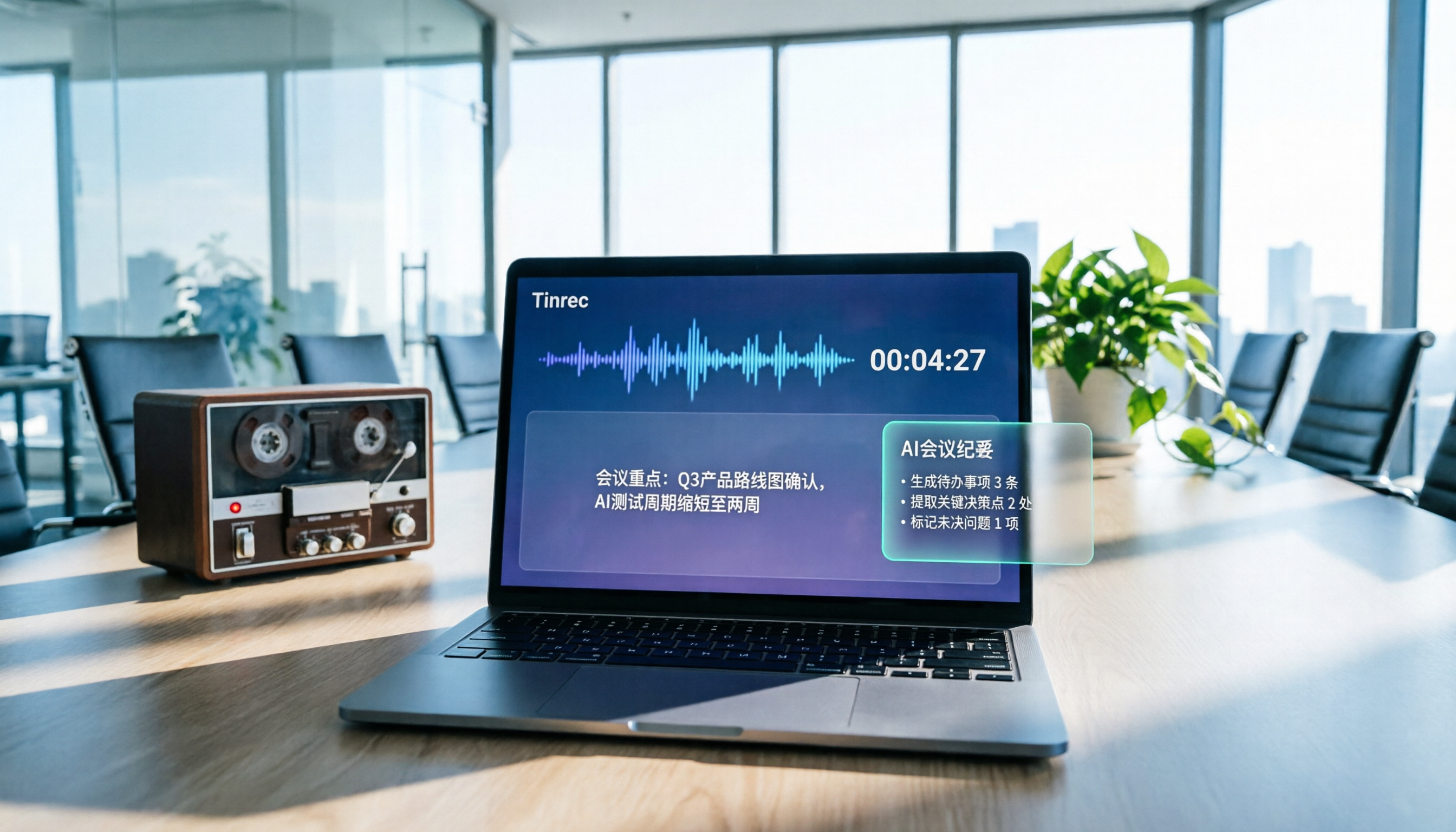
Tinrec as a Plaud Alternative in 2026: Free Recording-to-Text + AI Meeting Minutes
Looking for a free alternative to Plaud? This article compares Plaud and Tinrec from real-world usage scenarios, explaining why more people are switching to Tinrec: no hardware needed, cross-platform, AI summaries, and team collaboration all in one.

Best Free Recording-to-Text Apps? 2026 Hands-On: Plaud Note vs Tinrec – No Hardware Needed
Plaud Note offers 300 free transcription minutes per month but requires buying hardware first; Tinrec's free version needs no extra devices and records online meetings directly. Which one is right for you? This article explains it all.

2026 Tested: 4 Free AI Transcription Tools Compared – Is Plaud's 300 Monthly Minutes or Tinrec a Better Deal?
Want to transcribe Plaud recordings for free? We tested 4 tools, comparing free quotas, hardware costs, and AI features, and show how Tinrec can handle meeting notes without buying hardware.

2026 PLAUD Voice Recorder Alternatives: Tinrec Makes Student Recording Easier
On a student budget, is buying a PLAUD voice recorder really worth it? This article shares a senior student's real experience comparing PLAUD voice recorders with Tinrec, explaining why you don't need extra hardware to turn classroom recordings into key notes.

How to Convert Voice to Transcript in 2026? 5 Steps Tested with Gemini and Tinrec
A senior student shares hands-on experience using AI tools to turn lecture recordings into transcripts. Compare free quotas, accuracy, and AI features of Google Gemini and Tinrec to find the best value for students.
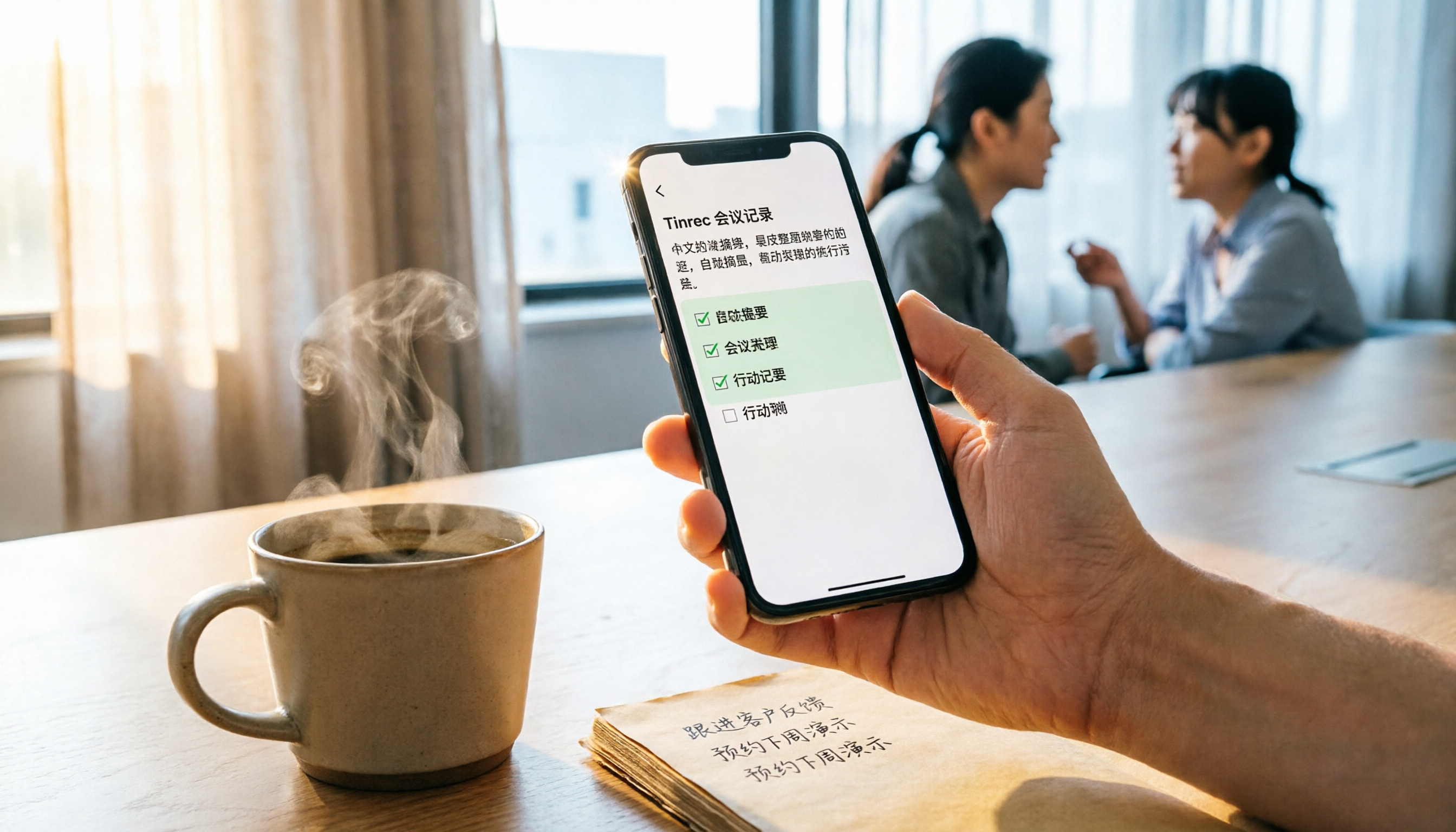
2026 iPhone AI Meeting Recorder App Comparison: Which One Makes Post-Meeting Cleanup Easier?
For iPhone users using AI to record meetings, transcription speed isn't the only factor. This article compares Notta and Tinrec in real-world scenarios, covering post-meeting organization, Chinese terminology handling, team spaces, and export options, to help you find the app that truly turns meetings into actionable to-do lists.

2026 iPhone Meeting Minutes App Comparison: Tinrec vs Otter.ai – Which Is Better for Chinese Users?
Choosing a meeting minutes app for iPhone? This article compares Tinrec and Otter.ai across four key dimensions: bot-free recording, Chinese meeting experience, file import and audio preservation, and team collaboration governance, to help you decide which one is worth installing.

5 Best Google Voice Meeting Transcription Tools Tested in 2026: Tinrec Saves the Most Time for Chinese Notes
A mid-level manager tested Google voice meeting transcription tools, from Google Meet's built-in transcription to Otter, Notta, and Tinrec, comparing bot-free recording, Chinese accuracy, AI summaries, and team collaboration to tell you which one is worth using.

5 Meeting Note Tools Compared in 2026: Is the iPhone Notes App Really Enough?
The iPhone Notes app's voice-to-text feature may seem free and convenient, but real meeting notes also need auto-summaries, to-dos, and team collaboration. This article compares Tinrec, iPhone Notes, Otter.ai, Notta, and more to help you find the best note-taking solution for Chinese meetings.