

Turn recordings into transcripts and summaries in minutes
Upload audio or video for multilingual transcription, AI notes, and action items
Last semester, I took a media analysis class, and the professor required us to listen to a Spotify Podcast and prepare a transcript for analysis. I instinctively opened Spotify's built-in transcript feature, only to find two frustrating issues: first, it displayed Simplified Chinese, and second, I couldn't download or copy the text. So I had to resort to the old-fashioned way—listening and typing manually. A 40-minute episode took me three hours, and my eyes were nearly crossed. Later, I realized that many people get stuck using Spotify's built-in feature for transcripts, but there's a smarter approach—using a professional audio-to-text tool to handle Spotify audio.
Why Are People Looking for Alternatives to Spotify's Built-in Transcripts?
Spotify does have a built-in Podcast transcript feature that automatically converts audio to text, allowing you to follow along like lyrics, and it's available to both free and Premium users. This feature is convenient for quickly previewing content, but in practice, there are several common frustrations:
- The display language may not be what you want: The transcript language is set by the creator in their backend. If the creator chose Simplified Chinese, that's what listeners see, with no way to switch.
- No download or export: Transcripts can only be viewed within the Spotify app; you can't copy them to a notes app or save them as a file.
- Lack of organization features: There's no automatic summarization, highlighting, or to-do extraction. After reading the entire transcript of a long episode, you still have to organize it yourself.
If you're like me and need to turn Spotify content into editable, translatable, and organizable transcripts, Tinrec is an option worth exploring.
Tinrec vs. Spotify Built-in Transcripts: What's the Core Difference?
Language and Font Language support is the first key difference. Spotify's built-in transcript language is determined by the creator, and listeners usually have to accept it passively. If it's in Simplified Chinese, the reading experience suffers. Tinrec supports Traditional Chinese and multilingual transcription, allowing you to choose the output language yourself, so you're not locked in—much friendlier for Traditional Chinese users.
Download and Export Spotify's built-in transcripts can't be downloaded or copied, which is a hassle for students who need to write reports or save files. Tinrec offers multiple export formats, including text files and document files, and can also export to third-party tools like Notion and Google Docs, making subsequent editing or assignment submission easy.
Translation Capability Spotify's built-in transcripts basically only show the original text, with no automatic translation. Tinrec has built-in real-time translation, generating translated text simultaneously during recording or transcription, and can output bilingual side-by-side content—super useful for students needing Chinese-English comparison or for those listening to foreign Podcasts.
AI Organization Spotify's built-in transcripts are just text, with no summaries, highlights, or to-dos. Tinrec automatically generates summaries, chapters, key points, and to-dos after transcription, and you can also ask AI questions about the content, such as "What are the main points of this Podcast episode?"—saving a lot of organization time.
Cross-Device and Input Sources Spotify transcripts can only be used within the Spotify app and can't import other audio. Tinrec not only records but also allows direct upload of audio files (e.g., Podcast audio downloaded from Spotify, if you have the rights), and can record any sound played on your computer via the desktop version—so no matter the source, you can organize it.
Tinrec's Core Features at a Glance
Real-Time Recording to Text Open Tinrec during a lecture or interview, record and transcribe simultaneously, and by the time class ends, your transcript is ready—no need to listen to the recording again. Seeing the text in real time also lets you confirm if you missed any key points, so you can address them immediately.
Stop organizing recordings by hand
Upload audio or video and automatically get a transcript, summary, and action items
Audio and Video File Transcription Upload downloaded Podcast audio, lecture recordings, or interview files, and Tinrec will convert them to text within minutes, saving you from the manual grind. It supports various audio and video formats, so historical data can be quickly digitized.
Real-Time Translation For cross-language courses or foreign Podcasts, Tinrec can display the original text, translation, or bilingual content simultaneously during recording, making language learning and international content organization convenient.
AI Summaries and To-Dos After transcription, Tinrec automatically generates summaries, chapters, and key points, and extracts to-dos from the discussion—so you don't have to re-listen for exam review or post-meeting follow-ups.
AI Q&A Ask Tinrec directly, "What are the professor's assignment requirements?" or "What's the conclusion of this Podcast episode?" It will answer based on the transcript content, so you don't have to manually search through the entire text.
Real-World Use Cases
Lecture Recording Organization Professors talk fast and flip slides even faster. Just open Tinrec to record, and you'll have the transcript and summary by the end of class. Export to Word or Notion, and your review efficiency doubles.
Organizing Spotify Podcasts If a Spotify Podcast lacks transcripts or only has Simplified Chinese, you can use Tinrec's desktop version to record the sound playing on your computer or import downloaded audio files to produce Traditional Chinese transcripts and translations. This way, you won't need to type manually for reports or reflections.
Group Discussion Records Open Tinrec during group discussions to automatically record everyone's contributions. After the meeting, just check the summary and to-dos—no more asking "What was the conclusion?" Everyone's responsibilities are clear at a glance.
Interview or Report Material Organization After interviewing a subject, upload the recording, and Tinrec will transcribe it and highlight key points, making it easy to cite in reports. Transcripts can be searched by keyword to quickly find the section you need.
Key Points to Consider When Choosing an Audio-to-Text Tool
Is Language Support Broad Enough? If you need Traditional Chinese or mixed Chinese-English, choose a tool that supports multiple languages. Tinrec supports Traditional Chinese and multiple languages, and in testing, it correctly recognized mixed Chinese-English content.
Can You Export and Edit? A transcript that can't be exported is half-broken. Tinrec offers multiple export formats and can also export to Notion and Google Docs, making subsequent organization and archiving easy.
AI Organization Capability A transcript alone isn't enough; automatic summaries, to-dos, and Q&A are the real time-savers. Tinrec's AI post-processing can directly generate key points and to-dos, so you don't have to manually highlight.
Is the Free Plan Sufficient? Students have limited budgets, so try the free version first. Tinrec has a free plan to experience basic features, suitable for short-term use; if you have long-term needs, consider the Pro plan. I recommend testing the free version first to see the results before deciding to pay.
Conclusion: Is Tinrec Worth Trying?
If you need to turn Spotify or other audio into Traditional Chinese transcripts, translations, downloads, and AI summaries, Tinrec is a very handy choice right now. It solves the problems of Spotify's built-in features: no download, Simplified Chinese, and lack of organization. It's especially suitable for students: lecture recording, Podcast organization, and group discussions all work well. I suggest starting with the free version, uploading a piece of audio to test the results, and then considering payment if it suits you. I've used it all semester and have already recommended it to three classmates.
References
- Spotify Transcript Feature | Firstory Help Center
- Transcribe Spotify Podcasts to Text: Free AI Tool | AskSia
- How to Use Spotify Podcast Subtitles? Display Podcast Transcript Text in Real Time! - Tech Girl
- Spotify Transcript Shows Simplified Chinese: How to Handle It? | SoundOn Help Center
- Recently, when adding subtitles to the YouTube version of our podcast, it was very laborious, but just now on Spotify, I tried listening to our latest episode and found... the transcript quality on Spotify is really good! The only drawback is the Simplified Chinese. 1. Is there a way to download Spotify transcripts? 2. Is there a way to make Spotify transcripts Traditional Chinese?
Turn every recording into actionable outcomes
Get 60 free transcription minutes when you sign in. No credit card required.
Related Reading
You might also like

2025 Live Transcription Tools Compared: Which One Actually Saves You Time?
How to choose a live transcription tool in 2025? We tested Tinrec, Granola, Notta, and Otter.ai across Chinese recognition, meeting audio capture, post-meeting organization, and team quotas. We also cover common pitfalls and scenario-based recommendations to help you find the one that truly saves you time.

2026 Real-Time Transcription Tools Buying Guide: 6 Tested Picks and Recommendations
Recording the meeting is just the beginning of the pain? This guide covers 6 real-time transcription tools, comparing Chinese language support, meeting note methods, and pricing plans. It also explains the most common pitfalls before buying, helping you find the right transcription tool for your needs.

Which Auto-Generated Meeting Notes Tool for Teams Is Best? 2026 Hands-On Test of 3 Tools: This One Works Best for Chinese Meetings
Teams built-in transcription only gives you a verbatim transcript; post-meeting organization is where the real time goes. This article uses Teams meetings as the scenario to compare Tinrec, Otter.ai, and Notta, helping you decide which is best for Chinese meetings and team collaboration.

3 Meeting Recording Tools Tested in 2026: Notion AI vs. Tinrec — Which Saves More Time?
Based on three real meetings, this comparison examines how Notion AI Meeting Notes, Granola, and Tinrec differ in meeting recording, transcription, post-meeting organization, and team handoff. Includes selection criteria, pitfalls to avoid, and a ready-to-use starter checklist.

2026 Comparison of 4 Teams Meeting Transcription Tools: Which Saves More Time with Auto Transcripts and AI Summaries?
Starting from the pain points of student group meetings on Teams, this comparison covers Teams built-in transcription, Tinrec, Otter.ai, and Notta, evaluating auto transcripts, AI summaries, action items, and cost limits to help you choose the best meeting notes workflow.
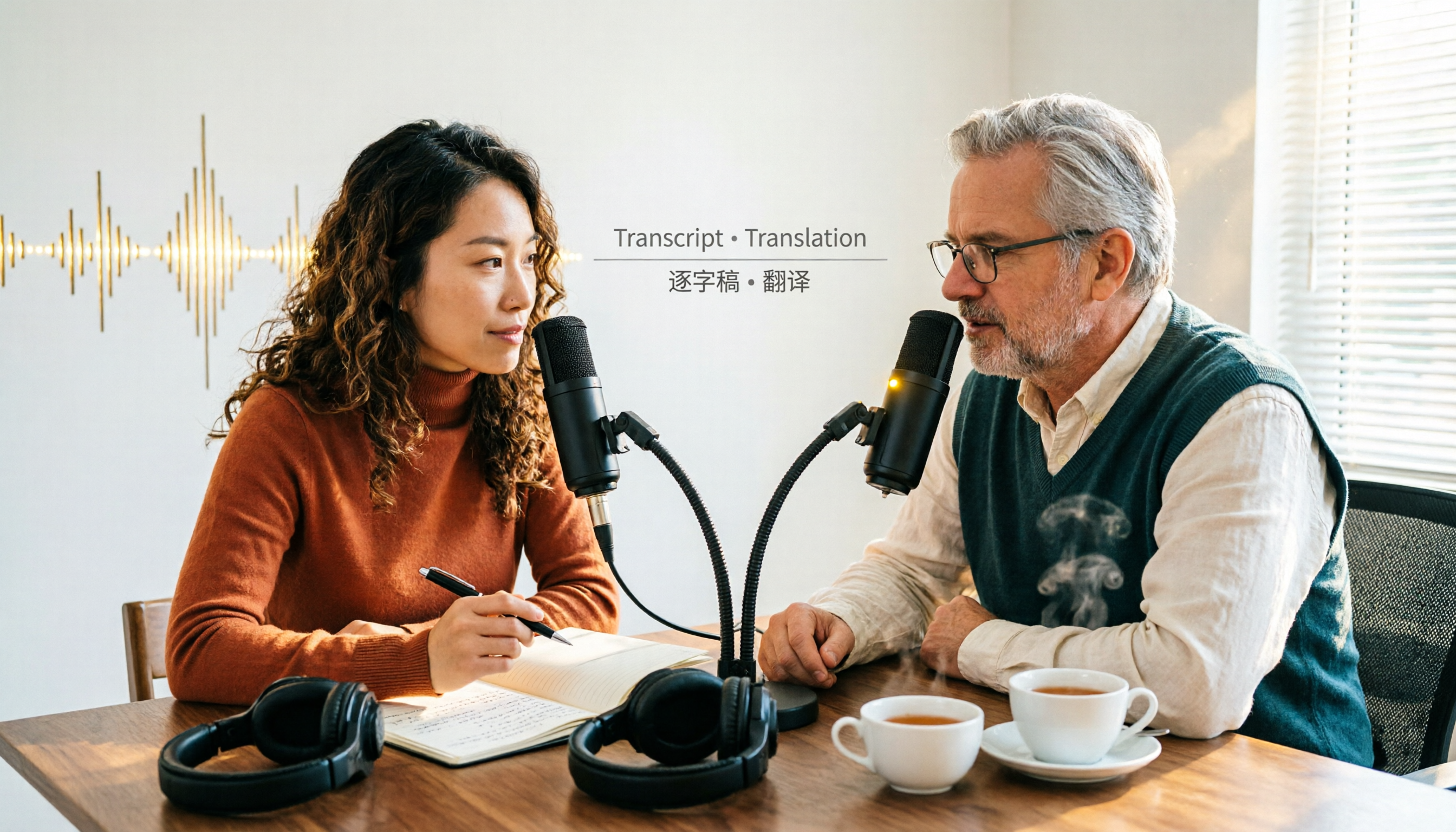
4 Podcast Transcript Translation Tools Tested for 2026: Which Free Version Is Enough?
This article starts with common misconceptions about Podcast transcript translation and compares four tools—Tinrec, Otter.ai, Notta, and TurboScribe—covering transcription, translation, summarization, export, free quotas, and team collaboration differences to help you choose the right solution for Chinese or mixed Chinese-English shows.

Best Notion Meeting Notes Templates in 2026: 6 Options Compared, and the One That Makes Follow-Ups Easiest
A roundup of 6 Notion meeting notes templates and AI meeting tool combinations, from free templates to team collaboration solutions, explaining which meeting scenarios each suits, how to handle post-meeting follow-ups, and selection advice.

2026 Comparison of 3 Meeting Notes Tools: Notion AI, Tinrec, and Notta — Which One Actually Saves You Cleanup Time?
Starting from a Notion meeting notes tutorial, this comparison examines the meeting notes workflows of Notion AI, Tinrec, and Notta, covering differences in templates, transcripts, summaries, action items, AI Q&A, and team collaboration to help you choose the right tool for Chinese-language meetings.

The Complete Guide to YouTube Transcripts in 2026: How to Get Free Transcripts and Summarize Key Points
Starting from student scenarios like exam review and class notes, this guide breaks down common misconceptions about free YouTube transcripts and shows how Tinrec turns transcripts into searchable, summarizable, and queryable study materials.