

Turn recordings into transcripts and summaries in minutes
Upload audio or video for multilingual transcription, AI notes, and action items
Recording meetings with your phone and then spending twice as long replaying and transcribing is a daily grind for many office workers. Recently, the Plaud recorder has gained a lot of attention online for being slim, magnetically attachable to phones, and capable of auto-summarization. But after using it a few times, I found that while it's convenient if you only need to handle in-person meetings or phone recordings, you'll need to reconsider if you deal with online meetings, historical recordings, or want to share meeting notes with your team.
In this article, I'll share my recent hands-on experience comparing three common types of AI recording tools: hardware recorders (using Plaud as an example), phone recording apps, and software-centric AI meeting notes tools like Tinrec, to see which one is better suited for the average office worker.
What Can AI Recording Tools Do for You?
AI recording tools don't just capture audio—they automatically transcribe it, organize key points, and even generate meeting notes. Here are three scenarios you're likely to encounter.
Scenario 1: Get Meeting Notes Within 5 Minutes of the Meeting Ending
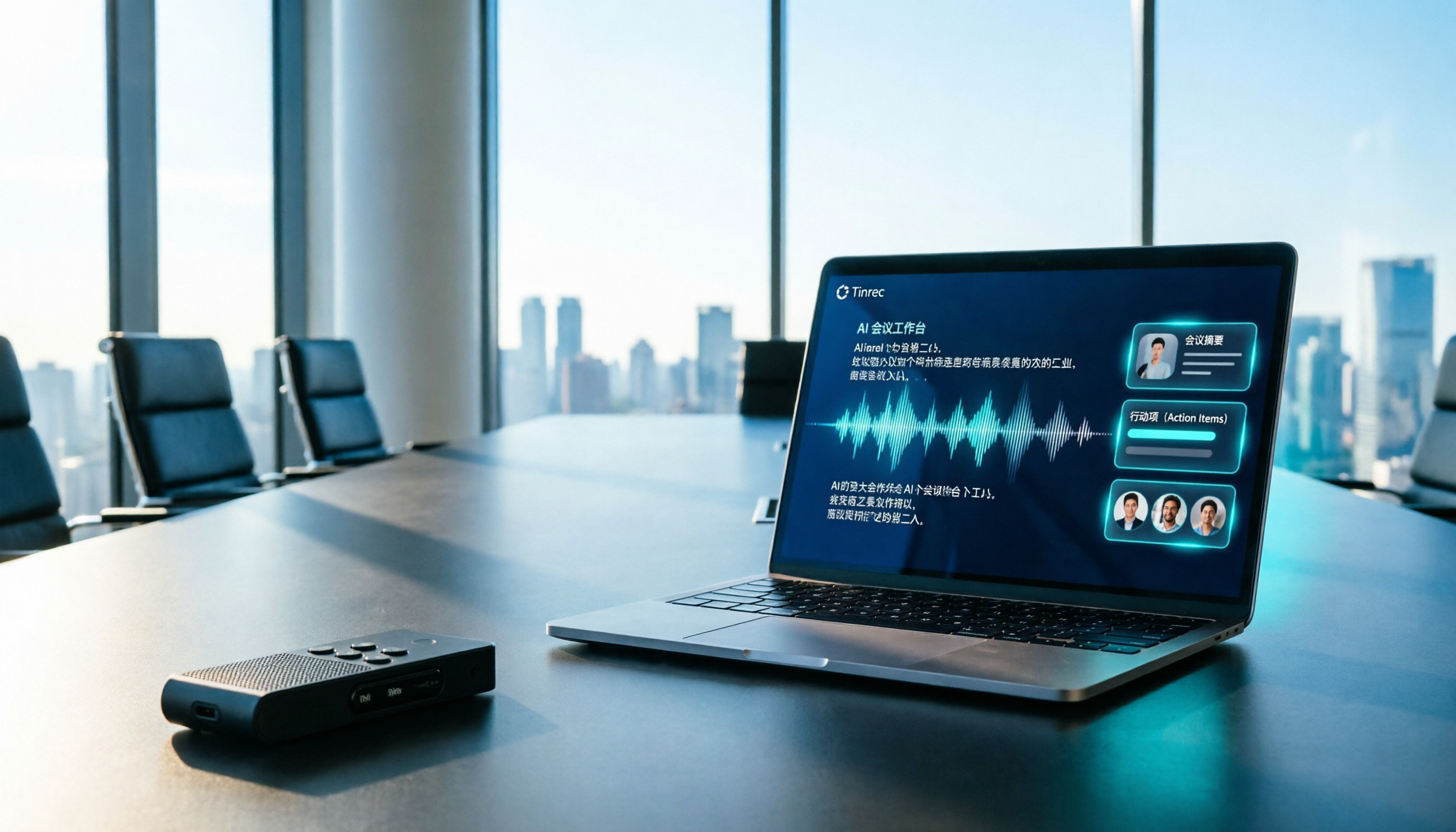
In the past, after a two-hour meeting, you might spend another hour organizing your notes. Now with Tinrec, by the time the meeting ends, the AI has already generated a summary, conclusions, and action items—who's responsible for what and deadlines are clear at a glance.
Scenario 2: No More Manual Note-Taking for Online Meetings
Tinrec's desktop app can directly capture your computer's system audio, so even if Zoom, Google Meet, or Teams meetings don't have recording enabled, you can get real-time transcripts without inviting a bot into the meeting.
Scenario 3: Turn Interview Recordings into a Searchable Database
If you frequently conduct user interviews or freelance interviews, Tinrec lets you upload audio files, and after AI transcription, you can ask questions about the content, such as "What pain points did the interviewee mention?" or "What are the client's thoughts on pricing?"—saving you from repeatedly replaying the audio.
What Core Capabilities Should AI Recording Tools Have?
There are many tools on the market, but core capabilities determine how useful they are. Using Tinrec as an example, here are a few key features.
Real-Time Transcription
Tinrec supports recording and transcribing simultaneously with low latency, so you can watch the screen during meetings to ensure you don't miss key points. This is practical for situations requiring immediate responses or detailed note-taking.
Bot-Free Online Meeting Recording
This is my favorite feature. Tinrec's desktop app captures system audio directly, so you don't need to add a meeting bot to the call. Participants won't see a strange attendee, and it works across platforms.
AI Summaries and Action Item Extraction
After transcription, Tinrec automatically organizes chapters, key points, and action items—not just a condensed transcript but a structured presentation, so you can quickly grasp the meeting's conclusions.
AI Q&A and Multi-Format Export
You can ask questions directly about the meeting content, such as "Who was responsible for following up with the client in the last meeting?" Tinrec uses semantic understanding to answer. You can also export the organized content to Notion, Google Docs, or download as files for further editing.
Team Spaces and Permission Management
Beyond personal use, Tinrec offers a team plan. Meeting data is stored in a shared team space, members can view collaboratively, admins can allocate seats and monitor usage, and data isn't lost when members leave.
Practical Use Cases
Meeting Notes: Hands-Free from Start to Finish
Online meetings: Open Tinrec's desktop app, select system audio recording, and get real-time transcripts during the meeting. Afterward, AI summaries are sent directly to the team, and action items sync to task management tools.
Stop organizing recordings by hand
Upload audio or video and automatically get a transcript, summary, and action items
In-person meetings: Open the Tinrec app on your phone, place it on the table, and it records, transcribes in real time, and generates summaries.
Interviews and Research: Quickly Organize Transcripts
Upload interview recordings to Tinrec, and after AI transcription, it automatically segments and labels speakers. You can ask questions about the content to find key quotes without replaying the audio.
Class Notes: Recording Plus Summaries
Students or lifelong learners can use Tinrec to record entire lectures, with AI generating key points and chapters. During review, you can search by keywords, saving the hassle of handwritten notes.
Client Communication: Track Every Commitment
After sales or support calls, upload the recording to Tinrec, and the AI extracts client needs, objections, and commitments for more precise follow-ups.
4 Things to Consider When Choosing an AI Recording Tool
1. Identify Your Primary Use Case First
If you only record in-person meetings or phone calls, a hardware recorder (like Plaud) is compact and has long battery life, making it convenient. But if you frequently have online meetings, need to organize historical recordings, or want team collaboration, software tools like Tinrec are more flexible—no extra device needed.
2. How the Tool Captures Meetings Matters
Some tools require a meeting bot to join, but Tinrec uses bot-free desktop recording that captures system audio directly, making it completely transparent to participants. This is especially important when meeting with clients or external partners.
3. Post-Transcription Organization Capabilities
Transcription is just the first step. The ability to auto-summarize, extract action items, and answer questions is what truly saves time. Tinrec's AI Q&A and post-processing features help you directly produce meeting notes or reports.
4. Team Collaboration and Data Ownership
For personal use, free tools might suffice, but teams need to share meeting notes and manage member permissions. Tinrec's team plan offers team spaces, seat management, and usage analytics, with meeting data owned by the team—it won't disappear if a member leaves.
Frequently Asked Questions
What's the difference between Tinrec and the Plaud recorder?
Plaud is a hardware recorder ideal for on-the-go recording and phone calls; Tinrec is a software-centric AI meeting notes tool that supports online meetings, file uploads, AI summaries, and team collaboration. If you need more comprehensive meeting organization features, Tinrec is a better fit.
Does Tinrec have a free plan?
Yes. Tinrec offers a free plan that lets you experience basic features like recording, importing, summarizing, and transcription. If you only occasionally organize a recording, the free plan is sufficient; if you use it frequently, consider a paid plan.
Do I need to buy a separate recorder to use Tinrec?
No. Tinrec has web, desktop, and mobile apps, so you can record and transcribe using your existing devices. For online meetings, use the desktop app to capture system audio; for in-person meetings, use the mobile app to record.
Does Tinrec support Chinese?
Yes. Tinrec supports Chinese, Traditional Chinese, and multilingual meeting scenarios, and can handle mixed Chinese-English content, offering real-time translation and bilingual transcripts. Actual performance may vary with audio quality, accents, and noise, but it performs well in clear conversations.
How is the team plan priced?
The team plan is priced per paid seat, with monthly or annual billing. Each seat includes 2,000 minutes of shared import quota per month; real-time recording doesn't count against the quota. For detailed pricing, please refer to the official purchase page.
Conclusion
AI recording tools aren't new, but choosing the right one can save you a ton of time. The Plaud recorder is great in specific scenarios, but if you need more comprehensive meeting notes, online meeting support, and team collaboration, Tinrec is a more practical choice.
I recommend starting with Tinrec's free plan, recording a real meeting, and seeing if the AI-generated summary and action items meet your needs. Don't rush to buy hardware—a software tool might solve most of your problems.
References
- Plaud Note Pro Unboxing Review | Portable AI Smart Recorder Evolved! Is It Good? Who Should Buy It? - Mr. Mad
- Plaud Taiwan | Official Website | Leading AI Recording Device Brand
- [Unboxing] Ultra-Thin AI ChatGPT Recorder Plaud Note Unboxing Test: Smooth Experience for Meeting Notes/Phone Call Transcription and Summaries
- Call Recording Is Impressive! AI Recorder "PLAUD NOTE" with GPT-4o Review! A Great Companion for Business Activities | Saiga NAK (Gaming and Esports News Media)
- Plaud Note | The Smartest AI Recording Card Ever
Turn every recording into actionable outcomes
Get 60 free transcription minutes when you sign in. No credit card required.
Related Reading
You might also like

2026 Hands-On Comparison of 3 AI Recording Tools: Plaud Audio to Text, Why Tinrec Is Better for Teams
This article compares Plaud recording hardware with Tinrec AI meeting notes tool, explains how to handle Plaud audio files, and analyzes Tinrec's advantages in transcription, summarization, and team collaboration. It's ideal for readers seeking efficient recording and organizing solutions.

2026 AI Voice Recorder Comparison: Tinrec vs Plaud Note – Costs and Features Fully Analyzed
This article compares Tinrec and Plaud Note in terms of costs, hardware expenses, online meeting recording, historical audio organization, team collaboration, and AI post-processing capabilities to help you decide which is better for users in the U.S.

Tinrec vs Plaud Note in 2026: A 5-Dimension Comparison for Hong Kong Professionals
Thinking about buying a Plaud voice recorder? This article compares Tinrec and Plaud Note across five dimensions—cost, online meetings, post-transcription processing, team collaboration, and language support—to help you choose the best AI recording solution for Hong Kong office workers.
2026 AI Recording Tool Buying Guide: PLAUD vs Tinrec Hands-On Recommendations
Still deciding between a PLAUD recorder and a software solution? This article compares hardware recording with Tinrec's AI meeting tool in real meeting, interview, and team collaboration scenarios to help you find the truly time-saving choice.

2026 Notion Alternatives: 5 Steps to Take Meeting Minutes with Tinrec
Still using Notion for meeting minutes? This article starts from real pain points, compares Tinrec and Notion for meeting notes, and provides a 5-step tutorial on how to use Tinrec to record online meetings without bots, auto-generate summaries and action items, turning meetings into searchable, collaborative team knowledge.

How to Take Meeting Minutes in 2026: 5 Steps to Replace Notion Free with Tinrec
Notion's free plan has trial limits for meeting notes. Switch to Tinrec for bot-free recording, AI summaries, to-dos, and team collaboration. Complete efficient meeting minutes in 5 steps.

What Does "Meeting Minutes" Mean? A Guide to Writing Meeting Minutes in English
Searching for "meeting minutes 中文" usually means you want to know how to say and write meeting minutes in English. This article covers the correct usage of "meeting minutes," common sections in meeting minutes, useful phrases, and introduces tools like Tinrec that can help you create meeting minutes quickly, saving you from overtime work.

Notion AI vs Tinrec in 2026: A 5-Dimension Comparison to Choose Your Meeting Notes Tool
Notion AI meeting notes may seem convenient, but limitations like the free plan, browser audio capture, and transcript retention could trip you up. This article outlines 5 common limitations of Notion AI and compares 7 meeting notes tools including Tinrec, Otter, Fireflies, Notta, TurboScribe, and Granola to help you find the best AI meeting assistant.

5 AI Meeting Note Tools for Cantonese in 2026: Which One Transcribes Cantonese Best?
Spending two hours in a meeting and another two hours writing up the minutes? This article addresses the pain points of Cantonese meetings, compares 5 AI meeting note tools, and uses Tinrec as an example to share selection tips, pitfalls to avoid, and scenario-based recommendations.