

Turn recordings into transcripts and summaries in minutes
Upload audio or video for multilingual transcription, AI notes, and action items
Many managers browse PTT for Plaud recorder unboxings and assume that buying that slim recording card will automatically improve their meeting notes. But the real challenge isn't the recording hardware—it's what happens after recording: turning content into to-dos, decisions, and follow-ups. In my team, someone bought a voice recorder first, only to find that online meetings still required a computer, files still needed manual organization, and eventually we circled back to software tools. This article compares the free plans and suitable use cases of Plaud Note and Tinrec from a practical usage perspective.
Tinrec vs Plaud Note: Quick Overview
Let's start with the conclusion: Plaud Note is a very slim AI recording card, excelling in portable recording, call recording, and hardware build quality. Tinrec, on the other hand, is an AI meeting notes and team collaboration tool that doesn't require additional hardware, excelling in online meetings, file import, post-meeting organization, and team knowledge accumulation. If you're like me, constantly chased by meetings, rather than agonizing over which recorder to buy, think first about 'how will this content become trackable actions after recording.'
Basic differences:
- Plaud Note: Requires hardware purchase, includes MagSafe case and magnetic ring; includes 300 minutes of transcription per month.
- Tinrec: Free version is ready to use, no hardware needed; works on mobile, desktop, and web; paid version unlocks more minutes and advanced features.
This article compares from 4 dimensions I think managers care most about—not spec sheets, but 'which one helps me work less overtime.'
Dimension 1: Entry Barrier and Free Plan
Plaud Note requires an upfront hardware budget. Although it includes 300 minutes of transcription per month, those minutes are tied to the device, meaning you pay for the hardware before talking about free. If you just want to test whether AI meeting notes are worth it, this upfront cost can be a deterrent.
Tinrec, on the other hand, lets you start immediately via download or web version. The free version allows you to experience the basic flow of recording, importing, and summarizing without buying anything. For managers like us who want to first verify 'does this tool fit our team,' zero barrier is very practical.
→ This dimension: Tinrec wins. The free plan has a lower entry barrier and avoids the risk of buying hardware only to find it doesn't suit your needs.
Dimension 2: Meeting and File Sources
Plaud Note's strength is in physical meetings, interviews, and call recording, especially the call recording mode via MagSafe attachment to the back of a phone. But if most of your meetings happen on Zoom, Google Meet, or Microsoft Teams, Plaud Note still relies on hardware audio capture, and system audio from online meetings isn't as direct.
Tinrec's desktop version can directly capture computer system audio without adding a bot to the meeting, allowing you to record online meetings and get real-time transcription. It also supports uploading existing audio files, videos, and mobile recordings. In other words, whether it's online meetings, physical recordings, or historical files, Tinrec uses the same workflow.
→ This dimension: Tinrec wins. Online meetings and historical files are high-frequency scenarios for modern managers, and Plaud Note requires extra steps here.
Dimension 3: Post-Transcription Organization and Follow-Up
Plaud Note can generate transcripts, summaries, speaker labels, and has templates for organizing key points. However, based on publicly available information, it lacks real-time translation, and the depth of AI follow-up tends to be limited to preset templates.
Stop organizing recordings by hand
Upload audio or video and automatically get a transcript, summary, and action items
Tinrec, in addition to transcripts, summaries, chapters, to-dos, and mind maps, allows you to ask follow-up questions on the meeting data, such as 'What were the three concerns the client mentioned last time?' or 'Organize this week's to-dos into a table.' It also offers real-time translation and bilingual viewing, which is useful for teams that occasionally handle mixed Chinese-English meetings.
→ This dimension: Tinrec wins. I don't just need a transcript; I need material I can use to report to my boss or track progress within 10 minutes after the meeting.
Dimension 4: Team Collaboration and Data Ownership
Plaud Note is essentially a personal recording device. Even with cloud sync, data remains within a personal account. To share recordings and transcriptions with a team, you'd have to manually forward files or share accounts, with limited administrative control.
Tinrec's team space allows meeting recordings, transcripts, summaries, and to-dos to be stored under the team. Members can read team data, but only those with seats can upload, edit, and export. Administrators can assign roles and seats, view usage analytics and audit logs, and even recover accidentally deleted audio files from the recycle bin. For a 10-person team, this isn't a bonus—it's a necessity.
→ This dimension: Tinrec clearly wins. Especially when team members change or leave, team meeting data doesn't disappear with personal accounts—this is the governance issue managers should care most about.
What Are the Unique Advantages of Each?
Tinrec's unique advantages:
- Bot-free online meeting recording: No need to add extra bots to Zoom/Meet/Teams; the desktop version captures system audio directly, minimizing disruption.
- AI follow-up and multi-format export: Summaries, to-dos, mind maps, real-time translation, export to Notion/Google Docs, etc., so no manual work after meetings.
- Team space and governance: Roles, seats, usage, audit, recycle bin—turning a personal meeting tool into a team asset.
- Multiple input sources: Online meetings, audio/video files, mobile recordings, and some web links can be processed.
Plaud Note's unique advantages:
- Portable hardware design: Ultra-slim at 0.29 cm, MagSafe magnetic design, easy to record on the go during commutes or fieldwork, ideal for those who prefer not to open apps on their phones.
- Convenient call recording: Using bone-conduction-like technology and magnetic case, it can record handheld calls or speakerphone calls, making it one of the few hardware devices that handle call recording smoothly.
Summary: Who Should You Choose?
- If you have online meetings daily, need to generate to-dos and follow-ups after meetings, and want meeting data to stay in a team space → Choose Tinrec.
- If you don't want to spend on hardware and want to test with a free version first → Choose Tinrec.
- If you're in sales or interviews, often on the go, frequently need to record calls, and don't mind buying a device first → Plaud Note is more convenient.
- If you just need a slim recording card and don't need much team collaboration → Plaud Note is sufficient, but you'll still need to figure out post-meeting organization.
In one sentence: Most managers' battlefield is in the meeting room and in front of the computer, not in their pocket. Tinrec, with its lower barrier, more complete post-meeting workflow, and team governance, helps you turn meetings into trackable team data. Plaud Note suits specific portable recording and call scenarios but isn't the best solution for meeting management. I recommend starting with Tinrec's free version, testing with your own meeting recordings, and then deciding whether to upgrade or add hardware.
References
- [Unboxing] Ultra-slim AI ChatGPT Recorder Plaud Note Unboxing and Test: Smooth Experience for Meeting Notes/Phone Call Transcription and Summarization
- Plaud Taiwan | Official Website | Leading AI Recording Device Brand
- Plaud Note | The Smartest AI Voice Recorder Card
- Zeczec | FAQ | PLAUD NOTE | The Smartest ChatGPT AI Voice Recorder Card | Business x Learning x Interview Invisible Assistant!
- PLAUD NOTE AI Smart Recorder Card Trial Report | One-Key Recording Plus AI Summarization for Daily and Business Use - Mobile01
Turn every recording into actionable outcomes
Get 60 free transcription minutes when you sign in. No credit card required.
Related Reading
You might also like

2026 Hands-On Comparison of 3 Recording Tools: Tinrec vs. Plaud Note Pro – Which Is Better for Users in Taiwan?
Still deciding between a Plaud recorder and an AI meeting tool? This hands-on comparison breaks down the differences between Tinrec and Plaud Note Pro across four key areas: hardware costs, online meetings, AI summarization, and team collaboration, helping you find the most time-saving recording solution.

Tinrec vs Plaud Note in 2026: A 5-Dimension Comparison to Help You Decide
A middle manager's hands-on comparison of Plaud Note voice recorder and Tinrec AI meeting tool across five key dimensions, from recording and transcription to post-meeting organization and team collaboration, to help you determine which one truly saves time.

4 AI Voice Recorders Tested in 2026: Which One Offers the Best Value for Students Taking Notes in Class?
We tested four AI recording tools—Tinrec, PLAUD Note, Notta, and Otter—in real classroom, group discussion, and final review scenarios. Find out how to make the most of free plans and which one is best for budget-conscious students.

How to Convert Plaud Recordings to Text in 2026: A 5-Step Complete Guide
Looking for a Plaud recording tutorial? This article starts with common misconceptions, compares Plaud hardware with Tinrec AI meeting tools, and teaches you the right way to turn recordings into searchable, collaborative meeting materials. It also provides buying tips and a guide to avoid pitfalls.
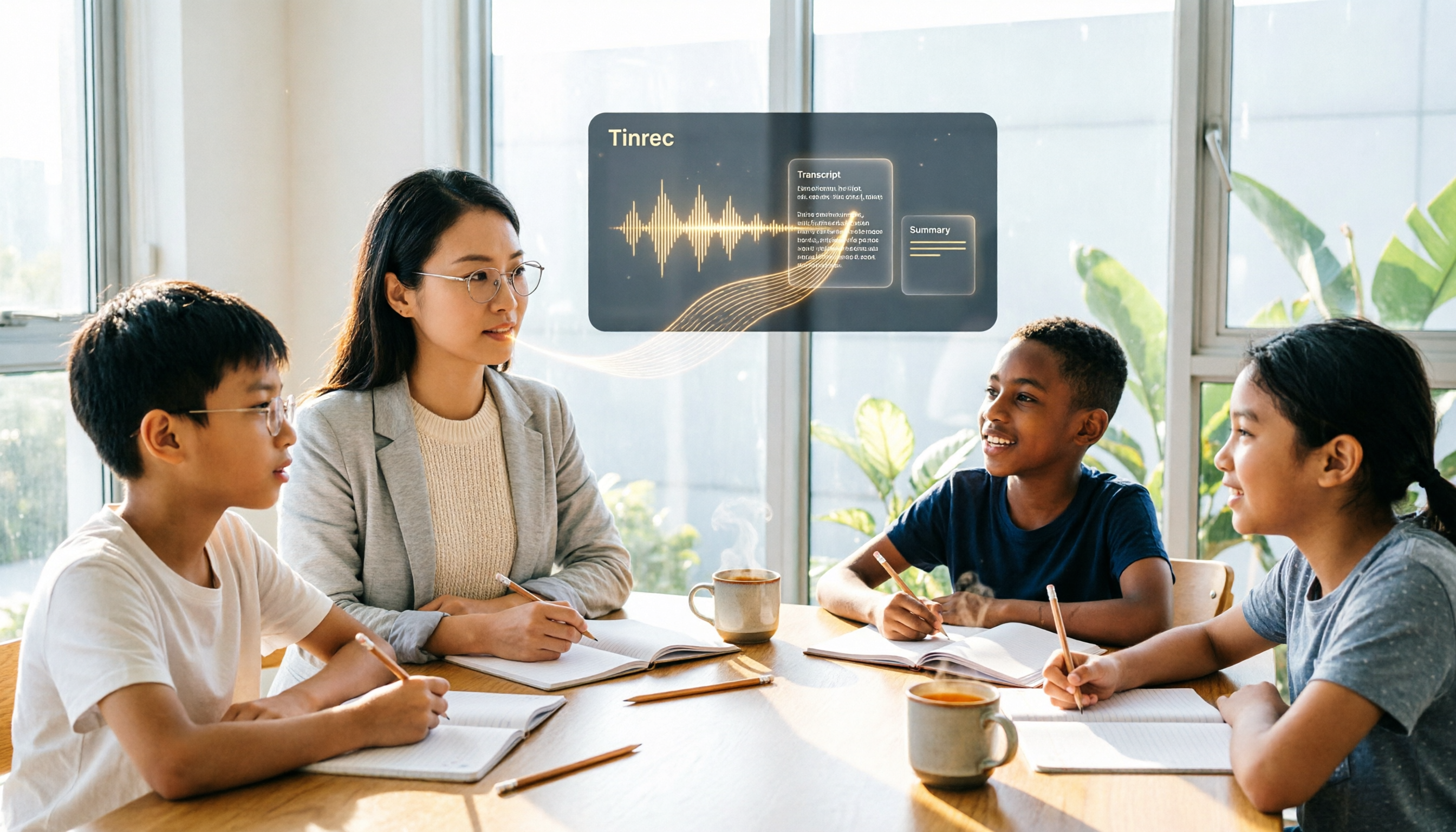
2026 Test of 4 Teaching Recording Tools: Beyond Plaud, Tinrec Is Better for Classroom Notes
A comparison of AI recording solutions for teachers and students, explaining the limitations of the Plaud recorder and Tinrec's advantages in classroom notes, transcripts, summaries, and team collaboration.

2026 AI Recorder Comparison: Tinrec vs Plaud Note – Which One Fits You Best?
This article compares Tinrec and Plaud Note across 5 key dimensions: recording methods, online meetings, Chinese transcription, AI summarization, team collaboration, and pricing, to help you decide which is better suited for your meeting notes needs.

2026 Tinrec Recording-to-Text Tutorial: Cantonese Transcription Test + Plaud Recording Comparison
Hands-on test of Tinrec and Plaud recording file processing, analyzing Cantonese transcription, AI meeting minutes, cross-platform support, and team collaboration differences to help Hong Kong workers save time and avoid overtime.

Tinrec vs Plaud Note 2026: 5-Dimension Comparison, Tinrec Wins for Meeting Notes
How to choose a recording tool in 2026? This article compares Tinrec and Plaud Note across 5 dimensions: recording methods, AI organization, cross-platform support, team collaboration, and long-term costs, to help you decide which is better for meeting notes and portable recording needs.

2026 Free Speech-to-Text Solutions: 4 Tools Compared
Plaud's transcription speed is fast, but organization and team collaboration are key. This article compares 4 speech-to-text solutions, covering free quotas, transcription speed, AI post-processing, and team spaces. Tinrec's bot-free meeting recording and Chinese experience make it more suitable for the workplace.