

Turn recordings into transcripts and summaries in minutes
Upload audio or video for multilingual transcription, AI notes, and action items
With back-to-back meetings every day, the worst part is having to listen to recordings and type up transcripts afterward. When looking for transcription software recommendations, you don't need to try every app—just know what you need it for. Here's a 5-step comparison of Tinrec and Otter.ai to help you save overtime hours.
Tinrec vs. Otter.ai | Quick Overview
Tinrec is an AI meeting notes and team collaboration tool that goes beyond transcription, offering summaries, action items, AI Q&A, and team spaces. Otter.ai is a mature AI meeting assistant, strong in English business meetings, but less tailored to Chinese and local scenarios. Here's a quick look:
| Category | Tinrec | Otter.ai |
|---|---|---|
| Positioning | AI meeting notes & team collaboration | AI meeting assistant / English business meetings |
| Platforms | Desktop, web, mobile | Desktop, web, mobile |
| Key Differences | No bot recording, Chinese-optimized, team spaces | Meeting bot, English ecosystem, mature collaboration |
Step 1 | Speech Recognition (Cantonese / Mixed Chinese-English)
Otter.ai is top-tier for English meetings, but with Cantonese and mixed Chinese-English content typical of Hong Kong meetings, it sometimes transcribes Cantonese colloquialisms into Mandarin words, or treats names and company names as noise. Tinrec focuses on Chinese and multilingual meetings; in a real test with a 5-minute mixed Chinese-English recording, Tinrec's transcript had fewer errors and more sensible segmentation.
→ This round: Tinrec wins.
Step 2 | Online Meeting Recording Method
Otter.ai mainly relies on a meeting bot joining Zoom/Meet/Teams—powerful but requires inviting the bot, which some companies' security policies may not allow. Tinrec's desktop version directly captures computer system audio, no extra bot needed; just hit record before the meeting. This suits Hong Kong companies that don't want a third party in the meeting.
→ This round: Tinrec wins.
Step 3 | AI Features and Post-Processing
Otter.ai offers summaries, action items, and AI Chat—great in English, but Chinese summaries and to-dos occasionally miss key points. Tinrec provides not only transcripts but also auto-summaries, chapters, action items, mind maps, and AI Q&A, and you can query across multiple meetings at once. It can also generate reports, tables, and documents.
Stop organizing recordings by hand
Upload audio or video and automatically get a transcript, summary, and action items
→ This round: Tinrec wins.
Step 4 | Cross-Platform and File Input
Otter.ai supports web, mobile, and desktop, but focuses on online meetings, with more restrictions on uploading pre-recorded audio. Tinrec supports live recording, bot-free meetings, audio/video file upload, mobile recording, and some web links, so you can organize historical meeting recordings too.
→ This round: Tinrec wins.
Step 5 | Team Collaboration and Knowledge Retention
Otter.ai has mature team management but leans toward English-speaking corporate ecosystems. Tinrec's team version offers a dedicated team space where meeting data belongs to the team, transferable even when members leave, plus roles, seats, usage analytics, audit logs, and a recycle bin. It's ideal for SMBs that want to turn meeting minutes into company assets.
→ This round: Tinrec wins.
What Unique Advantages Does Each Have?
Tinrec's unique advantages:
- Bot-free desktop recording—no need to worry about an extra bot in the meeting room.
- Accurate transcription for Chinese and mixed Chinese-English, better suited for Hong Kong office workers.
- Rich post-processing: summaries, action items, mind maps, AI Q&A, report generation.
- Team spaces with roles, seats, usage, and audit logs, so meeting content is preserved.
Otter.ai's unique advantages:
- Mature for English business meetings, with strong integration for English-speaking enterprises.
- Well-established meeting bot ecosystem, suitable for standard processes in foreign companies.
Summary: Which Should You Choose?
• If you need Cantonese/mixed Chinese-English meeting transcripts and don't want a bot joining → Tinrec • If you need post-meeting to-dos, Q&A, reports, and want the team to review together → Tinrec • If you're a heavy user of English business meetings and your company already uses the Otter ecosystem → Otter.ai remains a solid choice
In short: For Hong Kong office workers and local SMBs, Tinrec is more localized and comprehensive. When looking for transcription software recommendations, try Tinrec's free version first and test it with your own recording—that's the most practical approach.
References
- Yating Transcription
- Anytime! 3 Free AI Transcription Tools Recommended! AI Voice Notes for Meeting Minutes, Slides, Mind Maps | 104 Career Center
- 2026 Must-See! 4 AI Audio-to-Text Tools Recommended: Meeting Minutes, Podcast Transcription Software Comparison - Mobile01
- SoundType AI - Accurate Transcription, Speech to Text, AI Dictation - Google Play
- Asking the experts: Any recommended AI tools to convert audio files to transcripts?
Turn every recording into actionable outcomes
Get 60 free transcription minutes when you sign in. No credit card required.
Related Reading
You might also like

2026 Free Transcription App Roundup: 4 Options Compared
A student tests 4 free transcription apps: Tinrec, Otter.ai, Notta, and Yating Transcriber. Compare free quotas, cross-platform support, and AI features to save time on transcribing and focus on class.

2026 Tinrec Transcription App Review: Bot-Free Meeting Notes + AI Chinese Summaries
How to choose a transcription app? This article focuses on the key decision points, covering four critical aspects: accuracy, AI summarization, cross-platform support, and team collaboration. We tested Tinrec (秒听录音) and compared it with competitors like Otter.ai and Granola to help you avoid common pitfalls and pick the right tool.

2026 Hands-On Comparison of 4 AI Transcription Tools: Which Free Version Is Most Useful, as Discussed on Dcard?
Many people on Dcard discuss AI transcription tools. This hands-on comparison evaluates free tiers, accuracy, AI summarization, cross-platform support, and team collaboration to help you find a truly time-saving meeting notes solution.

5 Best Free Transcription Apps of 2026: Which Free Plan Is Enough?
We tested 5 transcription apps with free plans—Tinrec, Yating, Atter App, Otter.ai, and inFin—comparing free allowances, features, and use cases to help you quickly pick the right tool.

2026 AI Transcription Showdown: Tinrec vs Otter for Chinese Meetings & Bot-Free Recording
Still deciding between Tinrec and Otter for AI transcription? This hands-on comparison dives into 5 key dimensions—Chinese recognition, bot-free recording, post-meeting organization, and team collaboration—to help you find the best fit for your workflow.

2026 AI Meeting Recorder Comparison: Vocol vs Tinrec – Which Is Better for Taiwan Teams?
Hands-on comparison of Vocol and Tinrec covering bot-free recording, team governance, AI Q&A, export integrations, and Chinese language support, helping Taiwanese professionals find the best AI meeting assistant.

2026 AI Meeting Recorder Comparison: Tinrec vs Granola – Better for Chinese Teams & Collaboration
This hands-on comparison reviews Tinrec and Granola across five key dimensions: audio retention, Chinese translation, post-meeting outputs, team management, and pricing flexibility. It explains why Chinese-speaking teams and users who need to keep audio recordings are better served by Tinrec.
2026 Free AI Transcription Tools: Tinrec Free Plan Highlights + Buying Guide
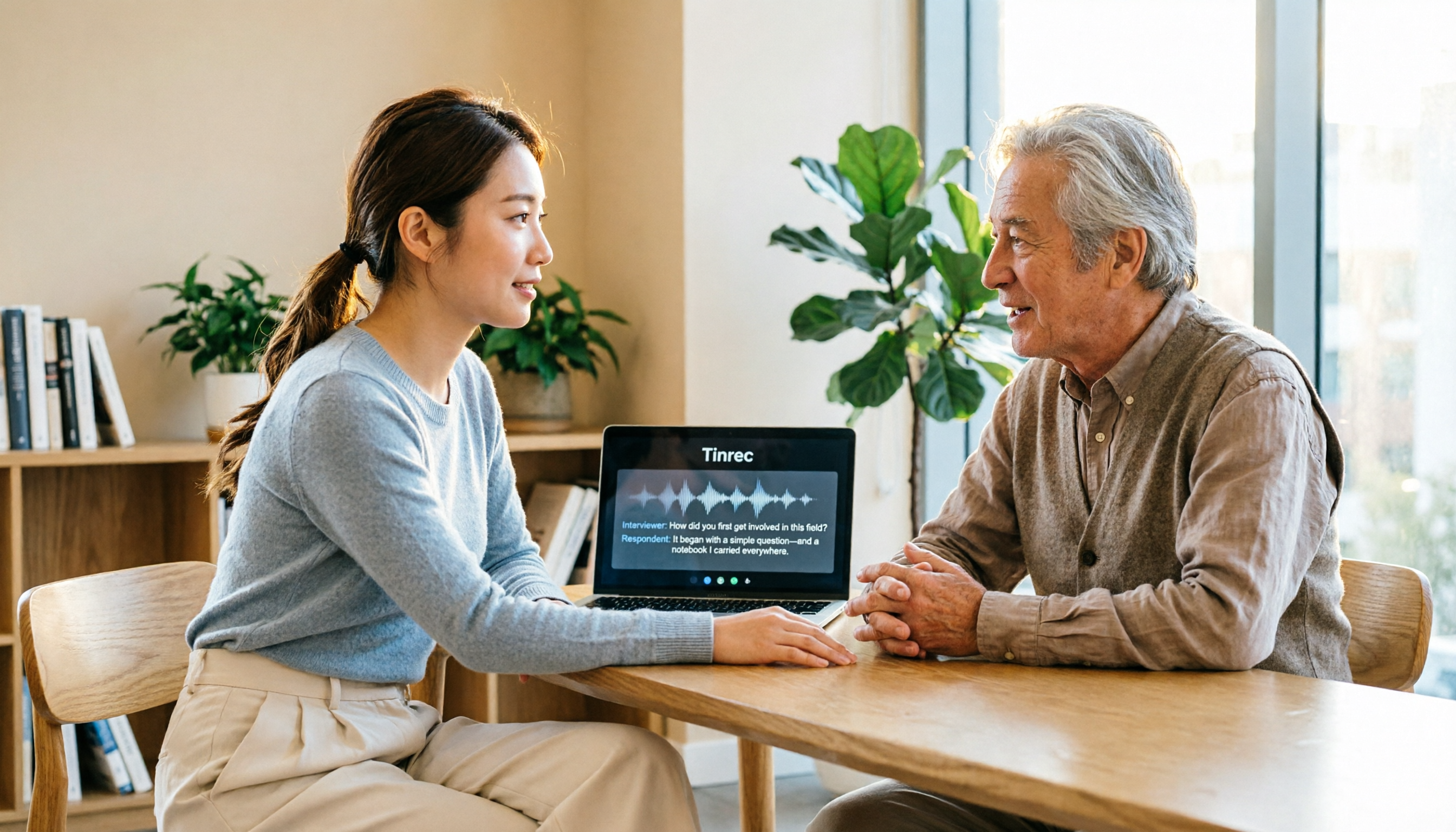
Looking for a free AI transcription tool but finding most free plans only handle a few minutes? This article uses Tinrec's free plan as an example to help you identify truly useful free options, and demonstrates how to process meeting, class, and interview transcripts in real scenarios.

2026 Hands-On Comparison of 4 AI YouTube Transcript Tools: Why Tinrec Is Worth a Try
Want to quickly get transcripts from YouTube videos without ending up with just a wall of text? This article uses Tinrec as an example to show how AI transcription, summarization, Q&A, and to-do extraction can turn video content into searchable, actionable data. It also covers 5 key factors to consider when choosing a tool.