

Turn recordings into transcripts and summaries in minutes
Upload audio or video for multilingual transcription, AI notes, and action items
Tinrec vs Granola | Quick Overview
Tinrec is an AI meeting notes and collaboration tool for individuals and teams. It doesn't just produce transcripts; it also turns meetings into summaries, action items, and mind maps, and stores them in a shared team space. Granola, on the other hand, is a bot-free AI meeting notes tool that excels at combining your handwritten notes with AI to generate key points.
| Aspect | Tinrec | Granola |
|---|---|---|
| Positioning | AI meeting notes & team collaboration | Bot-free AI meeting notes |
| Platform | Desktop, mobile, web | Desktop only |
| Pricing | Free plan, weekly pass, Pro monthly/yearly, Team plan | Basic free, Business $14/user/month |
| Key Differences | Keeps audio, supports file upload, real-time Chinese translation, full team governance | No audio retention, no pre-recorded file support, great English note-taking experience |
Below, we compare them across five dimensions to see which one suits you better.
Dimension 1 | Audio Retention & File Upload
Granola only handles live meetings; it doesn't support uploading pre-recorded audio files, and it doesn't save meeting audio. If you need to review or organize past meetings, Granola won't help. Tinrec, on the other hand, supports live recording, online meetings, and audio/video file uploads. It also retains audio files and even lets you manage them in a team recycle bin.
→ This dimension: Tinrec clearly wins.
Dimension 2 | Chinese & Real-Time Translation
Granola is primarily designed for English meeting notes and has limited performance in Chinese contexts. Tinrec covers Chinese, Traditional Chinese, and multilingual meetings, supports real-time translation and bilingual viewing, and lets you maintain team-specific terms to improve recognition of specialized vocabulary.
→ This dimension: Tinrec is better for Chinese speakers.
Dimension 3 | Post-Meeting Outputs & Export
Granola emphasizes "your notes + AI enhancement," producing personalized meeting notes with limited export options. Tinrec automatically generates summaries, chapters, action items, and mind maps. It can also use Agents to create reports, tables, and documents, and export to tools like Notion, Google Docs, and OneNote.
→ This dimension: Tinrec wins.
Dimension 4 | Team Space & Data Governance
Granola offers shared folders and user management, but it's still centered on personal notes. Tinrec provides a dedicated team space with role separation, seats, and member relationships, plus usage analytics, audit logs, and an audio recycle bin. This makes it suitable for departments or enterprises that need governance.
Stop organizing recordings by hand
Upload audio or video and automatically get a transcript, summary, and action items
→ This dimension: Tinrec wins.
Dimension 5 | Pricing Flexibility
Granola's free plan is basic, and its paid plan is $14/user/month, with simple options. Tinrec offers a free plan, a weekly pass, Pro monthly/yearly plans, and a Team plan. The Team plan, when billed annually, costs approximately $16.58 per paid seat per month and includes 2,000 minutes of shared upload quota. Whether you need short-term, long-term, or team solutions, Tinrec has a plan for you.
→ This dimension: Tinrec's plans are more flexible.
What Are Their Unique Strengths?
Tinrec's Unique Strengths
- Keeps audio and uploads files: You can review and organize past meetings and interview recordings.
- Real-time Chinese translation and bilingual viewing: Makes cross-language meetings smoother.
- Complete team space governance: Roles, seats, usage, audit, and recycle bin all in one place.
- Agent post-processing and multi-format export: Turns meetings into reports, tables, and documents, seamlessly integrating with your existing workflow.
Granola's Unique Strengths
- Handwritten notes + AI enhancement: Great for people who prefer taking handwritten notes to quickly capture key points.
- Lightweight interface: Focuses on the meeting moment with simple operation.
Summary: Which One Should You Choose?
- Need to keep recordings or upload historical files → Tinrec
- Chinese or cross-language meetings → Tinrec
- Team collaboration and permission management → Tinrec
- If you only need bot-free English meeting notes and don't need audio retention → Granola is sufficient
In a nutshell: For most Chinese-speaking teams and users who need to preserve meeting assets, Tinrec is the more complete choice. We recommend starting with Tinrec's free plan and testing it with your own meeting recordings to see how it works.
FAQ
Q1: Is Tinrec's free plan enough?
You can try basic recording, upload, summarization, and transcription, but there are usage limits, so it's suitable for light use.
Q2: Does Tinrec require a meeting bot?
No. The desktop app directly captures system audio, so you don't need to invite a bot to Zoom, Meet, Teams, or other meetings.
Q3: Can Granola upload audio files?
No. Granola only handles live meetings and does not retain meeting audio.
Q4: How is Tinrec's Team plan priced?
Monthly: $29.80 per paid seat/month; Annual: $199 per paid seat/year, including 2,000 minutes of shared upload quota.
Q5: How accurate is Tinrec's Chinese recognition?
It performs well with clear audio and common scenarios, but it can be affected by noise, accents, and overlapping speech. For important content, we recommend cross-checking with the audio recording.
References
- VS Code Speech - Visual Studio Marketplace
- VoiceMode - Voice for Claude Code & AI Coding Assistants
- GitHub - vocol/vocol: An integrated environment to support collaborative ontology / vocabulary development in distributed settings · GitHub
- Voice support
- r/ClaudeCode on Reddit: How is your voice input setup with the VS Code Extension? (Windows)
Turn every recording into actionable outcomes
Get 60 free transcription minutes when you sign in. No credit card required.
Related Reading
You might also like

2026 Free Transcription App Roundup: 4 Options Compared
A student tests 4 free transcription apps: Tinrec, Otter.ai, Notta, and Yating Transcriber. Compare free quotas, cross-platform support, and AI features to save time on transcribing and focus on class.

2026 Tinrec Transcription App Review: Bot-Free Meeting Notes + AI Chinese Summaries
How to choose a transcription app? This article focuses on the key decision points, covering four critical aspects: accuracy, AI summarization, cross-platform support, and team collaboration. We tested Tinrec (秒听录音) and compared it with competitors like Otter.ai and Granola to help you avoid common pitfalls and pick the right tool.

2026 Hands-On Comparison of 4 AI Transcription Tools: Which Free Version Is Most Useful, as Discussed on Dcard?
Many people on Dcard discuss AI transcription tools. This hands-on comparison evaluates free tiers, accuracy, AI summarization, cross-platform support, and team collaboration to help you find a truly time-saving meeting notes solution.

5 Best Free Transcription Apps of 2026: Which Free Plan Is Enough?
We tested 5 transcription apps with free plans—Tinrec, Yating, Atter App, Otter.ai, and inFin—comparing free allowances, features, and use cases to help you quickly pick the right tool.

2026 AI Transcription Showdown: Tinrec vs Otter for Chinese Meetings & Bot-Free Recording
Still deciding between Tinrec and Otter for AI transcription? This hands-on comparison dives into 5 key dimensions—Chinese recognition, bot-free recording, post-meeting organization, and team collaboration—to help you find the best fit for your workflow.

2026 AI Meeting Recorder Comparison: Vocol vs Tinrec – Which Is Better for Taiwan Teams?
Hands-on comparison of Vocol and Tinrec covering bot-free recording, team governance, AI Q&A, export integrations, and Chinese language support, helping Taiwanese professionals find the best AI meeting assistant.
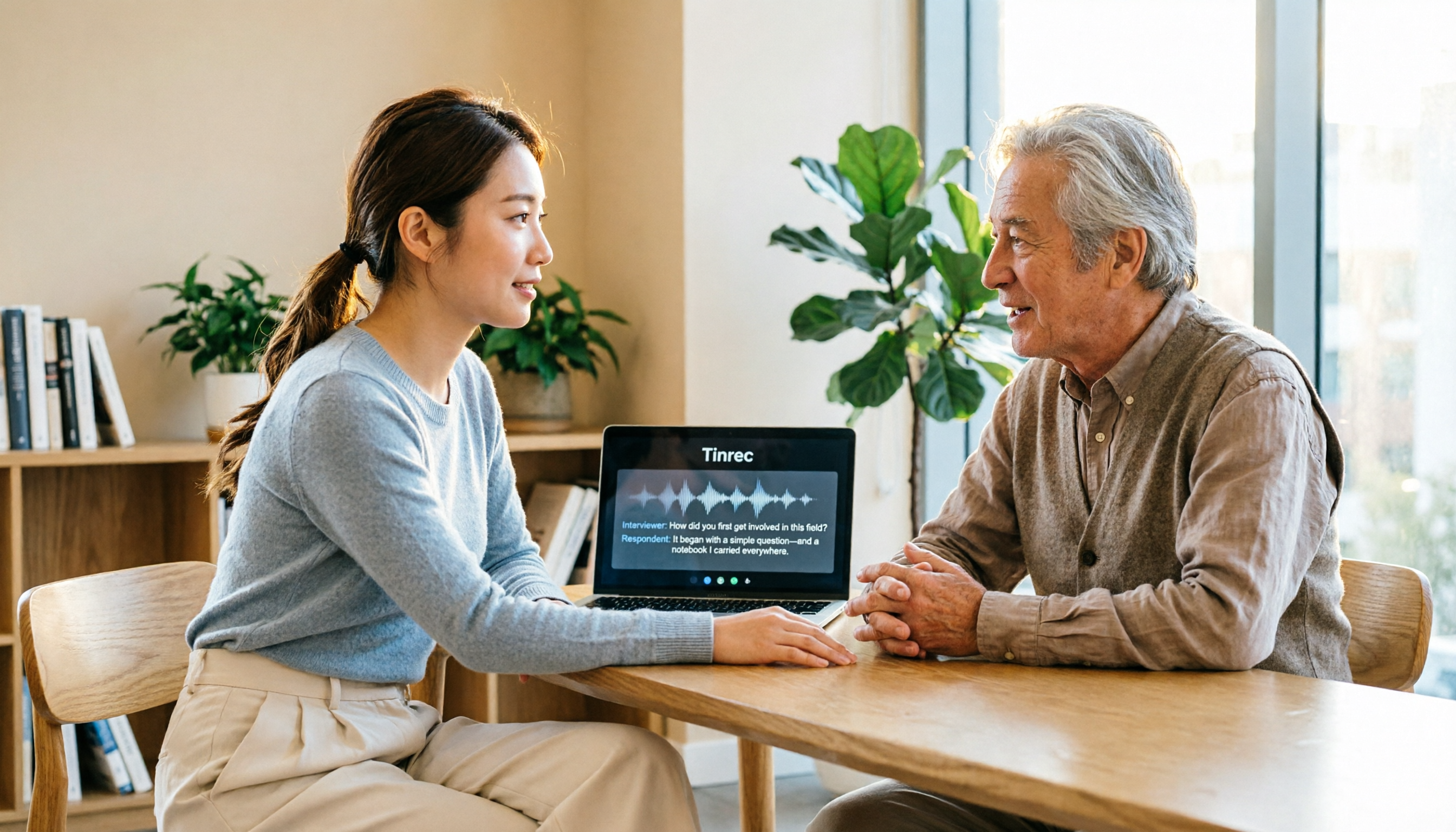
2026 Free AI Transcription Tools: Tinrec Free Plan Highlights + Buying Guide
Looking for a free AI transcription tool but finding most free plans only handle a few minutes? This article uses Tinrec's free plan as an example to help you identify truly useful free options, and demonstrates how to process meeting, class, and interview transcripts in real scenarios.

How to Choose Transcription Software in 2026? A 5-Step Comparison of Tinrec vs. Otter.ai
Turning meeting recordings into text is a common chore, and there are many transcription tools available. This article compares Tinrec and Otter.ai in 5 steps to see which one suits Hong Kong office workers better, so you can stop working overtime on meeting minutes.

2026 Hands-On Comparison of 4 AI YouTube Transcript Tools: Why Tinrec Is Worth a Try
Want to quickly get transcripts from YouTube videos without ending up with just a wall of text? This article uses Tinrec as an example to show how AI transcription, summarization, Q&A, and to-do extraction can turn video content into searchable, actionable data. It also covers 5 key factors to consider when choosing a tool.