

Turn recordings into transcripts and summaries in minutes
Upload audio or video for multilingual transcription, AI notes, and action items
Let me ask you a question: How many action items came out of last week's meetings? If you can't answer that, your meeting notes only captured the discussion, not the actions. I manage a team of 10 and attend 15 meetings a week. What I used to dread most wasn't the meetings themselves, but the post-meeting cleanup. It wasn't until I started using Tinrec, an AI meeting notes tool, that I turned writing meeting minutes from a "damage control" task into an "automatic output."
What Can AI Meeting Notes Do for You?
Scenario 1: Meeting minutes ready 5 minutes after the meeting ends
Previously, after a two-hour meeting, you might spend another hour organizing the minutes. Now with AI meeting notes—using Tinrec as an example—the moment the meeting ends, the AI has already generated the summary, conclusions, and action items. Who is responsible for what, and the deadlines, are all clear at a glance.
Scenario 2: Turning vague discussions into trackable tasks
Many people say things like "Can you follow up on this project?" or "Who's handling that presentation?" Tinrec directly extracts the "What (what needs to be done) / Who (who's responsible) / When (when it's due)" and adds them to the to-do list, so you don't have to go back and listen to the recording yourself.
Scenario 3: Team data no longer scattered across personal computers
Tinrec's team space centrally stores all meeting recordings, transcripts, and summaries, so new members can also see historical decisions. When a member leaves, the meeting data doesn't leave with them, and the team's knowledge base continues to grow.
What Are Tinrec's Core Capabilities?
Real-time transcription
It generates text as it records, not after the recording ends. Tinrec's desktop version doesn't require inviting a bot to the meeting; it directly captures the system audio, so you can record online meetings on Zoom, Google Meet, Microsoft Teams, etc. During the meeting, you can watch the text in real time to make sure nothing important is missed.
AI summaries and chapters
Long meetings are automatically split into chapters, so you don't have to listen from start to finish. The summary isn't just a condensed paragraph of the transcript; it's a structured organization—meeting topic, conclusions, and action items are listed separately, making it easy to share directly with your boss or team.
AI Q&A
After the meeting, you can directly ask Tinrec: "Who mentioned the budget in last week's meeting?" "What was the client's feedback?" It answers based on semantic understanding, so you don't have to search through the records until your eyes glaze over.
Action item extraction and multi-format export
It automatically organizes action items and can export them as documents or spreadsheets, which you can take to Notion, Google Docs, OneNote, and other tools to continue working. You don't need to retype anything; just plug the results into your existing workflow.
Team space and governance
The team version isn't just multiple people sharing one account. Tinrec for Teams makes meeting data owned by the team. Admins can set roles, seats, view usage analytics, and export audit logs. Inactive members without seats can still view data, but only those with seats can upload, edit, and export. Governance is clear.
Real-World Use Cases
Scenario 1: One-on-one meetings
Use Tinrec to record in real time, and it automatically generates a summary and action items, which you can send directly to your direct report for confirmation. Previously, you'd verbally assign tasks, and two days later the person would say they forgot. Now there's a clear action list in black and white, making follow-up much easier.
Scenario 2: Cross-departmental meetings
The desktop version records online meetings without a bot, so you don't have to show an unfamiliar participant to the other side. After the meeting, use the Q&A feature to quickly look up "what time did the client request," saving 20 minutes of searching through chat logs.
Scenario 3: Client interviews
Upload the interview recording, and Tinrec transcribes it and extracts client needs, objections, and commitments, turning them directly into an action list for the sales team. Previously, you'd have to wait until the next day to organize the notes; now you can hand them to the team right after the meeting.
Stop organizing recordings by hand
Upload audio or video and automatically get a transcript, summary, and action items
Scenario 4: Team weekly meetings
Store every weekly meeting in the team space, track progress on action items, and managers can use usage analytics to see who's actively using it and which meetings take the most time. Meeting data is no longer Word files piled in a drawer; it's a living, trackable asset.
5 Things to Consider When Choosing an AI Meeting Notes Tool
1. Can it record online meetings without a bot?
Some tools require adding a bot to the meeting, which shows an unfamiliar participant to others and feels awkward. Tinrec's desktop version directly captures system audio, so it doesn't disrupt the meeting. This is crucial for people who frequently have external meetings.
2. Does it have organization features after transcription?
Just providing a transcript isn't enough; you still have to find the key points yourself. Tinrec has summaries, chapters, action items, and Q&A, making it a complete post-meeting workflow. Don't be fooled by the term "AI transcription"—transcription is just the first step.
3. Performance in Chinese and multilingual settings
If you often have meetings that mix Chinese and English, pay attention to the tool's Chinese recognition. Tinrec supports multiple languages and real-time translation, and you can set team-specific terms to improve recognition of professional jargon. After we added our product names and internal slang, transcription accuracy improved significantly.
4. Team collaboration and data ownership
Personal tools and team tools are very different. Tinrec's team version makes meeting data owned by the team; when a member leaves, the data doesn't leave with them. Admins can set roles, seats, and audits. If you're just using it for yourself, the free or Pro version is enough; if you're managing a department, go straight for the team version.
5. Is the free tier sufficient?
If you only have 2-3 meetings a week, the free version is a good start. If you have meetings every day like I do, go straight for Pro or the team version—it's a trade-off of time for money. Don't just compare prices; calculate how much time you spend on meeting minutes each month.
Frequently Asked Questions
Q1: Are there legal issues with using AI to write meeting minutes?
A: Before recording or transcribing, it's recommended to get consent from participants and comply with local regulations. Tinrec provides recording and transcription, but compliance responsibility lies with the user. Our company has internal policies; before meetings, we verbally state, "This meeting will be recorded and transcribed."
Q2: How accurate is Tinrec's transcription?
A: We can't promise a fixed number because it depends on recording quality, accents, and background noise. In my team's actual use, with clear meeting recordings, the transcript is sufficient as a basis for records, but we still listen back to confirm important information. It's much faster than typing manually.
Q3: How long can I use the free version?
A: Tinrec's free version provides basic credits, suitable for trying out recording, importing, summarization, and transcription. If you need heavy use, like my 15 meetings a week, I recommend upgrading. You can start with the free version, record one meeting, and see if the generated summary and action items meet your needs.
Q4: What's the difference between the team and personal versions?
A: The personal version keeps data personal, while the team version provides a separate space where meeting data is owned by the team, with member management, roles, seats, usage analytics, and audit logs. Simply put, the personal version is for yourself, and the team version is for a group, and data doesn't disappear when people leave.
Q5: Can I export to other tools?
A: Yes. Tinrec supports multi-format export, including documents and spreadsheets, and can export to Notion, Google Docs, OneNote, and other tools for further processing. I usually export meeting minutes directly to our department's knowledge base in Notion, saving time on copy-pasting.
Conclusion
If you're still manually organizing meeting minutes, you really should try AI. After using Tinrec, what I saved wasn't accuracy—it was an extra hour a day with my family. Start with the free version, record one meeting, and see the summary and action items it generates. You'll get it. When you need team collaboration, consider upgrading to the team version to turn meeting data into a team asset. The essence of meeting minutes isn't just recording; it's making things happen.
References
- How to Use AI for Meeting Minutes? How to Organize Meeting Transcripts? | AI Speech-to-Text Tutorial | 104 Career Center
- 6-Step AI Meeting Minutes Organization: Use a Fixed Template to Turn Discussions into Clear Action Items – Featured Book Excerpt | Business Weekly
- Meeting Ink - 2026 AI Meeting Notes Tool Test: 7 Speech-to-Text and Summary Speed Comparison | Meeting Ink - AI Meeting Notes Assistant, Automatic Transcription and Summary
- 2026's Most Recommended AI Meeting Notes Tool: The Essential Time-Saving Tool for Meetings!
- AI Meeting Notes Software Recommendations: 5 App Real-World Tests, Automatic Transcription Makes Meetings a Breeze!
Turn every recording into actionable outcomes
Get 60 free transcription minutes when you sign in. No credit card required.
Related Reading
You might also like

2026 AI Meeting Notes Comparison: Free, Weekly, Pro, and Team Plans Pricing Explained
If you attend more than three meetings a week, you know how messy and time-consuming meeting notes can be. This article takes a tech procurement perspective to test Tinrec's four plans—Free, Weekly, Pro, and Team—covering core features and costs to help you quickly decide which offers the best value.

Vocol.ai vs Tinrec 2026: Which Is Better? Hands-On Comparison for Team Collaboration
Compare Vocol.ai and Tinrec, two AI voice collaboration platforms, across 5 key dimensions including meeting capture, AI post-processing, and team management to help decision-makers choose the right solution for their teams.

The Complete Guide to AI Meeting Notes in 2026: Auto Summaries and To-Dos, Plus How to Choose (Even for Students)
After testing multiple AI meeting note tools as a senior, I share how Tinrec solves the pain points of lecture recording, group discussions, and final exam review—from free plans and Chinese recognition to bot-free recording and AI Q&A, helping you avoid common pitfalls.

5 Best AI Meeting Note Tools Tested in 2026: Which One Lets You Ask Questions After Recording?
Tired of spending hours on meeting notes? We tested multiple AI meeting note tools to find the most time-saving solution that lets you ask questions directly after recording, so you can leave on time.

6 Best AI Meeting Note Tools in 2026: No Bot Needed, Tinrec Excels at Chinese Meetings
Tired of spending hours on meeting notes? This article tests 6 AI meeting note tools, comparing free plans, Chinese transcription, team collaboration, and bot-free recording to help you find the best fit.
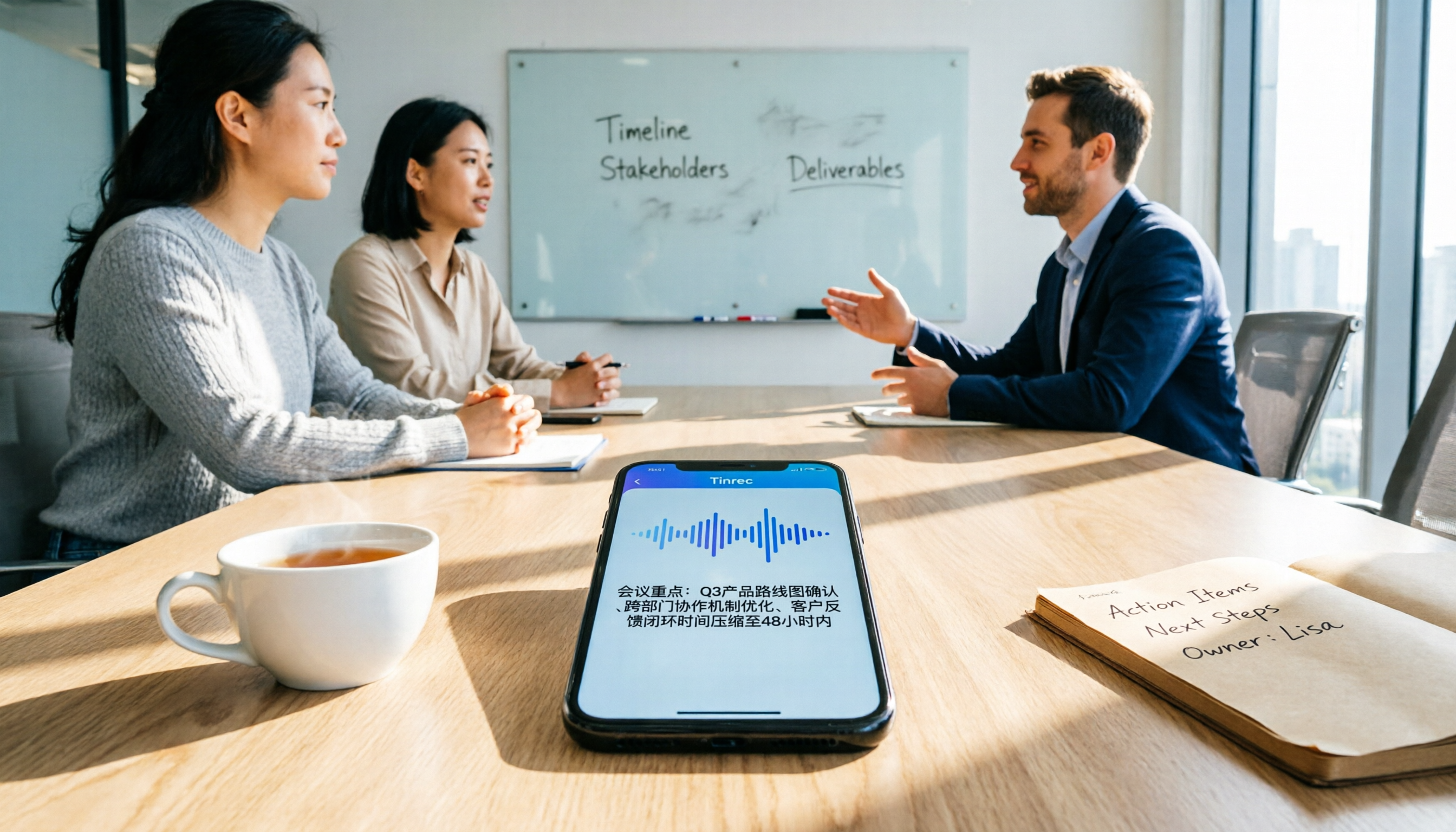
Are AI Meeting Note Apps Worth It in 2026? A 5-Step Guide to Choosing the Right Tool
Spending two hours in a meeting and another two organizing notes? This guide walks you through 5 steps to evaluate AI meeting note apps, with hands-on testing of Tinrec (Miao Ting Lu Yin) and comparisons with Otter, Notta, and PLAUD, helping you avoid wasted trial and error.
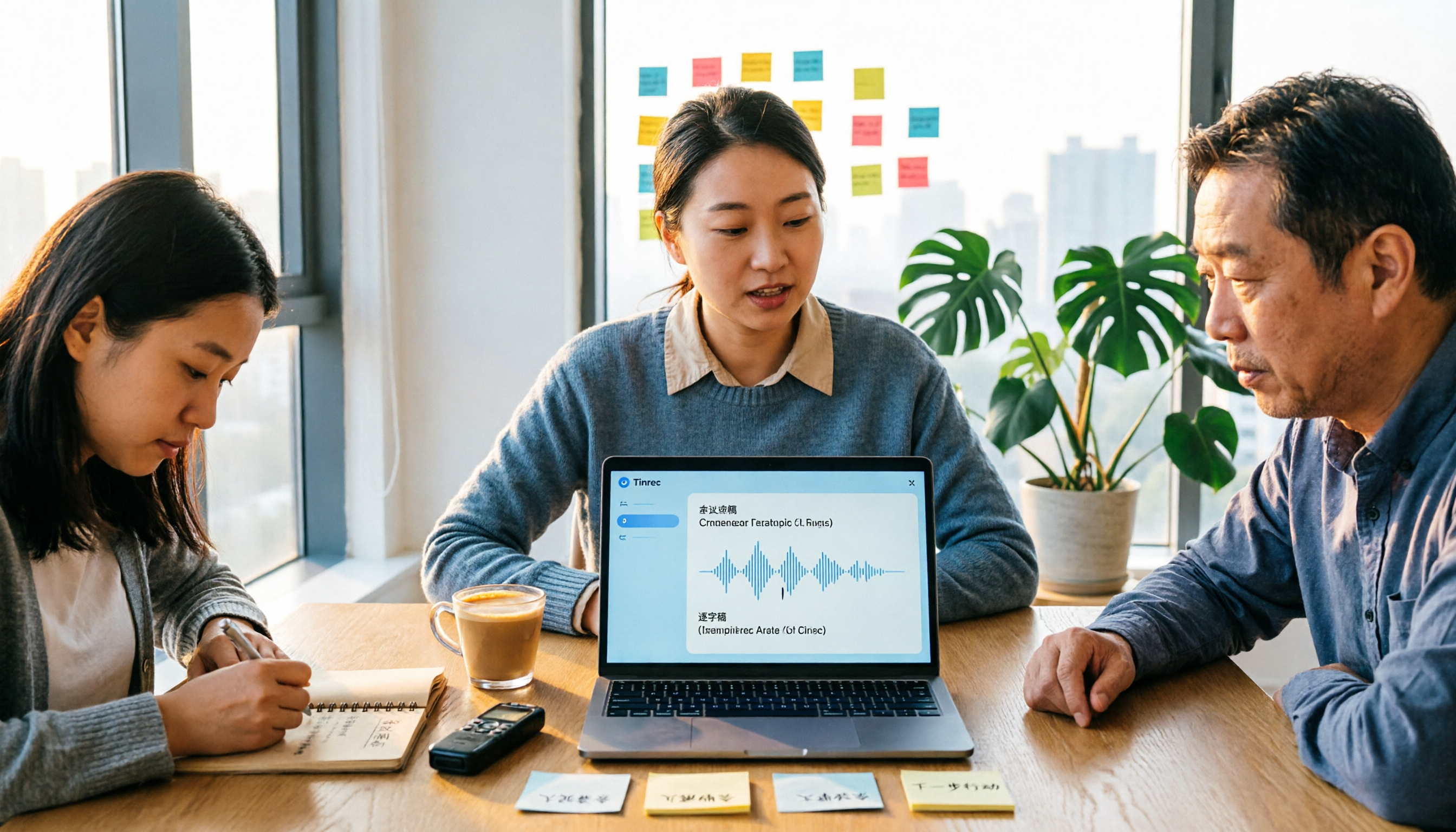
2026 Hands-On Comparison of 5 AI Speech-to-Text Tools: Vocol's Free Tier and Team Collaboration Stand Out
This article compares five AI speech-to-text tools—Vocol.ai, Yating, cSubtitle, Litok, and inFin—across free tier, transcription speed, team collaboration, and multilingual support, offering buying advice and pitfalls to avoid. Vocol.ai stands out with its 200-minute free tier and robust team collaboration features, making it ideal for professionals and small teams needing efficient meeting notes.

4 AI Meeting Note Tools Tested in 2026: Which One Handles Chinese Best?
Struggling with meeting notes? This hands-on review tests four AI meeting note tools—Tinrec, Otter.ai, Notta, and Granola—covering Chinese transcription, meeting summaries, and team collaboration, to help you decide which suits Taiwanese office workers best and whether the free plans are sufficient.

5 Best AI Meeting Note Tools Tested in 2026: How Tinrec Generates Chinese Meeting Minutes Without a Bot
We tested five AI meeting note tools, comparing everything from speech-to-text and AI summaries to cross-platform collaboration. This article details how Tinrec (秒听录音) generates Chinese meeting minutes without requiring a meeting bot, and provides a buyer's guide with common pitfalls to avoid.