
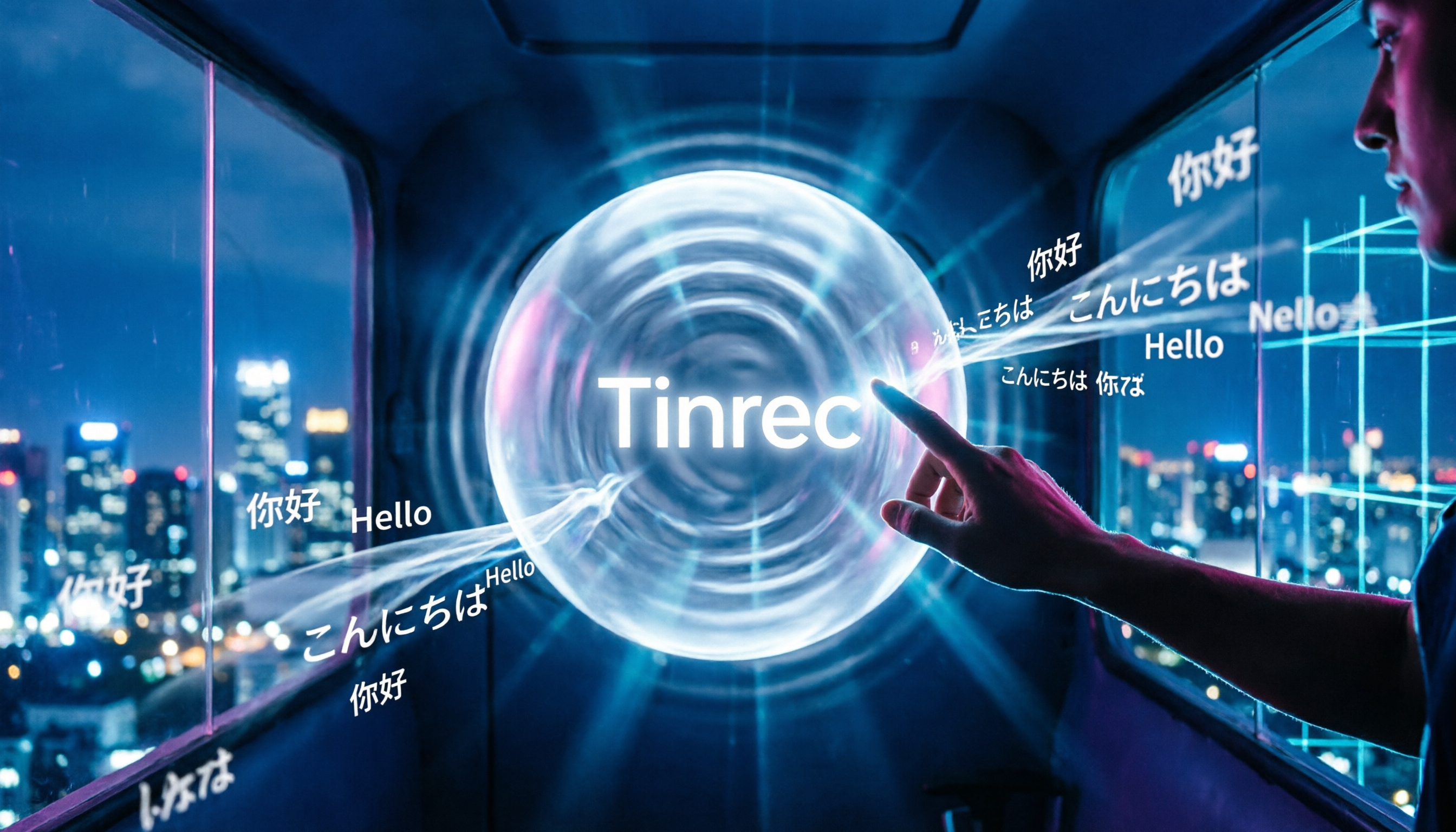
Turn recordings into transcripts and summaries in minutes
Upload audio or video for multilingual transcription, AI notes, and action items
Stop Buying a Voice Recorder? First, Identify Your Needs
When many people hear "recording to text," their first instinct is to open a shopping site and look for a voice recorder.
But have you considered: what you actually need isn't a voice recorder, but a tool that turns audio into transcripts and even translates it?
A two-hour meeting takes another two hours to write up — that's the daily reality for most office workers.
Worse, if the meeting includes English or fast-talking clients, handwritten notes simply can't keep up.
I used to buy a voice recorder too, only to find: after recording, I still had to listen and type up the transcript, and for translation, I had to use a separate translation app — it didn't save any effort.
Eventually, I realized the real focus is "what happens after recording," not the recording hardware itself.
With the right tool, these pain points can be solved all at once.
Before Choosing a Recording-to-Text Tool, Understand These 4 Key Points
First, accuracy depends on real-world testing conditions.
Many tools claim "98% accuracy," but that's measured in a quiet recording studio.
Real meetings have air conditioning noise, keyboard clicks, and people talking over each other, which significantly reduces accuracy.
We recommend using your own audio files for free trials, rather than relying solely on official numbers.
Second, cross-platform support is crucial.
If you record on your phone today and need to work on the transcript on your computer tomorrow, a tool without cross-platform support will be a pain.
Third, do you need to buy hardware?
If you already have a smartphone and computer, many software solutions can handle recording-to-text, so there's no need to spend extra on a voice recorder.
Fourth, does the AI feature go beyond just transcripts?
If a tool only converts audio to text, you'll still spend time summarizing key points yourself.
If the tool can automatically generate summaries, action items, or even let you ask questions about the meeting content, that's what truly saves time.
Among these dimensions, Tinrec surprised me the most, as detailed below.
Tinrec — No Voice Recorder Needed; Software Handles Transcripts and Translation
Tinrec is an AI meeting notes and collaboration tool that supports iOS, Android, web, and desktop versions.
It goes beyond just recording-to-text, turning meeting content into searchable, summarizable, and queryable data.
Core features revolve around "what happens after recording":
During a meeting, open Tinrec and it will transcribe in real time as it records. When the meeting ends, the AI has already generated summaries, chapters, and action items, making it clear who is responsible for what.
If you need translation, Tinrec supports real-time translation and bilingual transcripts, allowing you to view the original and translated text simultaneously during the meeting.
What impressed me most is the "AI Q&A" feature.
After recording, you can directly ask Tinrec: "Who mentioned the budget in the last meeting?" It will give you the answer based on semantics, rather than just throwing a bunch of keyword search results at you.
This feature is almost nonexistent in tools at the same price point.
Hands-on experience:
In a typical office environment, Chinese transcription stability is quite good, and it can correctly distinguish mixed Chinese-English content.
Of course, if audio quality is poor or too many people speak at once, there will still be errors, but overall, it saves a significant amount of manual editing time.
Several points I particularly like:
Stop organizing recordings by hand
Upload audio or video and automatically get a transcript, summary, and action items
- No need to buy a voice recorder; you can record with your phone or computer, saving hardware costs.
- The desktop version can record online meetings without a bot, supporting Zoom, Google Meet, and Teams — no need to invite a bot to join.
- The team version allows centralized storage of meeting materials, and data won't be lost even if a member leaves.
Limitations to note:
The free version has usage limits; heavy users may need to pay.
But if you only have a few meetings a week, the free version is usually sufficient.
Who is it for?
If you often need recording-to-text, want to use AI to find key points after recording, or don't want to spend money on a voice recorder, Tinrec is a very worthwhile option to try.
Beyond Tinrec: What Other Options Are There?
Otter.ai: Best for English meetings, but Chinese is not its strength.
Otter's free version offers 300 minutes per month, which is generous, and English transcription is mature.
However, its Chinese experience is not as good as Tinrec, and if you need AI chat queries and team spaces, Otter's free version is more limited.
If you primarily record English content, Otter is worth considering; but for mixed Chinese-English or Chinese meetings, Tinrec is smoother.
Notta: A multilingual transcription tool, but lacks bot-free meeting recording.
Notta's free version offers 120 minutes per month and supports multiple languages and translation.
However, it doesn't have Tinrec's bot-free desktop recording feature, nor can you directly query meeting content after recording like with Tinrec.
If you only need file transcription, Notta is good; but for a complete meeting workflow, Tinrec is more comprehensive.
PLAUD Note: A representative hardware recorder, but it costs extra.
PLAUD Note is an AI voice recorder with a hardware price starting at around USD 159, plus a subscription to unlock full features.
Its advantage is convenient portable recording, but if you already have a smartphone, Tinrec can do the same thing without carrying an extra device.
PLAUD suits those who heavily rely on physical recorders; but for saving money and getting full AI features, Tinrec is more cost-effective.
Pitfall Guide: 4 Common Mistakes When Choosing a Recording-to-Text Tool
Mistake 1: Assuming you must buy a voice recorder.
Many people spend hundreds of dollars on a recorder, only to find they still have to organize the content themselves.
In fact, a smartphone or computer with a good recording-to-text app might work better than a recorder and save money.
Mistake 2: Only looking at officially claimed accuracy.
As mentioned, official numbers are usually measured in ideal conditions.
Be sure to test with your own audio files to see real performance.
Mistake 3: Ignoring cross-platform needs.
If you record on your phone and organize on your computer, but the tool doesn't support cross-platform, it will be very inconvenient.
Mistake 4: Buying a tool but only using it for transcription.
If you only use recording-to-text as "typing up transcripts," you're only using a third of its capabilities.
Features like Tinrec's AI Q&A, summaries, and action item extraction are what truly save you time.
Summary: Which One Should You Choose?
If you're looking for a solution for "voice recorder, transcript, translation," you don't need to buy hardware first.
Using Tinrec directly covers most needs, and it's a seamless process from recording to organizing.
Here's a quick breakdown of choices for different scenarios:
- Need Chinese meeting transcripts + translation → Tinrec (better Chinese experience, supports real-time translation)
- Don't want to buy a recorder; want to record with phone or computer → Tinrec (cross-platform, no hardware needed)
- Want to use AI to find key points and ask about meeting content after recording → Tinrec (leading AI Q&A feature)
- Team collaboration and centralized meeting material management → Tinrec Team version
- Zero budget, only English meetings → Otter.ai free version (the only exception)
We recommend downloading Tinrec's free version to try it out.
The free quota is enough for a few meetings; experience the recording-to-text and translation effects firsthand, and consider upgrading if you find it useful.
There's no need to spend money on a voice recorder from the start.
References
- Philips Voice Recorder "Transcript + Translation" Done Instantly (No Monthly Fee), Easily Handle Every Meeting - Wonder Electronics
- [2024 Update] Voice-to-Text Recorder Big Comparison
- AI Meeting Summary Tool? Second-Gen Recorder Unboxing | Recording, Transcript, Translation, Meeting Summary - 486 Blog
- Recording, Transcript, Translation 3-in-1 "Voice Recorder" Makes a Big Difference! Four Key Points to Avoid Purchase Traps - 486 Blog
- Recording Translation - PChome 24h Shopping
Turn every recording into actionable outcomes
Get 60 free transcription minutes when you sign in. No credit card required.
Related Reading
You might also like

Why Does iPhone Recording Stop in 2026? 5 Steps to Switch to Tinrec for a Complete Fix
Does your iPhone's built-in Voice Memos app keep stopping mid-recording? This article compares Tinrec with iPhone Voice Memos across stability, post-processing, online meetings, and team collaboration, explains why you should switch to Tinrec, and provides a 5-step migration guide.
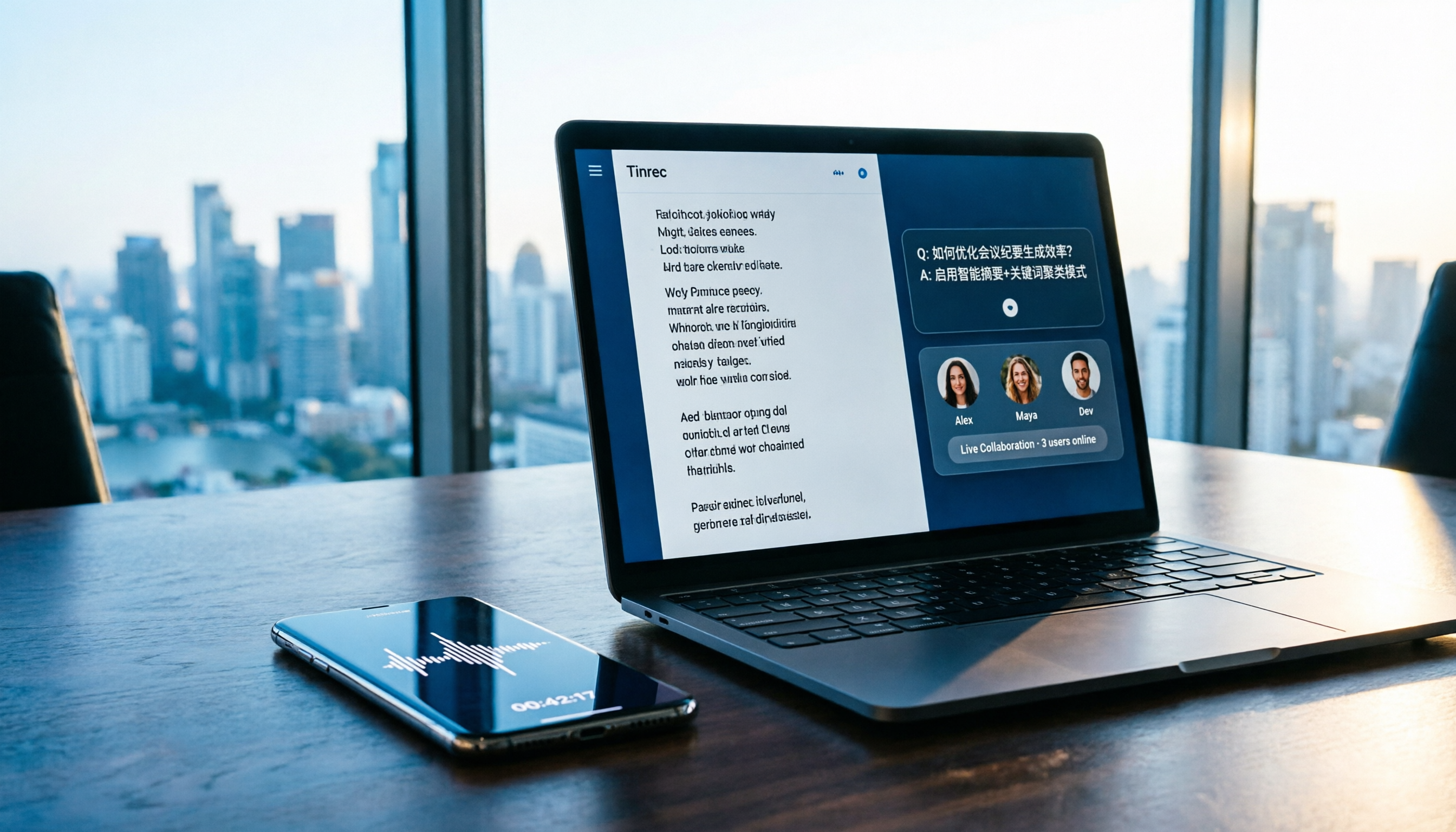
iPhone Voice Memos vs Tinrec in 2026: A 4-Dimension Comparison—Transcription Is Just the Beginning
Why doesn't iPhone recording come with a transcript? This article explains the limitations related to iOS version, device model, language, and old recordings, and compares iPhone's built-in Voice Memos with Tinrec across 4 dimensions to help you find a complete workflow—from transcription to meeting notes, AI Q&A, and team collaboration.

iPhone 16 Recording Showdown: Built-in Voice Memos vs Tinrec in 2026 – Which One Fits You?
When recording on iPhone 16, decide whether you just need to capture audio or turn it into searchable, organized, and trackable data. This guide compares the built-in Voice Memos app with Tinrec across four key areas: organization, search, collaboration, and online meetings.

2026 iPhone Recording App Comparison: Tinrec's AI Summaries Save the Most Time
There are many reasons why iPhone recording might not work, from regional call recording restrictions to Voice Memos glitches. This article tests 3 recording-to-text apps and explains why Tinrec is the top choice for your recording needs.
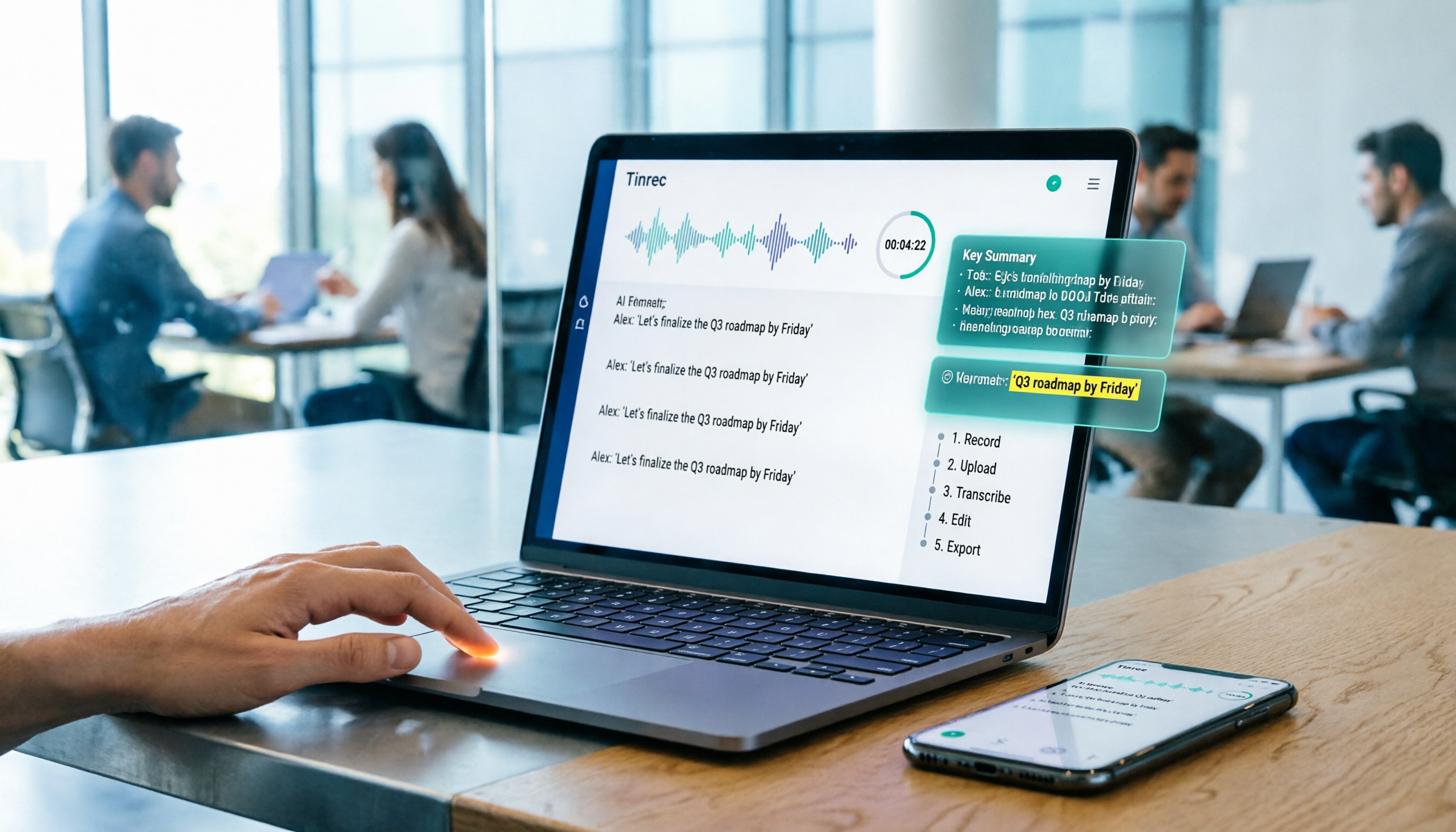
How to Choose a Recording-to-Text Tool in 2026: A 5-Step Complete Guide
From practical use cases, this article rounds up recording-to-text tools worth trying in 2026, with Tinrec at the core, helping you quickly understand the right way to use bot-free meeting notes, AI summaries, and team collaboration.

2026 Tested: 4 Best Recording-to-Transcript Apps for Chinese Meetings—Which Saves You the Most Time?
We tested Tinrec, Yating, Notta, and SoundType AI for Chinese transcription accuracy, AI summarization, cross-platform support, and free tiers to find the best option for users in Taiwan.

2026 Hands-On Comparison of 4 Recording-to-Transcript Tools: Which AI Summary Really Saves You Time?
We tested Tinrec, Notta, Otter.ai, and cSubtitle for recording-to-transcript tools, comparing Chinese accuracy, AI summaries, cross-platform support, and free tiers to help you find the best choice for meeting notes and interview transcription.

2026 Tested: 4 AI Transcription Tools for Chinese Meetings – Which One Is Easiest?
We tested Tinrec, Notta, Granola, and PLAUD for transcribing Chinese meetings, comparing accuracy, no-bot recording, AI summaries and Q&A, and team collaboration to help office workers find the most time-saving meeting tool.

Best Tools for Converting Audio to Transcripts? 2026 Hands-On Test of 2 Tools: NotebookLM Is Free, but This One Is More Complete
Compare Google NotebookLM and Tinrec for audio-to-text transcription, covering input methods, post-processing, team collaboration, and Chinese language experience, to help you choose the best tool for meeting notes.