

Turn recordings into transcripts and summaries in minutes
Upload audio or video for multilingual transcription, AI notes, and action items
Are you still putting up with iPhone recording interruptions? Every time you record a meeting or interview, it mysteriously stops halfway, and important content vanishes into thin air. This article provides a full comparison between Tinrec and the iPhone's built-in Voice Memos app, analyzing five dimensions: stability, post-processing, online meetings, and team collaboration, to help you decide whether to switch tools.
Tinrec vs. iPhone Voice Memos: Quick Overview
iPhone Voice Memos is a built-in free tool that's simple to use, but it's limited in features and prone to interruptions. Tinrec, on the other hand, is an AI meeting notes and collaboration tool that offers more stable recording, plus transcription, summaries, to-dos, AI Q&A, and team spaces.
| Item | Tinrec | iPhone Voice Memos |
|---|---|---|
| Positioning | AI meeting notes and team collaboration | Personal quick recordings |
| Pricing | Free tier available; paid plans from weekly to team | Built-in, free |
| Platforms | Web, desktop, mobile | iOS only |
| Key differences | Transcription, summaries, bot-free online meetings, team management | Recording only, no post-processing |
This article compares the two across five dimensions: recording stability, post-processing capabilities, online meeting recording, team collaboration, and cost.
Dimension 1: Recording Stability and Interruption Issues
iPhone Voice Memos: According to user feedback, switching apps or locking the screen can cause recordings to stop or files not to save; playing LINE voice messages or iMessage audio can also interrupt recordings; recently, users have reported recording for 1 hour 11 minutes but only saving 17 minutes, or recordings stopping automatically in under 10 minutes.
Tinrec: Designed with long-form meeting recording at its core, the desktop version captures system audio directly from your computer, bypassing the phone's microphone and avoiding common audio conflicts and app-switching interruptions. Even for mobile recording, Tinrec's recording module prioritizes stability, making it suitable for meetings and interviews.
→ This dimension: Tinrec clearly wins.
Dimension 2: Post-Recording Content Processing
iPhone Voice Memos: You can only play back recordings; there's no automatic transcription, summary, or to-do list. You'll need to manually listen, transcribe, and organize—a one-hour meeting might take two to three hours to process.
Tinrec: After recording, it automatically generates transcripts, AI summaries, chapters, highlights, action items, and even mind maps. It also supports AI Q&A, allowing you to ask questions about the meeting content, such as "What were the client's main complaints?" Furthermore, you can generate reports, tables, and documents, and export them to tools like Notion, Google Docs, and OneNote.
→ This dimension: Tinrec wins decisively.
Dimension 3: Online Meeting Recording
iPhone Voice Memos: It can only record via the external microphone, resulting in poor audio quality and background noise, and it can't directly capture system audio from online meetings. If you're using headphones during a meeting, you'll barely pick up the other party's voice.
Tinrec: The desktop version uses a bot-free approach to capture system audio directly, supporting online meetings on Zoom, Google Meet, Microsoft Teams, Webex, and more. No need to invite a bot; recordings are clear and don't disturb other participants, and they won't be interrupted by phone playback.
→ This dimension: Tinrec clearly wins.
Dimension 4: Team Collaboration and Data Management
iPhone Voice Memos: Sharing personal recordings relies on AirDrop or iCloud, lacks permission management, makes multi-person collaboration difficult, and recordings tend to be scattered across personal devices.
Stop organizing recordings by hand
Upload audio or video and automatically get a transcript, summary, and action items
Tinrec: Offers team spaces that centrally store meeting recordings, transcripts, summaries, and to-dos. Members can share and view, and admins can set roles and seats to control who can record, upload, and edit. It also includes usage analytics, audit logs, and an audio recycle bin, turning meeting data into a traceable team asset.
→ This dimension: Tinrec clearly wins.
Dimension 5: Pricing and Cost
iPhone Voice Memos: Built-in and free, with no additional cost, but the time spent and the risk of recording interruptions may be higher.
Tinrec: The free tier lets you experience basic recording, transcription, and summary features. Paid plans include a weekly pass (for short-term intensive use), Pro monthly/annual plans (for long-term individual users), and a team plan at USD 29.80 per seat per month or USD 199 per seat per year (approximately USD 16.58 per month). If meeting notes are a work necessity, the time saved by paying is well worth it.
→ This dimension: Tie (depends on your needs).
What Unique Advantages Does Each Offer?
Tinrec's Unique Advantages
- Bot-free online meeting recording: No extra participants, protecting privacy and not disturbing the meeting, with direct system audio capture.
- One-stop post-processing: Automatically generates transcripts, summaries, and to-dos after recording, plus AI Q&A and report generation, saving hours of manual work.
- Team spaces and governance: Roles, seats, usage analytics, and audit logs turn meeting data into a digital asset for the team, not scattered across personal phones.
- Multilingual and real-time translation: Supports Chinese and mixed Chinese-English content, with options to view original text, translations, or bilingual transcripts in real time.
iPhone Voice Memos' Unique Advantages
- Built-in and free: No download or payment needed; ready to use anytime.
- Intuitive operation: Simple interface, ideal for quickly capturing ideas or memos.
Summary: Which One Should You Choose?
- If you only record occasionally, don't mind interruptions, and don't need transcription or team collaboration, iPhone Voice Memos is sufficient.
- If you need stable long recordings, online meeting notes, automatic transcription and summaries, and team sharing—especially if you're tired of recording interruptions—then Tinrec is the way to go.
In a nutshell: For most users with meeting recording needs, Tinrec is the more complete choice. We recommend starting with the free tier to test stability in your own recording scenarios.
Frequently Asked Questions
Q1: Can Tinrec completely replace the iPhone's built-in recorder? Yes. Tinrec covers the functionality of iPhone Voice Memos and offers more stable recording, transcription, and post-processing. However, if you only need a minimal quick recorder, keeping the built-in tool is fine.
Q2: Will Tinrec recordings be interrupted? Tinrec's desktop version captures system audio and isn't affected by phone audio playback, making it more stable than typical phone recordings. However, any digital tool can be affected by device anomalies, so we recommend testing before important recordings.
Q3: What platforms does Tinrec support? Tinrec offers a web version, desktop versions (Windows/macOS), and mobile versions (iOS/Android), allowing you to switch between devices.
Q4: Is the free tier sufficient? The free tier provides basic quotas, suitable for light experimentation with recording, transcription, and summaries. If you have weekly meeting recording needs, we recommend upgrading to Pro; teams can consider the team plan.
Q5: What should I be aware of when using Tinrec for recording? Before recording, you should comply with local laws and obtain consent from participants if necessary. Additionally, while AI transcription saves time, it's still advisable to cross-check important content against the transcript and original recording.
Q6: What's the difference between the team plan and the individual plan? With the individual plan, recordings are managed personally. The team plan provides a dedicated team space where data belongs to the team, and adds member management, roles and seats, sharing permissions, usage analytics, and audit logs.
References
- iPhone Recording Stops or Incomplete? 5 Tips to Fix It Quickly
- iPhone Voice Memos Anti-Interruption Tips: Record While Playing Voice Messages - Mr. Mad
- #iPhone Voice Memos Recording Stops and Only Saves 17 Minutes - Apple forum | Dcard
- Discussion: Why Does iPhone 11 Recording Suddenly Stop? - iOS Board - PTT
- Simple Ways to Fix iPhone Can't Record Audio
Turn every recording into actionable outcomes
Get 60 free transcription minutes when you sign in. No credit card required.
Related Reading
You might also like

The Complete Guide to Quick Recording on iPhone in 2026: One-Tap Start, Action Button, and AI Tools
How do you set up quick recording on iPhone? This article shows you how to use Voice Memos shortcuts, Back Tap, the Action button, and third-party AI recording tools (like Tinrec) to start recording with one tap at critical moments, and automatically transcribe and summarize.
Best iPhone Call Recording Apps in 2026: Built-in Recording + Tinrec Transcription Tested
iPhone's built-in call recording finally arrived with iOS 18.1, but what do you do after recording? This article tests 3 solutions, covering recording, transcription, and team collaboration.

3 Ways to Merge iPhone Voice Recordings in 2026: A Hands-On Comparison, and Why Tinrec Makes Post-Merge Organization Effortless
Merging iPhone voice recordings isn't hard, but the real challenge is turning the merged file into usable transcripts, summaries, and to-dos. This article compares built-in GarageBand, online tools, and third-party apps from a methodological perspective, then explains why handing the merged file to Tinrec saves the most effort.

2026 iPhone Voice Recording Apps Compared: Fix No-Sound Issues with Tinrec
Many iPhone users face the issue of recordings with no sound. In this article, I share the best solutions after hands-on testing and compare four transcription apps to help you find the right tool.
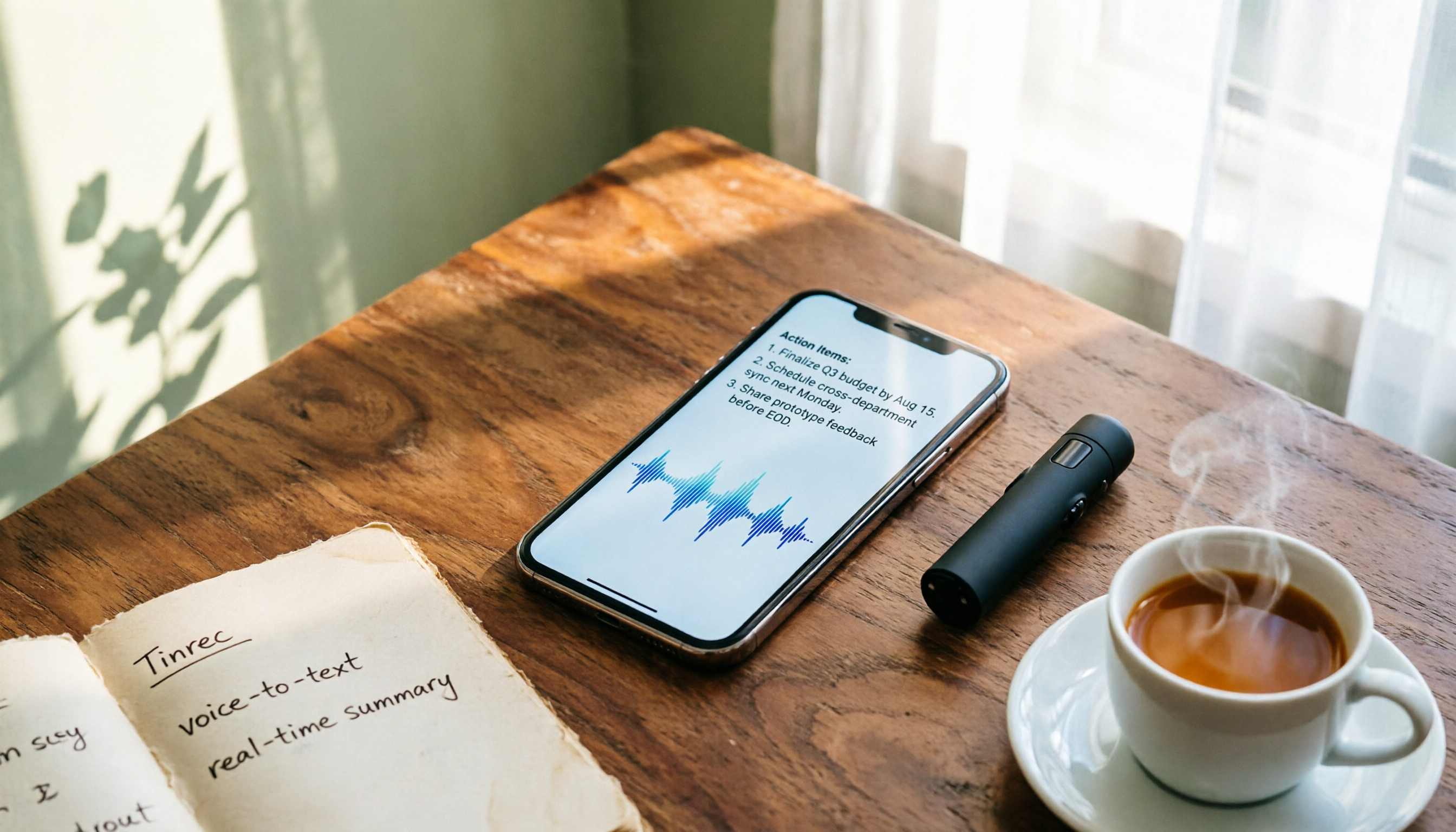
4 iPhone Recording Methods Compared in 2026: From Free Built-in Tools to AI Meeting Assistants
This hands-on comparison reviews 4 iPhone recording methods, including the built-in Voice Memos, quick recording shortcuts, hardware recorders, and the AI tool Tinrec, helping you choose the best option based on budget and needs.
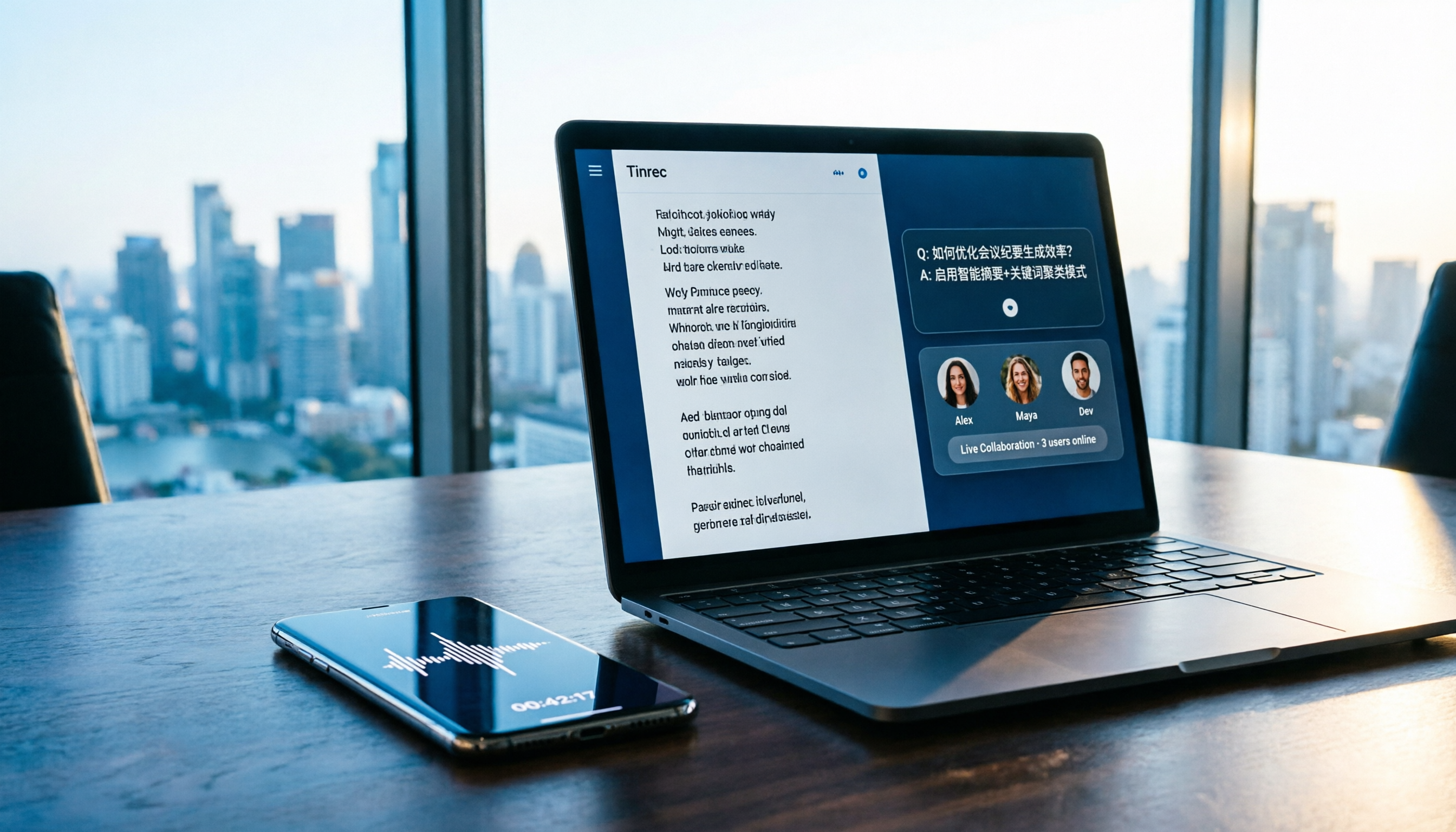
iPhone Voice Memos vs Tinrec in 2026: A 4-Dimension Comparison—Transcription Is Just the Beginning
Why doesn't iPhone recording come with a transcript? This article explains the limitations related to iOS version, device model, language, and old recordings, and compares iPhone's built-in Voice Memos with Tinrec across 4 dimensions to help you find a complete workflow—from transcription to meeting notes, AI Q&A, and team collaboration.

iPhone 16 Recording Showdown: Built-in Voice Memos vs Tinrec in 2026 – Which One Fits You?
When recording on iPhone 16, decide whether you just need to capture audio or turn it into searchable, organized, and trackable data. This guide compares the built-in Voice Memos app with Tinrec across four key areas: organization, search, collaboration, and online meetings.

2026 iPhone Recording App Comparison: Tinrec's AI Summaries Save the Most Time
There are many reasons why iPhone recording might not work, from regional call recording restrictions to Voice Memos glitches. This article tests 3 recording-to-text apps and explains why Tinrec is the top choice for your recording needs.
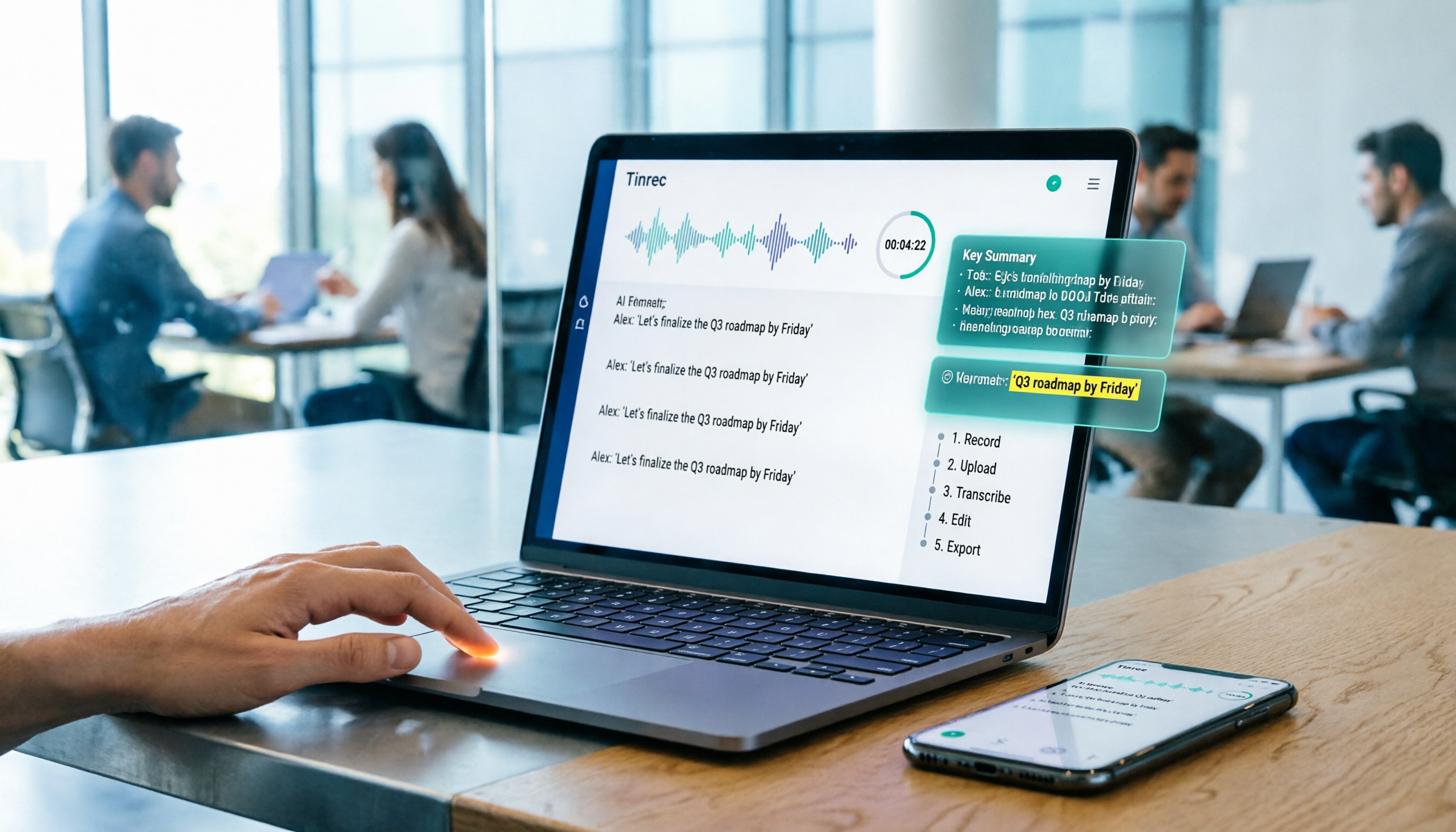
How to Choose a Recording-to-Text Tool in 2026: A 5-Step Complete Guide
From practical use cases, this article rounds up recording-to-text tools worth trying in 2026, with Tinrec at the core, helping you quickly understand the right way to use bot-free meeting notes, AI summaries, and team collaboration.