

Turn recordings into transcripts and summaries in minutes
Upload audio or video for multilingual transcription, AI notes, and action items
When people ask about AI meeting notes costs on Dcard or PTT, the first mistake is focusing only on monthly or annual fees, ignoring hardware costs, minute limits, and the time spent organizing data later. This article compares Tinrec and PLAUD Note, focusing on cost, recording methods, Chinese support, post-processing, and team features, to help you avoid inefficient choices.
Tinrec vs PLAUD Note | Quick Overview
Tinrec is an AI meeting notes and team collaboration software that requires no additional hardware. You can record directly from your computer or phone, import audio files, and organize them into summaries, action items, and searchable team data. PLAUD Note, on the other hand, is an AI recording hardware device, ideal for on-the-go recording and phone calls, but it is not a software service itself; it requires the companion app and a subscription.
| Item | Tinrec | PLAUD Note |
|---|---|---|
| Positioning | AI meeting notes and team collaboration software | AI recording hardware |
| Main Cost | Free tier available; Pro/Team subscription | Hardware from USD 159; additional subscription required |
| Supported Platforms | Web, desktop, mobile | Dedicated hardware with companion app |
| Key Differences | No bot for online meetings, Chinese meetings, team spaces | Portable recording, phone call recording, long battery life |
Dimension 1 | Cost and Total Cost of Ownership
PLAUD Note requires purchasing hardware first: NotePin is USD 159, Note Pro is USD 189, and if you need more transcription minutes, you must subscribe separately. The Starter plan offers 300 minutes per month, Pro annual is USD 99.99 for 1,200 minutes per month, and Unlimited annual is USD 239.99. The initial cost is relatively high, and hardware and subscription are separate expenses.
Tinrec lets you start with the free tier to experience recording, import, summarization, and transcription. For occasional high usage, you can buy a weekly pass; for regular use, choose Pro monthly or annual plans. The team plan offers a 7-day trial, 1 free seat, and 300 shared import minutes. The monthly price is USD 29.80 per paid seat per month, and annual billing is approximately USD 16.58 per month. With an active team plan, real-time recording does not deduct minutes; only file and web imports consume shared import minutes.
→ In this dimension, Tinrec is more cost-effective, especially for users who don't want to spend on hardware upfront.
Dimension 2 | Recording Methods: Online Meetings vs. On-the-Go Recording
PLAUD Note excels at in-person meetings, on-the-go recording, and phone calls. The hardware itself does not directly handle online meeting audio; you need extra setup or place the device near the sound source, which is not its core scenario.
Tinrec's desktop version can directly capture system audio from your computer, so you don't need to invite any meeting bot to join. It can record online meetings on Zoom, Google Meet, Microsoft Teams, Webex, and more, generating real-time transcripts. Simply open Tinrec and start recording, and the meeting content will be transcribed simultaneously.
→ In this dimension, if most of your meetings are online, Tinrec is clearly more suitable.
Dimension 3 | Chinese and Multilingual Support
PLAUD Note's transcription and summarization features require the companion app. The official materials do not emphasize deep Chinese meeting processing; for Traditional Chinese, mixed Chinese-English, or technical jargon, you need to test it yourself.
Tinrec treats Chinese meetings as a key scenario, supporting Traditional Chinese, mixed Chinese-English content, multilingual transcription, real-time translation, and bilingual transcripts. The team plan also maintains a custom glossary to improve recognition of technical terms. Actual performance may vary with audio quality, accents, and overlapping speech, but the overall direction is more aligned with the daily meetings of users in Taiwan.
Stop organizing recordings by hand
Upload audio or video and automatically get a transcript, summary, and action items
→ In this dimension, for users who primarily have Chinese meetings, Tinrec's positioning is more direct.
Dimension 4 | File Import and Post-Processing
PLAUD Note focuses on recording new audio; its ability to organize historical audio or external files is limited. It emphasizes recording and basic summaries. Further organizing into reports or exporting to other tools requires more steps.
Tinrec supports not only real-time recording but also uploading audio and video files, and even importing content from some web links. After transcription, it automatically generates summaries, chapters, highlights, action items, and mind maps. You can also ask AI questions about the meeting content and export to Notion, Google Docs, OneNote, Dropbox, and more. For post-meeting reports, tables, or documents, there is an Agent post-processing feature.
→ In this dimension, Tinrec is more comprehensive in "organizing and reusing after recording."
Dimension 5 | Team Collaboration and Data Management
PLAUD Note's team features are more about device and member management, with less emphasis on collaborative search, editing, and governance of meeting data. The ability to accumulate team meeting content is limited.
Tinrec's team plan provides a dedicated team space where meeting data belongs to the team, and members can view and reuse historical meetings. Roles, seats, and shared quotas are managed separately. Admins can view usage trends, member rankings, audit logs, and use the audio recycle bin. When a member leaves, their team resources can be transferred to other active members, so nothing is lost when someone departs.
→ In this dimension, for teams needing multi-person collaboration and cross-meeting action item tracking, Tinrec wins.
What Are the Unique Advantages of Each?
Tinrec's unique advantages:
- No extra hardware needed; start recording with your existing computer or phone.
- No bot for online meetings, so meetings are not disrupted.
- Chinese meetings, real-time translation, and team glossary are more tailored to local needs.
- Team space, seat management, usage analytics, and audit logs make data easy to accumulate and hand over.
PLAUD Note's unique advantages:
- Compact hardware, one-touch recording, ideal for in-person meetings on the go.
- Supports phone call recording, and long battery life is convenient for extended out-of-office recording.
Summary: Who Should You Choose?
- If you mainly have online meetings, need Chinese summaries, or want meeting data to become a searchable team asset → Tinrec.
- If you are often on the move, need portable recording or phone call recording, and don't mind carrying an extra device → PLAUD Note.
- If you have a limited budget and want to try AI meeting notes basics first → Start with Tinrec's free tier; no hardware cost upfront.
In one sentence: Most readers coming from Dcard asking about "AI meeting notes costs" actually need a tool that is cost-effective, works well in Chinese, can record online meetings, and allows team sharing. Tinrec is the more complete choice. We recommend starting with the free tier and testing with your own meeting recordings.
FAQ
How long can I record with Tinrec's free tier? The free tier provides basic quotas to experience recording, import, summarization, and transcription. Specific minutes are subject to the official page. Light usage is usually sufficient; heavy users can consider Pro or Team plans.
How is Tinrec's team plan priced? The team plan offers a 7-day trial, 1 free seat, and 300 shared import minutes. The monthly price is USD 29.80 per paid seat per month, and annual billing is USD 199 per paid seat per year, with 2,000 team shared import minutes per seat per month.
Can Tinrec automatically join online meetings? No, it does not automatically join. You need to open the Tinrec desktop app, which captures system audio, and start recording manually. No additional bot is invited as a participant.
How accurate is it for Chinese meetings? Tinrec supports multilingual and glossary features for Chinese meetings, but we don't recommend relying on a fixed percentage. Actual performance is affected by audio quality, accents, background noise, and overlapping speech. For important content, please cross-check with the transcript and recording playback.
References
- Free AI Transcript (with Timeline) for Meeting Notes! - Teacher Forum | Dcard
- AI Meeting Notes - Google Play App
- I Spent Four Hours Building an AI Meeting Notes Tool for Less Than Ten TWD | WenHao Yu
- AI Meeting Notes Software Recommendations: 5 Apps Tested and Compared, Auto-Transcribe to Make Meetings Easier!
- Notion Launches AI for Work with Meeting Notes, Search, and Model Tools | iThome
Turn every recording into actionable outcomes
Get 60 free transcription minutes when you sign in. No credit card required.
Related Reading
You might also like

2026 Real-World Test: 3 Live Transcription Tools Compared—Which Free Plan Is Enough?
How do you choose a live transcription tool? This article tests Tinrec, Notta, and Otter, comparing bot-free recording, Chinese recognition, free quotas, and AI summarization to help you find the best free plan.

2026 Real-Time Transcription AI Tools Compared: Which Free Version Is Best?
Tired of spending hours on meeting notes? This article reviews 5 real-time transcription AI tools, from completely free to team collaboration options, and tells you which one is worth trying after hands-on testing.

5 Best Real-Time Transcription Tools in 2026: Free vs. Team Plans Compared
Choosing the right real-time transcription tool can be tricky. This article compares Tinrec, Notta, Yating, Otter.ai, and Fireflies.ai across recording methods, Chinese language support, AI post-processing, free tiers, and team collaboration to help you avoid common pitfalls and find the best fit.

Which Real-Time Transcription AI Is Best? 2026 Hands-On Test of 2 Tools: Tinrec Is Better for Office Workers
Real-time transcription AI isn't just about converting speech to text—it should turn meetings into actionable data. This article compares Tinrec and Yating, testing them across four key dimensions: AI features, meeting capture, team collaboration, and Chinese-language experience, to help you pick the best tool for your needs.

Tinrec vs Otter.ai 2026: Best AI Meeting Recorder for Chinese Users (No Bot Required)
Compare Tinrec and Otter.ai on live transcription, meeting recording, post-meeting organization, and team collaboration to find the best AI meeting notes tool for Chinese speakers.

2026 Real-Time Transcription Tools Compared: Which Is Easiest to Use and Saves the Most Time?
Tired of spending hours transcribing meeting recordings? This article tests 4 real-time transcription tools—Tinrec, Easemate AI, inFin, and Yating—evaluating accuracy, ease of use, AI features, and cross-platform support to help you pick the best one.

2026 Tinrec Real-Time Transcription Tutorial: Free Voice-to-Text + AI Summaries
This tutorial walks you through using Tinrec's free plan, including real-time voice-to-text transcription, AI summaries, free plan limitations, and step-by-step instructions. It's ideal for office workers and students who want to quickly organize meeting transcripts.

Best Real-Time Transcription Translation Tools: 2026 Test of 5, This One Is Best for Chinese Meetings
How to choose a real-time transcription translation tool? This article uses Tinrec as an example to fully analyze the application scenarios, core capabilities, purchasing considerations, and common questions about real-time transcription translation, helping you quickly grasp key points in cross-language meetings.
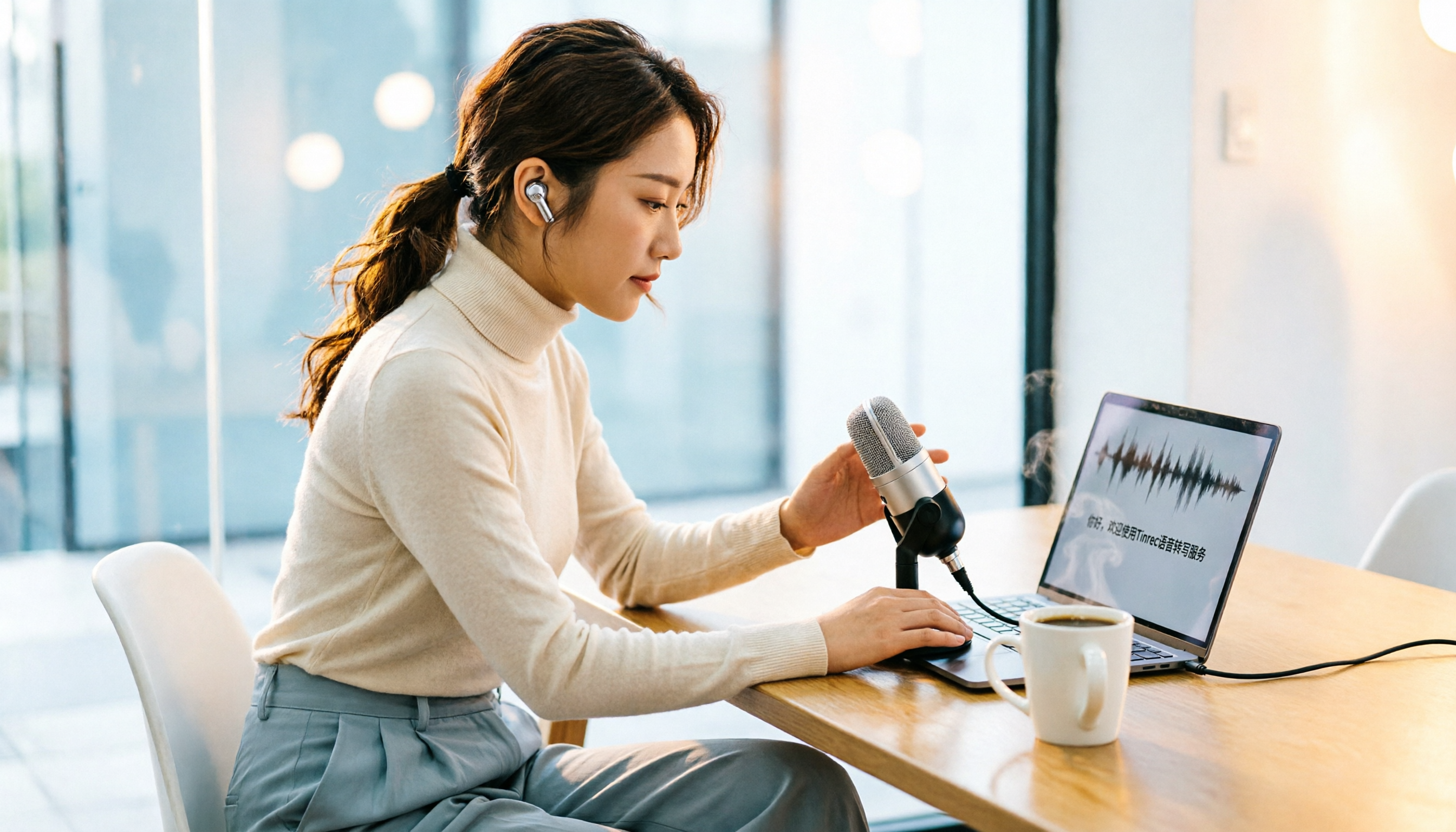
2026 Free Real-Time Transcription Tools: Tinrec Review – Turn Meetings into Text in 3 Steps
Tired of manual transcription? This article tests Tinrec's free real-time transcription feature, covering free credits, usage guide, and FAQs to help you quickly turn meetings and interviews into searchable text records.