

Turn recordings into transcripts and summaries in minutes
Upload audio or video for multilingual transcription, AI notes, and action items
Many people think real-time transcription AI is just "speech-to-text," and all you need is a tool with high accuracy. But in reality, the most time-consuming part of meetings isn't typing—it's organizing key points, tracking action items, and turning discussions into actionable data. If you just get a long transcript and have to read it all yourself, you haven't really saved time.
A better approach is to choose an AI tool that can directly turn meeting content into summaries, action items, and even let you ask follow-up questions. This time, I picked two real-time transcription AI tools that are widely discussed in Taiwan—Tinrec and AI-Generated Transcript (formerly Yating)—and tested them across four key dimensions to help you decide which one is worth using.
Tinrec vs. Yating: Quick Overview
Tinrec is an AI meeting notes and collaboration tool designed for individuals and teams. It doesn't just transcribe; it emphasizes post-meeting organization, AI Q&A, action item extraction, and team knowledge management. Yating, on the other hand, is a speech-to-text service developed by Taiwan AI Labs, known for its accuracy in Mandarin and Taiwanese Hokkien, and is suitable for interviews, classroom use, and hearing-impaired assistance.
| Comparison Item | Tinrec | Yating |
|---|---|---|
| Core Positioning | AI meeting notes and team collaboration | High-accuracy speech-to-text |
| Supported Platforms | Web, desktop, mobile | Laptop, mobile (browser) |
| Main Input Methods | Live recording, online meetings, audio files, links | Microphone live transcription, audio files (needs confirmation) |
| Post-Meeting Features | Summary, action items, AI Q&A, export, team space | Transcript, translation |
Next, I'll compare the two tools across four dimensions: AI feature richness, meeting capture methods, team collaboration, and Chinese/multilingual experience.
Dimension 1: AI Feature Richness
Yating's strength lies in speech recognition and transcript generation. It supports transcription of mixed Chinese, Taiwanese, and English conversations, and also offers translation. However, its output basically stays at the "text" level, and users need to organize key points themselves.
Tinrec goes further: besides transcripts, it automatically generates AI summaries, chapters, key points, and action items. Even better, you can ask the AI questions about the meeting content, such as "Did the client mention delivery dates?" or "What was the decision in this meeting?" You can even use Agent post-processing to generate meeting minutes, reports, or tables.
→ This dimension: Tinrec clearly wins because it turns transcripts into directly usable data, not just raw text.
Dimension 2: Meeting Capture and Cross-Platform Support
Yating primarily uses the browser to open the microphone for live transcription, which is suitable for in-person interviews and classroom recording. However, for online meetings (like Zoom or Google Meet), it requires additional setup or manual audio playback, and there's no native bot-free recording solution.
Tinrec's desktop version can directly capture computer system audio without inviting additional meeting bots, allowing you to record online meetings on Zoom, Google Meet, Microsoft Teams, Webex, and more. It also supports live recording, audio file upload, and mobile recording, offering a more complete cross-platform experience.
→ This dimension: Tinrec wins, as it's more convenient for office workers who frequently attend online meetings.
Dimension 3: Team Collaboration and Knowledge Management
Yating is more geared toward individual use. Generated transcripts typically stay on personal devices or accounts, lacking team sharing, member management, and permission controls.
Stop organizing recordings by hand
Upload audio or video and automatically get a transcript, summary, and action items
Tinrec's team version provides a dedicated team space where meeting data belongs to the team. You can set roles, allocate seats, view usage analytics, check audit logs, and even have an audio recycle bin. Even if a member leaves, meeting data doesn't disappear with their personal account, allowing it to accumulate as a team asset.
→ This dimension: Tinrec wins, making it suitable for departments or project teams.
Dimension 4: Chinese and Multilingual Experience
Yating has years of experience in Mandarin and Taiwanese recognition. Official data shows 85% accuracy for Mandarin/Taiwanese, 95% for mixed Chinese-English, and 88% for all English, which is helpful for local language or cultural education scenarios.
Tinrec also supports Chinese, Traditional Chinese, and multilingual meetings, and offers real-time translation and bilingual transcript viewing. Additionally, it has a team glossary feature to maintain company-specific terminology, improving recognition of professional terms. Although Tinrec doesn't publish fixed accuracy numbers, its overall features are more aligned with actual post-meeting workflows.
→ This dimension: It's a tie. Yating has data-backed accuracy for specific languages, while Tinrec excels in feature completeness.
What Are Their Unique Advantages?
Tinrec's Unique Advantages
- Bot-free online meeting recording: The desktop version directly captures system audio, so you don't need an extra bot participant in meetings, avoiding awkwardness.
- Post-meeting Agent processing and multi-format export: Automatically generate reports, tables, and documents, and export to tools like Notion, Google Docs, OneNote, and Dropbox.
- Comprehensive team governance: Team spaces, role-based seats, usage analytics, and audit logs turn meeting data into manageable digital assets.
Yating's Unique Advantages
- Strong reputation for Mandarin and Taiwanese recognition: With 4 million downloads since 2017, it's suitable for local language interviews, cultural education, and hearing-impaired student support.
- Intuitive operation: Just open a browser and use it, making it friendly for elderly users or students unfamiliar with tech tools.
Conclusion: Which One Should You Choose?
If you need a complete solution that goes beyond transcription—including organization, follow-up questions, export, and team collaboration—Tinrec is the better choice. It's especially suitable for office workers who have weekly meetings, need to track action items, or want to share meeting notes across departments.
If you mainly do local language interviews or classroom recording and only need high-accuracy transcripts and translation, Yating is still a great option.
In short, for most office workers, Tinrec's post-meeting organization and team features align more closely with real work needs. I recommend starting with the free version and testing it with your own meeting recordings.
FAQ
Q1: What's the difference between real-time transcription AI and regular recording software?
Regular recording software only captures audio, while real-time transcription AI converts speech to text in real time and provides further organization like summaries, action items, and Q&A.
Q2: How long can I use Tinrec's free version?
Tinrec offers a free version with basic credits for recording, importing, summarizing, and transcribing. Actual credits depend on the official page.
Q3: Does Tinrec require additional hardware?
No. Tinrec works on web, desktop, and mobile, so you don't need extra recording equipment.
Q4: Is Yating's accuracy really higher?
Yating reports 85% accuracy for Mandarin/Taiwanese and 95% for mixed Chinese-English, but actual results depend on recording quality, accents, and background noise.
Q5: Can team members without seats view meeting data?
Yes. Active members without seats can view, play, and read team data; only those with seats can upload, edit, import, and export.
Q6: What should I be aware of when using such tools?
Recording and transcription involve others' privacy. Follow local laws and obtain consent from participants when necessary.
References
- Meeting Ink - AI Meeting Notes & Speech-to-Text - Google Play
- AI-Generated Transcript – Ministry of Education Campus Digital Content and Teaching Software
- Home | Vocol.ai Voice Collaboration Platform
- Atter AI: Speech-to-Text, Meeting Transcript, Voice Memo, Yating - App Store
- Online AI Speech, Video, Audio File Auto-Transcription - Free Trial - cSubtitle
Turn every recording into actionable outcomes
Get 60 free transcription minutes when you sign in. No credit card required.
Related Reading
You might also like

2026 Real-Time Transcription App Comparison: Which Saves the Most Time for Traditional Chinese Meeting Notes?
We tested 4 real-time transcription apps in 2026—Tinrec, Otter, Notta, and Fireflies—to find the best fit for Hong Kong professionals taking Traditional Chinese meeting notes. Read our hands-on review and tips to avoid common pitfalls.

2026 Real-World Test: 3 Free Real-Time Transcription Tools—Which Free Plan Can Actually Handle a Full Meeting?
How do you choose a free real-time transcription tool in 2026? This article focuses on Tinrec (秒听录音) and compares three tools' real-time transcription, post-meeting organization, and free quotas, helping you avoid common pitfalls like 3-minute recording limits and meeting bot interruptions.

2026 Tested: 4 Free Real-Time Transcription Tools Compared—Tinrec AI Q&A and Team Collaboration Win
In 2026, we tested 4 free real-time transcription tools, comparing transcription accuracy, AI summaries, cross-platform support, and team features. Tinrec stood out with its AI Q&A and bot-free recording, saving you meeting cleanup time.

5 Real-Time Transcription AI Tools Tested in 2026: Which One Saves the Most Time on Chinese Meeting Summaries?
After hands-on testing, Tinrec stands out as the most balanced option for Traditional Chinese real-time transcription, bot-free recording, and post-meeting organization. This article compares 5 tools and offers tips to avoid common pitfalls.
How to Use Real-Time Transcription in 2026? A 5-Step Guide from Recording to AI Summaries
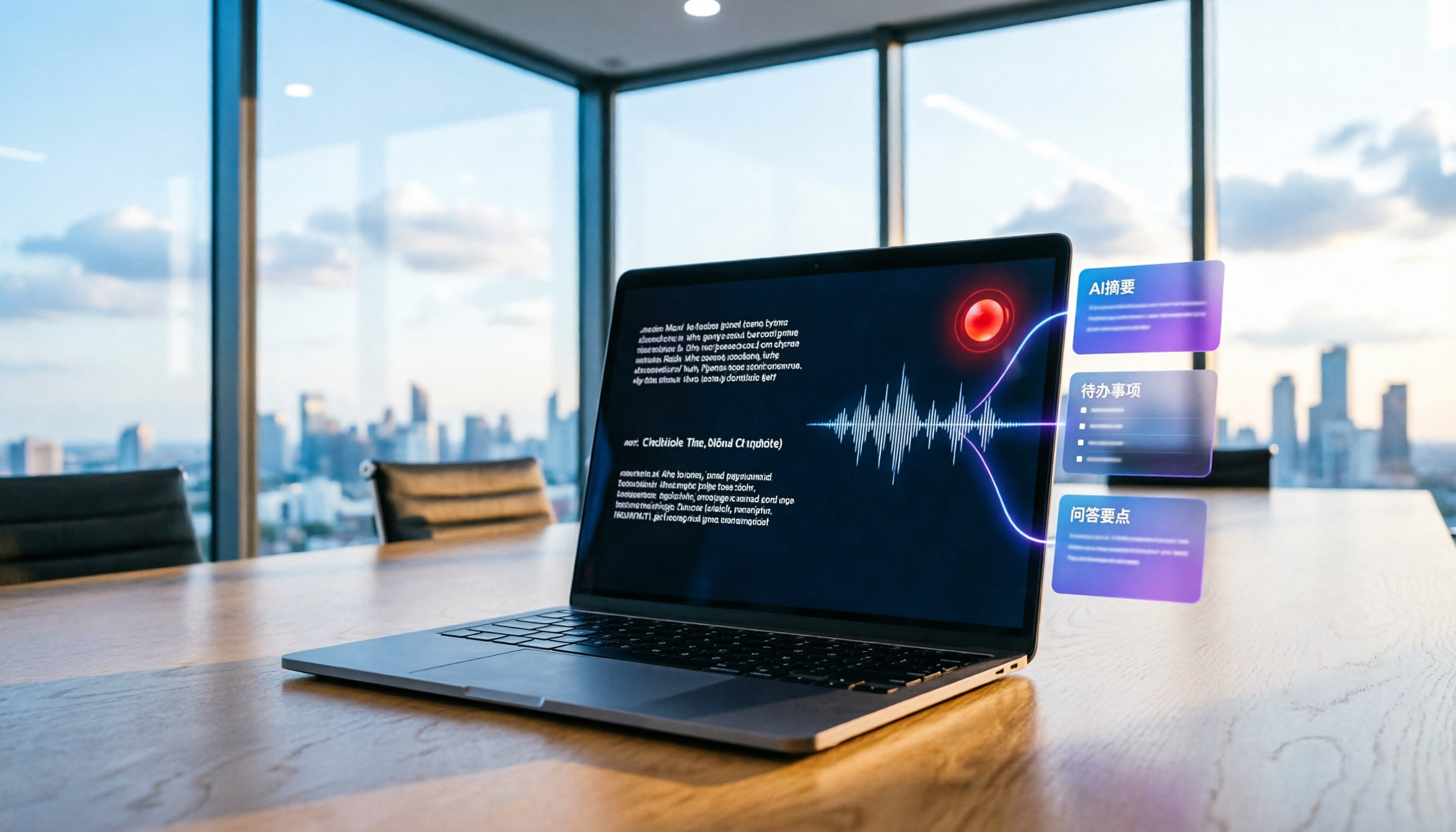
Real-time transcription generates text as you record, so you have the transcript right after the meeting. This article uses Tinrec to demonstrate 5 steps, from recording and transcription to AI summaries, to-dos, and Q&A, helping you save time and avoid overtime.

2026 Real-World Test: 3 Live Transcription Tools Compared—Which Free Plan Is Enough?
How do you choose a live transcription tool? This article tests Tinrec, Notta, and Otter, comparing bot-free recording, Chinese recognition, free quotas, and AI summarization to help you find the best free plan.

2026 Real-Time Transcription AI Tools Compared: Which Free Version Is Best?
Tired of spending hours on meeting notes? This article reviews 5 real-time transcription AI tools, from completely free to team collaboration options, and tells you which one is worth trying after hands-on testing.

5 Best Real-Time Transcription Tools in 2026: Free vs. Team Plans Compared
Choosing the right real-time transcription tool can be tricky. This article compares Tinrec, Notta, Yating, Otter.ai, and Fireflies.ai across recording methods, Chinese language support, AI post-processing, free tiers, and team collaboration to help you avoid common pitfalls and find the best fit.

Tinrec vs Otter.ai 2026: Best AI Meeting Recorder for Chinese Users (No Bot Required)
Compare Tinrec and Otter.ai on live transcription, meeting recording, post-meeting organization, and team collaboration to find the best AI meeting notes tool for Chinese speakers.