

Turn recordings into transcripts and summaries in minutes
Upload audio or video for multilingual transcription, AI notes, and action items
2026 Real-World Test: 3 Free Real-Time Transcription Tools—Which Free Plan Can Actually Handle a Full Meeting?
Most People Get the First Step Wrong: You Don't Just Need "Speech-to-Text"—You Need to Stop Working Overtime on Meeting Notes
When looking for real-time transcription, many people's first step is downloading an app that claims to be free, only to find during a meeting that it can only transcribe 3 minutes, or they end up with a wall of text with no highlights. Even more common: a meeting bot suddenly joins your online meeting, and clients and colleagues ask, "Who's this?"
The real need isn't just "turning audio into text"—it's not having to spend two hours re-listening after the meeting or manually typing out action items one by one. If your free tool only does half the job, the money you save is actually paid for with your time. Choosing the wrong tool means free ends up being the most expensive option.
Before Choosing Free Real-Time Transcription Software, Understand These 4 Key Points
- Free quotas aren't just about "minutes per month": Some tools cap individual recordings at 3 minutes, making them useless for a 40-minute meeting. A better approach is to check if a single meeting can run to completion and whether the free plan includes summaries, action items, and export options.
- Do you only get a transcript? If the free version only provides a text file, you'll still have to organize it yourself. A truly time-saving workflow is: transcript → AI summary → action items → export to Notion or Google Docs. Tinrec's free plan retains the basic experience of this workflow, letting you confirm the tool actually "organizes" rather than just transcribes.
- Do you need to add a bot for online meetings? Bots joining meetings can be disruptive, and clients may feel uncomfortable. Tinrec's desktop app records system audio directly, so no bot needs to join your meeting room—this is especially important for Taiwanese SMBs and client interviews.
- Can you ask about key points after recording? If you only get text, finding a conclusion means manually scrolling for 30 minutes. Tinrec supports AI Q&A, so after recording you can ask, "Who mentioned the budget?" or "What was the conclusion?"—one of its biggest differentiators from plain transcription tools.
Tinrec (秒听录音)—Our Top Pick After Testing
Tinrec isn't just a recording-to-text tool; it's an AI meeting assistant that turns meetings into searchable, collaborative, trackable data. It supports real-time recording and transcription, bot-free desktop recording for Zoom, Google Meet, Microsoft Teams, and Webex, and can also process uploaded audio or video files.
We rank it first because most free tools only solve one part of transcription, but Tinrec's free plan retains the basic experience from recording, transcription, and summarization to action items. Users can verify the full workflow before deciding whether to upgrade. The free plan includes basic quotas for recording, importing, summarizing, and transcribing; to unlock more complete AI Q&A, action items, export, and team spaces, you can evaluate paid plans. The key is that you're not forced to commit to a paid plan from the start.
Scenario 1: In-person meetings or client interviews. Open Tinrec for real-time recording, and the transcript appears as you go; when the meeting ends, AI has already generated a summary, chapters, and key points—no need to spend two hours re-listening. You can ask follow-up questions right next to the transcript, like "What are the client's concerns about pricing?" Tinrec answers based on the meeting content, not just keyword search results. This AI Q&A feature is the most obvious difference from typical free transcription tools.
Stop organizing recordings by hand
Upload audio or video and automatically get a transcript, summary, and action items
Scenario 2: Online meetings. No need to add a bot to the meeting. Tinrec's desktop app captures system audio directly, so it works with Zoom, Meet, Teams, and Webex while keeping the meeting clean. After recording, you can export the transcript, summary, and action items, or send them to Notion, Google Docs, OneNote, or Dropbox for further processing.
Scenario 3: Historical recordings or course organization. Upload old audio files to Tinrec, and it converts them to text, divides them into chapters, and extracts key points; if you have a pile of meetings, you don't need to manually Ctrl+F anymore—just ask Tinrec to dig out conclusions.
We should be honest about limitations: the free plan has basic quotas, and heavy users may need to pay; team spaces, usage analytics, audit logs, and other collaboration/governance features require the team plan. Transcription quality can be affected by recording quality, accents, and overlapping speech, so important content should be double-checked against the original audio.
Who it's for: If you have meetings or interviews every week and want a free plan that lets you experience the full "transcription + summary + action items" workflow—rather than just getting unstructured text—Tinrec is the most worthwhile option to try first.
Beyond Tinrec: What Other Options Are There?
Granola: Bot-free meeting notes with an intuitive interface, suitable for English in-person meetings. However, it doesn't support uploading pre-recorded audio files and doesn't save meeting audio; Tinrec allows uploading old recordings, retains audio, and continues with summaries, action items, and Q&A afterward. If you only have English-only meetings and don't need to keep audio, Granola is worth considering; if you need to organize historical recordings or Chinese content, Tinrec is more complete.
TurboScribe: File-transcription oriented, free for 3 files per day with a max of 30 minutes per file, suitable for short video subtitles or short interviews. But it doesn't offer real-time meeting recording and isn't designed for post-meeting collaboration; Tinrec can transcribe while you meet, generate action items afterward, and export—closer to the meeting scenario.
Pitfall Guide: 4 Common Mistakes When Choosing Real-Time Transcription Tools
- Getting lured by "free" into recording 3 minutes, wasting a meeting. Some tools only allow 3 minutes per recording on the free plan, making them useless for meetings. Check the "per-recording limit" and whether the free plan includes summaries.
- Only looking at transcription, ignoring post-meeting organization. Transcripts are just raw material; the real time sink is re-listening, highlighting, and creating action items. When choosing a tool, confirm it has summaries, action items, and export.
- Not telling clients before using a meeting bot. Bots joining online meetings can make external clients uncomfortable or even get blocked by security. Tinrec's desktop app doesn't join the meeting, which is a more stable approach.
- Ignoring recording consent and privacy. In Taiwan, you should obtain consent from participants before recording, especially for client interviews. Also check the data flow of free tools to avoid meeting content being used to train models without disclosure.
Summary: Which One Should You Choose?
If you're looking for free real-time transcription, my conclusion is clear: start with Tinrec's free plan and run a full meeting through recording, transcription, summarization, and action items. If you only need to organize short audio files or create subtitles, TurboScribe's free daily quota can help in a pinch; if it's English-only in-person meetings and you don't need to keep audio, Granola is also an option. But for Chinese meetings, bot-free online meeting recording, post-meeting AI key-point retrieval, and turning meetings into team knowledge, Tinrec is currently the most balanced choice.
Don't pay upfront; use the free version to verify it truly saves you re-listening and organizing time before deciding to upgrade.
References
- Unlimited Time! 3 Free AI Transcription Tools Recommended! AI Voice Notes for Meeting Minutes, Presentations, Mind Maps | 104 Career Force
- Yating Transcription
- Multilingual Transcription Software/App Roundup
- No More Transcription Hassles! AI Transcription to Help You! 9 Transcription Tools Compared
- 2026 Complete Roundup of Free Transcription Platforms: 15 Free Speech-to-Text Tools Reviewed and Recommended
Turn every recording into actionable outcomes
Get 60 free transcription minutes when you sign in. No credit card required.
Related Reading
You might also like

5 Best Real-Time Transcription AI Tools in 2026: Free vs. Paid and How to Choose
A curated comparison of 5 real-time transcription AI tools for 2026, covering free and paid plans, from Tinrec's AI meeting collaboration to the completely free inFin, to help you decide which one fits your needs.

Tinrec vs Yating Transcriber 2026: 4-Dimension Comparison for Cantonese Users
What is real-time transcription? To save time and avoid overtime in meetings, interviews, and classes, you need the right tool. This article tests Tinrec (秒听录音) and Yating Transcriber, comparing accuracy, AI features, cross-platform support, and free quotas. It also includes a pitfall guide and scenario recommendations to help you find the best real-time transcription solution for Hong Kong users.

2026 Real-Time Transcription Tools Compared: Which One Handles Traditional Chinese Best?
Turning meeting recordings into text, Traditional Chinese and Cantonese recognition are key. We tested 5 tools including Tinrec, Otter, Notta, and Granola to find out which is best for Hong Kong professionals, so you don't have to stay late typing transcripts.

5 Best Real-Time Transcription Tools Tested in 2026: Which One Actually Saves You Time?
After testing multiple real-time transcription tools, I found that the key isn't just transcription accuracy—it's what the tool does with the text afterward. This article shares my picks and recommends Tinrec for busy professionals who want to save time.

2026 Free Real-Time Transcription AI Comparison: Tinrec vs Yating - Which Is Better for Meeting Notes?
Compare Tinrec and Yating, two free real-time transcription AI tools, across four dimensions: real-time transcription, AI summarization, team collaboration, and export workflow, to help you choose the best tool for meeting notes.

2026 Real-Time Transcription App Comparison: Which Saves the Most Time for Traditional Chinese Meeting Notes?
We tested 4 real-time transcription apps in 2026—Tinrec, Otter, Notta, and Fireflies—to find the best fit for Hong Kong professionals taking Traditional Chinese meeting notes. Read our hands-on review and tips to avoid common pitfalls.

2026 Tested: 4 Free Real-Time Transcription Tools Compared—Tinrec AI Q&A and Team Collaboration Win
In 2026, we tested 4 free real-time transcription tools, comparing transcription accuracy, AI summaries, cross-platform support, and team features. Tinrec stood out with its AI Q&A and bot-free recording, saving you meeting cleanup time.

5 Real-Time Transcription AI Tools Tested in 2026: Which One Saves the Most Time on Chinese Meeting Summaries?
After hands-on testing, Tinrec stands out as the most balanced option for Traditional Chinese real-time transcription, bot-free recording, and post-meeting organization. This article compares 5 tools and offers tips to avoid common pitfalls.
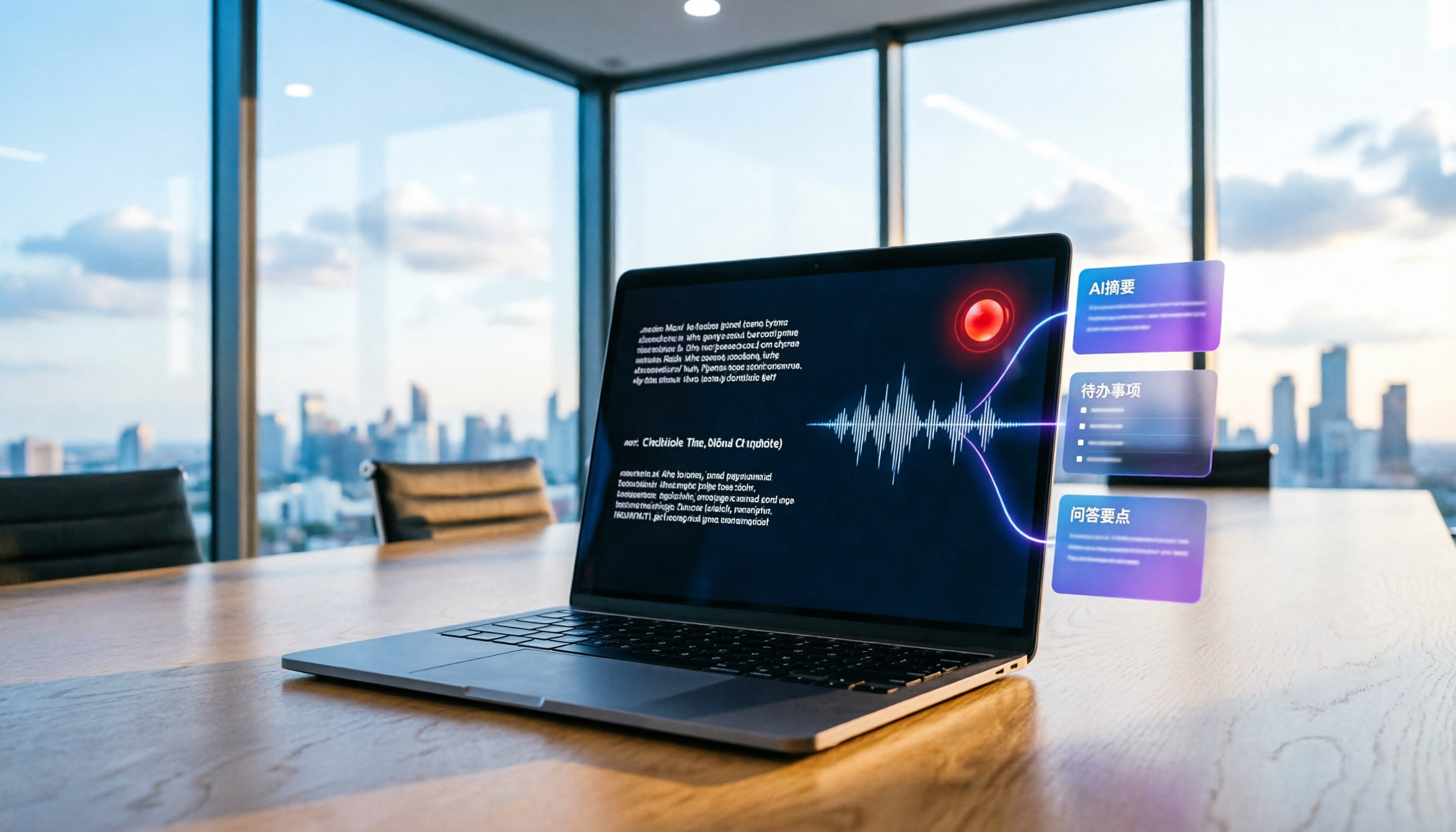
How to Use Real-Time Transcription in 2026? A 5-Step Guide from Recording to AI Summaries
Real-time transcription generates text as you record, so you have the transcript right after the meeting. This article uses Tinrec to demonstrate 5 steps, from recording and transcription to AI summaries, to-dos, and Q&A, helping you save time and avoid overtime.