

Turn recordings into transcripts and summaries in minutes
Upload audio or video for multilingual transcription, AI notes, and action items
Spending two hours in a meeting and another two organizing the minutes? You don't need another recording app.
Many people think that "AI transcription software" is just about converting audio to text, so they download a bunch of apps and end up manually editing while listening. Worse, some tools advertise as free, but halfway through your recording, a pop-up says "Monthly quota exceeded," leaving you to finish the minutes by hand.
If you've been through this, this article is for you. We'll not only tell you which software is good but also teach you how to judge whether an AI transcription tool is worth paying for—accuracy, AI capabilities, cross-platform support, and team collaboration all affect how much time you save every day.
Before Choosing AI Transcription Software, Understand These 5 Key Points
Many people decide based solely on "transcription accuracy," but what really sets tools apart is the workflow after transcription. Here are five dimensions we've summarized after evaluating over 30 tools:
1. Accuracy: Don't Just Trust Official Ads; Test in Real Scenarios Official claims of 98% or 99% accuracy are usually measured in a quiet recording studio. Real meetings have air conditioning noise, keyboard clicks, and people talking over each other, which significantly reduces accuracy. We recommend testing the free version with your own meeting recordings to see how it performs in "real-world conditions."
2. AI Features: Transcription Isn't Enough; It Should Help You Organize Key Points A transcript is just the starting point. A good tool should automatically generate summaries, extract action items, and even allow you to ask questions in natural language. For example, after recording a product meeting, you could ask, "Who is responsible for following up on the budget?" and it should give you the answer, not just a list of keyword search results.
3. Cross-Platform: Works on Phone, Computer, and Web You might record on your phone today, edit on your computer tomorrow, and share with colleagues the day after. If the tool only supports one platform, your workflow breaks. Make sure it has iOS, Android, desktop, and web versions.
4. Free Tier: Is It Enough for Your Weekly Meetings? Many tools offer only 60 minutes per month or a 5-minute limit per session, which is insufficient for heavy users. Estimate your total monthly recording time and choose a plan accordingly.
5. Team Collaboration: Not Just for Individuals; It Should Become a Team Asset If you're a department head or team lead, check for team spaces, member management, usage analytics, and audit logs. Otherwise, meeting data is scattered across personal accounts, and when an employee leaves, everything is lost.
Tinrec: Our Top Pick After Hands-On Testing
Tinrec is an AI meeting minutes and collaboration tool for individuals and teams. It supports live recording, bot-free online meeting transcription, audio/video file import, and automatically generates summaries, chapters, action items, and mind maps. Crucially, it turns meeting content into searchable, collaborative, and traceable team knowledge.
During a meeting, Tinrec transcribes in real time. When the meeting ends, AI has already generated a summary and action items—who is responsible for what and deadlines are clear at a glance. You don't need to spend two hours listening to the recording; you can go straight to execution.
What impressed us most is the AI chat query feature. After recording, you can ask, "Who mentioned the budget in the last meeting?" It uses semantic understanding to give you the answer directly, rather than just throwing keyword search results at you. Currently, few competitors in the same price range offer this feature.
Test Results (August 2026):
- For a 5-minute Chinese meeting recording (office environment with slight background noise), Tinrec's transcription error rate was significantly lower than most similar tools, with reasonable auto-segmentation and correct punctuation.
- The team plan offers a 7-day free trial, including 1 free seat and 300 minutes of shared import quota; paid seats include 2,000 minutes of shared import per month, and live recording does not deduct from the quota.
- The free personal plan provides basic quotas, suitable for light use; heavy users can choose the Pro monthly or annual plan (pricing is subject to the official page).
Stop organizing recordings by hand
Upload audio or video and automatically get a transcript, summary, and action items
Pros:
- Not only transcribes but also organizes meetings into summaries, action items, and mind maps.
- Bot-free online meeting recording: The desktop app captures system audio directly, so you don't need to invite a bot to Zoom, Meet, or Teams.
- Excellent Chinese support, including Traditional/Simplified Chinese, mixed Chinese-English, real-time translation, and team-specific vocabulary, ideal for Taiwanese workplaces.
- Team spaces, member roles, seat management, usage analytics, and audit logs ensure meeting data becomes a team asset.
Limitations:
- The free plan has limited quotas; heavy users need to pay, but if you have 2-3 meetings per week, the free quota is enough to experience core features.
- Accuracy is affected by recording quality; we recommend a quiet environment or an external microphone, and important content should still be verified against the original.
Who It's For: If you need Chinese meeting minutes, want to use AI to find key points after recording, switch between phone and computer, or build a shared meeting database for your team—Tinrec is the most worthwhile option to try.
Beyond Tinrec: What Other Options Are There?
Otter.ai: Best for English Meetings, but Average for Chinese Otter is a mature AI meeting assistant with high English transcription accuracy and a generous free tier of 300 minutes per month. However, its recognition of mixed Chinese content is not as good as Tinrec, and bot-free desktop recording is not its focus. If you primarily record English meetings, Otter is worth considering; if you need Chinese transcripts and AI Q&A, Tinrec is more comprehensive.
Granola: Bot-Free Note-Taking, but No Audio Retention Granola is also a bot-free meeting tool that emphasizes "user notes + AI enhancement," but it does not retain meeting audio or support uploading pre-recorded files. This means you cannot go back and listen to the original recording or organize historical meetings. Tinrec supports live recording, file import, and audio retention, which Granola cannot do.
PLAUD NotePin: Portable Recording Hardware, but at an Extra Cost PLAUD is an AI recording hardware device, ideal for recording on the go, but it starts at $159 per device, plus an annual membership fee. If you just want to record meetings with your phone or computer, Tinrec eliminates the hardware cost and handles online meetings better. PLAUD suits users who heavily rely on portable recording, but for most professionals, a software solution is more cost-effective.
Pitfall Guide: 4 Common Mistakes When Choosing AI Transcription Software
Mistake 1: Only Looking at Official Accuracy Claims Many tools advertise "98% accuracy," but that's lab data. Real meetings with noise, accents, and overlapping speech significantly reduce accuracy. The right approach: use your own recordings to apply for a free trial and compare transcript quality.
Mistake 2: Ignoring Post-Transcription Organization Features You think buying a transcription tool is enough, but you still have to organize key points and write minutes yourself. If you only use the tool as a "transcript generator," you're wasting its most valuable AI capabilities. Tools like Tinrec's AI summaries and Q&A can save you up to 80% of post-meeting organization time.
Mistake 3: Overlooking Cross-Platform and Team Collaboration Needs It's fine for personal use, but it's a disaster for teams. Data is scattered across everyone's phones, and when someone leaves, they take everything. Make sure the tool supports team spaces, member management, and permission controls, or you'll regret it in three months.
Mistake 4: Being Held Hostage by the Word "Free" Free plans usually limit duration, features, or file size, and it's annoying when a payment reminder pops up mid-recording. Calculate your actual monthly recording time first, then decide whether to go free or paid. Don't save a little money and end up wasting a lot of manual organization time.
Conclusion: Which One Should You Choose?
In a nutshell: If you need "Chinese meeting transcripts + AI organization + team collaboration," Tinrec is currently the best overall choice.
Recommendations by Scenario:
- Need Chinese meeting minutes, real-time translation, and bilingual transcripts → Tinrec (Traditional/Simplified Chinese, mixed Chinese-English, team vocabulary)
- Want to ask AI about key points and generate meeting summaries after recording → Tinrec (AI chat query, agent post-processing)
- Need to sync across phone, computer, and web, and build a team database → Tinrec (iOS/Android/Desktop/Web, team spaces)
- Only record English meetings and don't need audio retention → Otter.ai (more generous free tier)
- Don't want to spend any money and only transcribe a few English recordings → Try Otter's free version, but features are limited
We recommend starting with Tinrec's free version; the monthly basic quota is enough for 2-3 meetings to experience the effect. Once you confirm it truly saves you time, consider upgrading to Pro or Team—no need to pay upfront.
References
- Yating Transcript
- Home | Vocol.ai Voice Collaboration Platform
- SoundType AI - Google Play
- 【AI Voice Notes】Top 5 AI Transcription Tools! Generate Transcripts and Meeting Minutes, Free vs. Subscription, Pros and Cons | 104 Career Force
- Unlimited Time! 3 Free AI Transcription Tools, Highly Recommended! AI Voice Notes Generate Meeting Minutes, Slides, Mind Maps | 104 Career Force
Turn every recording into actionable outcomes
Get 60 free transcription minutes when you sign in. No credit card required.
Related Reading
You might also like

The Complete Guide to Transcription Apps in 2026: Real-World Testing of Recording-to-Text, AI Summaries, and Team Collaboration
PTT users often discuss transcription apps, but most tools only handle transcription and fail to effectively organize meeting highlights. This article, from the perspective of a mid-level manager, provides a full analysis of how Tinrec turns recordings into searchable, collaborative meeting materials, along with a buying guide.

2026 English Transcription App Guide: No-Bot Meeting Recording + AI Q&A
Looking for an English transcription app? It should do more than just convert speech to text—it should help you organize, ask questions, and collaborate. We tested Tinrec and were impressed by its instant recording, no-bot meeting transcription, and AI Q&A.
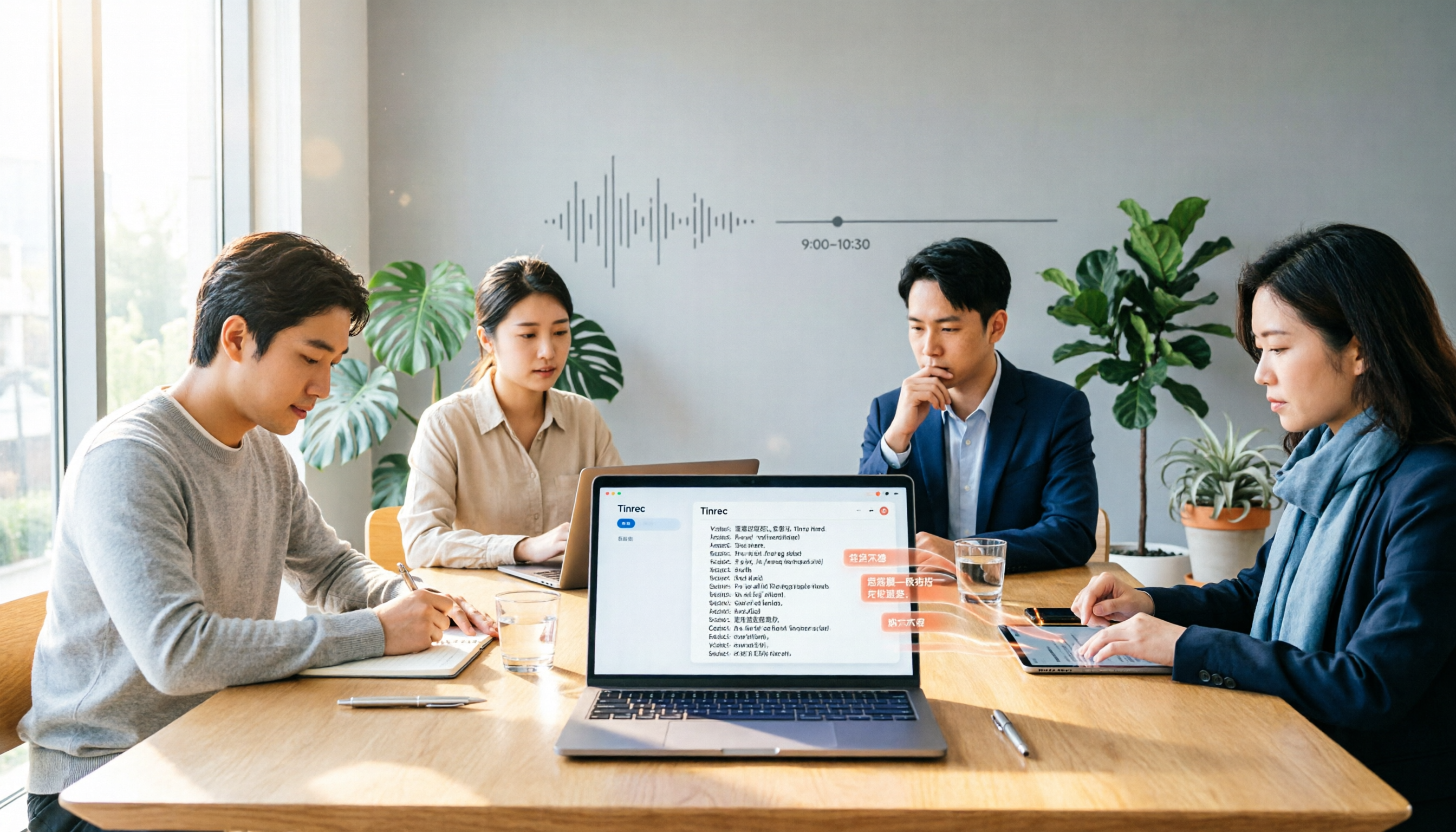
6 AI Transcription Tools Compared in 2026: Which Offers the Best Free Plans and Team Collaboration?
How do you choose an AI transcription tool in 2026? This article tests six tools—Tinrec, Vocol.ai, Yating, NotebookLM, cSubtitle, and Litok—covering free quotas, Chinese recognition, team collaboration, and use cases to help you find the best meeting notes solution.

2026 Meeting Recording to Text Tools: Tinrec Review and Buying Guide
Using Tinrec as an example, this article helps you avoid the pitfall of only comparing recognition rates, and understand the key aspects to look for in meeting recording-to-text tools: bot-free recording, AI summaries, action item extraction, and team spaces. It also provides practical use cases and FAQs.
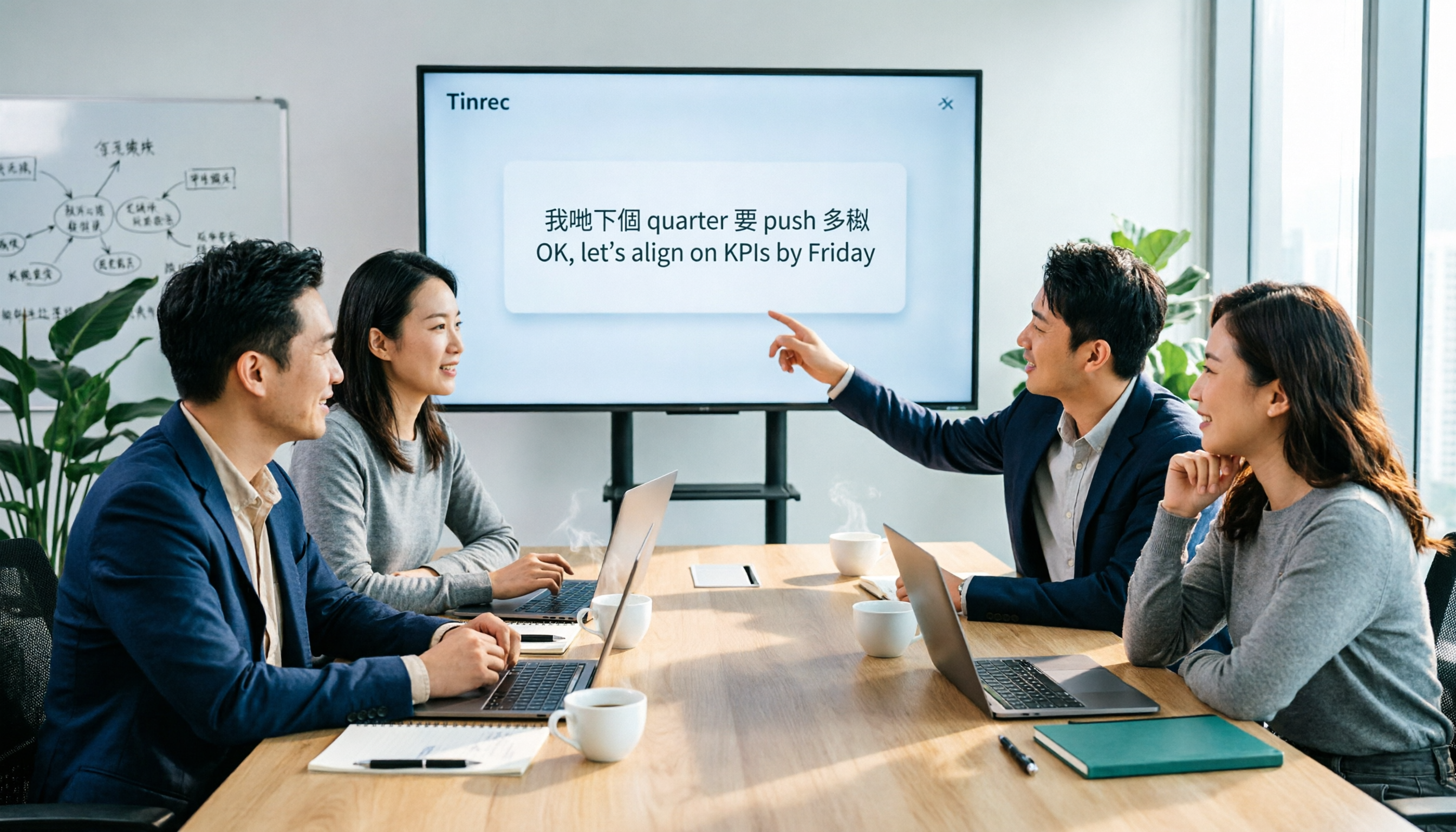
2026 Comparison of 4 AI Meeting Recorders: Does Tinrec Stand Out for Cantonese?
We tested 4 AI meeting transcription tools for Cantonese and mixed Chinese-English meetings, focusing on transcription, AI summarization, cross-platform support, and team collaboration. Verdict: Tinrec is the most convenient.

2026 Voice-to-Transcript Tool Comparison: Which One Is Better for Chinese Meetings?
How do you choose a voice-to-transcript tool? This article compares Tinrec and Yating, testing them across four key dimensions: language support, post-meeting organization, cross-platform availability, and team collaboration, to help you find the best option for Chinese meeting notes.

2026 English Meeting Transcription Tools Buying Guide: 4 Tested and Recommended
This guide helps you choose the best AI transcription tool for English meetings, covering transcription accuracy, cross-language support, and post-meeting organization. We tested Tinrec, Otter, Notta, and Granola, and provide actionable recommendations.
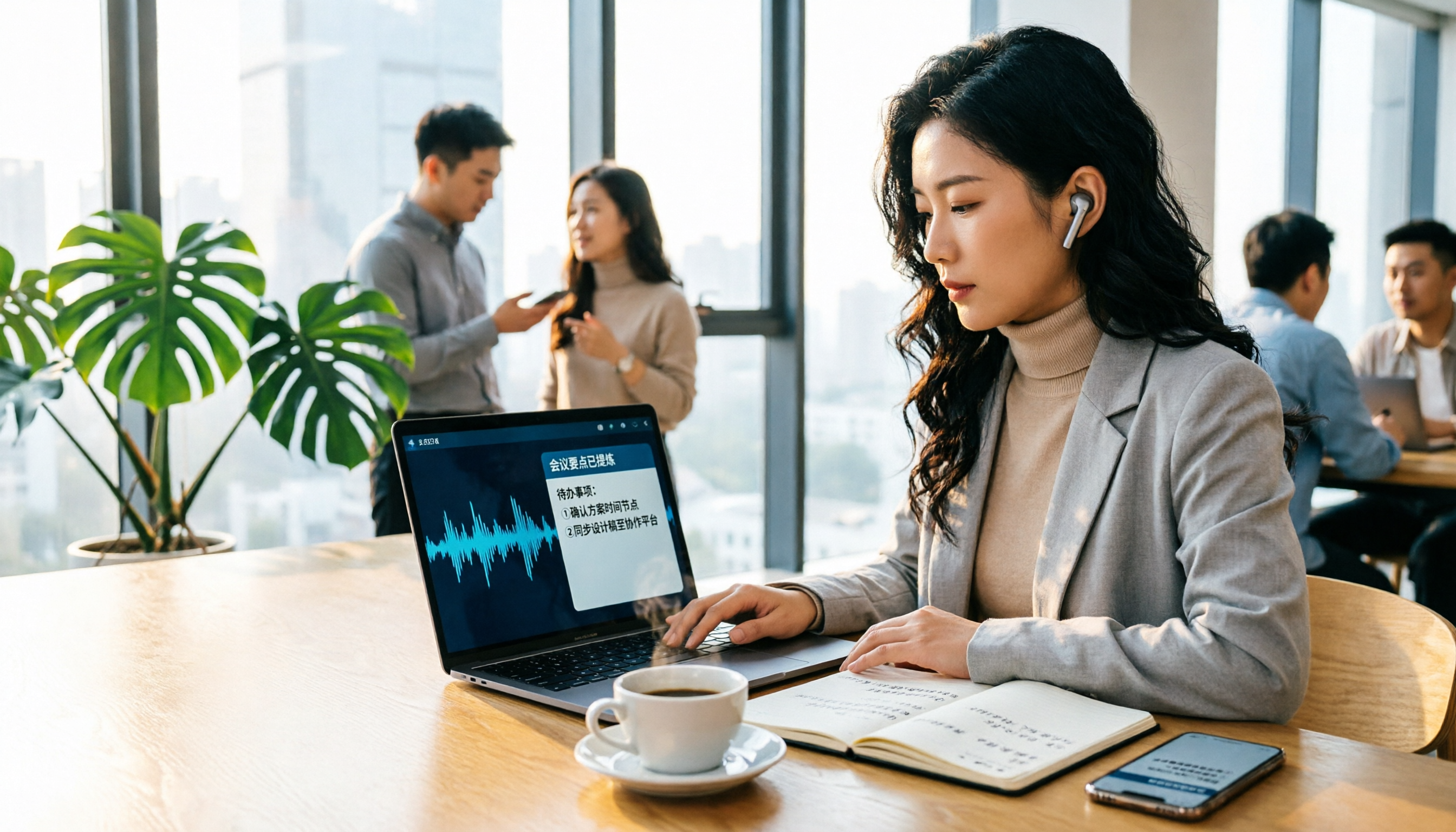
2026 Free Meeting Recording to Text Guide: 5 Key Buying Points and Tinrec Review
How to choose a free meeting recording to text tool? This article covers 5 key points: free quota, bot-free recording, AI organization, cross-platform, and team collaboration. We tested Tinrec (Miao Ting Lu Yin) and compared it with Otter, Granola, Notta, etc., to help you avoid common pitfalls and make the best decision.

2026 Hands-On Comparison of 3 Meeting Transcription Apps: Full Recording Without Bots
This article tests Tinrec (Miao Ting Lu Yin) to see how it solves the time-consuming problem of meeting minutes, including real-time transcription, AI summaries, action item extraction, and team collaboration, along with buying tips and FAQs.