
Turn recordings into transcripts and summaries in minutes
Upload audio or video for multilingual transcription, AI notes, and action items
Have you ever calculated how much time you spend on meetings? In a month, you might spend 12 hours in meetings and another 6 hours transcribing them—almost half the meeting time. And if you miss a key point, you have to re-listen to the recording. This article compares three common real-time transcription options: human transcription, general AI tools, and Tinrec (which I've been using recently), so you can choose the most cost-effective and efficient approach for your needs.
What Can Real-Time Transcription Do for You?
Real-time transcription doesn't wait until the recording is finished; it generates text as you speak. For professionals, its main value is:
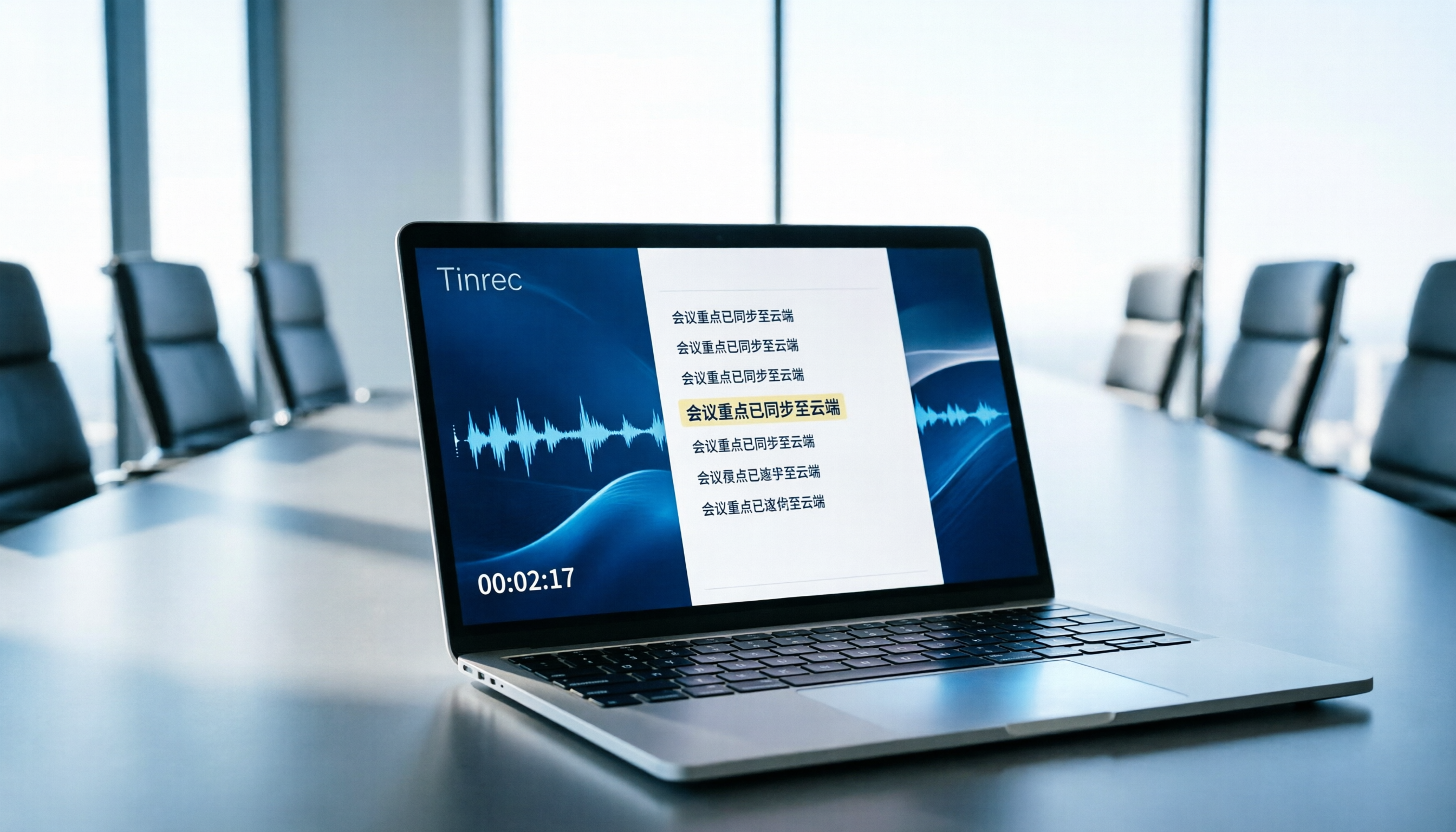
Scenario 1: Complete records right after the meeting. With Tinrec, for example, you open the desktop app during a meeting, and it captures your computer's audio directly—no need to invite a meeting bot. When the meeting ends, the transcript, summary, and action items are already generated.
Scenario 2: No more manual transcription for interviews or classes. Students or researchers can use Tinrec to record interviews and then search for specific segments afterward, or even ask AI questions like "What did the interviewee say about pricing?" without listening to the entire recording.
Scenario 3: Real-time understanding in multilingual meetings. Tinrec supports live translation, so you can view the original text, translation, or bilingual side-by-side while recording, making it easier to catch key points in foreign languages.
How Are Costs Calculated? Understanding the Cost Structure of Three Options
Real-time transcription costs generally fall into three categories: human transcription, general AI tools, and integrated AI meeting tools like Tinrec.
Human transcription: Based on 2026 rates in Taiwan, general interviews cost about NT$15–30 per minute, multi-person meetings NT$25–50 per minute, legal or medical records NT$40–80 per minute, and English transcription NT$30–60 per minute. For a 30-minute audio file, costs typically range from NT$500 to NT$1,500, with rush orders potentially adding 50–100%. The advantage is high accuracy and the ability to handle accents and complex situations; the downside is higher cost and longer turnaround times.
General AI tools: Most use a monthly subscription model, with common price ranges from NT$200 to NT$500 per month, and some offer free versions or daily free quotas. However, free versions often have limitations on session length, monthly minutes, or features. If you only occasionally transcribe personal notes, a free version might suffice; but for multiple meetings per week, a paid subscription is much cheaper than human transcription.
Tinrec plans: The personal plan includes a free version, weekly pass, Pro monthly, and Pro annual, catering to different usage frequencies. The team plan is priced per seat, with annual billing at approximately US$199 per seat (about US$16.58/month), and each seat includes 2,000 minutes of shared import quota per month; real-time recording currently does not deduct from this quota. In comparison, the per-minute cost for heavy team usage is far lower than human transcription.
Using Tinrec as an Example: How Do Costs and Features Align?
Many people only look at the price, but overlook the cost of post-processing. Tinrec's philosophy is to treat the transcript as a starting point, not the end.
Real-time recording to text: Record and transcribe simultaneously during meetings, interviews, or classes. The desktop app can capture audio from conferencing systems like Zoom, Google Meet, and Microsoft Teams, without needing to invite a meeting bot.
AI summaries and chapters: Long meetings are automatically divided into chapters, making it easy to find key points. You no longer need to read the entire transcript.
Action item extraction: Tinrec extracts action items mentioned during the meeting, showing who is responsible and deadlines at a glance.
AI Q&A: You can directly ask Tinrec questions like "Who mentioned the budget in the meeting?" or "What were the client's concerns?" It answers based on the meeting content, which is more intuitive than searching for keywords.
Stop organizing recordings by hand
Upload audio or video and automatically get a transcript, summary, and action items
Multi-format export and team space: Transcripts, summaries, and action items can be exported to tools like Notion, Google Docs, and OneNote. The team plan also centralizes meeting data, allowing new members to search and review past meetings.
Practical Scenarios: Which Option Fits Which Need?
Scenario 1: Occasionally transcribing a recording with a limited budget. Start with Tinrec's free version, which provides enough basic quota to experience recording, import, and summary features. If you need more, consider the weekly or monthly pass.
Scenario 2: Three or more meetings per week, requiring quick meeting notes. I recommend Tinrec Pro or the team plan. For example, with the team plan billed annually, if each person has 2 hours of meetings per week, that's about 8 hours (480 minutes) per month—well below the 2,000 minutes of import quota per seat per month; real-time recording doesn't count against the quota, so costs are manageable.
Scenario 3: Teams that need to share meeting data and track action items. Tinrec's team plan offers member, role, and seat management, with meeting data owned by the team, so it isn't lost when members leave. Administrators can also view usage and audit logs.
Scenario 4: When extremely high accuracy is required, such as for legal or medical purposes. Human transcription remains the top choice, but you can also use Tinrec to generate a draft and then have it proofread by a human, which is cheaper and more efficient than doing everything manually.
4 Things to Consider When Choosing a Real-Time Transcription Tool
Accuracy: Don't just rely on official claims. Recording quality, accents, and overlapping speech all affect results. Tinrec performs reliably with clear audio and common scenarios, but for critical content, it's still advisable to cross-check with the original recording.
Real-time capability and input sources: Some tools can only record online meetings, while others only accept file uploads. Tinrec supports real-time recording, desktop system audio capture, audio file import, and mobile recording, covering a wider range of situations.
Post-processing capabilities: The transcript is just the first step. The ability to automatically summarize, extract action items, ask AI questions, and export to other tools is what really saves time. Tinrec integrates all these features into one platform.
Team collaboration and data ownership: If you're using it as a team, make sure to confirm data ownership and permissions. With Tinrec's team plan, resources belong to the team, and when members leave, ownership can be transferred, preventing data loss.
Frequently Asked Questions
Q1: What's the difference between real-time transcription and general recording-to-text? Real-time transcription converts speech to text as you record, while general recording-to-text requires uploading the recording after it's finished. The advantage of real-time is that you get the text immediately after the meeting, without waiting. Tinrec supports both.
Q2: How much does AI real-time transcription cost? General AI tools typically cost NT$200–500 per month, with some offering free versions. Tinrec's personal plan includes a free version and paid subscriptions, while the team plan costs approximately US$199 per seat per year; check the official website for current pricing.
Q3: Which is better: human transcription or AI transcription? It depends on your needs. If you require accuracy above 98%, need to handle accents, or need legal documents, human transcription is more suitable. For general meetings, interviews, or internal records, AI tools are faster, cheaper, and easier to process. You can use Tinrec to generate a draft and then have it proofread manually.
Q4: What's the difference between Tinrec's team plan and personal plan? The personal plan stores data under your personal account, suitable for individual use. The team plan provides a dedicated team space, with meeting data owned by the team, and adds member management, seats, usage analytics, and audit logs, making it suitable for departments or project teams.
Q5: What should I be aware of when using real-time transcription? Before recording, confirm that participants consent and be aware of local regulations. Additionally, AI transcription can still make errors, so for important decisions, it's wise to replay the recording to verify.
Conclusion
The cost of real-time transcription isn't just about the per-minute price; it's about the time saved in post-processing and whether you can actually use the output. If you have more than three meetings a week, I'd suggest starting with Tinrec's free version to experience the convenience of automatic transcripts, summaries, and action items. Once you're comfortable, you can choose a paid personal plan or team plan based on your usage. Instead of spending thousands of dollars each month on human transcription, invest in a tool that continuously builds your meeting assets.
References
- 2026 Transcription Rates and Fees Overview: Are Free AI Tools Any Good? | Tasker Blog
- How Much Does Transcription Cost? 2026 Latest Rates and Quotes | Tasker
- 2026 Transcription Service Reviews: Top 10 Tools Comprehensive Test and Recommendation Guide
- 2025 Transcription Rates from NT$500 | PRO360
- Meeting Voice-to-Text and Transcription: Which AI Tool Should You Use? Free vs. Paid Comparison | Manager Today
Turn every recording into actionable outcomes
Get 60 free transcription minutes when you sign in. No credit card required.
Related Reading
You might also like

2026 Real-Time Transcription Comparison Chart: 3 Key Differences to Help You Decide If Tinrec Is Worth It
A real-time transcription tool isn't just about accurate conversion—what matters is whether you can organize, track, and collaborate on the text afterward. Using Tinrec as an example, this article walks you through the core capabilities, use cases, and buying considerations for real-time transcription tools, and provides a simple comparison chart to help you quickly decide.

2026 Real-Time Transcription Tools Compared: Why Tinrec Beats Yating for Team Meetings?
This article addresses the common meeting documentation needs of users in Taiwan, comparing real-time transcription tools such as Tinrec and Yating. It analyzes aspects like bot-free online meeting recording, team collaboration, and AI post-processing to help you decide which is more suitable for individuals and teams.
2026 Comparison of 3 Real-Time Transcription Tools: Tinrec's Bot-Free Recording + AI Q&A Saves the Most Time
We tested three real-time transcription AI tools—Otter, Notta, and Tinrec—comparing meeting recording, AI summaries, Q&A features, and free tiers. Tinrec records online meetings without a bot, and its Chinese transcription and AI Q&A best fit the needs of users in the US. This guide helps you choose without pitfalls.

2026 Real-World Test of 3 Real-Time Transcription Tools: Beyond Yating Transcriber, Is Tinrec Better for Workplace Teams?
After testing three real-time transcription tools, a mid-level manager found that Tinrec better meets workplace needs with bot-free online meeting recording, AI summaries and action item extraction, and team collaboration spaces. This article uses real meeting scenarios to show how Tinrec saves time on meeting notes, compares it with Yating Transcriber, and helps you choose the right tool.
Best Real-Time Transcription Platforms in 2026: We Tested 3, and This One Offers the Best Value for Chinese Meetings
Looking for a real-time transcription platform but unsure about the costs? This article tests Tinrec, Otter.ai, and Notta, comparing pricing, accuracy, AI features, and team collaboration to help you find the most cost-effective option.

7 Real-Time Transcription Tools Tested in 2026: Which One Really Turns Your Meetings into Searchable Data?
Real-time transcription isn't just about converting speech to text—it's about what you do afterward: organizing, searching, and collaborating. This hands-on review rethinks how to choose a transcription tool, comparing 7 options including Tinrec, Otter, and Notta to help you find the one that truly fits your workflow.

Tinrec vs Yating Live Transcription in 2026: A 5-Dimension Showdown—Which Real-Time Transcription Tool Wins?
We tested Tinrec and Yating Live Transcription across five dimensions—accuracy, real-time performance, post-processing, cross-platform support, and free tier—to help you decide which real-time transcription tool is best for users in Taiwan. Includes sample live transcripts and a guide to common pitfalls.

4 Real-Time Transcription & Translation Tools Compared in 2026: Free Plans and Chinese Support Explained
Still waiting until after a meeting to translate the transcript? This hands-on comparison of 4 real-time transcription and translation tools covers free quotas, Chinese recognition, bot-free recording, and cross-platform support to help you find the best meeting translation solution.
2026 Online Real-Time Transcription: Free Options + Instant Transcription
Looking for truly free online real-time transcription tools? This guide uses Tinrec to demonstrate the complete workflow, from recording to organizing meeting notes, covering key selection criteria and common questions.