

Turn recordings into transcripts and summaries in minutes
Upload audio or video for multilingual transcription, AI notes, and action items
Many graduate students preparing their thesis only remember to run an originality check with Turnitin, but overlook the more time-consuming step of transcribing interview recordings. Transcribing usually takes several hours and is prone to missing key points when done manually. In fact, interview recording during thesis writing can be fully handled by real-time transcription tools—which is exactly why I recommend Tinrec.
Why Are People Looking for Alternatives to Yating Transcription?
Yating Transcription is a speech-to-text tool that markets itself with "You talk, we type," allowing users to upload recordings and quickly get text. For those who only need simple transcripts, it's sufficient.
However, if your needs go beyond "turning audio into text"—such as further organizing interview highlights, extracting action items, or sharing transcripts with research partners—you may hit a wall. Common frustrations include: getting the transcript but still having to write the summary yourself; files being passed around during collaboration; and cross-platform use not being convenient enough. If you have similar needs, Tinrec is worth checking out.
Tinrec vs. Yating Transcription: What's Different in Core Experience?
Not Just Transcripts, but Actionable Data Transcripts are the foundation, but thesis interviews usually require organizing key points, conclusions, and action items. Tinrec doesn't just transcribe; it automatically generates summaries, chapters, and action items, saving a lot of manual organization time. Yating Transcription mainly stays at text transcription, leaving follow-up organization to you.
Record Online Meetings Without Bots If you need to record online interviews (e.g., via Zoom or Google Meet), Tinrec's desktop app can directly capture system audio, so you don't need to invite a bot to join the meeting, and interviewees won't be disturbed. Yating Transcription focuses more on file uploads, and real-time transcription of online meetings isn't its core feature.
AI Q&A to Quickly Find Key Points Interview transcripts often run dozens of pages, making it time-consuming to find a specific answer. Tinrec supports AI Q&A, allowing you to ask directly, "What are the interviewee's views on the research question?" It will provide answers based on the semantic content of the transcript. Yating Transcription lacks such intelligent query features.
Team Collaboration and Data Accumulation Thesis research often requires collaborative analysis of interview data with advisors and peers. Tinrec's team version provides a team space where members can centrally view and share transcripts and summaries. Yating Transcription is more for individual use, requiring other tools for collaboration.
Real-Time Translation and Multilingual Support If interviews involve foreign languages or require bilingual comparison, Tinrec supports real-time translation, displaying both the original and translated text simultaneously. Yating Transcription has limited real-time multilingual translation capabilities.
Overview of Tinrec's Core Features
Real-Time Recording to Text: Open Tinrec, and you'll see text appear in real time as you record. During thesis interviews, you can immediately confirm whether the transcript is complete, and the text record is done by the time the interview ends.
Bot-Free Online Meeting Recording: The desktop app directly captures system audio, so you can record online meetings on Zoom, Google Meet, Microsoft Teams, etc., without needing an extra participant.
AI Summaries and Action Item Extraction: After recording, Tinrec automatically generates summaries, chapters, and action items. Key points and next steps from the interview are clear at a glance, without having to replay the recording repeatedly.
Stop organizing recordings by hand
Upload audio or video and automatically get a transcript, summary, and action items
AI Q&A: Ask questions directly about the recording content, such as "What limitations did the interviewee mention?" Tinrec will find relevant passages from the transcript, saving significant search time.
Multi-Format Export and Team Space: You can export transcripts and summaries as documents or sync them to tools like Notion and Google Docs. The team space centralizes research data, preventing data loss due to member changes.
Practical Use Cases
Thesis Interview Recording: During in-depth interviews, use Tinrec for real-time recording-to-text, and get the transcript and summary immediately after the interview. Then use AI Q&A to quickly sort out research findings, saving at least half the time compared to traditional manual transcription.
Online Group Discussions: When discussing your thesis with your advisor over Google Meet, Tinrec's desktop app records without bots, automatically generating meeting minutes and action items, making subsequent revisions clear.
Class or Seminar Notes: Turn on Tinrec during lectures or seminars to get real-time text, and use AI summaries to quickly review key points, ensuring you don't miss critical arguments.
Research Data Organization: Upload previous interview recordings to Tinrec to quickly convert them to text and build a searchable database for future citations.
Key Points to Consider When Choosing a Real-Time Transcription Tool
Post-Transcript Organization Capabilities: Transcription is just the first step; whether it can automatically summarize and extract action items is the key to saving time. Tinrec excels in this area.
Online Meeting Recording Method: If you need to record remote interviews, choose a tool that supports bot-free recording to avoid disturbing interviewees. Tinrec's desktop app directly captures system audio.
Collaboration and Sharing Convenience: Thesis research often involves multiple collaborators, so it's important that the tool has a team space and member management. Tinrec's team version offers full team features.
Multilingual and Real-Time Translation: When dealing with foreign-language interviews, real-time translation can greatly improve efficiency. Tinrec supports multilingual transcription and bilingual comparison.
Privacy and Data Retention: The privacy protection of recordings and transcripts cannot be overlooked. Tinrec provides a team recycle bin and audit logs for more transparent data management.
Conclusion: Is Tinrec Worth Trying?
If you're looking for a real-time transcription tool that not only converts speech to text but also automatically organizes content, supports online meetings, and facilitates team collaboration, Tinrec is one of the few options on the market that can meet all these needs simultaneously. Especially for thesis interviews that require deep post-processing, Tinrec's AI summaries and Q&A features will save you a lot of time. I recommend downloading the free version of Tinrec and testing it with your own interview recordings—this is more direct than reading any review.
Frequently Asked Questions
Is the Tinrec free version sufficient? The free version provides basic usage credits, suitable for occasional use or testing. If you need to record interviews or meetings frequently, consider upgrading to a paid plan.
Which platforms does Tinrec support? Tinrec offers web, desktop, and mobile versions, making cross-platform use convenient.
How accurate is it? Tinrec provides high-quality transcription in clear audio and common scenarios, but actual results can be affected by recording quality, accents, and background noise. For important content, it's recommended to cross-check with the original.
What's the difference between team and individual versions? The individual version keeps data under your personal account. The team version provides a separate team space where meeting data belongs to the team, and adds features like members, roles, seats, usage analytics, and audit logs.
How to choose between Yating Transcription and Tinrec? If you only need simple speech-to-text, Yating is sufficient. But if you need automatic summaries, AI Q&A, team collaboration, and online meeting recording, Tinrec is a more complete choice.
Do I need consent to record with Tinrec? Before recording, you should comply with local laws and obtain participants' consent when necessary. Tinrec doesn't automatically join meetings; you must initiate recording manually.
References
- Turnitin Plagiarism Check System | National Taiwan Normal University Library
- ZhiQuan International Co., Ltd. Student Version Feature Introduction Originality Check System
- SYMSKAN Literature Similarity Search Service
- Yating Transcription
- National Kaohsiung University of Science and Technology Library
Turn every recording into actionable outcomes
Get 60 free transcription minutes when you sign in. No credit card required.
Related Reading
You might also like

2026 Hands-On Comparison of 3 Meeting Note Tools: Why I Switched from Google's Built-in to Tinrec
A senior student tests Google Calendar, Google Meet, and Tinrec for meeting notes, sharing why Tinrec is better for organizing lecture recordings, group discussions, and online meetings. Learn about free tier limits and AI summarization capabilities.

5 Best Meeting Minutes Apps in 2026: Real-World Comparison to Save Your Post-Meeting Time
Starting from meeting minutes apps trending on PTT, we tested 5 AI voice-to-text tools, comparing Chinese recognition, AI summaries, free tiers, and team collaboration features to help busy managers find the best fit.

5 Best Free AI Meeting Note Tools Tested in 2026: Generate Transcripts and Action Items Without Spending a Dime
This article tests 5 free AI meeting note tools, comparing free quotas, accuracy, online meeting support, and post-meeting organization features. Tinrec is recommended as the top choice, helping office workers automatically generate meeting transcripts and action items for free.
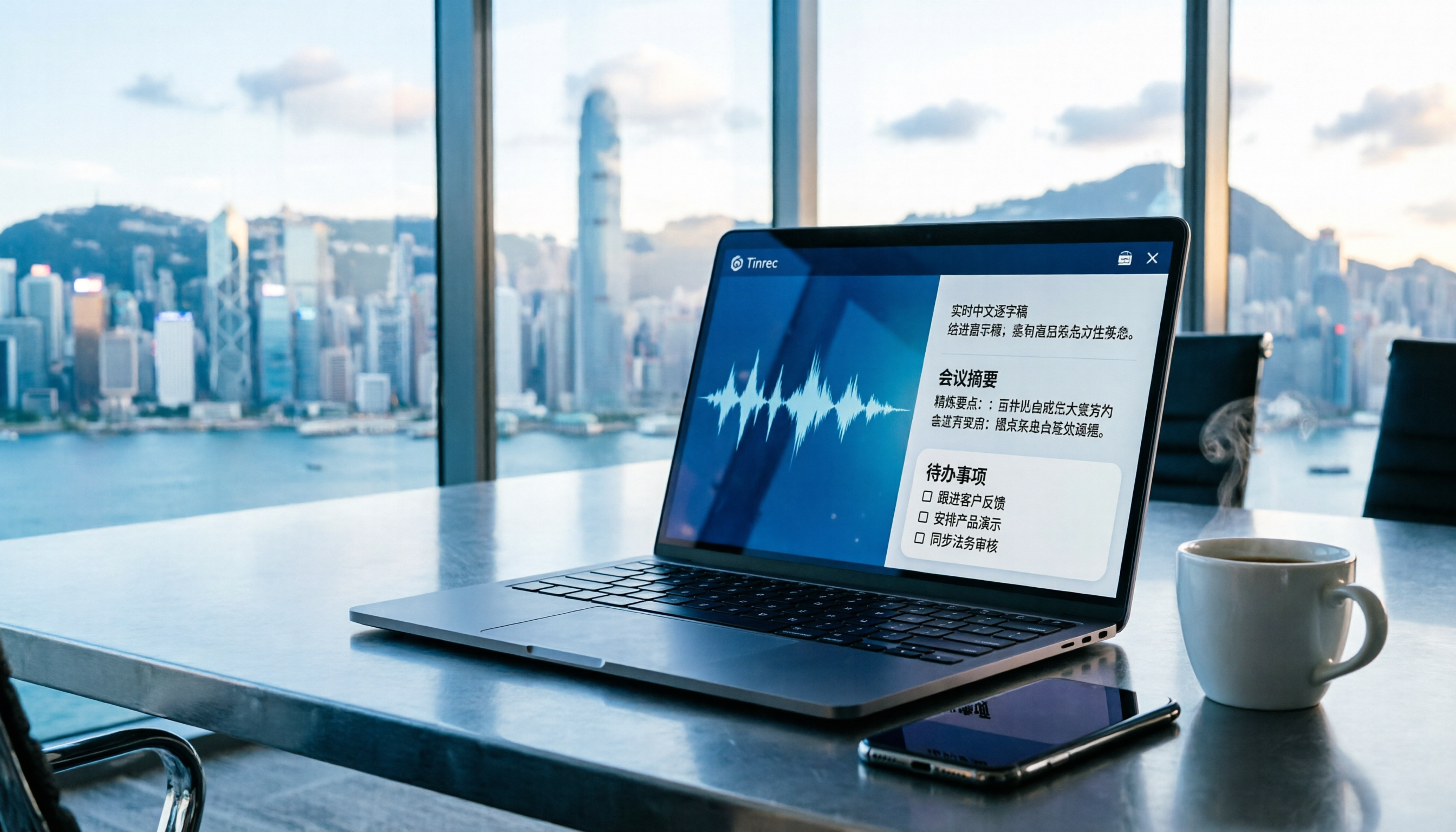
2026 Tinrec Recording-to-Text Tutorial: Chinese Support, Auto Meeting Minutes
Hong Kong office workers spend too much time on meeting minutes. This article tests Tinrec's real-time recording-to-text feature, showing how AI automatically generates transcripts, summaries, and action items—complete minutes in 5 minutes without writing prompts.

Best Real-Time Transcription Tools in 2026: 4 Tested, This One Is Most Practical for Chinese Meetings
A 2026 hands-on comparison of real-time transcription tools, evaluating latency, accuracy, AI post-processing, and cross-platform support to help you choose the best solution for Chinese-language meetings.
3 Best Real-Time Transcription Tools Worth Recommending in 2026: Cost and Feature Comparison
With so many real-time transcription tools on the market, how do you choose between free and paid options? This article tests tools like Tinrec, comparing costs, accuracy, and AI features to help you save time and money.

2026 Real-Time Transcription Tools Compared: How Much Can You Save on Teaching Recordings?
We tested several real-time transcription tools to answer how much it costs to convert teaching recordings to text and why Tinrec is the best choice for Hong Kong users to save money and time.

2026 Real-World Test of 4 Real-Time Transcription AI Tools: Tinrec Helps You Skip Overtime
This article tests several real-time transcription AI tools, focusing on Tinrec's performance in Cantonese transcription, real-time speed, AI summarization, and team collaboration, helping Hong Kong professionals choose the right tool to avoid overtime.

2026 Real-Time Transcription Complete Guide: Pricing Trends and Hands-On Reviews of 4 Tools
Struggling with real-time transcription costs and tool choices? This article compiles 2026 pricing for human and AI transcription services, tests four tools—Tinrec, Otter, Notta, and Granola—and provides insights on cost, accuracy, real-time performance, and buying advice to help you find the best meeting notes solution.