

Turn recordings into transcripts and summaries in minutes
Upload audio or video for multilingual transcription, AI notes, and action items
A two-hour class, sixteen weeks per semester—that's thirty-two hours of recordings you can't possibly re-listen to. You need a meeting note tool that automatically highlights key points. I used to rely on Google Calendar's built-in meeting notes and Google Meet's "take notes for me," but I found Tinrec works better for students. Here's my hands-on experience from this semester.
What Can Meeting Note Tools Do for You?
Scenario 1: Class recordings no longer pile up as files on your phone In the past, I'd record lectures but never bother to open them at home. Now with Tinrec, it transcribes in real time as it records, so I have a transcript right after class. Even better, the AI summary organizes the professor's key points, examples, and assignment requirements into one section—super time-saving when reviewing before finals.
Scenario 2: Quickly organize action items and task assignments after group discussions Every group discussion is chaotic, and no one remembers the conclusions afterward. I just start a Tinrec recording, and when it's done, it automatically extracts to-dos—who's responsible for research, who's making the slides, and the deadline—all clear at a glance. No need to open Google Docs and type everything out.
Scenario 3: Record online meetings without inviting a bot Some of our project meetings use Google Meet, but the free version doesn't include recording. Tinrec's desktop app can directly capture your computer's system audio, so you don't need to invite a separate bot to the meeting like other tools require. That's really convenient.
What Are the Core Features of Meeting Note Tools?
Real-time transcription: Tinrec transcribes as it records with less than a second of delay. During class, you can follow along on screen to make sure you don't miss anything, instead of waiting for the recording to finish and then converting it.
AI semantic summaries: It doesn't just condense the transcript into a paragraph; it structures the information—meeting topic, conclusions, action items, and assignees are listed separately. This is far more useful than Google's simple notes.
AI chat queries: After transcription, you can ask Tinrec questions directly—"Who mentioned the budget during the meeting?" "What are the professor's requirements for the final report?"—and it answers based on semantic understanding. Google's notes won't let you do that.
Multi-format export: Tinrec lets you export results to Google Docs, Notion, OneNote, and other tools. I usually send summaries to my Notion class notes database and refine them into my own study materials.
Team spaces: If you're on a project team, the Team plan lets you create a shared space to centralize recordings, transcripts, and to-dos from every discussion, so new members can review past materials. However, students usually find the free plan sufficient; consider upgrading if you need team sharing.
Real-World Use Cases
Lecture recording organization: Use the Tinrec mobile app to record during class, with real-time transcription. After class, review the AI summary and copy key points to your note-taking app. Before finals, search keywords to find important content instead of re-listening to recordings.
Stop organizing recordings by hand
Upload audio or video and automatically get a transcript, summary, and action items
Group meetings: For in-person discussions, place your phone in the middle to record. Tinrec's real-time transcript lets everyone follow along, and after the meeting, you can share action items and assignments directly to the group chat. No one needs to type notes during the meeting.
Online courses or webinars: Use the desktop app to record Google Meet or Zoom without installing a bot. Tinrec captures system audio while transcribing and translating, and it can generate chapters so you can jump to any section you need to review.
Interviews or research projects: Upload interview audio files to Tinrec, and it automatically transcribes and generates summaries and key points. Use AI Q&A to quickly find specific viewpoints mentioned by interviewees without listening to the entire audio.
4 Things to Consider When Choosing a Meeting Note Tool
- Accuracy: Don't just trust official claims. Test with your own recordings. Tinrec performs well with clear audio, but if multiple people talk at once or there's background noise, some errors may occur—verify important information against the original.
- Bot-free recording support: If you frequently use Google Meet or Zoom, check whether the tool requires inviting a bot. Tinrec's desktop app captures system audio directly without adding an extra participant, which is more convenient than many tools.
- AI features: Transcription is just the first step—what matters is whether the tool helps you organize afterward. Tinrec's AI summaries, action item extraction, and Q&A turn recordings into more than just text; they become truly reviewable or actionable materials.
- Cross-platform and pricing: Make sure the tool supports the devices you use. Tinrec is available on iOS, Android, and web. The free plan offers basic credits, enough to try a few meetings; if you record heavily every week, the Pro plan is reasonably priced—skip a few late-night snacks and you're covered.
FAQ
Q: What's the difference between Google's built-in meeting notes and Tinrec? A: Google Calendar and Meet's note features are fine for simple notes, but Tinrec adds AI summaries, action item extraction, Q&A, and multi-format export, making it better for students who want to turn recordings into reviewable materials.
Q: Is the free plan enough? A: If you only record one or two classes a week, the free plan's basic credits are enough to try it out. I started with the free plan for two group meetings and upgraded because I found it useful.
Q: How do you record Google Meet without a bot? A: Tinrec's desktop app records your computer's audio directly, so no meeting bot is needed. Just open Tinrec and start recording before the meeting; it captures the system audio.
Q: How accurate is the transcription? A: It works well in quiet environments with a single speaker, like lectures. But if the classroom is noisy or multiple people speak at once, error rates increase, so it's best to cross-check important content against the transcript and recording.
Q: Can I export to Google Docs? A: Yes. Tinrec supports export to Google Docs, Notion, OneNote, and other tools, making it easy to continue editing or share with classmates.
Conclusion
AI meeting notes are no longer futuristic technology—they're tools you can use right now, and they genuinely save students time. If you're like me and record several hours of lectures each week without wanting to re-listen, I highly recommend trying Tinrec. The free plan includes basic credits, so you can test it with one lecture recording and see how AI helps organize key points.
References
- Add meeting notes to Google Calendar events - Google Docs Editors Help
- Using NotebookLM to Quickly Create Meeting Minutes - 1/2
- Use AI in meetings and video conferences | Google Workspace
- Google Meet "take notes for me" feature - Computer - Google Meet Help
- [Wingwill Academy] Google Calendar's note feature: one-click meeting minutes 📅 (Google Workspace series)
Turn every recording into actionable outcomes
Get 60 free transcription minutes when you sign in. No credit card required.
Related Reading
You might also like

2026 Meeting Minutes Excel Template: Free Download + AI Auto-Summarization
Tired of manually organizing meeting minutes? This article covers the essential fields for a meeting minutes Excel template, free download sources, and how to use Tinrec to automatically generate meeting summaries and action items, turning meeting content into trackable tables.

2026 AI Meeting Notes App Comparison: Tinrec vs Granola – Which Is Right for You?
This article compares Tinrec and Granola, two bot-free AI meeting notes tools, across five dimensions: meeting capture methods, Chinese content processing, audio retention and file import, post-meeting organization and export, and team collaboration and management, to help you decide which is better for Chinese meetings and team knowledge management.

5 Best AI Meeting Recorder Tools Tested in 2026: How to Choose the Most Time-Saving Option for Chinese Meetings
Struggling with meeting minutes format and time-consuming organization? This article tests 5 AI meeting recorder tools, from free to paid, to help you find the best choice for Chinese meetings, bot-free recording, and team collaboration.

2026 Hands-On Comparison of 3 AI Meeting Note Tools: Which Saves the Most Time for English Meeting Minutes?
Struggling to write English meeting minutes? We tested 3 AI tools, and Tinrec stands out with bot-free recording, real-time translation, and automatic summaries to help you cut down on overtime.

How to Take Meeting Notes on iPhone in 2026: 4 Steps from Recording to AI Summaries
An essential guide for iPhone users on meeting notes, testing tools like Tinrec, Notta, and Meeting Ink. Learn 4 steps from recording to AI summaries, avoid common pitfalls, and make meeting organization painless.

5 Best Meeting Minutes Apps in 2026: Real-World Comparison to Save Your Post-Meeting Time
Starting from meeting minutes apps trending on PTT, we tested 5 AI voice-to-text tools, comparing Chinese recognition, AI summaries, free tiers, and team collaboration features to help busy managers find the best fit.
5 Best Free AI Meeting Note Tools Tested in 2026: Generate Transcripts and Action Items Without Spending a Dime
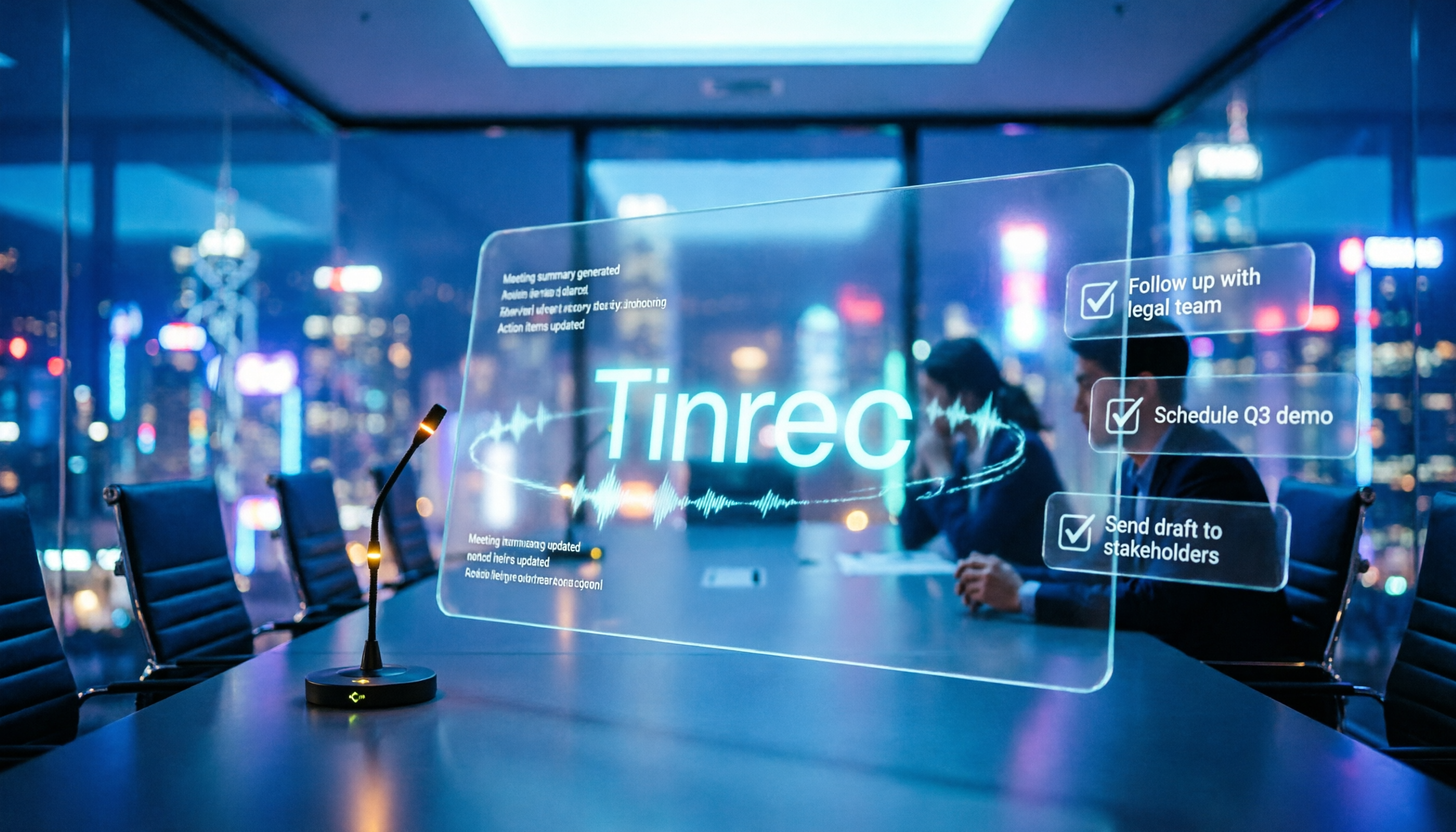
This article tests 5 free AI meeting note tools, comparing free quotas, accuracy, online meeting support, and post-meeting organization features. Tinrec is recommended as the top choice, helping office workers automatically generate meeting transcripts and action items for free.
2026 Tinrec Recording-to-Text Tutorial: Chinese Support, Auto Meeting Minutes
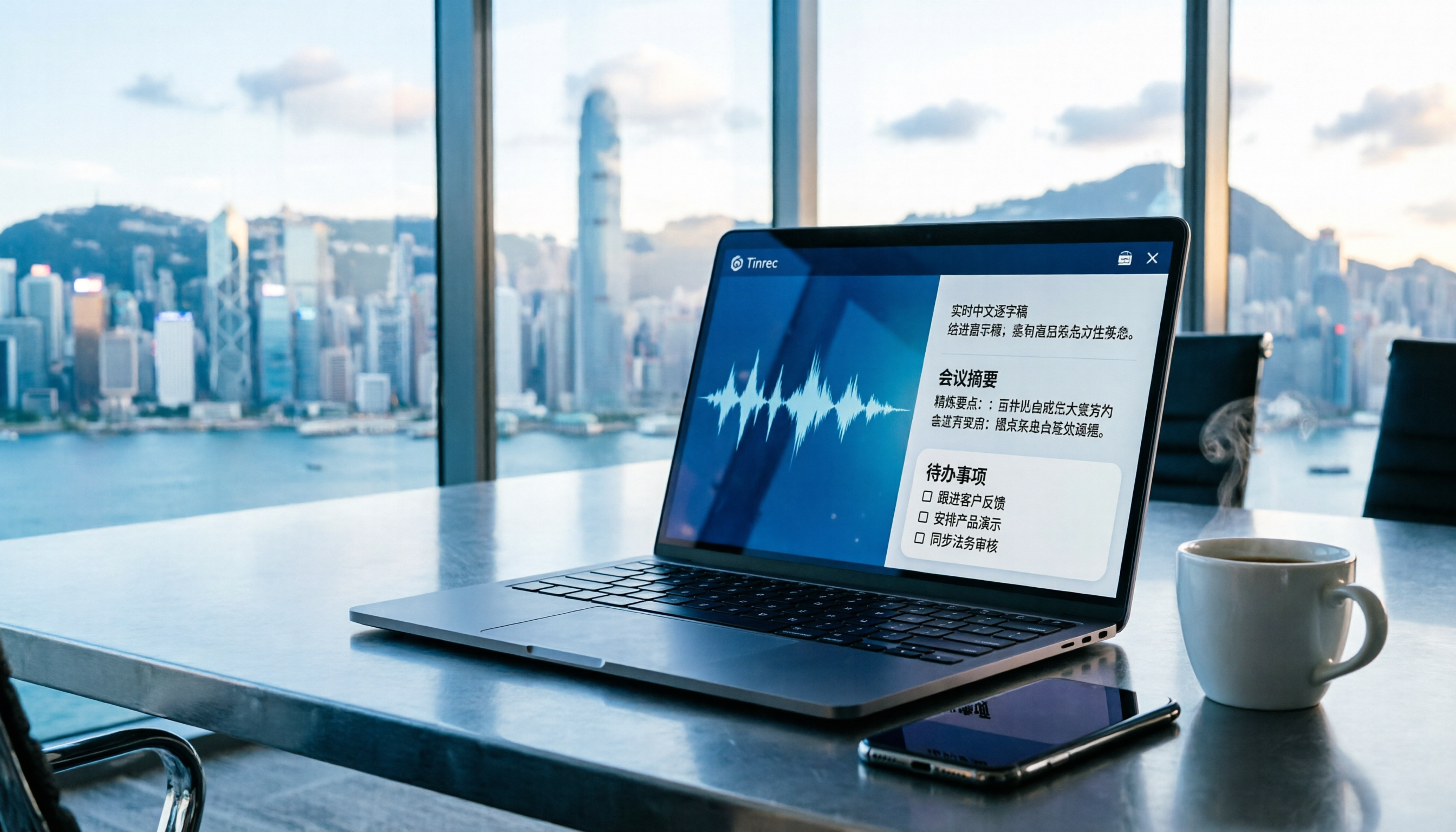
Hong Kong office workers spend too much time on meeting minutes. This article tests Tinrec's real-time recording-to-text feature, showing how AI automatically generates transcripts, summaries, and action items—complete minutes in 5 minutes without writing prompts.

Best Real-Time Transcription Tools in 2026: 4 Tested, This One Is Most Practical for Chinese Meetings
A 2026 hands-on comparison of real-time transcription tools, evaluating latency, accuracy, AI post-processing, and cross-platform support to help you choose the best solution for Chinese-language meetings.