

Turn recordings into transcripts and summaries in minutes
Upload audio or video for multilingual transcription, AI notes, and action items
There are so many real-time transcription tools out there—which one should you choose? Should you go free or paid? Is the AI summarization feature actually useful? We spent two afternoons testing them, and here's our verdict.
Two hours in meetings, two more to write up notes? You don't need a tool—you need a solution
I attend about 15 meetings a week, some of them international, with a mix of Chinese, English, and technical jargon. The worst part isn't the meeting itself—it's what comes after. A one-hour meeting can take me two hours to transcribe, highlight key points, and list action items. If the meeting is in a foreign language, I have to translate before organizing, which is even more painful.
What's even more frustrating is audio in Cantonese or a mix of Chinese and English. Many tools claim to support multiple languages, but when you feed them a real meeting recording, the output is practically unusable.
If you're dealing with the same issues, this article is for you.
Before choosing a real-time transcription tool, understand these 5 key points
1. Accuracy: Don't just trust the official 98% claim
Many tools tout 98% accuracy, but that's measured in a quiet recording studio. Real meetings have air conditioning noise, keyboard clatter, and people talking over each other, which significantly drops accuracy. We tested with a real-world scenario: a 5-minute recording of a bilingual meeting with two speakers and background AC noise. Under these conditions, the differences between tools really show.
2. AI features: Do you want a transcript, or a polished meeting summary?
Most of the time, we want the latter. Instead of looking for a tool that does both real-time transcription and translation, think about what you need after recording: Do you want to manually Ctrl+F for keywords, or just ask the AI, "What was the meeting's conclusion?"
3. Cross-platform: Record on your phone, edit on your computer—no hiccups
If you record on your iPhone today and edit on your computer tomorrow, a tool that doesn't support cross-platform use will be a pain. Among the tools we tested, some only have mobile apps, others only web versions. Make sure to check before you choose.
4. Free tier: Is it enough for a week of real use?
Many tools offer a paltry free allowance that runs out after one meeting. If you have 2-3 meetings a week, the free version should at least get you through a week of testing.
5. AI Q&A: This is the real time-saver
After recording, can you ask the AI, "What were the interviewee's concerns about pricing?" instead of manually searching through a 30-minute transcript? Very few tools offer this feature, but for those of us who value time over money, it's a game-changer.
Tinrec (Miaoting Recording) — Our Top Pick After Testing
Tinrec is an audio-to-text tool, and it was the first one I tested. It turned out to be surprisingly good.
AI Q&A: Ask questions right after recording—this feature gets a perfect score from me
Before, after recording an interview, I'd have to Ctrl+F through the transcript to find a specific quote. Now, Tinrec's AI Q&A lets me ask, "What were the interviewee's concerns about pricing?" It understands the context and gives you the answer directly, complete with timestamps. Almost no other tool we tested has this feature.
Stop organizing recordings by hand
Upload audio or video and automatically get a transcript, summary, and action items
Transcription quality: Reliable in real-world scenarios
We tested with a 5-minute meeting recording (two speakers, AC noise, mixed Chinese and English), and Tinrec's transcription quality was quite stable in common meeting scenarios, with an error rate low enough to ignore. I won't give you inflated numbers because results depend on recording quality, but for everyday meetings and interviews, its accuracy is more than sufficient.
Who it's for
If you frequently record meetings, interviews, or lectures and want to use AI to find key points afterward, Tinrec is currently the best fit. It works on both mobile and desktop, with smooth syncing.
Limitations
The free version has usage limits, and heavy users will need to pay. But for most people with 2-3 meetings a week, the free allowance is enough to fully experience its value. I recommend starting with the free version and upgrading if you find it useful.
Alternatives to Tinrec
Meeting Ink
It's feature-rich: multi-platform real-time recording, transcripts, smart summaries, task tracking, live captions, and multi-language translation. However, its AI Q&A isn't as intuitive as Tinrec's, and the experience falls short when you want to quickly find key points after recording. If you need real-time translation, consider it.
Yating Transcript
A well-established Taiwanese brand with decent accuracy. But it lacks AI Q&A, so you can only manually search for keywords after recording. If you just want plain transcription, give it a try.
Easemate AI
A free online transcription service with timestamps, speaker identification, and AI chat. However, its AI chat is more like keyword search, not like Tinrec's ability to understand context and provide answers with timestamps. It's suitable for light users who need it occasionally.
Pitfall Guide: 4 Common Mistakes When Choosing a Real-Time Transcription Tool
Pitfall 1: Trusting official accuracy rates
Many tools advertise "98% accuracy," but that's measured in a quiet studio. Real meetings have noise and overlapping speech, which significantly reduces accuracy. Use your own recordings to test free trials, and don't just rely on ads.
Pitfall 2: Ignoring AI features
If you only use a transcription tool for "audio to text," you're only using a third of its potential. With Tinrec's AI Q&A, you can ask "What was the meeting's conclusion?" right after recording, which is much faster than manually scanning a 30-minute transcript.
Pitfall 3: Free tier traps
Some tools offer a tiny free allowance that runs out after one meeting. Before paying, make sure the free version is enough to test your entire workflow.
Pitfall 4: Not thinking through cross-platform needs
If you record on your iPhone today and edit on your computer tomorrow, a tool without cross-platform support will be a pain. Check that both your phone and computer are supported before choosing.
Conclusion: Which One Should You Choose?
If I had to recommend just one, it would be Tinrec.
- Need bilingual (Chinese/English) or Cantonese transcription with AI Q&A → Tinrec (stable transcription, AI Q&A with almost no competition)
- Want to use AI to find key points after recording → Tinrec (the only one with semantic understanding Q&A)
- Need to use both phone and computer → Tinrec (smooth cross-platform sync)
- Zero budget, English only → Consider Otter.ai, but that's beyond this article's scope
I recommend downloading Tinrec's free version first—no need to pay upfront. Test it with your own recordings, and you'll see how much time AI Q&A can save you.
References
- Meeting Ink - 2026 AI Meeting Notes Tool Test: 7 Voice-to-Text and Summarization Speed Comparison | Meeting Ink - AI Meeting Notes Assistant, Auto-Transcribe and Summarize
- 2026 Real-Time Transcription Tool Comparison: Which Has the Strongest AI Summarization? - Miaoting Recording Blog
- Meeting Ink - Transcript AI Meeting Summary Voice-to-Text - Google Play App
- Unlimited Time! 3 Free AI Transcription Tools, Highly Recommended! AI Voice Notes for Meeting Minutes, Slides, Mind Maps | 104 Career Force
- Yating Transcript
Turn every recording into actionable outcomes
Get 60 free transcription minutes when you sign in. No credit card required.
Related Reading
You might also like

Hands-On Review of 4 Smart Meeting Collaboration Tools in 2026: How to Use Google Meet, Teams, and Zoom?
How do you use smart meeting collaboration tools? This article focuses on Google Meet, comparing it with Microsoft Teams, Zoom, and Cisco Webex. It shares hands-on experiences, feature differences, and a guide to avoid common pitfalls, helping you choose the right tool to boost meeting efficiency.

Smart Meeting Collaboration in 2026: How to Use Auto Recording and Cross-Platform Tools
Smart meeting collaboration isn't just about buying equipment. This article starts with common misconceptions, helps you understand the core features and practical steps of smart meeting collaboration, and answers frequently asked questions to boost your meeting productivity.
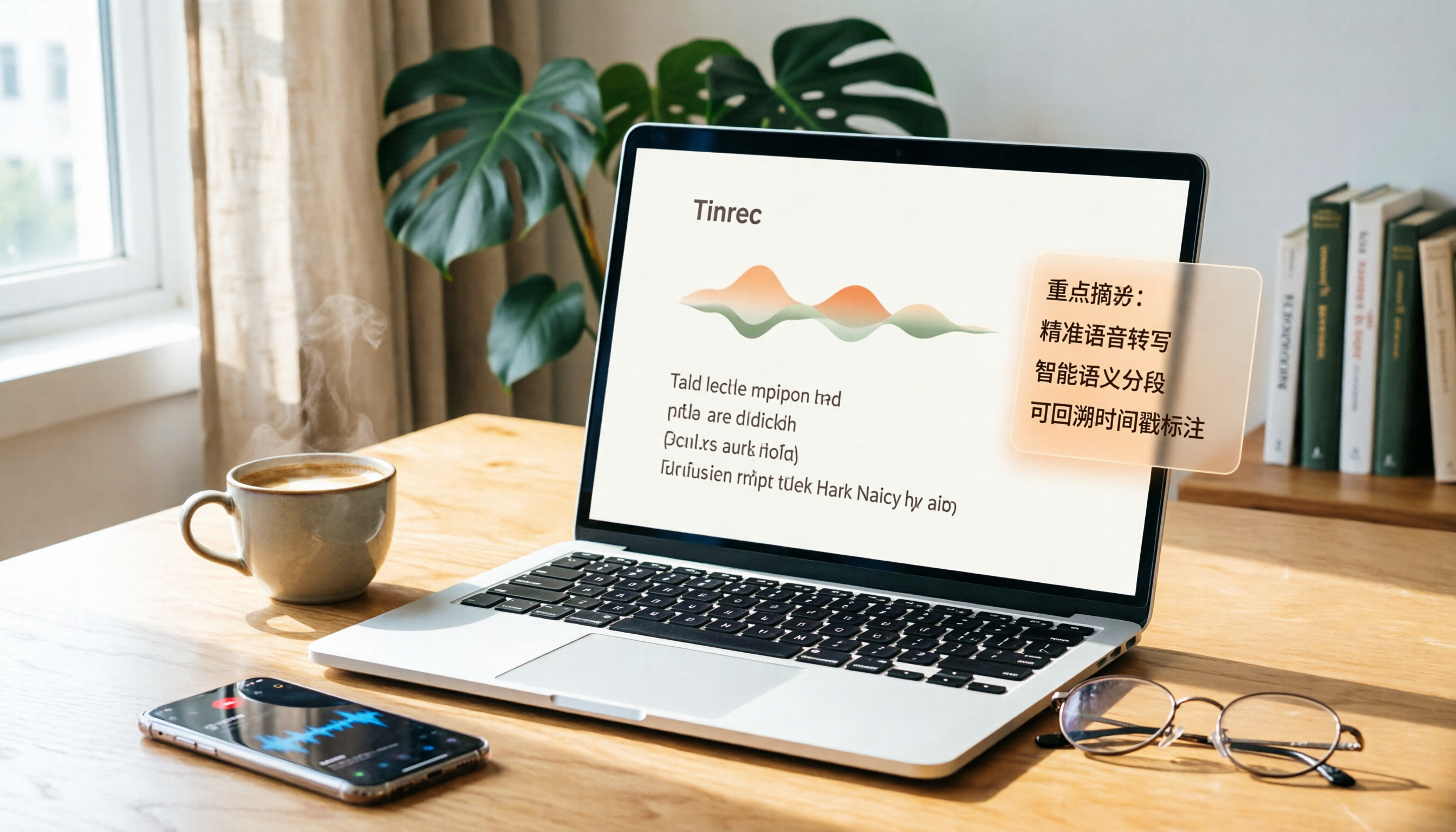
How to Create Real-Time Transcripts for Dcard in 2024: AI Transcription and Summary Tools
Dcard does not have built-in real-time transcription, but common tools like mobile voice input, AI transcription, and document summarizers can save time. This article covers practical workflows, tool selection, and FAQs for 2024.

2026 Free Real-Time Transcription AI Tools: 5 Options Compared
Explore 5 free AI-powered real-time transcription tools, including Meeting Ink, Voice-to-Text App, cSubtitle, Vocol.ai, and Yating Transcription. Compare features, supported platforms, and free plan limitations to find the best fit for meeting notes and interview transcription.

2026 Meeting Minutes Template Guide: Tinrec vs Notta 5-Dimension Comparison - Which Is Right for You?
Meeting minutes are not just about transcripts; they should also auto-generate summaries, action items, and reports. This article compares Tinrec and Notta across 5 key dimensions, including meeting capture, post-processing, and team collaboration, to help you choose the best AI meeting minutes tool.

Best AI Meeting Notes Tools in 2026: We Tested 3, and This One with No-Bot Recording Is the Most Convenient
Meetings take two hours, and organizing notes takes another two? This article tests three AI meeting notes tools—Tinrec, Otter.ai, and Granola—covering no-bot recording, Chinese language experience, and post-meeting organization to help you find the most suitable one.
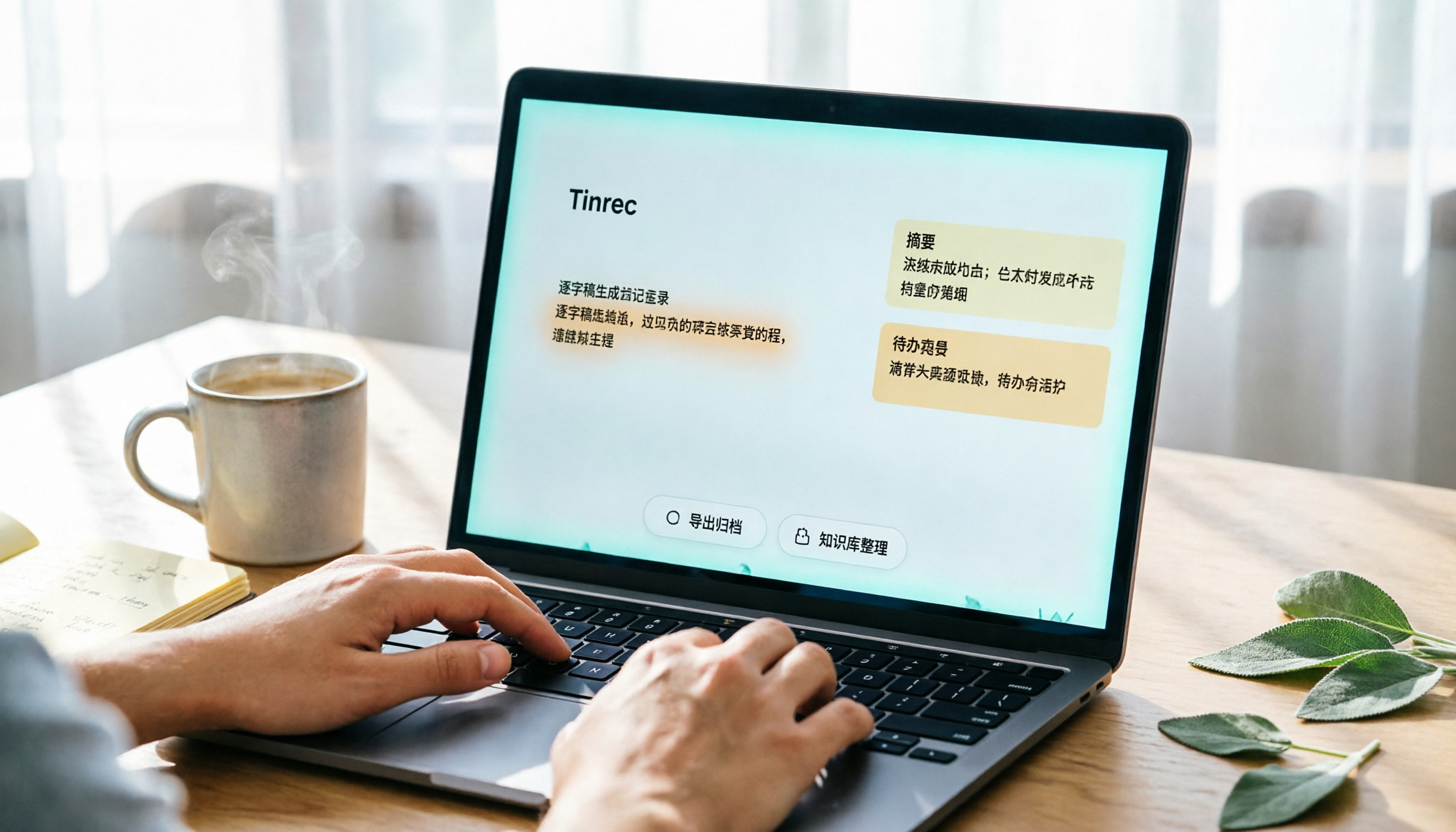
2026 Review of 4 Notion Meeting Notes Templates: Why I Switched to Tinrec for Automated Generation
Meeting notes aren't just about having a Notion template. This article compares common Notion meeting note template types using real workflows, and explains why using Tinrec to automatically generate transcripts, summaries, and to-dos, then exporting to Notion for archiving, is more efficient than manually filling templates.

2026 Notion AI Meeting Notes Tutorial: 3 Steps to Auto Summaries and Action Items
A hands-on tutorial for Notion AI meeting notes, showing how to use the /meeting command to automatically generate transcripts, summaries, and action items without installing bots. Supports Zoom, Google Meet, and Teams.

2026 Meeting Minutes Format Templates: 4 Free Solutions Compared
Meetings aren't the problem—it's the follow-up and tracking afterward. This article, from a mid-level manager's hands-on perspective, reviews 4 free solutions and provides copy-ready meeting minutes format templates to help you quickly produce actionable meeting notes.