

Turn recordings into transcripts and summaries in minutes
Upload audio or video for multilingual transcription, AI notes, and action items
To answer your search query directly: the most straightforward English term for 智能會議協作 is Intelligent Meeting Collaboration, though some also say Smart Meeting Collaboration or AI-powered meeting collaboration. But for a mid-level manager like me who attends 15 meetings a week and manages a team of 10, the point isn't how to say it in English—it's whether this collaboration can truly turn meetings from "heard and forgotten" into "searchable, trackable, and handover-ready" assets. Below, I'll break down what Intelligent Meeting Collaboration can actually do, using Tinrec, which my team uses in practice, as an example.
What Can Intelligent Meeting Collaboration Do for You?
Scenario 1: Meeting minutes ready within 5 minutes of the meeting ending Previously, after a two-hour project meeting, I'd spend another hour organizing notes. Now with Tinrec, the meeting is transcribed in real time, and by the time it ends, AI summaries, conclusions, and action items are already generated—who's responsible for what and the deadlines are all listed out.
Scenario 2: When your boss asks about the last meeting's conclusions The worst thing when reporting to your boss is being asked, "What was the conclusion of the last meeting?" Now I can search for keywords in Tinrec or simply ask the AI, "What was the conclusion of the last budget meeting?" and it answers based on the transcript—no more flipping through notes for 3 minutes.
Scenario 3: Cross-department collaboration without relying on verbal handoffs Things you tell colleagues often get forgotten after two days. Tinrec's action item extraction pulls out action items like "Department A to reply with specs by next Wednesday" and places them in the team space, so who can see it and who's responsible is no longer just a verbal promise.
What Are Tinrec's Core Intelligent Meeting Collaboration Capabilities?
Bot-free recording of online meetings: Tinrec's desktop app captures your computer's system audio, so you don't need to add a bot to Zoom, Meet, Teams, or Webex; just open Tinrec and start recording. In my testing, I found this approach ideal for meetings where you don't want to alert external clients.
Real-time transcription and translation: It generates a transcript as it records, with low latency; for cross-language meetings, you can view the original text, translation, or a bilingual side-by-side view, so even meetings where your boss mixes Chinese and English can be organized.
AI summaries, chapters, and key points: Instead of condensing the transcript into a single paragraph, it structurally lists meeting topics, conclusions, action items, and responsible persons. Long meetings are automatically divided into chapters, so I can review the morning's meetings in 5 minutes over lunch.
AI conversational query: You can directly ask, "Who mentioned the budget during the meeting?" or "What was the client's feedback?" Tinrec answers based on semantics, not just keyword search.
Multi-format export and post-processing: You can export to Notion, Google Docs, OneNote, Dropbox, or have Tinrec generate reports, tables, or documents based on the meeting, ready to send to your boss or clients.
Practical Use Cases
Department weekly meetings: Before the meeting, open Tinrec's desktop app, which records system audio directly; after the meeting, AI summaries automatically organize decisions and action items, which you can post to the team space for members to review.
Stop organizing recordings by hand
Upload audio or video and automatically get a transcript, summary, and action items
Client interviews: Sales colleagues use Tinrec to record client needs and commitments; after the meeting, AI Q&A extracts "what pain points the client mentioned," and then generates a follow-up proposal document.
Cross-department project meetings: Record online meetings without a bot, then use action item extraction to assign tasks to each department, share progress in the team space, and avoid post-meeting amnesia.
Personal learning: For online courses or webinars, use Tinrec to record and transcribe, AI summaries organize key points, and you can later ask questions to review.
4 Things to Watch When Choosing an Intelligent Meeting Collaboration Tool
- Whether you need to invite a bot: Some tools require a bot to join the meeting as a participant, which others will see as an extra attendee. Tinrec's desktop app records system audio directly without adding a participant, making it suitable for external meetings.
- Whether you can organize the transcript: A raw transcript isn't enough. Tinrec provides AI summaries, action items, chapters, Q&A, and export options, reducing the time you'd spend re-listening to recordings.
- Chinese and multilingual experience: If you often have meetings in Chinese or mixed Chinese-English, test the tool with accents and terminology. Tinrec supports Traditional Chinese and multiple languages, and you can set team-specific terms to improve recognition of professional jargon.
- Personal use vs. team collaboration: Personal versions are fine for individual organization, but teams need shared meeting assets. Tinrec's team version offers dedicated spaces, roles, seats, usage analytics, and audit logs; when a member leaves, data can be handed over and doesn't disappear.
- Whether audio files are retained: Some tools don't save meeting audio. Tinrec retains recordings, and transcripts can be replayed with timestamps for verification, so important content isn't just hearsay.
FAQ
Q: What is the English term for 智能會議協作? A: The common term is Intelligent Meeting Collaboration, but Smart Meeting Collaboration is also used. In the tool space, AI Meeting Assistant and AI Meeting Notes & Collaboration are also common.
Q: What's the difference between Tinrec and a regular recording app? A: A regular recording app just records; Tinrec transcribes, generates summaries and action items, and offers AI Q&A, export, and team sharing.
Q: How can you record online meetings without inviting a bot? A: Tinrec's desktop app captures your computer's system audio. When you're in a meeting on Zoom, Meet, Teams, etc., just open Tinrec and start recording—no extra participant needed.
Q: Can all team members see every meeting? A: The team version focuses on team-level sharing; active members can view team data, but members without a seat can only view, not edit, upload, or export. Detailed permissions are managed by roles and seats.
Q: Is the free version sufficient? A: If you only occasionally organize a recording or two, the free version lets you try basic features; but if you have multiple meetings a week and need team collaboration, consider the Pro or team version—it saves you over an hour of organizing time each day.
Conclusion
Intelligent Meeting Collaboration isn't just a new buzzword—it's about turning meetings from one-off events into cumulative assets. Tinrec lets mid-level managers like me stop spending late nights organizing meeting notes; recording, transcription, summaries, action items, and team spaces are all in one workflow, and the key is that everything is searchable, trackable, and handover-ready. If you have more than 3 meetings a week, try the free version first and record a couple of meetings to see the AI-organized results—you'll never go back to handwritten notes.
References
Turn every recording into actionable outcomes
Get 60 free transcription minutes when you sign in. No credit card required.
Related Reading
You might also like

2026 Smart Meeting Collaboration Platform: Bot-Free Recording & Team Meeting Knowledge Management
Using Tinrec as an example, this article explains how a smart meeting collaboration platform can record online meetings without bots, automatically generate transcripts and action items, and turn meeting data into searchable, collaborative digital assets for your team.

4 Smart Meeting Collaboration Tools Tested in 2026: Which Ones Really Save You Time on Meeting Notes?
Smart meeting collaboration isn't just about buying an interactive whiteboard; it's about taking meetings from recorded to searchable, trackable, and shareable. Using Tinrec as an example, this article explains the core capabilities, real-world use cases, buying considerations, and FAQs to help you decide which tool fits your team best.

2026 Hands-On Comparison of 4 Smart Meeting Collaboration Tools: Which One Excels at Bot-Free Recording and Chinese Summaries?
Spending two hours in a meeting and another two organizing notes? This article tests four smart meeting collaboration tools—Tinrec, Otter, Fireflies, and Notta—covering bot-free recording, Chinese transcription, AI summaries, and team spaces to help you pick the best meeting assistant.
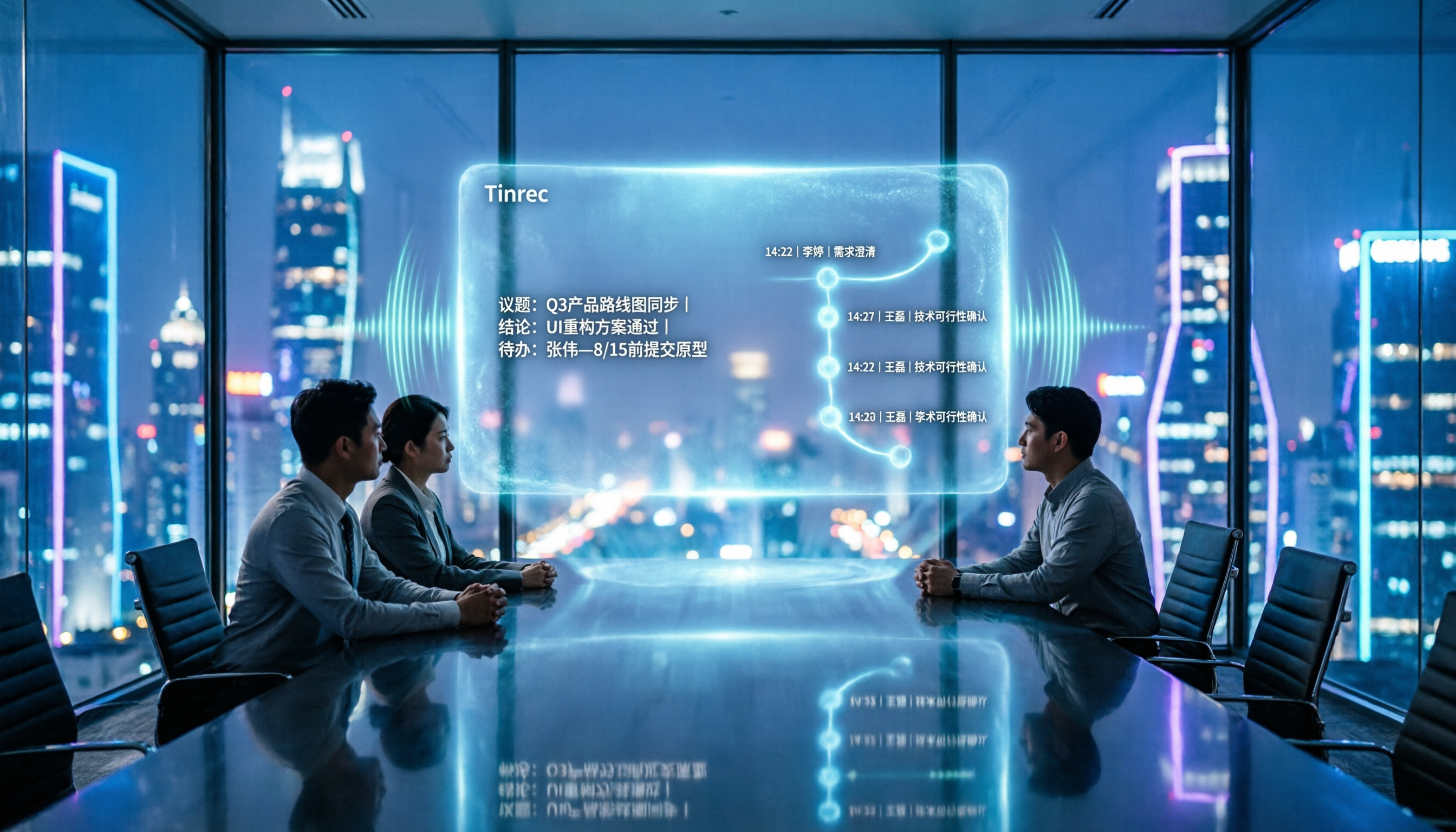
2026 Hands-On Comparison of 5 Smart Meeting Collaboration Tools: How Does Tinrec Actually Save Time in Meetings?
We tested five tools—Otter, Notta, Fireflies, Granola, and Tinrec—from three angles: bot-free recording, Chinese meeting notes, and team collaboration, to see how Tinrec saves the most time in meetings.

2026 Smart Meeting Collaboration: Why I Switched from Notta to Tinrec
Wondering which country leads in smart meeting collaboration? This hands-on review from a mid-level manager explains why choosing the right tool matters more than the country, and shares real-world insights on switching from Notta to Tinrec.

Best AI Meeting Assistant in 2026: We Tested 4 Tools—This One Handles Chinese Meetings Best
Tired of taking meeting notes? We tested 4 AI meeting transcription and collaboration tools, evaluating Chinese transcription, bot-free recording, and team collaboration, to find the best fit for office workers.

4 Smart Meeting Collaboration Platforms Tested in 2026: Which Is Best for Chinese Meetings Without a Meeting Bot?
This article compares four smart meeting collaboration platforms—Tinrec, Otter.ai, Notta, and Granola—across bot-free recording, Chinese transcription, AI summaries, team collaboration, and free tiers, helping you decide which is most worthwhile.

4 Best AI Meeting Collaboration Platforms in 2026: From Personal Notes to Team Collaboration
Spending two hours in a meeting and another two organizing the notes? This article reviews 4 AI meeting tools, covering bot-free recording, Chinese transcription, AI summaries, and team spaces, to help you choose the right intelligent meeting collaboration platform that truly saves time.
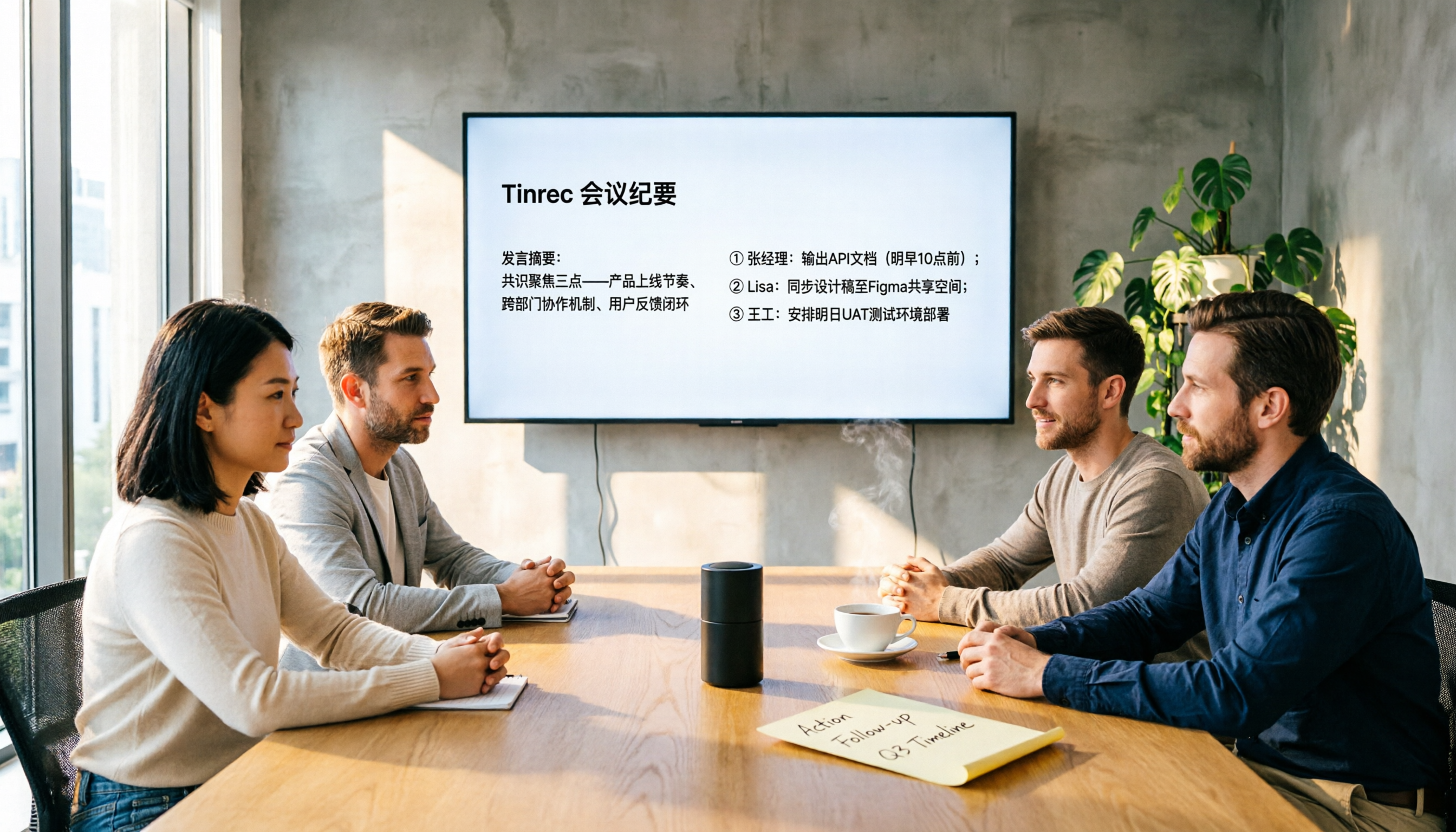
How to Choose an AI Meeting Assistant in 2026: Bot-Free Recording + AI Meeting Minutes
Spending two hours in meetings and another two hours writing up notes? This guide walks you through five key factors—recording methods, Chinese transcription, AI summaries, action items, and team collaboration—to help you understand the critical differences between AI meeting platforms like Tinrec, Otter, and Notta, so you can pick the right tool and save hours of post-meeting work.