

Turn recordings into transcripts and summaries in minutes
Upload audio or video for multilingual transcription, AI notes, and action items
2026 Notta Alternative Recommendation: Why More Users Are Switching to Tinrec?
If you're searching for an intelligent meeting collaboration platform on PTT, you'll likely see a flood of recommendations, but which one truly fits your meeting habits? As a mid-level manager attending 15 meetings a week, I've tried several tools and ultimately settled on Tinrec. This article shares my selection process and why I believe Tinrec is a worthy alternative for Notta users.
Why Are People Looking for Notta Alternatives?
On PTT's medstudent and Tainan boards, users have asked about meeting software and video conferencing equipment. Some mentioned Google Meet and Line Meetings, but many felt these were too informal or limited in features. Notta, as a common transcription tool, handles multi-device transcription, meeting notes, and translation, but users may encounter more advanced needs in practice: transcription is just the first step—post-meeting organization, follow-up, and team collaboration are where the real time goes. Some users are seeking alternatives because they need more than a transcription tool; they need a collaboration platform that turns meeting content into team assets. If you have similar needs, Tinrec is worth exploring.
Tinrec vs Notta: What's Different in Core Experience?
Chinese and Multilingual Meeting Experience: For users in Taiwan, transcription and organization of Chinese meetings are basic needs. Tinrec supports Chinese, Traditional Chinese, and handles mixed Chinese-English content, offering real-time translation and bilingual viewing. Notta also supports multiple languages, but Tinrec's Chinese meeting scenarios, especially with team-specific terms, align more closely with local usage habits. If you frequently hold Chinese meetings, Tinrec's experience will feel more intuitive.
Bot-Free Online Meeting Recording: Many people dislike having an extra bot participant in meetings. Tinrec's desktop version directly captures system audio, eliminating the need to invite additional bots to Zoom, Meet, or Teams meetings. Notta also has a desktop app, but Tinrec's bot-free recording is a core selling point and doesn't affect the participant list. If you value meeting privacy and a clean participant list, this difference is crucial.
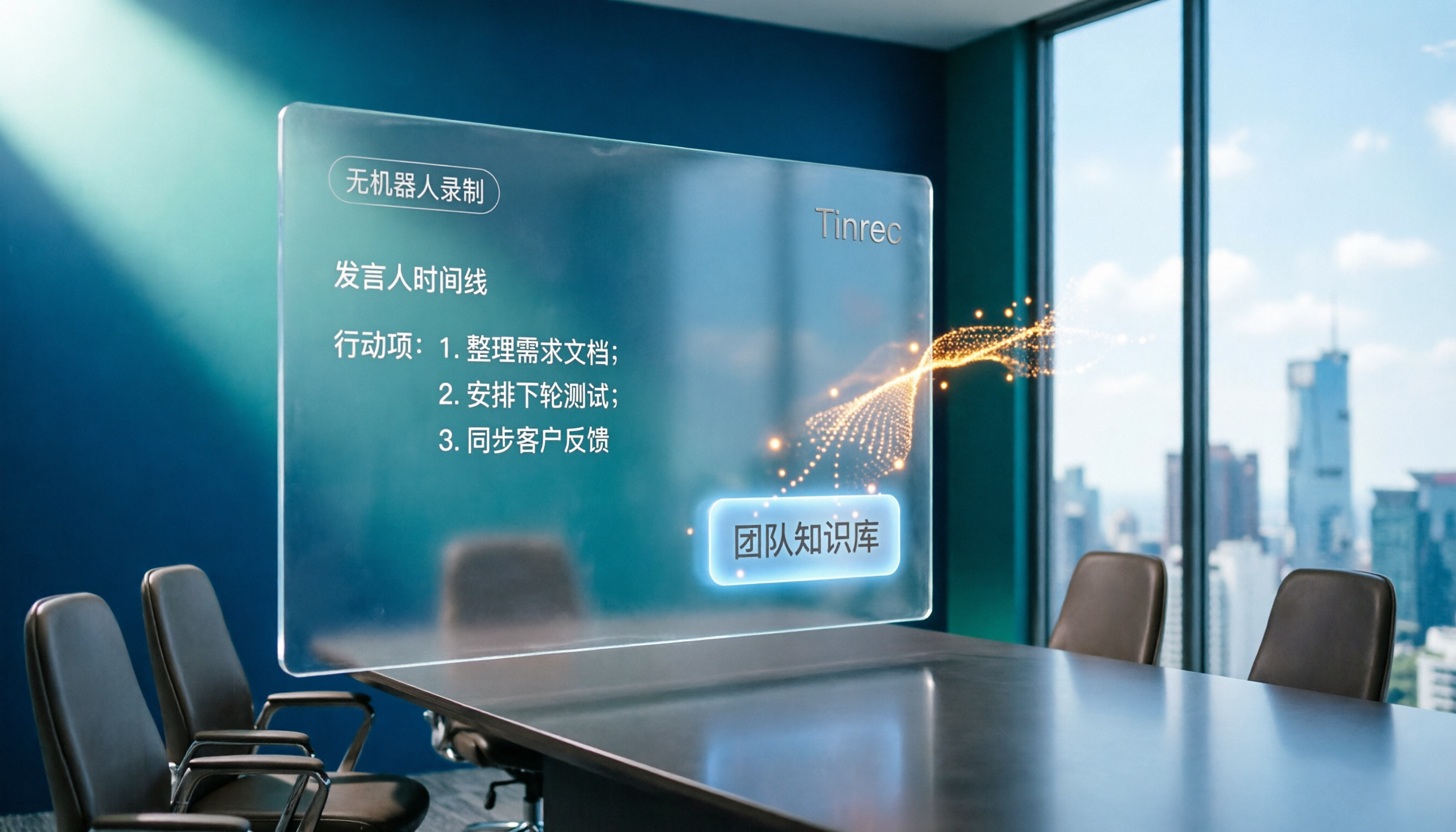
AI Post-Processing After Transcription: Transcription is just the beginning. Tinrec doesn't just provide a verbatim transcript; it generates summaries, chapters, action items, and even allows AI Q&A to directly query meeting content, with Agent post-processing to create reports, tables, and documents. Notta's summary feature is decent, but Tinrec's AI Q&A and Agent capabilities turn meeting data into deliverable work products. For managers needing quick meeting outputs, this saves significant time.
Team Spaces and Governance: If you manage a team, Tinrec's team plan offers dedicated team spaces where meeting data belongs to the team, with support for roles, seats, usage analytics, audit logs, and a recycle bin. Notta's Business plan also has team features, but Tinrec offers more granular member management and data handover, such as transferring resources when a member exits. This ensures long-term data accumulation for companies or departments.
Tinrec's Core Features at a Glance
Real-Time Voice-to-Text: Open Tinrec, and text appears as you record, with less than 1 second latency. During meetings, you can follow along with the text to ensure no key points are missed, and the transcript is ready the moment the meeting ends. I've tested it—in a typical meeting room environment, the Chinese transcription quality is sufficient to serve as a draft for meeting minutes.
Stop organizing recordings by hand
Upload audio or video and automatically get a transcript, summary, and action items
Bot-Free Online Meeting Recording: With Tinrec's desktop version, you can directly record meeting audio from your computer without adding a bot to the meeting. When I'm on Zoom or Teams meetings, I just run Tinrec, and I have the transcript and summary afterward, without colleagues finding it intrusive. This is a much better experience than tools that require a bot.
AI Summaries and Action Items: After recording a one-hour meeting, Tinrec automatically generates a summary, chapters, and action items. I typically review the summary for key points, check the action items for anything missed, and then paste them into my task management tool. This process is at least twice as fast as manual organization.
AI Q&A: This is my personal favorite. After recording, I can ask Tinrec directly—"What was the meeting's conclusion?" "Who is responsible for what?"—and it uses semantic understanding to find answers in the transcript, saving me from flipping through dozens of pages. When my boss suddenly asks about details from a previous meeting, I can answer within 30 seconds.
Team Spaces: The team plan allows centralized storage of meeting data with shared access for members. I have my team upload meeting recordings and transcripts to the same space, so new members can review historical meetings without constantly asking seniors. Admins can also monitor usage and audits, providing peace of mind.
Real-World Use Cases
Meetings: For our weekly department meetings, I use Tinrec to record and transcribe in real time, and it automatically generates summaries and action items that I send to team members for follow-up. What used to take 30 minutes to organize now takes 5 minutes.
Classes: If you attend lectures or seminars, you can record with Tinrec and use AI Q&A afterward to quickly review key points, even generating a note outline. I use this for online courses, saving a lot of time on note-taking.
Interviews: For user interviews or expert interviews, I record and transcribe with Tinrec. As soon as the interview ends, I can search for keywords to find exact quotes, which I can cite directly in reports without replaying the audio.
Personal Notes: I jot down ideas or voice memos on the fly, and Tinrec converts them to text, making them searchable and organizable—essentially a searchable voice notebook.
Key Considerations When Choosing a Voice-to-Text Tool
Bot-Free Recording Support: If you dislike having a bot in meetings, choose a tool that captures system audio. Tinrec's desktop version can directly record computer audio without affecting the participant list.
Post-Transcription Organization: Don't just look at transcription accuracy; check for summaries, action items, and Q&A capabilities. Tinrec turns transcripts into actionable data.
Team Collaboration and Governance: If your team shares meeting data, pay attention to member management, permissions, and data ownership. Tinrec's team plan offers roles, seats, audit logs, and a recycle bin for more reliable data management.
Multilingual Support: Ensure the tool supports the languages you use. Tinrec supports Chinese, Traditional Chinese, and multilingual real-time translation, making it user-friendly for Taiwanese users.
Free Tier and Upgrade Costs: Try the free version first to confirm it meets your needs before upgrading. Tinrec's free plan offers basic quotas, and team trials include 7 days with 1 seat and 300 minutes, so you can test it before deciding.
Conclusion: Is Tinrec Worth Trying?
If you're looking for an intelligent meeting collaboration platform that turns meeting content into team assets, Tinrec's bot-free recording, AI post-processing, and team spaces are worth your time. Especially for users with many Chinese meetings, Tinrec's localized experience will feel intuitive. I recommend downloading the free version and testing transcription and summary with your own recordings before deciding on an upgrade. For those of us with over a dozen meetings a week, saving time on meeting notes is well worth it.
References
Turn every recording into actionable outcomes
Get 60 free transcription minutes when you sign in. No credit card required.
Related Reading
You might also like
2026 Smart Meeting Collaboration Platform Review: Bot-Free Recording + Chinese Meeting Insights
A hands-on comparison of smart meeting collaboration platforms in 2026, evaluating Tinrec, Otter, Fireflies, and Notta from the perspectives of bot-free recording, Chinese meeting organization, and team knowledge management, with buying advice and pitfalls to avoid.

4 Smart Meeting Collaboration Tools Tested in 2026: Which One Saves You the Most Time on Post-Meeting Tasks?
In 2026, smart meeting collaboration is no longer about just recording—it's about making the content immediately usable after the meeting. This hands-on comparison evaluates tools like Tinrec, Notta, and Granola across four dimensions: meeting capture, post-meeting organization, Chinese language support, and team workspace, helping you choose the right tool and avoid common purchasing mistakes.

Tinrec vs Otter.ai 2026: 5-Dimension Comparison for Seamless Chinese Smart Meeting Collaboration
A hands-on comparison of Tinrec and Otter.ai across 5 key dimensions—meeting notes, bot-free recording, AI Q&A, team collaboration, and Chinese language experience—to help you choose and use the right smart meeting collaboration app.

2026 Hands-On Comparison of 4 Smart Meeting Collaboration Tools: Which AI Meeting Notes Really Save Your Team Time?
Spending two hours in meetings and another two on notes? This article tests four smart meeting collaboration tools—Tinrec, Otter, Notta, and Granola—focusing on bot-free recording, Chinese language support, team knowledge management, and pricing, to help you avoid common buying mistakes and find the solution that truly saves your team time.

2026 Free Sales Meeting Minutes Solutions: 3 Tools Compared at a Glance
Do sales meeting minutes always take longer than the meeting itself? This article tests three tools—Tinrec, Otter.ai, and Notta—covering free plans, Chinese accuracy, bot-free recording, and team collaboration to help you find the best sales meeting minutes solution.

4 Smart Meeting Assistants Compared in 2026: Which Works Best for Chinese Meetings and Team Collaboration?
How to use smart meeting assistants? Avoid common pitfalls first, then compare Tinrec, Otter.ai, Fireflies, and Notta on bot-free recording, Chinese transcription, team spaces, and pricing to help you make a purchasing decision.

Tinrec vs PLAUD Note 2026: Hardware-Free Recording & Team Meeting Collaboration
A student's hands-on comparison: Tinrec, a hardware-free AI meeting collaboration tool, vs PLAUD Note, a hardware recording device. From recording methods, online meetings, AI processing, team collaboration to budget, find out why most students are better off with Tinrec.

2026 Hands-On Comparison of 2 Smart Meeting Collaboration Platforms: Tinrec vs Otter.ai – Which One Should Chinese Teams Choose?
This comparison examines Tinrec vs Otter.ai across Chinese-language meetings, bot-free recording, post-meeting organization, team spaces, and platform compatibility to help you decide which better fits the meeting collaboration needs of Taiwan-based teams.

2026 Hands-On Comparison of 4 Smart Meeting Collaboration Platforms: Which One Turns Meetings into Team Assets?
In 2026, we tested and compared four smart meeting collaboration platforms—Tinrec, Otter.ai, Granola, and Notta—across aspects like bot-free recording, Chinese meeting performance, AI Q&A, and team knowledge accumulation, to help you choose the best meeting notes tool for your team.