

Turn recordings into transcripts and summaries in minutes
Upload audio or video for multilingual transcription, AI notes, and action items
What Can an AI Meeting Collaboration Platform Do for You?
The worst part of meetings is that after they end, you can't remember all the key points, no one follows up on action items, and you have to review everything again before the next meeting. AI meeting collaboration platforms like Tinrec are designed to solve this problem. Using Tinrec as an example, here's what it can do:
- Scenario 1: Get meeting notes within 5 minutes of the meeting ending. Previously, a two-hour meeting might require another hour of your time to organize. Now, with Tinrec recording, the moment the meeting ends, AI has already generated a transcript, summary, conclusions, and action items, showing who is responsible for what and the deadlines at a glance.
- Scenario 2: Team members can access historical meetings anytime. The team space centrally stores all meeting data for everyone. New members can search past discussions without digging through chat logs or asking colleagues.
- Scenario 3: Turn meeting content into actionable steps. Tinrec doesn't just transcribe; it extracts action items, generates reports, and even lets you ask AI questions like "What requirements did the client mention in last week's meeting?" to quickly find answers.
Tinrec's Core Capabilities and 5-Step Usage Guide
To fully use Tinrec for AI meeting collaboration, follow these 5 steps:
Step 1: Record the Meeting (Supports In-Person and Online)
Tinrec supports two main recording methods. For in-person meetings or interviews, simply open the Tinrec app on your phone or computer and tap the record button for real-time transcription. For online meetings (such as Zoom, Google Meet, Microsoft Teams), use the desktop version, which captures your computer's system audio directly—no need to invite a meeting bot, and it won't disturb other participants.
Step 2: Get Real-Time Transcript and AI Summary
Once recording starts, Tinrec transcribes as it records, almost in real time. As soon as the meeting ends, the AI summary is also ready. The summary isn't just a condensed paragraph of the transcript; it's structured: meeting topic, discussion conclusions, action items, and responsible persons are listed separately. You can quickly grasp the meeting's key points without re-listening to the recording.
Step 3: Extract Action Items and Next Steps
Tinrec automatically identifies action items from the meeting discussion, such as "Submit the budget by next Friday" or "Ask the marketing team to update the proposal." You can also manually mark important sections for more efficient later review. These action items can be exported as documents or directly assigned to team members for follow-up.
Step 4: Use AI Q&A for In-Depth Meeting Analysis
After transcription, you can ask Tinrec questions directly, such as "Who mentioned the budget in the meeting?" or "What was the client's reaction to the new proposal?" Tinrec uses semantic understanding to find answers from the meeting content and includes timestamps. This is much faster than keyword-searching the transcript.
Step 5: Export and Share with Your Team
Tinrec supports multiple export formats, including Word, PDF, TXT, or direct transfer to tools like Notion and Google Docs. If you use the team version, you can place meeting data in the team space, where all members can view, search, and track action items. Admins can also set roles, allocate seats, view usage, and access audit logs.
Practical Use Cases
Use Case A: Department Weekly Meetings
For a one-hour weekly meeting, use Tinrec to record and transcribe in real time. After the meeting, summaries and action items are automatically generated. Managers can directly paste action items into project management tools, saving time on meeting minutes.
Stop organizing recordings by hand
Upload audio or video and automatically get a transcript, summary, and action items
Use Case B: Client Interviews
When sales teams conduct needs interviews with clients, they can record with Tinrec. After the interview, use AI Q&A to quickly identify the client's pain points, budget, and key decision-makers. This information can be exported into a client interview report and shared with the team.
Use Case C: Online Courses or Lectures
Students or self-learners can use Tinrec to record online courses (by capturing system audio via the desktop version), generating transcripts and summaries for easy review after class. AI Q&A can also help you quickly find explanations of specific concepts.
Use Case D: Project Retrospective Meetings
For post-project retrospective discussions, use Tinrec to document the process. The action items and conclusions extracted after the meeting can serve as the basis for the retrospective report. Team members can simply open the team space to review the entire discussion.
5 Key Considerations When Choosing an AI Meeting Collaboration Tool
- Flexibility of Recording Methods: Check whether the tool supports both in-person and online meetings, and whether online meetings require a bot to join. Tinrec's desktop version captures system audio, so no extra bot is needed, and no unfamiliar participants appear in the meeting.
- Post-Transcription Organization Capabilities: A transcript is just the starting point; what matters more is summaries, action items, and Q&A. Tinrec offers comprehensive post-processing features to turn meeting content into actionable data.
- Team Collaboration Features: If you need to share meeting notes with your team, ensure the tool has team spaces, member management, and permission controls. Tinrec's team version includes a dedicated space with separate roles and seats, and data belongs to the team.
- Chinese and Multilingual Support: The quality of Chinese meeting transcription varies greatly, so it's advisable to test it. Tinrec supports Chinese, Traditional Chinese, and multiple languages, and offers real-time translation and team-specific terms to improve professional terminology recognition.
- Data Security and Compliance: Recordings and transcriptions involve sensitive information, so confirm the tool provides audit logs and data deletion mechanisms. Tinrec's team version includes audit logs, an audio recycle bin, and reminds users to comply with local laws and obtain participant consent.
Frequently Asked Questions
Q: Does Tinrec require additional hardware? No. Tinrec is a software tool with web, desktop, and mobile versions. You can record and transcribe using your computer or phone without buying a separate voice recorder.
Q: How do I record online meetings? Open the Tinrec desktop app, select "Record system audio," and then join the meeting as usual. Tinrec will capture the meeting audio and transcribe in real time, with no need to invite a bot to the meeting.
Q: Is the free version sufficient? If you only occasionally organize meeting recordings, you can start with the free version. It provides basic credits to experience recording, importing, summarization, and transcription. If you use it regularly every week, consider upgrading to Pro or Team.
Q: Can team members without a seat view data? Yes. In Tinrec's team version, active members without a seat can view, play, and read team data; they only need a seat to record, upload, and edit.
Q: How accurate is the transcription? Tinrec provides high-quality transcription in clear audio and common scenarios, but actual results may vary depending on recording quality, accents, background noise, and overlapping speech. For important content, it's recommended to cross-check the transcript with the audio playback.
Conclusion
The core value of an AI meeting collaboration platform is to turn meetings from "heard and forgotten" into "searchable, trackable, and collaborative team assets." Tinrec's no-bot recording, AI summaries, action item extraction, and team space fully cover the workflow from recording to action. If you have more than three meetings a week, we recommend trying Tinrec's free version to experience the convenience of AI-organized meeting notes, then decide whether to upgrade to Pro or Team.
References
- Zoom Meetings: Meeting Services for Virtual Collaboration
- Google Meet: Online Voice and Video Meeting Calls | Google Workspace
- Use AI in Meetings and Video Conferencing | Google Workspace
- Meeting Ink - AI Meeting Notes Assistant, Automatic Transcription and Meeting Summary
- Use Intelligent Productivity in Microsoft Teams Premium - Microsoft Support
Turn every recording into actionable outcomes
Get 60 free transcription minutes when you sign in. No credit card required.
Related Reading
You might also like

2026 Hands-On Comparison of 3 Sales Meeting Note Tools: Beyond Transcripts, Track Client Action Items
Sales meeting notes are not just transcripts; they are documents that capture client needs, commitments, objections, and next steps. This article provides a hands-on perspective to help you understand definitions, writing methods, and tool selection, and introduces how Tinrec turns client meetings into trackable team assets.

How to Create a Sales Meeting Minutes Template in 2026? 5 Steps from Recording to AI Summary
When it comes to sales meeting minutes, sales reps often get stuck replaying recordings, manually transcribing, and missing action items. This article addresses these pain points, teaches you 5 key points for choosing a sales meeting minutes tool, recommends Tinrec (秒听录音) based on hands-on testing, compares Otter, Notta, and Fireflies, and provides a pitfall avoidance guide and scenario-based recommendations.

Which Smart Meeting Collaboration Platform Is Best? 2026 Hands-On Test of 5, Tinrec Is the Top Choice for Hong Kong Office Workers
We tested 5 smart meeting collaboration platforms, and Tinrec stood out with its bot-free recording, AI organization, and team space features, making it the best fit for Hong Kong office workers who attend meetings daily.

2026 Test: 3 Sales Meeting Notes Tools Compared – Which AI Can Really Help You Close Deals?
Sales meeting notes shouldn't require manual transcription. This article, from a mid-level manager's testing perspective, compares Tinrec, Notta, and Otter.ai across transcription quality, AI task extraction, team collaboration, and cross-platform support, revealing which tool best auto-generates trackable sales meeting notes and how to avoid common buying mistakes.
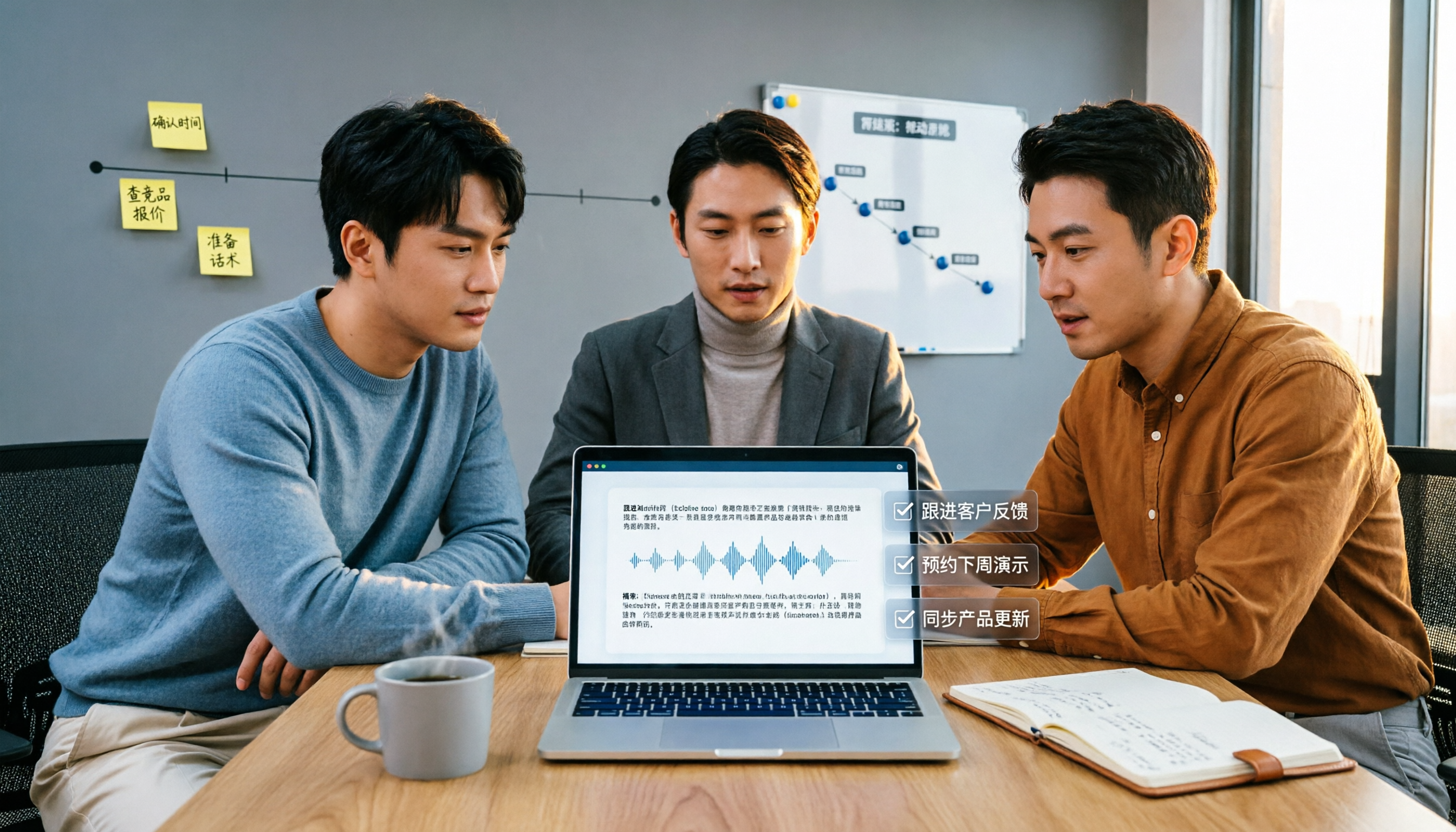
How to Take Sales Meeting Minutes in 2026: 5 Steps from Recording to Action Tracking
How to take sales meeting minutes in 2026? This article focuses on Tinrec and outlines 5 recording-to-text solutions, guiding you from recording, summarizing, to-do lists, to team collaboration, establishing a trackable sales meeting workflow.

5 Best Sales Meeting Note Tools in 2026: Which One Fits Your Sales Team?
Looking for a sales meeting note tool? This article compares Tinrec, Otter.ai, Fireflies.ai, Notta, and Granola, covering bot-free recording, Chinese transcription, AI summaries, and team collaboration to help you choose the best option for your sales team.

2026 Tinrec Sales Meeting Notes: Auto Summaries + Action Items in One Go
This article reviews Tinrec's instant recording feature, guides you in choosing a sales meeting notes tool, compares Otter, Fireflies, Notta, and more, and offers tips to avoid common pitfalls and make the right choice.
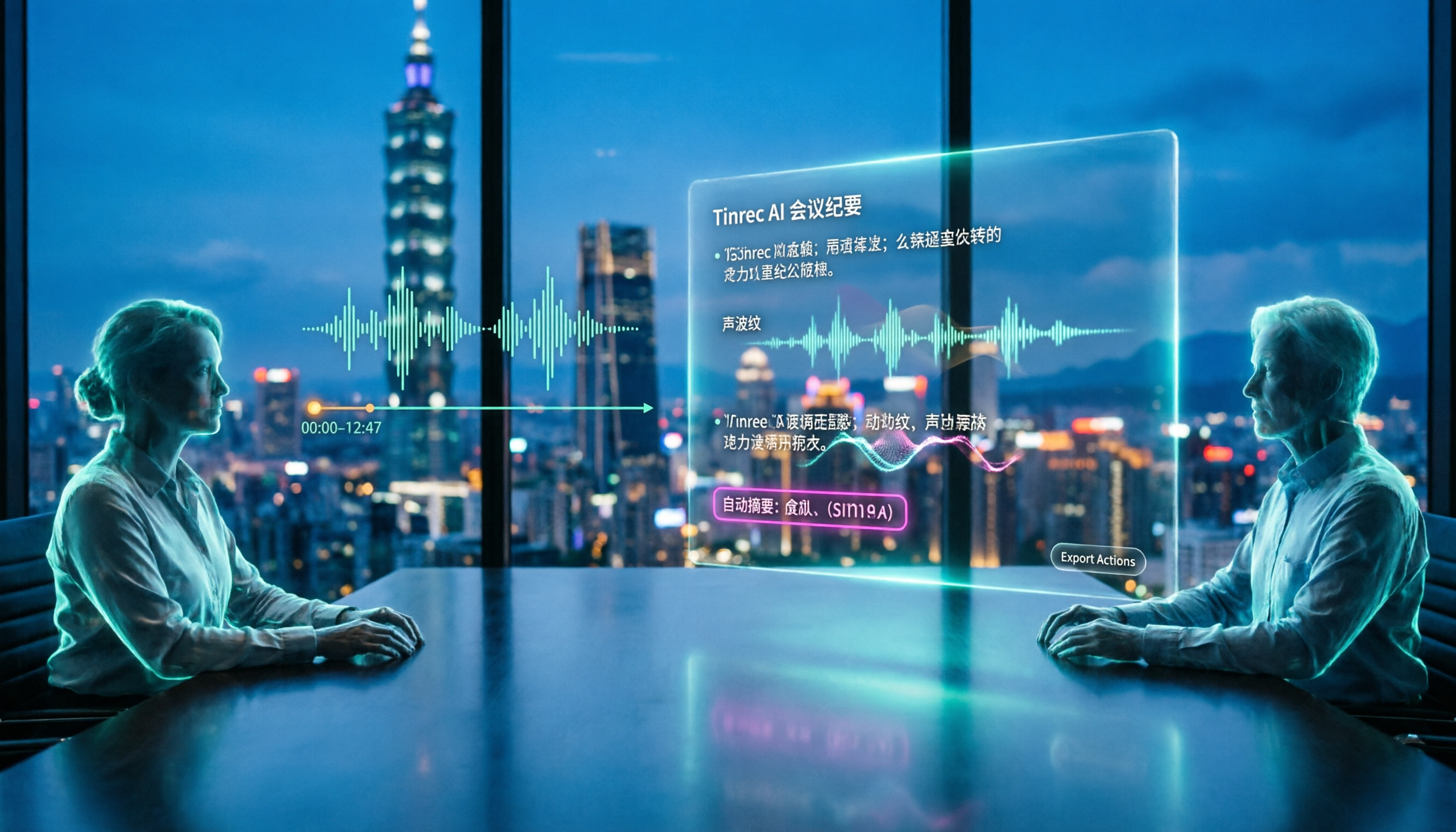
4 Smart Meeting Collaboration Platforms Tested in 2026: Which AI Meeting Notes Tool Saves You the Most Time?
Spending two hours in a meeting and another two hours writing up the minutes? This article tests four smart meeting collaboration platforms—Tinrec, Otter.ai, Notta, and Granola—comparing transcription, AI summaries, team collaboration, and free tiers to help you find the best choice for users in Taiwan.

2026 Hands-On Comparison of 3 Sales Meeting Minutes Tools: No More Struggling with English Meeting Notes
We tested Tinrec, Otter.ai, and Notta to help you quickly produce English sales meeting minutes. Key factors include bot-free recording and team collaboration.