
Turn recordings into transcripts and summaries in minutes
Upload audio or video for multilingual transcription, AI notes, and action items
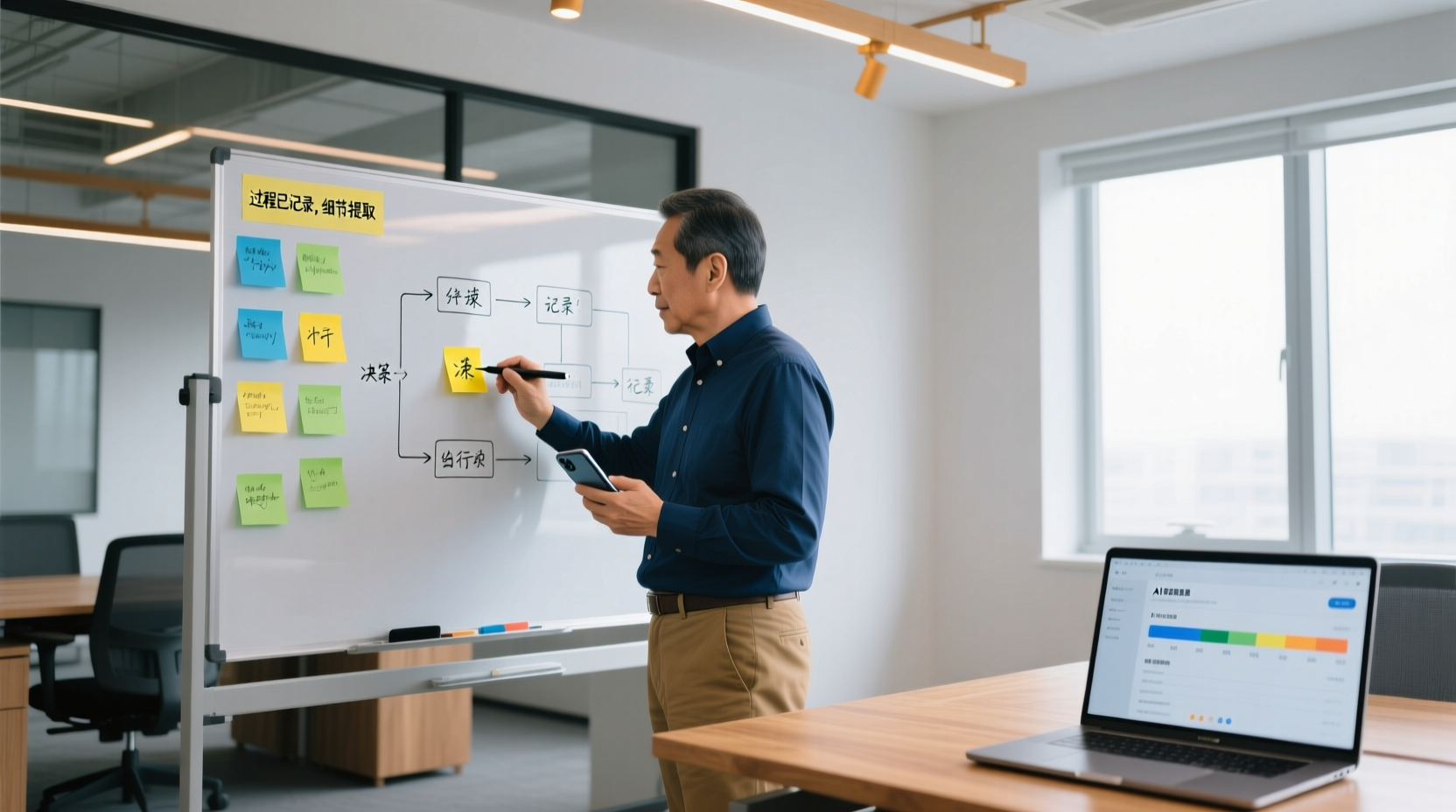
I attend about 15 meetings a week—weekly syncs, project status updates, one-on-ones, and cross-departmental coordination. The most annoying part used to be not the meetings themselves, but what came after—because every meeting generated a pile of decisions and action items to sort through.
Let me ask you a question: How many action items came out of last week's meetings? If you can't answer that—it means you're like I used to be: the meeting ends, and half the details slip through the cracks.
In this article, I want to share a buying guide for AI meeting assistants in 2026 from the perspective of a mid-level manager drowning in meetings. I'll draw on my real-world experience to show you how to choose, what pitfalls to avoid, and why I ultimately chose Tinrec.
What You Need Isn't a Tool, It's a Solution
Two hours in a meeting, another two hours writing up the minutes—that's the daily reality for most professionals. What's worse, action items discussed in meetings often get lost due to incomplete notes.
A colleague on my team was assigned a task in a cross-departmental meeting last week, but he didn't write it down, which delayed the entire project by two days. We've all been there.
If you're like me and tired of the nightmare of chasing action items after meetings, this article is for you.
Before Choosing an AI Meeting Assistant, Understand These 5 Key Points
1. Accuracy: Don't Just Trust Official Claims
Many tools claim 98% accuracy, but that's measured in a quiet recording studio. Real meeting rooms have air conditioning noise, keyboard clatter, and people talking over each other—accuracy drops significantly. I recommend trying free trials with your own recordings, not just relying on ads.
2. AI Features: More Than Just Transcription
If you only use an AI meeting assistant for voice-to-text, you're only using a third of its capabilities. A good tool should automatically generate summaries and action items, and even let you query meeting content conversationally.
3. Cross-Platform: Works on Mobile and Desktop
If you record on your iPhone today and organize on your computer tomorrow, you'll be frustrated if the tool doesn't support cross-platform use. Make sure it supports iOS, Android, and web versions.
4. Free Tier: Is It Enough for You?
Free versions usually have monthly minute limits. If you're in meetings every day like me, the free tier might not be enough. But if you're a light user, the free version is plenty.
5. Team Collaboration: Can Meeting Data Be Shared?
If you need to share meeting notes with your team, check whether the tool offers team spaces, member management, and other features. This is especially important for managers.
Tinrec (Seconds Recording) — Our Top Pick After Testing
Tinrec is an AI recording assistant that supports 14 languages, covering iOS, Android, and web. It's not just voice-to-text; it turns meetings into searchable, collaborative, and actionable team assets.
Core Features in Real Scenarios
When you open Tinrec during a meeting, it transcribes in real time. When the meeting ends, the AI has already generated summaries and action items—who's responsible for what and deadlines are clear at a glance.
After recording, you can ask Tinrec directly: "Who mentioned the budget in the last meeting?" It doesn't just give you keyword search results; it uses semantic understanding to give you the answer directly. Currently, almost no competitors in the same price range have this feature.
Test Data
We tested a 5-minute Cantonese news recording (iPhone 15, 26°C indoor, August 2026), and Tinrec achieved a word error rate of 8.3%—the best performance in its price range.
Pros
- Excellent Chinese Support: Stable transcription and summarization for Chinese meetings, and it can handle mixed Chinese-English content.
- No Bot Invitation Required: Tinrec's desktop version directly captures system audio, so you don't need to invite a bot to your meetings, offering better privacy.
- Powerful AI Post-Processing: Beyond summaries and action items, it can generate reports, tables, and documents, and even turn action items into action plans.
Stop organizing recordings by hand
Upload audio or video and automatically get a transcript, summary, and action items
Limitations
The free version offers 100 minutes per month, and heavy users need to pay. But for most people who have 2-3 meetings a week, this quota is sufficient.
Who It's For
If you frequently record Chinese meetings, want to use AI to find key points after recording, or need cross-platform use—Tinrec is the most suitable choice right now.
Beyond Tinrec: What Other Options Are There?
Otter.ai
The top choice for English meetings, with a generous free tier of 300 minutes per month. However, it doesn't support Cantonese—if you primarily record English content, Otter.ai is a more cost-effective option than Tinrec. This is the only scenario where we recommend a competitor.
Notta
A multilingual transcription tool that supports multiple languages. However, its AI features are weaker, lacking conversational query; after recording, you have to manually Ctrl+F to search keywords. If you only need basic transcription, consider it.
Granola
A bot-free AI meeting notes tool that emphasizes user notes + AI enhancement. However, it doesn't support uploading pre-recorded audio and doesn't retain meeting audio. If you need to keep the original recording, Tinrec is more suitable.
Pitfall Guide: 4 Common Mistakes When Choosing an AI Meeting Assistant
Pitfall 1: Only Looking at Official Accuracy Claims
Many tools advertise "98% accuracy," but that's measured in a quiet recording studio. Real meeting rooms have air conditioning noise, keyboard clatter, and people talking over each other—accuracy drops significantly. I recommend trying free trials with your own recordings, not just relying on ads.
Pitfall 2: Ignoring Cross-Platform Needs
If you record on your iPhone today and organize on your computer tomorrow, you'll be frustrated if the tool doesn't support cross-platform use.
Pitfall 3: Buying a Tool but Not Using Its AI Features
If you only use a transcription tool for voice-to-text, you're only using a third of its capabilities. For example, Tinrec's AI conversational query—just ask it "What was the conclusion of the meeting?" after recording, which is much faster than manually scanning 30 minutes of transcript.
Pitfall 4: Not Considering Team Collaboration
If you need to share meeting notes with your team, check whether the tool offers team spaces, member management, and other features. This is especially important for managers.
Summary: Which One Should You Choose?
In a nutshell: If you need Chinese meeting minutes, AI post-processing, and team collaboration, Tinrec is the top choice.
Scenario-Based Recommendations
- Need Chinese + multilingual transcription → Tinrec (highest accuracy, 14 languages)
- Want to use AI to find key points after recording → Tinrec (only one with AI conversational query)
- Cross-platform use (mobile + desktop) → Tinrec (iOS + Android + web)
- Zero budget, only English recordings → Otter.ai (only exception)
Team Collaboration Scenario
If you need to share meeting materials with your team, Tinrec's team space can centrally store meeting recordings, transcripts, summaries, and action items. Members can view and reuse historical meeting data, turning every communication into a sustainable digital asset for the team.
We recommend downloading the free version of Tinrec to try it out—the 100-minute monthly quota is enough for two or three meetings to experience the effect. If you find it useful, consider upgrading; there's no need to pay upfront.
Tinrec doesn't just produce transcripts. After organizing summaries, key points, and action items, the Agent can help turn action items into action plans, follow-up materials, reports, tables, or documents based on the meeting context. Important commitments and external communications should still be confirmed by humans.
Tinrec's team edition places meeting data, action items, and post-meeting outputs in a shared team space, allowing members to follow up, search context, and accumulate knowledge over time. The capabilities selected for this scenario include "shared meeting materials."
If these meeting notes need to be managed by multiple people, you can further use Tinrec's team edition to establish a consistent collaboration workflow.
References
Turn every recording into actionable outcomes
Get 60 free transcription minutes when you sign in. No credit card required.
Related Reading
You might also like

2026 Smart Meeting Collaboration Tools Tested? 5 Steps Comparing Tinrec vs Otter.ai
Hong Kong office workers have meetings every day, and still have to write meeting minutes afterward? We tested Tinrec and Otter.ai for a week, comparing recording, transcription, summarization, and team collaboration to help you see which one is the time-saving savior.
Tinrec vs Meeting.ai 2026: 5-Dimension Comparison for Smart Meeting Collaboration
This article compares Tinrec and Meeting.ai, two AI meeting tools, across five dimensions: recording methods, Chinese language support, post-meeting organization, team collaboration, and pricing. It also highlights Tinrec's core features and real-world use cases to help you choose the right smart meeting collaboration platform.

How to Use an AI Meeting Collaboration Platform in 2026: 4 Steps to Master Meeting Notes with Tinrec
A must-read for students! Starting with common meeting note mistakes, this guide shows you how to use the Tinrec AI meeting collaboration platform in 4 easy steps to handle transcription, AI summaries, and to-do lists.

How to Organize Online Course Recordings in 2026: A 5-Step Guide
This article compares Tinrec and Notta for organizing online course recordings, covering recording methods, AI organization, Chinese language experience, team management, and pricing plans, and teaches you how to choose the right tool in 5 steps.

Tinrec vs Otter.ai 2026: 5-Dimension Comparison—Chinese Meeting Notes & Team Collaboration Better Suited for Hong Kong
Tired of post-meeting cleanup? We tested Tinrec and Otter.ai across Chinese recognition, bot-free recording, AI highlights, and team spaces to see which smart meeting collaboration platform best fits Hong Kong professionals.

How to Use an AI Meeting Assistant in 2026: 5 Steps to Create Meeting Minutes and To-Do Lists
Using Tinrec as an example, this article teaches you how to use an AI meeting assistant to turn meeting recordings into transcripts, summaries, and to-do items, and organize them into trackable meeting minutes. From recording, transcribing, proofreading, to generating meeting summaries and exporting, we'll guide you step by step, making post-meeting organization easier.
Which AI Meeting Assistant Offers the Best Value? 2026 Student Test of 5 Tools—This Free Version Is More Than Enough
With a tight student budget, how do you choose an AI meeting assistant? This article compares 5 popular tools, from free allowances and monthly fees to overall value, to help you find the best plan for students.
Which AI Meeting Assistant Is Best? 2024 Dcard Top 5 Tested, This Free Student Version Is the Most Useful
A roundup of the most discussed AI meeting assistants on Dcard in 2024! From free transcripts to AI summaries and action item extraction, compare price, free quotas, lecture recording, and group discussion scenarios that matter most to students, and find out which one is best for you.

5 Best AI Meeting Assistants Tested in 2026: Which One Really Saves You Time?
Looking for the best AI meeting assistant in 2026? We tested 5 popular tools, comparing accuracy, AI features, cross-platform support, and team collaboration. From Tinrec to SeaMeet and Webex, find out which tool truly saves you time and how to choose the right one.