

Turn recordings into transcripts and summaries in minutes
Upload audio or video for multilingual transcription, AI notes, and action items
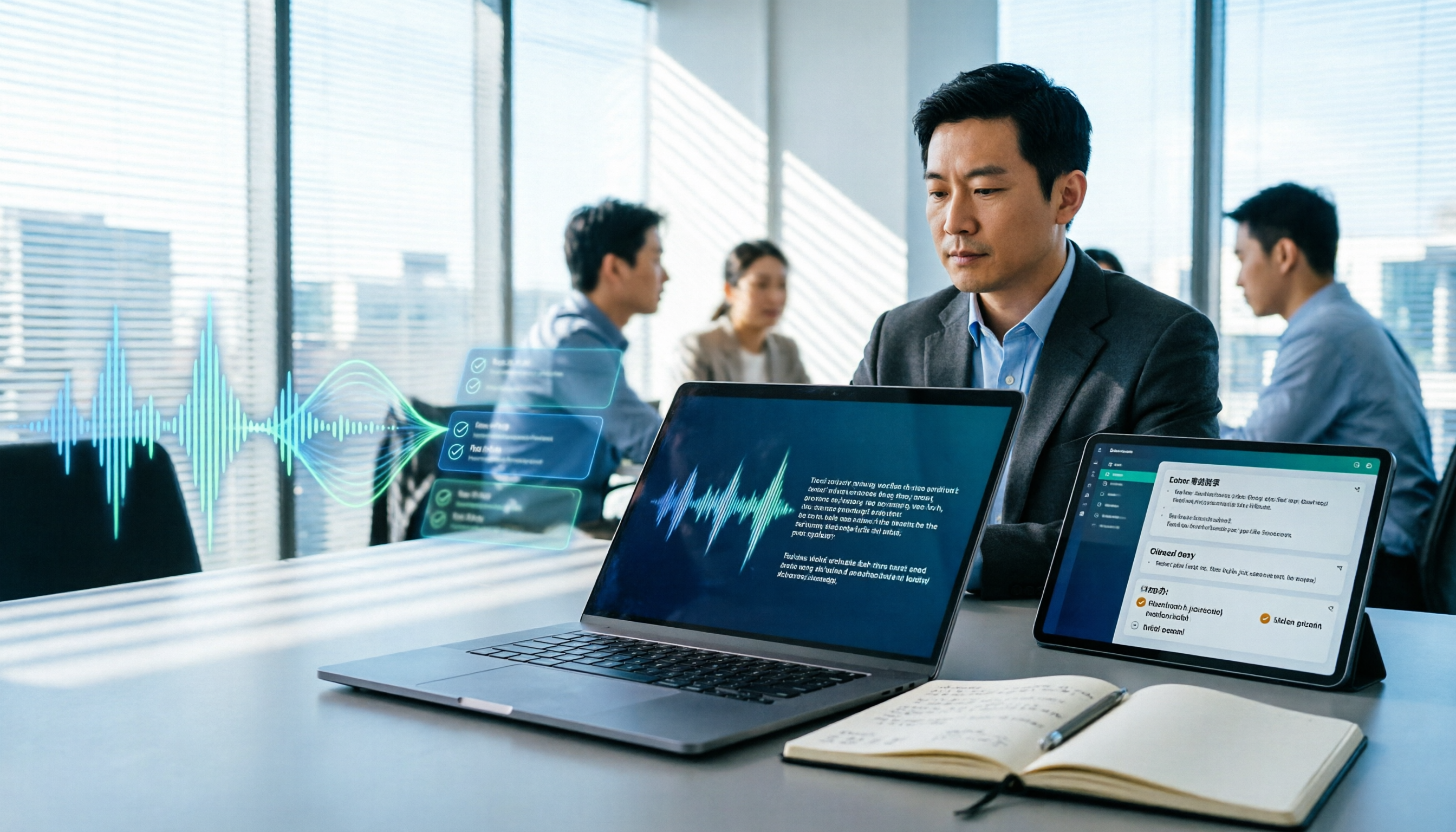
At 10 AM on Monday, you open your laptop to prepare for a meeting, only to realize you'll have to take notes yourself again. You pick up your phone to record, but the thought of converting the audio into a transcript and organizing the key points makes you feel exhausted. Not to mention chasing down everyone's action items after the meeting.
Now there are AI meeting tools that can automate these tasks, but the market is mainly divided into two camps: pure software solutions like Tinrec, and AI recording hardware like PLAUD Note. Which one is right for you? This article provides a hands-on comparison.
Tinrec vs PLAUD Note: Quick Overview
Tinrec is an AI meeting notes and collaboration tool that doesn't require additional hardware—it works on computers and phones. Its highlights include "recording online meetings without bots" and "automatically organizing meetings into searchable, collaborative team knowledge." PLAUD Note, on the other hand, is an AI recording device that requires purchasing hardware and using a companion app. Its strengths are portable recording and phone call recording.
Here's a quick look at the basics:
| Item | Tinrec | PLAUD Note |
|---|---|---|
| Type | Pure software (web, desktop, mobile) | Hardware recorder + App |
| Price | Free tier available; paid plans from weekly, monthly, to yearly | Device costs approx. USD 159–189, plus subscription required |
| Primary Use | Online meetings, in-person meetings, interviews, historical audio files | In-person meetings, phone call recording, portable notes |
| Team Collaboration | Supports team spaces, member management, usage analytics | Primarily for individual use |
Next, I'll compare across 5 key dimensions, and I'll tell you who wins in each.
Dimension 1: Ease of Use: Install an App vs. Buy Hardware First
PLAUD Note requires you to spend money on a recorder first. On the US official site, the NotePin is USD 159 and the Note Pro is USD 189. And that's just the device cost; you'll also need a subscription to use transcription and AI features, meaning a double cost of "hardware + subscription." For those on a budget or just wanting to try it out, the barrier is high.
Tinrec is pure software—you just download the app or open the web page to start recording. It offers a free version with basic credits, and if you have a sudden need for many meetings, you can buy a weekly plan. For long-term use, consider monthly or yearly plans. You don't have to spend hundreds upfront, so the trial cost is much lower.
→ This dimension: Tinrec clearly wins.
Dimension 2: Online Meeting Recording: System Audio Directly vs. Hardware Limitations
PLAUD Note is primarily designed for recording in-person meetings and phone calls. It captures audio via Bluetooth or by placing the recorder near the sound source. To record online meetings on Zoom, Google Meet, or Teams, you have to place the recorder near your computer's speakers or use workarounds, which is cumbersome and prone to picking up background noise.
Tinrec's desktop version can directly capture your computer's system audio, so you don't need to add a meeting bot or set up extra equipment. Just open Tinrec on your computer, hit record, and it captures the meeting audio and transcribes it in real time. This is a huge time-saver for office workers with daily online meetings.
→ This dimension: Tinrec clearly wins.
Dimension 3: AI Post-Processing: Beyond Transcripts, Ask Questions and Generate Reports
PLAUD Note's app offers AI summaries and action suggestions, and you can use "Ask AI" to ask questions like "Who decided the next project timeline?" However, its core experience revolves around the recorder itself, and editing, exporting, and collaboration features are relatively basic.
Tinrec automatically generates transcripts, summaries, chapters, and action items, and also supports "AI Q&A," allowing you to ask follow-up questions about a single meeting or across multiple meetings. Even better, it can turn meeting content into reports, tables, and documents, and export them to tools like Notion, Google Docs, and OneNote. In other words, Tinrec doesn't just record—it transforms meeting data into actionable work products.
→ This dimension: Tinrec wins.
Dimension 4: Team Collaboration: Personal Hardware vs. Team Knowledge Base
PLAUD Note is a personal device; one recorder is typically used by one person, and recordings are stored in a personal account. Sharing with a team requires manual export or file sharing, which is fragmented.
Stop organizing recordings by hand
Upload audio or video and automatically get a transcript, summary, and action items
Tinrec's team plan provides a dedicated team space where meeting data is stored centrally. New members can view historical meetings, and admins can allocate seats, view usage analytics, and audit logs. When a member leaves, data doesn't disappear—it can be transferred to other active members. For departments or project teams with regular meetings, this truly turns meetings into team assets.
→ This dimension: Tinrec clearly wins.
Dimension 5: Chinese Language Experience and Pricing Flexibility: More Consideration for US Users
PLAUD Note supports multiple languages, but its strength is hardware recording, and its Chinese transcription tuning and localization are average. Its subscription plans are mainly annual (Pro is USD 99.99/year, Unlimited is USD 239.99/year), plus hardware costs, making the total expense high.
Tinrec emphasizes Chinese meeting experience, supporting Traditional Chinese and mixed Chinese-English content, and allows managing team-specific terms to improve recognition of professional jargon. Pricing-wise, the free version lets you try it out, weekly plans are available for temporary needs, and long-term users can choose Pro monthly or yearly plans. You can pick a plan based on your usage frequency without being locked in.
→ This dimension: Tinrec wins.
What Are the Unique Advantages of Each?
Tinrec's Unique Advantages
- No Additional Hardware Needed: Just install the app or open the web page; you can record on your computer or phone, saving money on equipment.
- Record Online Meetings Without Bots: The desktop version captures system audio directly, preserving meeting privacy and avoiding the need to invite bots.
- Complete Post-Meeting Workflow: From transcripts, summaries, and action items to AI Q&A and report generation, all in one flow.
- True Team Collaboration: Team spaces, member management, and usage analytics turn meeting data into a searchable knowledge base.
PLAUD Note's Unique Advantages
- Portable Recording Convenience: Small size and long battery life make it ideal for those frequently meeting clients on the go or attending in-person meetings.
- Phone Call Recording Support: If you often need to record phone discussions, the convenience of a hardware recorder is something software can't fully replace.
Summary: Which Should You Choose?
- If you have online meetings daily and don't want to manually organize notes → Tinrec (bot-free recording + automatic summaries)
- If you need to share meeting outcomes with your team or build a departmental meeting knowledge base → Tinrec (team spaces and collaboration features)
- If you're on a budget and want to try AI meeting notes first → Tinrec (free tier to get started)
- If you frequently attend in-person meetings on the go and don't mind carrying an extra recorder → PLAUD Note's portability is practical
- If your primary need is recording phone calls and you can accept hardware plus subscription costs → PLAUD Note has an advantage in call recording
In a nutshell: For most US office workers and teams, Tinrec is the more complete choice, especially for those with many online meetings and a need for post-meeting organization and team collaboration. I recommend downloading Tinrec's free version and testing it with your own meeting recordings.
FAQ
Q1: Is Tinrec's free version sufficient? A: The free version provides basic credits for recording, uploading audio, and generating summaries and transcripts. If you only need to organize meeting notes occasionally, the free version is a good start. But if you have regular weekly meetings, consider a paid plan.
Q2: Can PLAUD Note record online meetings? A: Yes, but you need to place the recorder near your computer's speakers, and the quality can be affected by the environment. In contrast, Tinrec captures system audio directly, offering better sound quality and convenience.
Q3: How does Tinrec's AI Q&A work? A: After recording a meeting, you can ask questions about the transcript or summary in Tinrec, such as "What are the action items from this meeting?" The AI answers based on the meeting content. The team version can even analyze across multiple meetings.
Q4: Do I need to buy Tinrec hardware? A: No. Tinrec is pure software; just install the app on your phone or computer, and you're ready to use it without any additional recording equipment.
Q5: How do I manage members when using Tinrec for a team? A: The team plan supports creating team spaces, inviting members, and assigning seats and roles. Admins can view usage analytics and audit logs, and when a member leaves, data can be transferred to avoid losing meeting records.
Q6: Should I inform participants before recording? A: Yes, it's recommended. Before using any recording tool, you should comply with local laws and obtain consent from participants to avoid disputes.
References
- AI Meeting Notes - Google Play App
- AI Meeting Notes Software Recommendations: 5 Apps Tested, Auto-Transcription Makes Meetings Easy!
- Meeting Notes AI App - App Store
- Notta - Accurate Transcripts, Voice to Text, Meeting Recording, AI Summary Notes App - App Store
- Meeting Ink - Transcript AI Meeting Summary Voice to Text - Google Play App
Turn every recording into actionable outcomes
Get 60 free transcription minutes when you sign in. No credit card required.
Related Reading
You might also like
How to Use AI for Meeting Minutes in 2026: 5 Steps from Recording to Team Data
For mid-level managers juggling a dozen meetings a week and still stuck writing up minutes afterward, this guide breaks down how to use AI for meeting minutes in 5 steps: recording, transcription, summary and chapters, action item extraction, and team knowledge retention. It also reviews 7 AI meeting minutes tools, their positioning, pricing, and best-fit scenarios, so you can pick the right one for your team.

What Are Meeting Minutes in 2026? 4 Steps from Recording to Complete Minutes
What do meeting minutes mean? How do they differ from meeting records? This article first uses 4 steps to explain how to turn a meeting recording into trackable meeting minutes, then compares Tinrec and Otter.ai across 5 dimensions—Chinese-language meetings, recording methods, post-meeting outputs, team governance, and pricing—to help you decide which approach to use.

2026 Comparison of 6 Meeting Minutes Tools: Which Format Produces Actionable Records Fastest?
How to write meeting minutes that won't get rejected? This article breaks down the 5 core fields and writing principles of meeting minutes, and compares the format support, free quotas, and pricing of 6 tools—Tinrec, Otter.ai, Fireflies.ai, Notta, Granola, and TurboScribe—to help you choose the best record-keeping solution for your team.

Best AI Meeting Collaboration Platforms 2026: 6 Tools with Auto Summaries & Team Knowledge Capture
From bot-free recording and post-meeting summaries to team knowledge retention, here are 6 AI meeting collaboration solutions, with Tinrec as the primary example, to help you quickly choose the right tool for your needs.

How to Use Live Transcription in 2026: 5 Steps from Recording to AI Meeting Notes
In 2026, live transcription tools compete not just on transcription speed but on post-meeting organization and team collaboration. This article breaks down the live transcription workflow in 5 steps, tests Tinrec's bot-free recording, AI summaries, action item extraction, and AI Q&A, and compares Otter.ai, Notta, and Granola for different use cases—helping Hong Kong office workers cut overtime and leave work earlier.

2026 Comparison of 4 Smart Meeting Collaboration Platforms: From Free to Team Plans
A tutorial-style side-by-side comparison of Tinrec, Otter.ai, Notta, and Granola—covering meeting recording, transcripts, summaries, action items, AI Q&A, team seats, and pricing—to help you decide which fits your meeting workflow.

How to Choose Smart Meeting Collaboration Tools in 2026: A Complete 5-Step Evaluation Guide
Use 5 steps to build evaluation criteria for smart meeting collaboration: from meeting scenarios, capture methods, post-meeting workflows, team governance to total cost of ownership. Using Tinrec as an example, learn how to validate with a real meeting and choose the right tool within budget.

2026 Smart Meeting Collaboration Tool Comparison: From Recording to Action Items, Which One Really Handles Post-Meeting Work?
Starting from the common misconception of 'putting the entire budget into the meeting moment,' this article breaks down how to choose a smart meeting collaboration toolbox: how meetings are captured, what can be done after transcription, where data ultimately resides, and how team roles and seats are allocated. It compares Tinrec, built-in platform transcription, Otter.ai, and PLAUD recording hardware, with a pitfall guide and scenario-based selection advice.

2026 Review of 5 Smart Meeting Collaboration Platforms: Tinrec vs Otter.ai – Which Should Chinese-Speaking Teams Choose?
Starting from the three most common pitfalls when choosing a meeting tool, this hands-on comparison examines Tinrec and Otter.ai across six dimensions: meeting capture, Chinese transcription, post-meeting output, audio retention, team governance, and pricing. It helps you decide how to choose a smart meeting collaboration platform and whether the free version is sufficient.