

Turn recordings into transcripts and summaries in minutes
Upload audio or video for multilingual transcription, AI notes, and action items
Many people think that turning meeting recordings into transcripts is as simple as feeding the audio file to AI. But in reality, after getting a messy transcript, you still have to manually label speakers, remove duplicate content, and organize it into meeting notes you can share with colleagues—this often takes more time than expected.
So this time, I tested 3 meeting transcription tools that people frequently ask about, focusing on which ones can continue to help you organize the content into actionable data after producing the transcript. In the end, I found that Tinrec is particularly smooth for Chinese meetings and follow-up organization.
Why Are People Looking for Alternatives to Common Meeting Transcription Tools?
Tools like Notta and Otter have accumulated a significant user base, and their basic transcription features do solve some needs. However, in practice, many users encounter several common frustrations:
- The transcript is not automatically organized into a structured summary, so you still have to open another document to organize it yourself.
- Online meetings require inviting a bot to join, and some companies or clients are uncomfortable with an extra participant in the meeting.
- When mixing Chinese and English, or when multiple people speak at once, the transcript tends to get garbled, making corrections labor-intensive.
If you have similar frustrations, Tinrec is worth checking out. It doesn't just turn audio into text; it directly organizes meeting content into workable data.
Tinrec vs. Common Meeting Transcription Tools: What's Different in Core Experience?
Online Meeting Recording Method
This aspect matters most to those who frequently have online meetings. Notta and Otter mostly rely on bots joining the meeting to record, but Tinrec's desktop version directly captures the computer's system audio, so you don't need to add a bot. In other words, you don't have to add an extra member in Zoom, Meet, or Teams, nor do you need to explain it to colleagues in advance. Open the Tinrec desktop app, and meeting audio is transcribed in real time.
Depth of Post-Transcription Organization
Many tools stop after producing the transcript, but Tinrec automatically generates summaries, chapters, highlights, and to-dos. You don't have to dig through thousands of words to find conclusions and action items. For those who must produce meeting notes every time, the time saved is significant.
Chinese and Mixed Chinese-English Content
Tinrec handles Chinese meetings and mixed Chinese-English content quite reliably. While I won't promise a fixed accuracy rate, in actual tests, as long as the audio is clear and there isn't too much overlapping speech, Tinrec's Chinese transcripts are highly readable and preserve proper nouns. If you often deal with Chinese meetings, interviews, or course recordings, this experience will be noticeable.
Data Continuity and Team Collaboration
After recording a meeting individually, files often end up scattered across your computer or cloud drive, making them hard to find later. Tinrec's team space centralizes meeting data, so even if a colleague leaves, historical meeting notes and to-dos don't disappear. This capability is more important than simple transcription for small teams or departments.
Overview of Tinrec's Core Features
Bot-Free Online Meeting Recording
This feature is really needed by many. Install the Tinrec desktop app, open it before the meeting, and it captures system audio directly without affecting the meeting member list. It transcribes as it records, so by the end of the meeting, the transcript is ready.
Audio and Video Upload Transcription
Already have a recording or video? Just upload it, and Tinrec quickly transcribes it, adding punctuation and paragraphs. It works for historical meetings and interview recordings.
AI Summaries, Chapters, and To-Do Extraction
After transcription, it doesn't just give you the transcript; it also automatically organizes summaries, chapters, and action items. You can review the highlights directly or assign to-dos to responsible colleagues.
Stop organizing recordings by hand
Upload audio or video and automatically get a transcript, summary, and action items
AI Chat Query
After recording a one-hour meeting, just ask Tinrec: "What was the meeting conclusion?" "Who is responsible for what?" It answers based on the content, so you don't have to manually flip through thirty pages of transcript. This is my personal most-used feature.
Multi-Format Export and Further Processing
It supports exporting to Word, TXT, SRT, and other formats, and can also convert meeting content into reports, tables, or documents. You can then take it to Notion, Google Docs, and other tools for further editing.
Practical Use Cases
Weekly Department Meetings
Record online meetings with the Tinrec desktop app, and transcripts and summaries are generated automatically. After the meeting, paste the to-dos into the group chat, so no one has to ask "What was the conclusion last time?"
Client Interviews or Requirement Discussions
For in-person meetings, record with your phone, upload to Tinrec afterward, and the AI summary helps you extract client needs, commitments, and next steps. No need to re-listen to the recording and retype the transcript.
Course or Lecture Notes
Students or lifelong learners can upload course recordings to Tinrec, getting not only the transcript but also chapters and highlights, making review much faster.
Personal Idea Capture
Record a quick thought, Tinrec transcribes it, and later you can search it with AI Q&A—faster than flipping through a notebook.
Points to Consider When Choosing a Speech-to-Text Tool
1. Does It Force the Use of a Meeting Bot?
If your company or clients don't like having a bot in meetings, choosing a bot-free solution like Tinrec is safer.
2. Does It Automatically Organize After Transcription?
A transcript alone isn't enough; confirm whether the tool can automatically generate summaries and to-dos. Otherwise, you've just outsourced the typing, but the organizing is still your job.
3. Capability with Chinese Content
If you primarily handle Chinese meetings, be sure to test with your own recordings. Don't just rely on official accuracy claims; a real test is the most reliable.
4. Data Continuity for Individuals and Teams
If meeting notes need to be shared with colleagues or handed off across people, choose a tool with team space so data doesn't disappear when someone leaves.
5. Export Formats Match Your Workflow
Check whether you can export to formats you commonly use, or integrate with Notion, Google Docs, etc., to avoid transfer hassles later.
Conclusion: Is Tinrec Worth Trying?
If you're looking for a tool that handles Chinese meetings, doesn't require an extra bot, and can organize summaries and to-dos after transcription, Tinrec is currently one of the few options that meets all these needs at once. Especially for those who frequently need to consolidate meeting action items, using Tinrec is much more efficient than just having a transcript.
I recommend downloading the free version of Tinrec and running it with your own meeting recordings. The free version lets you experience the core recording, transcription, summary, and AI Q&A features, so you can decide whether to upgrade after actually using it.
Frequently Asked Questions
What's the difference between Tinrec and regular recording software?
Regular recording software only records audio. Tinrec also transcribes the audio into text and organizes it into summaries, chapters, highlights, and to-dos, and allows searching and asking questions.
Does Tinrec require inviting a bot to join meetings?
No. The Tinrec desktop app directly captures the computer's system audio, so you don't need to invite any extra members, and the meeting member list remains unchanged.
Is the free version sufficient?
The free version provides basic recording, transcription, summary, and Q&A features, suitable for testing. If you have meetings every week, consider the Pro or Team plans.
Does the transcript label speakers in multi-person meetings?
Tinrec tries to distinguish different speakers during transcription, but manual adjustments may still be needed when there is overlapping speech. It's recommended to avoid simultaneous talking in the recording environment as much as possible.
What's the difference between Team and Personal plans?
Personal plans keep data under your individual account, while Team plans have a dedicated space where meeting data belongs to the team, with additional features like member management, seat allocation, usage analytics, and audit logs. Suitable for departments or project groups.
How accurate is the transcription?
Actual results are affected by recording quality, accents, noise, and overlapping speech. It's recommended to test with your own recordings and verify important content against the original audio.
References
- How to Use AI for Meeting Minutes? How to Organize Meeting Transcripts? | AI Speech-to-Text Tutorial | 104 Career Center
- Get Meeting Notes Done! How to Use AI Speech-to-Text? Gemini Notebook, Gemini, EchoScript Operation Guide | 104 Career Center
- Meeting Ink - 2026 AI Meeting Notes Tool Test | 7 Speech-to-Text and Summary Speed Comparison | Meeting Ink - AI Meeting Notes Assistant, Automatic Transcription, Summarization
- [AI Voice Notes] Top 5 Recommended AI Text Conversion Tools! Generate Transcripts and Meeting Notes Highlights, Free vs. Subscription, Pros and Cons | 104 Career Center
- Online AI Speech, Video, and Audio Auto-Transcription - Free Trial - cSubtitle
Turn every recording into actionable outcomes
Get 60 free transcription minutes when you sign in. No credit card required.
Related Reading
You might also like

2026 Live Transcription Free Options: 5 Plans Compared
From a mid-level manager's hands-on perspective, this guide breaks down 5 types of free live transcription options in 2026 and the most common pitfalls. It explains what live transcription can do for you, core capabilities, practical use cases, and 5 checkpoints for choosing a tool, using Tinrec's live recording, bot-free online meeting recording, AI summary to-dos, and team spaces as examples.

5 Live Transcription Platforms Tested and Compared in 2026: How to Choose Based on Free Quotas, Per-Minute Costs, and Team Plans
How is pricing calculated for live transcription platforms? This article tests and compares the free quotas and pricing models of 5 platforms including Tinrec, Yating Transcription, Clova Note, and inFin, and contrasts them with the market rate of $15-70 per minute for human transcription, helping you determine which plan is the most cost-effective.

2026 Real-Time Transcription Tools Compared: Which One Handles Chinese Meetings Out of the Box?
We tested four real-time transcription tools in 2026, comparing their ability to handle mixed Chinese-English speech, post-meeting summaries and action items, bot-free recording, team collaboration, and free tiers. Here's a breakdown of Tinrec, Yating Transcription, Notta, and Otter.ai to help you choose the one that truly works for you.

2026 Comparison of 5 Live Transcription Tools: Evaluation Criteria and Selection Guide
How to choose a live transcription tool? This article first clarifies the evaluation criteria, then compares tools like Tinrec, Notta, Otter.ai, and Granola, covering language recognition, post-meeting output, meeting audio capture methods, team permissions, and pricing quotas, helping you decide which one to pick.
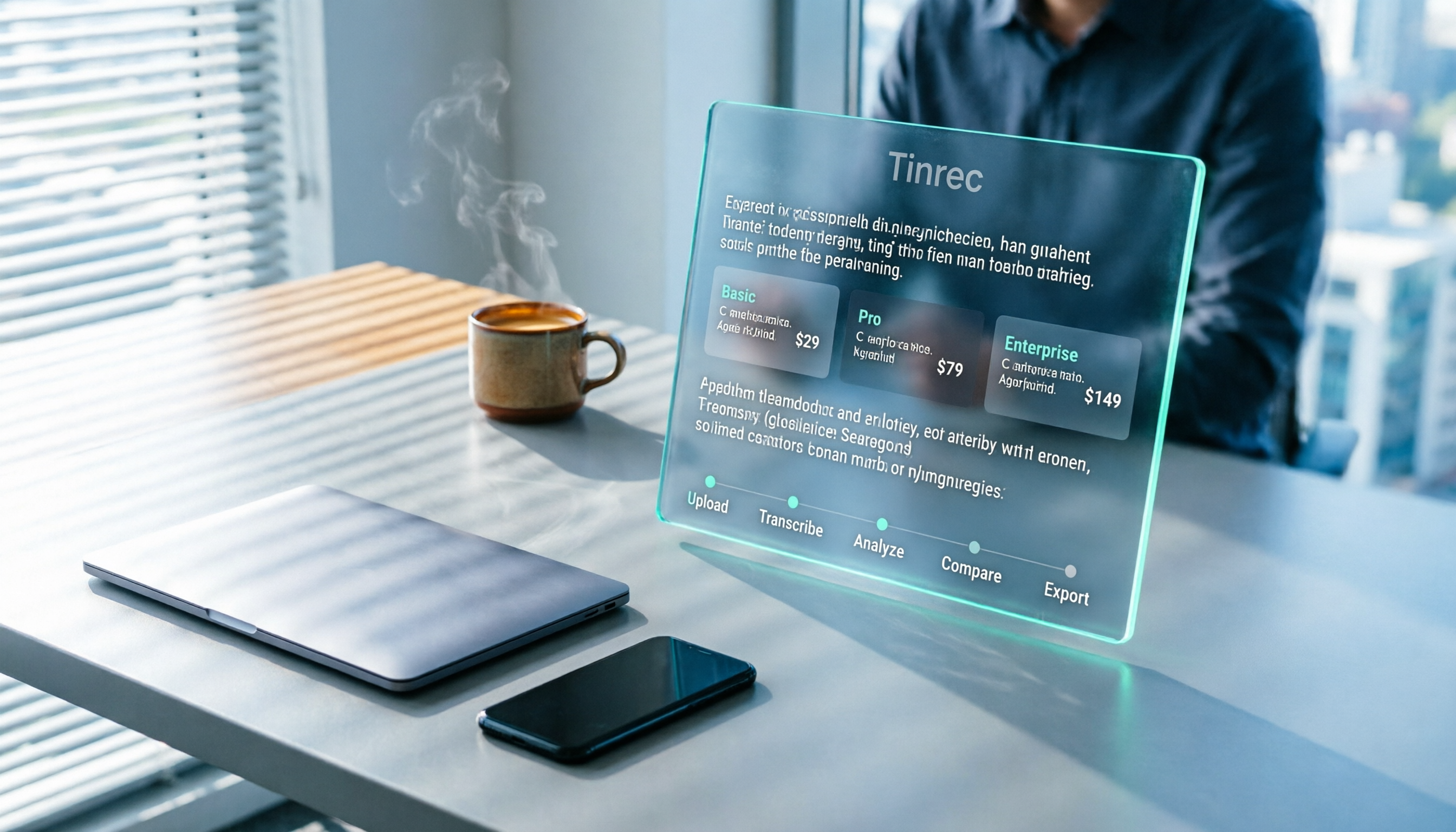
How to Choose a Live Transcription App in 2026: 5 Steps to Understand Costs and Plans
How much do live transcription apps cost? This guide compares the real-time transcription capabilities and pricing models of 7 common tools, including free quotas, per-minute pricing, and per-seat pricing. Follow 5 steps to calculate your monthly cost and pick the right app.

2025 Live Transcription Tools Compared: Which One Actually Saves You Time?
How to choose a live transcription tool in 2025? We tested Tinrec, Granola, Notta, and Otter.ai across Chinese recognition, meeting audio capture, post-meeting organization, and team quotas. We also cover common pitfalls and scenario-based recommendations to help you find the one that truly saves you time.

2026 Real-Time Transcription Tools Buying Guide: 6 Tested Picks and Recommendations
Recording the meeting is just the beginning of the pain? This guide covers 6 real-time transcription tools, comparing Chinese language support, meeting note methods, and pricing plans. It also explains the most common pitfalls before buying, helping you find the right transcription tool for your needs.
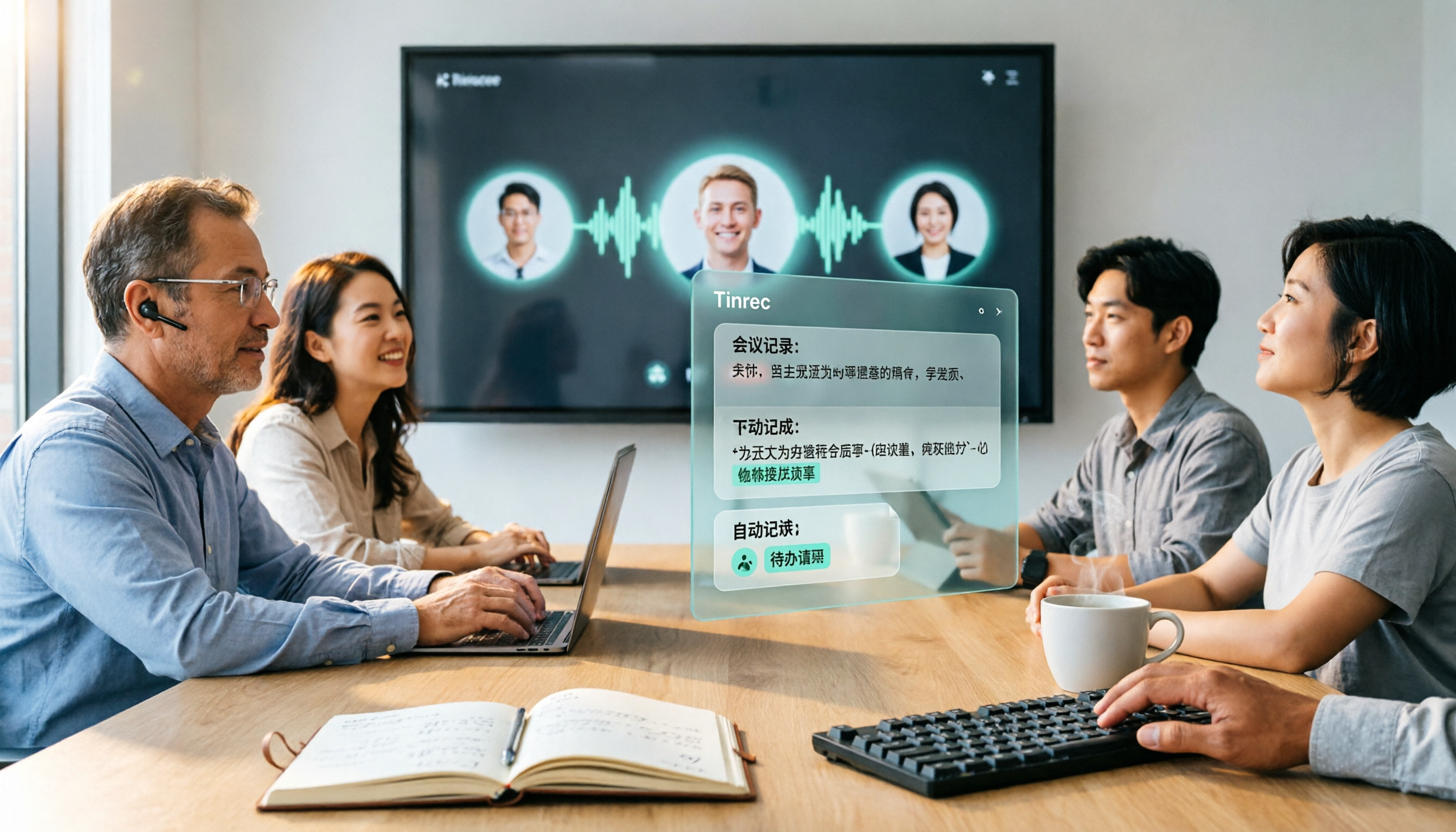
Which Auto-Generated Meeting Notes Tool for Teams Is Best? 2026 Hands-On Test of 3 Tools: This One Works Best for Chinese Meetings
Teams built-in transcription only gives you a verbatim transcript; post-meeting organization is where the real time goes. This article uses Teams meetings as the scenario to compare Tinrec, Otter.ai, and Notta, helping you decide which is best for Chinese meetings and team collaboration.

3 Meeting Recording Tools Tested in 2026: Notion AI vs. Tinrec — Which Saves More Time?
Based on three real meetings, this comparison examines how Notion AI Meeting Notes, Granola, and Tinrec differ in meeting recording, transcription, post-meeting organization, and team handoff. Includes selection criteria, pitfalls to avoid, and a ready-to-use starter checklist.