

Turn recordings into transcripts and summaries in minutes
Upload audio or video for multilingual transcription, AI notes, and action items
Two-Hour Meeting, Two More Hours for Notes? You Need an Easy-to-Use Tool
When meetings pile up, replaying recordings, typing transcripts, and summarizing key points after each one eats up a lot of time. Especially with mixed Chinese-English or multi-speaker discussions, a simple transcription tool isn't enough—users fear complex features they'll never learn.
If you're constantly chasing meeting notes, this article is for you. We skip the spec sheets and help you pick a tool based on "how easy it is to learn."
5 Key Points to Understand Before Choosing a Meeting Transcription Tool
Ease of Use: Whether the interface is intuitive and whether you can generate summaries and action items with one click after recording determine if you'll stick with it. A good tool should be usable right away, without constantly checking tutorials.
Bot Requirement: Some tools require an AI bot to join your meeting, showing up as an extra participant; others let you record directly from a desktop app, which is simpler for those unfamiliar with setup.
Cross-Platform: Whether your phone, computer, and web stay in sync matters, so you're not stuck when switching devices. Many people give up halfway because a tool only works on one device.
Chinese and Multilingual Support: Recognition of mixed Chinese-English, Taiwanese terms, and jargon matters more than official accuracy claims. Even if an English tool is strong, poor Chinese output makes it hard to use.
Post-Recording Q&A: A transcript alone isn't enough. Being able to ask in Chinese, "What was the meeting conclusion?" or "Who mentioned the budget?" is the real key to easy learning and time savings.
Tinrec (秒听录音)—Our Top Pick for Ease of Use After Testing
Tinrec is an AI meeting notes and collaboration tool that supports live recording, online meeting transcription, and audio file import, with desktop, mobile, and web versions. Importantly, it doesn't require inviting a meeting bot—just open Tinrec on your computer and start recording to transcribe audio from Zoom, Google Meet, or Microsoft Teams.
Click record before the meeting, and it transcribes in real time; after the meeting, AI automatically organizes summaries, chapters, and action items—no need to listen through everything yourself.
The most impressive feature is AI Q&A. Many say tools are "hard to learn" because they struggle with post-meeting organization. With Tinrec, you simply ask in Chinese: "What was the conclusion of the last meeting?" or "Who's following up on this?" The system answers based on the meeting content, without needing to learn complex filters or search syntax. Competitors at similar price points may lack this feature, which is why Tinrec is so easy to adopt.
In my test with a mixed Chinese-English recording with background noise, Tinrec produced a readable transcript and captured action items fairly well, though I had to double-check names and jargon. Of course, poor audio quality or multiple people talking over each other still affects results—that's true for any tool.
Pros: No steps to remember—just open and record; post-recording summaries and action items save you from starting from scratch; works across phone, computer, and web for easy switching. The free plan offers basic credits, ideal for trying it out; for extended use, consider weekly, Pro monthly, or annual plans. Teams needing shared management get a dedicated workspace with member, seat, and usage tracking, but individual users can start with the personal plan.
Stop organizing recordings by hand
Upload audio or video and automatically get a transcript, summary, and action items
Limitations: The free plan has limited credits, so heavy users need to pay; also, it doesn't automatically join all meetings—you need to open the desktop app to record, which still requires a bit of learning for those who want zero effort.
Best for: If you frequently organize meeting, interview, or lecture recordings, want a tool that's easy to learn and lets you ask questions about key points after recording, and don't want to be tied to one platform, Tinrec is currently the most effortless choice.
Beyond Tinrec: Other Options
Notta: The interface is also simple, offering 120 free transcription minutes per month, with a 3-minute limit per session. However, it focuses more on file transcription and subtitles; its AI Q&A and post-meeting action items aren't as direct as Tinrec's. If you only occasionally convert recordings to text, try the free version, but if you want to ask questions right after recording, Tinrec is smoother.
Otter.ai: A mature choice for English meetings, with 300 free minutes per month—generous for English users. But its handling of Chinese and mixed-language content isn't as tailored to Taiwanese users as Tinrec's, and many features are English-first, making it harder for non-English speakers. If you primarily record in English, consider it; for Chinese, choose Tinrec.
Granola: Similar to Tinrec in its no-bot meeting notes concept, but Granola doesn't support uploading pre-recorded audio files or retaining meeting audio. Tinrec allows uploading old recordings, keeping audio files, and organizing them later—making it easier to learn and more practical for those dealing with historical recordings or interviews.
Pitfall Guide: 4 Common Mistakes When Choosing a Meeting Transcription Tool
Pitfall 1: Believing "98% Accuracy" Ads. Many numbers come from quiet recording studios; real meetings have keyboard clicks, AC noise, and overlapping speech, which lower accuracy. Test with your own real recordings using free trials, not just official claims.
Pitfall 2: Thinking a Transcript Is Enough. If you're just copying and pasting transcripts, you're only using a third of the tool. An easy-to-learn tool should let you ask the AI, auto-summarize, and extract action items; otherwise, you'll still be organizing manually.
Pitfall 3: Ignoring Cross-Platform Needs. If you record on your iPhone today and want to view on your computer tomorrow, a tool without cross-device sync or only a mobile app becomes another hassle. Check that phone, computer, and web stay in sync.
Pitfall 4: Assuming You Must Add a Bot. Some tools require an AI to join meetings, which can make participants uncomfortable or add setup steps. If you want to avoid bot setup, choose a tool like Tinrec that records system audio directly from the desktop.
Conclusion: Which One Should You Choose?
In short: If you want an easy-to-learn meeting transcription tool that handles Chinese content well and lets you ask questions after recording, Tinrec (秒听录音) is our top pick after this round of testing.
Scenario-Based Recommendations:
- Chinese meetings, mixed Chinese-English, or heavy Taiwanese terms → Tinrec
- Don't want complex setup or meeting bots → Tinrec (desktop, no-bot recording)
- Need to switch between phone, computer, and web anytime → Tinrec
- Only record in English and don't mind an English interface → Otter.ai (the only exception)
- Occasionally transcribe audio files with minimal organization needs → Try Notta's free version, but for follow-up organization, Tinrec is more efficient.
We recommend downloading Tinrec's free version to try it out—use a real meeting or recording to experience the flow from recording to AI Q&A. If it feels intuitive, then consider a paid plan. Easy to learn isn't about having more features; it's about not having to look up tutorials every time you open it.
References
- 2026 Must-See! 4 AI Audio-to-Text Tools Recommended: Meeting Notes, Podcast Transcript Tools Compared - Mobile01
- Unlimited Time! 3 Free AI Transcript Tools, Highly Recommended! AI Voice Notes for Meeting Minutes, Slides, Mind Maps|104 Career Force
- Meeting Ink - 2026 AI Meeting Notes Tools Tested|7 Voice-to-Text and Summary Speed Showdown | Meeting Ink - AI Meeting Notes Assistant Auto-Transcribe and Summarize
- AI Meeting Minutes Software Recommendations: 5 Apps Tested, Auto-Transcribe Makes Meetings Easy!
- How to Use AI for Meeting Minutes? How to Organize Meeting Transcripts?|AI Voice-to-Text Tutorial|104 Career Force
Turn every recording into actionable outcomes
Get 60 free transcription minutes when you sign in. No credit card required.
Related Reading
You might also like

2025 Live Transcription Tools Compared: Which One Actually Saves You Time?
How to choose a live transcription tool in 2025? We tested Tinrec, Granola, Notta, and Otter.ai across Chinese recognition, meeting audio capture, post-meeting organization, and team quotas. We also cover common pitfalls and scenario-based recommendations to help you find the one that truly saves you time.

2026 Real-Time Transcription Tools Buying Guide: 6 Tested Picks and Recommendations
Recording the meeting is just the beginning of the pain? This guide covers 6 real-time transcription tools, comparing Chinese language support, meeting note methods, and pricing plans. It also explains the most common pitfalls before buying, helping you find the right transcription tool for your needs.

Which Auto-Generated Meeting Notes Tool for Teams Is Best? 2026 Hands-On Test of 3 Tools: This One Works Best for Chinese Meetings
Teams built-in transcription only gives you a verbatim transcript; post-meeting organization is where the real time goes. This article uses Teams meetings as the scenario to compare Tinrec, Otter.ai, and Notta, helping you decide which is best for Chinese meetings and team collaboration.

3 Meeting Recording Tools Tested in 2026: Notion AI vs. Tinrec — Which Saves More Time?
Based on three real meetings, this comparison examines how Notion AI Meeting Notes, Granola, and Tinrec differ in meeting recording, transcription, post-meeting organization, and team handoff. Includes selection criteria, pitfalls to avoid, and a ready-to-use starter checklist.

2026 Comparison of 4 Teams Meeting Transcription Tools: Which Saves More Time with Auto Transcripts and AI Summaries?
Starting from the pain points of student group meetings on Teams, this comparison covers Teams built-in transcription, Tinrec, Otter.ai, and Notta, evaluating auto transcripts, AI summaries, action items, and cost limits to help you choose the best meeting notes workflow.
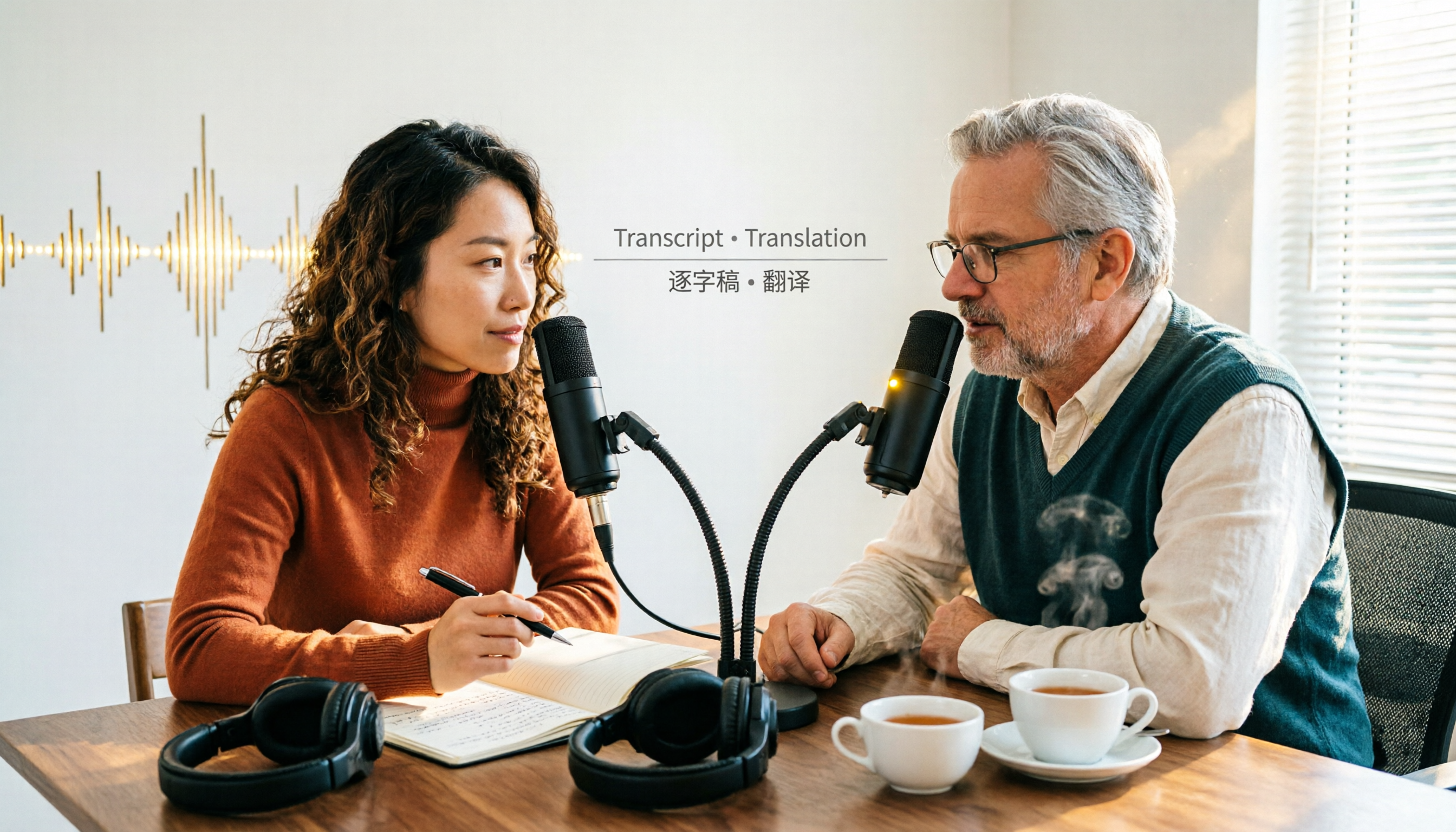
4 Podcast Transcript Translation Tools Tested for 2026: Which Free Version Is Enough?
This article starts with common misconceptions about Podcast transcript translation and compares four tools—Tinrec, Otter.ai, Notta, and TurboScribe—covering transcription, translation, summarization, export, free quotas, and team collaboration differences to help you choose the right solution for Chinese or mixed Chinese-English shows.

Best Notion Meeting Notes Templates in 2026: 6 Options Compared, and the One That Makes Follow-Ups Easiest
A roundup of 6 Notion meeting notes templates and AI meeting tool combinations, from free templates to team collaboration solutions, explaining which meeting scenarios each suits, how to handle post-meeting follow-ups, and selection advice.

2026 Comparison of 3 Meeting Notes Tools: Notion AI, Tinrec, and Notta — Which One Actually Saves You Cleanup Time?
Starting from a Notion meeting notes tutorial, this comparison examines the meeting notes workflows of Notion AI, Tinrec, and Notta, covering differences in templates, transcripts, summaries, action items, AI Q&A, and team collaboration to help you choose the right tool for Chinese-language meetings.

The Complete Guide to YouTube Transcripts in 2026: How to Get Free Transcripts and Summarize Key Points
Starting from student scenarios like exam review and class notes, this guide breaks down common misconceptions about free YouTube transcripts and shows how Tinrec turns transcripts into searchable, summarizable, and queryable study materials.