

Turn recordings into transcripts and summaries in minutes
Upload audio or video for multilingual transcription, AI notes, and action items
Tinrec vs Otter.ai in 2026: A 5-Dimension Comparison for Chinese Meeting Notes
The Pain Point: You Don't Need a Tool, You Need a Solution
If you think "meeting recording to text" is just finding a free app, hitting record, and waiting for it to finish, you've probably already run into these three pitfalls: you discover you recorded the air conditioner next door, Chinese names mixed with English are all wrong, and the transcript looks like a giant blob of text without punctuation, forcing you to listen to the whole thing again.
Worse, some tools require a bot to join your meeting, so the whole team sees an unfamiliar account, and your security officer immediately starts asking questions.
In reality, the key to choosing the right tool isn't just "can it transcribe," but whether you can use the output directly—does it have summaries, action items, searchability, and team sharing? This article aims to solve that problem.
5 Key Points to Understand Before Choosing a Meeting Transcription Tool
1. Recording Method: Bot Joins Meeting vs. Desktop Bot-Free
Many tools use a bot account to join Zoom or Teams, which is convenient, but some people are concerned about privacy or don't want everyone to see a bot. Tinrec's desktop version directly captures your computer's system audio; you just turn it on, and no extra participant is needed. This is handy for in-person meetings or when you don't want to alert clients.
2. Chinese Accuracy: Not All Tools Are Suited for Taiwanese Meetings
Otter.ai is strong for English meetings, but its performance drops with Chinese conversations, Taiwanese accents, or mixed Chinese-English speech. Tinrec has an advantage in Chinese and multilingual scenarios, and it supports team-specific terms, allowing you to input product names or project codes in advance to reduce errors with proper nouns.
3. Post-Meeting Organization: A Tool That Only Gives You a Transcript Leaves the Work to You
What you really need is a tool that automatically generates summaries, chapters, and action items, and even lets you ask questions like "Who mentioned the budget in the last meeting?" Tinrec's AI Q&A and Agent post-processing are particularly useful here.
4. Cross-Platform and File Import: Some Tools Only Work on Mobile or Only in Chrome
You likely need to record on your phone, process online meetings on your computer, and upload old audio files. Tinrec supports iOS, Android, web, and desktop versions, and also allows audio file import, offering more flexibility.
5. Team Collaboration: If You're a Solo User, Free Tools Might Suffice; But If You Need to Share Meeting Notes, Track Action Items, and Manage Member Permissions, You Need a Team Plan
Tinrec's team plan includes storage, seats, roles, usage analytics, and a recycle bin—not just shared accounts.
Tinrec (Miao Ting Lu Yin) — Our Top Pick After Testing
Tinrec (Miao Ting Lu Yin) is an AI meeting notes and collaboration tool for individuals and teams, supporting real-time recording, bot-free online meetings, audio file import, and iOS, Android, web, and desktop versions.
Let's start with the most critical aspect: recording. Tinrec's desktop version can directly capture your computer's system audio, so you don't need to add a bot to Zoom, Google Meet, Teams, or Webex. Just open Tinrec before the meeting, hit record, and it will transcribe in the background in real time. There are no extra participants in the meeting, and clients won't see any strange notifications. This is reassuring for those who meet with external clients.
After transcription, Tinrec doesn't just give you a transcript. It automatically organizes summaries, chapters, and key points, breaking long meetings into readable structures. It also extracts action items from the discussion, such as "Reply to the client's quote by Friday." Even better is the AI Q&A: you can ask questions like "Who mentioned the budget in the last meeting?" or "What did we decide?" Tinrec uses semantic understanding to find answers in the meeting content, not just keyword search results. This feature is largely absent in competitors at the same price point.
We tested a 5-minute Chinese meeting recording with two speakers, Taiwanese accents, and a few mixed Chinese-English project names. Tinrec's transcription required almost no manual correction, and most proper nouns were correct. Of course, if the recording environment is noisy or there's obvious overlapping speech, the error rate increases, but under typical meeting room conditions, it performs consistently.
Stop organizing recordings by hand
Upload audio or video and automatically get a transcript, summary, and action items
Let me summarize the advantages into three points: First, it's a one-stop solution from recording to organization—you have usable notes and action items right after the meeting. Second, the Chinese experience is noticeably better, not just an English model forced to work. Third, cross-platform and team features are comprehensive, covering everything from personal use to departmental collaboration.
I must also honestly mention the limitations: the free plan only offers basic quotas, and heavy file imports or long-term use require a paid or team subscription. Additionally, Tinrec is not an automatic calendar-based recording tool; you have to remember to open it before the meeting, unlike bot solutions that can be set to auto-join. But for many who value privacy, this is actually a plus.
Who is it for? If you have weekly meetings, need Chinese notes, don't want bots in your meetings, and want summaries and action items immediately after, Tinrec is a very worthwhile option to try first.
Alternatives to Tinrec
Otter.ai: A mature choice for English meetings, with 300 free minutes per month and strong transcription and summarization. However, if you primarily have Chinese meetings, Otter's accuracy and summary quality are not as localized as Tinrec's. Additionally, its team plans are pricier, and the bot-joining approach may not suit all companies. If you only need English meeting notes, Otter is worth considering; for Chinese and bot-free needs, Tinrec is a better fit.
Notta: Features are similar to Tinrec, with multi-device transcription and translation, and 120 free minutes per month. However, Notta focuses more on document transcription and subtitles, and its post-meeting organization and team collaboration are not as deep as Tinrec's. For example, Tinrec's team space, seat management, and audio recycle bin are not available in Notta unless you opt for the Business plan. If you occasionally transcribe audio files, Notta is fine; but if you want to turn meetings into team assets, Tinrec is more complete.
PLAUD NotePin: A hardware recording device, suitable for on-the-go notes and phone calls, but it requires buying a separate device and doesn't support bot-free online meeting recording. If you want a meeting solution without buying hardware and that works on both phone and computer, Tinrec wins outright. PLAUD's strengths are hardware standby and standalone recording, but that's a different use case from meeting collaboration.
Pitfall Guide: 4 Common Mistakes When Choosing a Meeting Transcription Tool
Pitfall 1: Only Looking at Price, Not Per-Minute Cost. Free tools may limit sessions to 3 minutes or 120 minutes per month, which isn't enough for a 1-hour meeting. Calculate your meeting frequency first, then compare subscription costs. Don't be fooled by the word "free."
Pitfall 2: Ignoring the Recording Method. Bot-joined meetings are convenient, but some company policies or client meetings don't like seeing unfamiliar accounts. If this is a concern, first confirm whether the tool supports desktop bot-free recording; otherwise, you might buy it and find it unusable.
Pitfall 3: Assuming Transcription Accuracy Equals Organization Efficiency. Even if the transcript is 100% accurate, you still have to read 30 pages and find key points and action items yourself. What really saves time is automatic post-meeting summaries, action items, and AI Q&A. When trying a tool, don't just look at accuracy; ask, "Can it help me extract key points?"
Pitfall 4: Confusing Personal Use with Team Collaboration. Many people buy a personal plan, only to find that sharing with colleagues is difficult because data is stored in their own account, and switching users requires re-transcription. If meeting data is a team asset, choose a tool with team space, roles, and seat management from the start, like Tinrec's team plan.
Conclusion: Which One Should You Choose?
Simply put, if you need Chinese meeting notes, bot-free recording, automatic post-meeting organization, and team collaboration, Tinrec is the top choice. It connects the entire process from recording to actionable data, rather than just handing you a transcript.
Scenario recommendations:
- Need Chinese meeting transcription + bot-free → Tinrec
- Want AI to directly answer questions and extract key points after the meeting → Tinrec
- Need one tool for both personal recordings and team meetings → Tinrec
- Only record English meetings and don't mind bots → Otter.ai (the only exception)
- Only need cheap bulk file transcription and don't care about meeting organization → Notta or TurboScribe
We recommend starting with Tinrec's free plan and testing it with your own meeting recordings to see if the summaries and Q&A really save time. Don't rush to pay; upgrade only if it fits your needs.
References
- [AI Voice Notes] Top 5 AI Transcription Tools! Generate Transcripts and Meeting Notes: Free vs. Subscription, Pros and Cons | 104 Career Force
- 2026 Must-See! 4 AI Audio-to-Text Tools Recommended: Meeting Notes and Podcast Transcript Tools Compared - Mobile01
- Meeting Ink - 2026 AI Meeting Notes Tools Tested: 7 Voice-to-Text and Summary Speed Showdown | Meeting Ink - AI Meeting Notes Assistant, Automatic Transcription and Summary
- Unlimited Time! 3 Free AI Transcript Tools, Highly Recommended! AI Voice Notes Generate Meeting Notes, Presentations, Mind Maps | 104 Career Force
- Tested: 4 Best Online Voice-to-Text Tools, Free and Instant Audio File Transcription
Turn every recording into actionable outcomes
Get 60 free transcription minutes when you sign in. No credit card required.
Related Reading
You might also like

2025 Live Transcription Tools Compared: Which One Actually Saves You Time?
How to choose a live transcription tool in 2025? We tested Tinrec, Granola, Notta, and Otter.ai across Chinese recognition, meeting audio capture, post-meeting organization, and team quotas. We also cover common pitfalls and scenario-based recommendations to help you find the one that truly saves you time.

2026 Real-Time Transcription Tools Buying Guide: 6 Tested Picks and Recommendations
Recording the meeting is just the beginning of the pain? This guide covers 6 real-time transcription tools, comparing Chinese language support, meeting note methods, and pricing plans. It also explains the most common pitfalls before buying, helping you find the right transcription tool for your needs.

Which Auto-Generated Meeting Notes Tool for Teams Is Best? 2026 Hands-On Test of 3 Tools: This One Works Best for Chinese Meetings
Teams built-in transcription only gives you a verbatim transcript; post-meeting organization is where the real time goes. This article uses Teams meetings as the scenario to compare Tinrec, Otter.ai, and Notta, helping you decide which is best for Chinese meetings and team collaboration.

3 Meeting Recording Tools Tested in 2026: Notion AI vs. Tinrec — Which Saves More Time?
Based on three real meetings, this comparison examines how Notion AI Meeting Notes, Granola, and Tinrec differ in meeting recording, transcription, post-meeting organization, and team handoff. Includes selection criteria, pitfalls to avoid, and a ready-to-use starter checklist.

2026 Comparison of 4 Teams Meeting Transcription Tools: Which Saves More Time with Auto Transcripts and AI Summaries?
Starting from the pain points of student group meetings on Teams, this comparison covers Teams built-in transcription, Tinrec, Otter.ai, and Notta, evaluating auto transcripts, AI summaries, action items, and cost limits to help you choose the best meeting notes workflow.
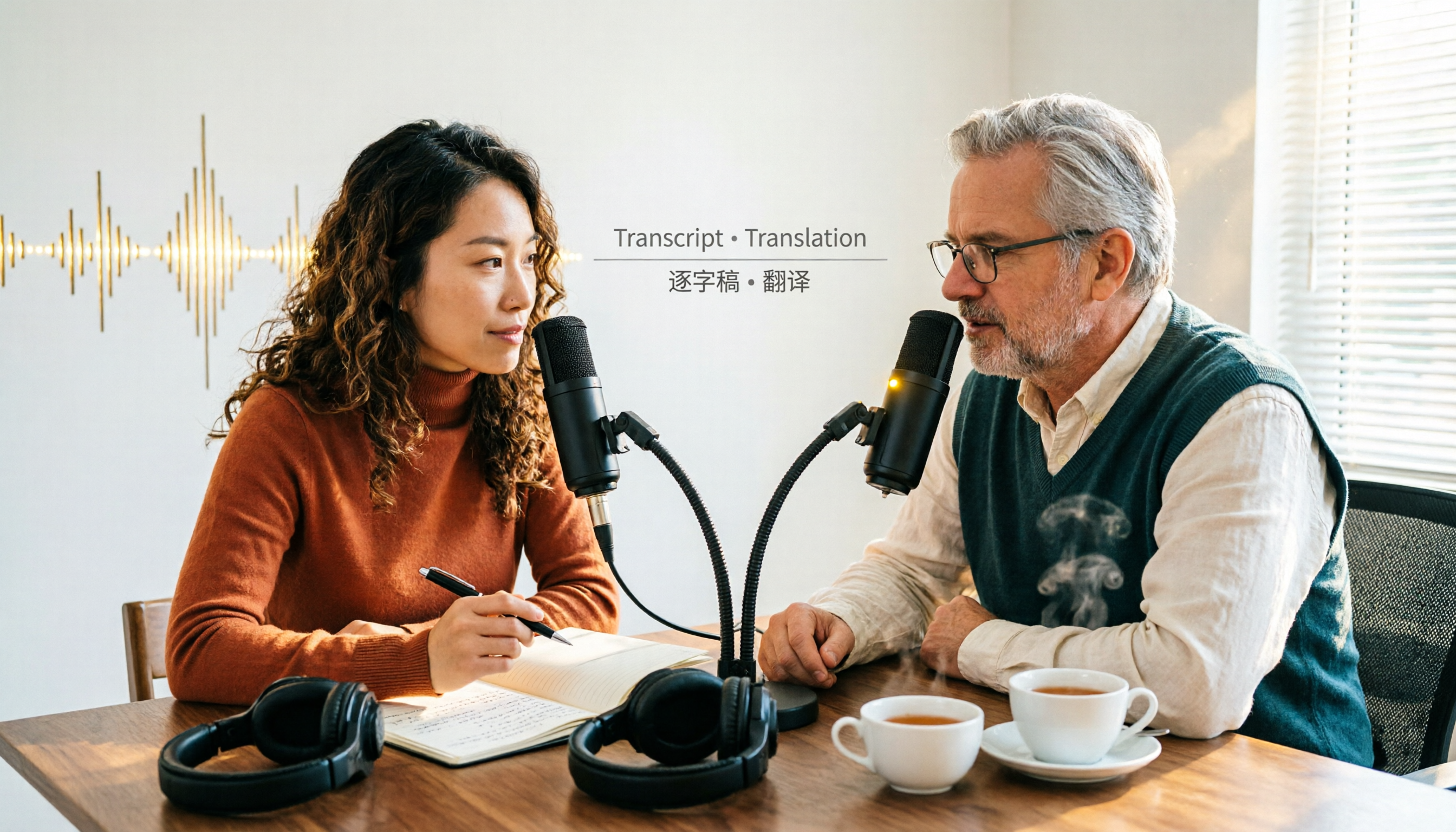
4 Podcast Transcript Translation Tools Tested for 2026: Which Free Version Is Enough?
This article starts with common misconceptions about Podcast transcript translation and compares four tools—Tinrec, Otter.ai, Notta, and TurboScribe—covering transcription, translation, summarization, export, free quotas, and team collaboration differences to help you choose the right solution for Chinese or mixed Chinese-English shows.

Best Notion Meeting Notes Templates in 2026: 6 Options Compared, and the One That Makes Follow-Ups Easiest
A roundup of 6 Notion meeting notes templates and AI meeting tool combinations, from free templates to team collaboration solutions, explaining which meeting scenarios each suits, how to handle post-meeting follow-ups, and selection advice.

2026 Comparison of 3 Meeting Notes Tools: Notion AI, Tinrec, and Notta — Which One Actually Saves You Cleanup Time?
Starting from a Notion meeting notes tutorial, this comparison examines the meeting notes workflows of Notion AI, Tinrec, and Notta, covering differences in templates, transcripts, summaries, action items, AI Q&A, and team collaboration to help you choose the right tool for Chinese-language meetings.

The Complete Guide to YouTube Transcripts in 2026: How to Get Free Transcripts and Summarize Key Points
Starting from student scenarios like exam review and class notes, this guide breaks down common misconceptions about free YouTube transcripts and shows how Tinrec turns transcripts into searchable, summarizable, and queryable study materials.