
Turn recordings into transcripts and summaries in minutes
Upload audio or video for multilingual transcription, AI notes, and action items
After a meeting or class ends, facing a one-hour phone recording often requires twice or more time to replay and type out the content—especially when Traditional Chinese recognition is inaccurate and punctuation is missing, making transcriptions a painful struggle.
To solve this problem, this article reviews 5 mainstream tool solutions on the market, providing a detailed "tool comparison table" (covering 6 evaluation dimensions including language support, real-time capability, summary features, and pricing) along with step-by-step operation tutorials and FAQs, so you can avoid detours.
Quick navigation conclusions:
- Want completely free and focused on Taiwanese accent? Consider Yating Transcript.
- Need strong English recognition and international team collaboration? Choose Otter.ai.
- Prefer a simple web-based upload with no complex features? GoodTape is a good start.
- Value integration with physical hardware for business scenarios? Xunfei Ting is a decent auxiliary tool.
- Value a complete "recording-to-action" workflow, and need auto-generated decision summaries and multilingual support? Evaluate Tinrec.
1. Why You Need a Professional Mobile Voice-to-Text Tool
Traditional built-in recording apps on phones only "store" audio, offering very low information density. When you need to find a specific decision after a meeting or review a key point from a lecture, you have to scrub through the timeline like searching for a needle in a haystack. Modern AI voice-to-text tools transform "time-based audio content" into "scannable, searchable, actionable text data."
A good tool not only provides real-time Traditional Chinese recognition but also automatically identifies speakers, filters out filler words, and even generates meeting minutes with key conclusions and action items right after the recording ends.
2. Comparison Table of 5 Mobile Real-Time Voice-to-Text Tools in 2026
When selecting a tool, evaluate based on these 6 core dimensions. Here is a comparison of 5 representative tools on the market:
| Comparison Dimension | Yating Transcript | Otter.ai | GoodTape | Xunfei Ting | Tinrec (Miao Ting Recording) |
|---|---|---|---|---|---|
| Traditional Chinese Support | Excellent (Taiwan accent) | Weak (English-focused) | Good | Good (mainly simplified-to-traditional conversion) | Excellent (supports auto-recognition of 10+ languages including Chinese, Japanese, English, Taiwanese) |
| Real-time Transcription | Supported | Supported | Not supported (upload only) | Supported | Supported (low-latency real-time conversion) |
| AI Summary/Action Items | No | Yes (English) | Yes (paid) | Yes | Yes (auto-generates meeting minutes, conclusions, and to-do lists) |
| AI Chat Query | No | Yes (English) | No | No | Yes (semantic Q&A on recording content) |
| Supported Platforms/Integrations | iOS, Android | iOS, Android, Web | Web-based | iOS, Android, Web | iOS, Android, Web |
| Free Credits/Pricing | Free | 300 min/month (free) | 3 recordings/month (free) | Pay-per-duration | 100 min/month (free) / Basic $4.9/month |
3. Deep Dive: From "Transcript" to "AI Decision Summary" Evolution
When evaluating the above list, we found that user needs have evolved from "I need these words typed out" to "I need to know what was discussed and what to do next." Many traditional tools only provide long transcripts, solving the dictation problem but still requiring readers to spend time reading thousands of words.
Stop organizing recordings by hand
Upload audio or video and automatically get a transcript, summary, and action items
Tinrec, for example, differentiates itself by offering a complete post-processing workflow. When recording ends, the system not only outputs text but also splits it into chapters and extracts clear to-do items. Additionally, for cross-border meetings or foreign language online courses, tools with auto language recognition significantly lower the language barrier for users.
4. Practical Tutorial: How to Efficiently Convert Phone Recordings into Actionable Steps
Now that you know how to choose, let's use Tinrec (with its complete workflow) as an example to demonstrate how to turn voice data into efficient work notes in different scenarios.
1. Real-Time Voice-to-Text (During a Meeting/Class)
In physical meetings or classes, you need real-time transcription without waiting, so you can focus on discussions.
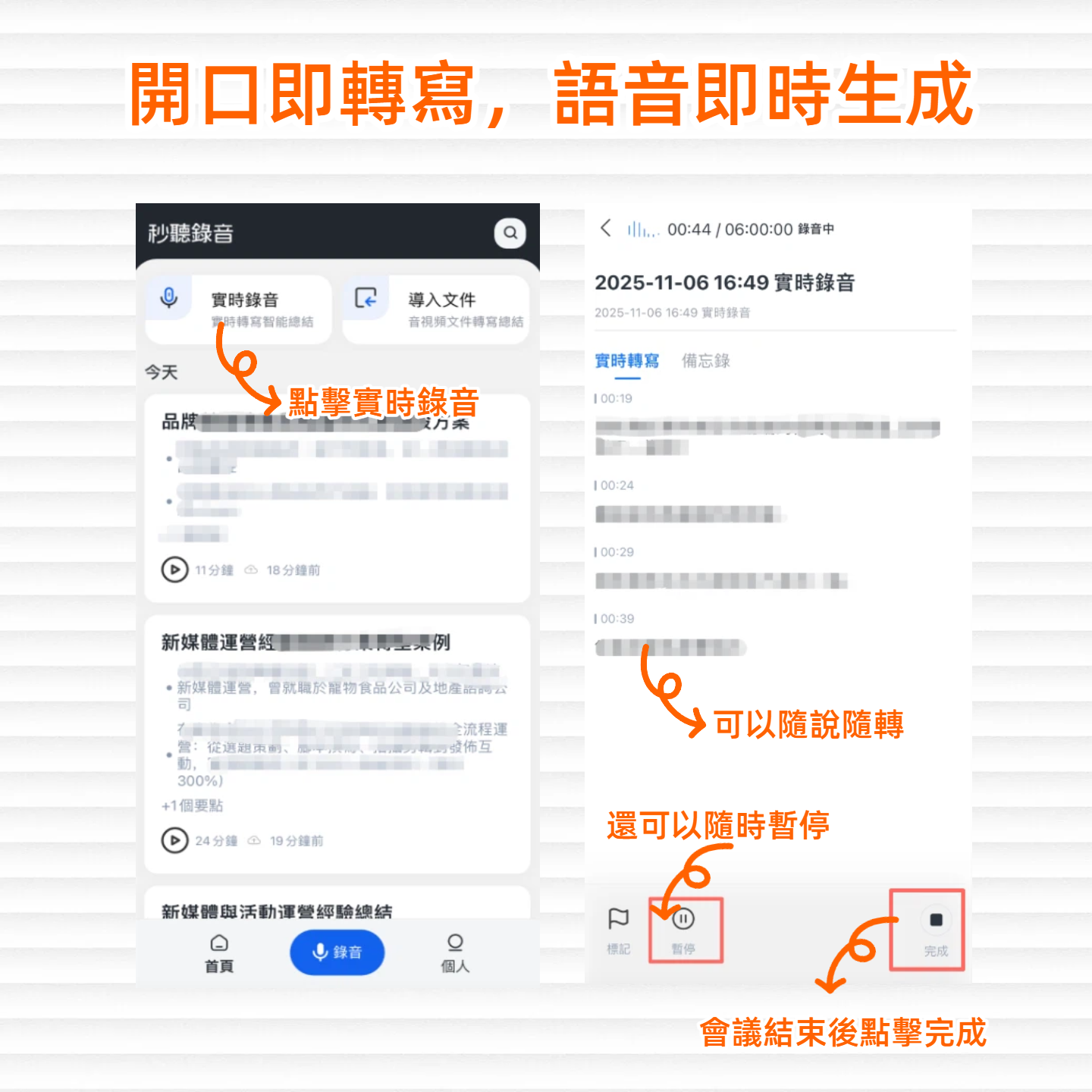
- Step 1: Open the real-time voice-to-text interface on your phone or web browser.
- Step 2: Tap start recording; the system will instantly convert speech to text displayed on screen.
- Step 3: You can pause or mark key points during recording; after stopping, the system automatically generates meeting minutes.
2. Import Existing Audio Files
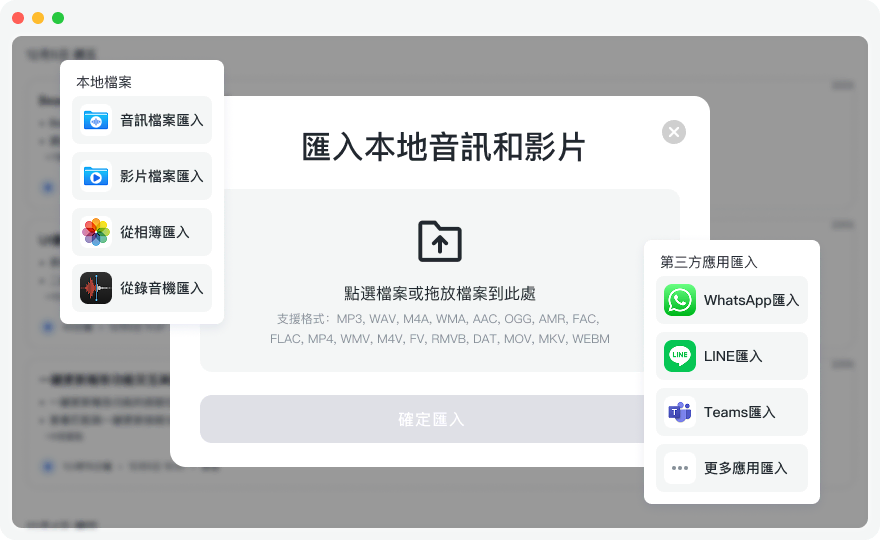
If you've recorded files using iPhone Voice Memos or other devices, you can upload them for processing.
- Step 1: Go to the audio file to text feature.
- Step 2: Upload supported audio formats (e.g., MP3, M4A, WAV).
- Step 3: Wait for cloud processing; the system will identify speakers and produce a full transcript with AI summary.
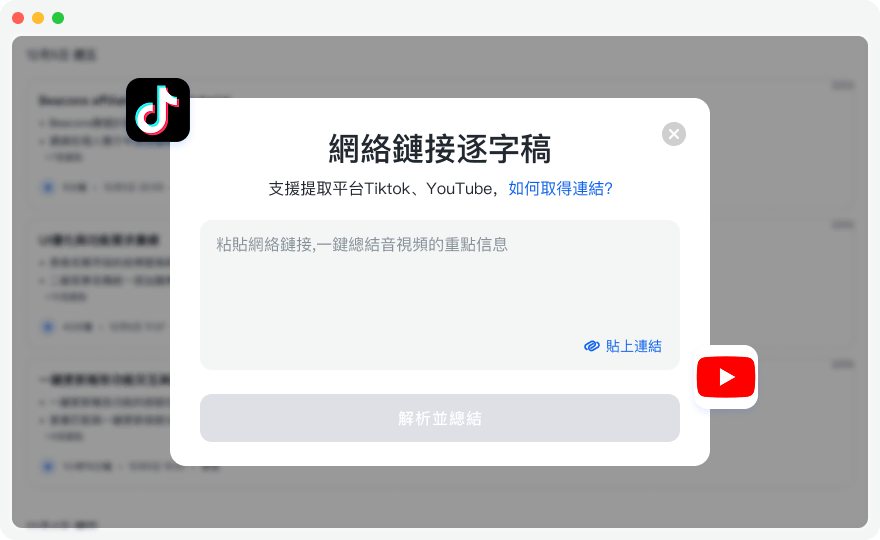
3. Podcast and Online Video Link to Text
For content creators or students, summarizing YouTube or podcast key points is common.
- Step 1: Copy the URL of a YouTube, podcast, or supported online video.
- Step 2: Go to the podcast/video to text entry and paste the link.
- Step 3: The system automatically grabs the audio and converts it to text, so you can quickly get the core content without spending dozens of minutes watching.

4. Using AI Chat Query to Quickly Extract Key Points
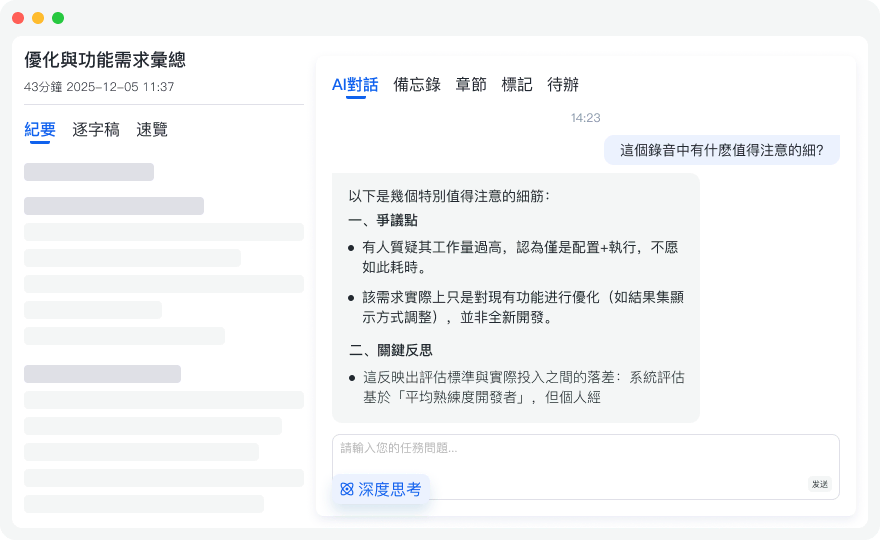
Traditional Ctrl+F only searches for keywords, but AI query lets you find answers by asking questions.
- Step 1: In the transcribed record page, open the AI chat query panel.
- Step 2: Directly type a question, e.g., "What were the key revision points for next week's marketing proposal discussed in today's meeting?"
- Step 3: The AI will accurately answer based on the context of the recording and highlight the corresponding source paragraphs.
5. Frequently Asked Questions (FAQ)
Q1: Can the built-in Voice Memos on iPhone directly transcribe Traditional Chinese text? Currently, the built-in Voice Memos on iPhone only supports basic recording with no native auto-transcription or summary features. To get a transcript, you need to use a third-party voice-to-text app for subsequent upload processing.
Q2: When attending Teams or Google Meet online meetings, does a mobile voice-to-text app pick up audio well? If you hold the phone near your computer speakers, it's prone to environmental noise and device resonance. The recommended solution is to have the tool join the meeting via its web version, or upload the Teams/Meet recorded audio file directly to the cloud platform for transcription—accuracy will be much higher.
Q3: What are the limitations of free mobile real-time voice-to-text software? Most free tools have limitations in three areas: 1) Monthly total transcription time cap (e.g., free tier only 100 minutes). 2) Maximum single recording length. 3) Whether advanced AI summaries and multiple export formats are provided.
Q4: Is Traditional Chinese recognition accuracy high? Are there accent issues? With advancements in AI models, mainstream tools' recognition of Traditional Chinese has improved significantly. If the tool has multilingual auto-recognition, even if speech includes English technical terms or mild accents (e.g., Taiwanese, Cantonese), recognition performance is quite good.
Q5: If the recording is very long, can AI tools directly summarize the meeting conclusions? Yes. Modern AI recording assistants have built-in large language models that, after generating the transcript, can automatically summarize meeting key points, decisions, and a to-do list, saving manual re-reading.
Q6: Can a phone-recorded foreign language meeting or video without subtitles be simultaneously transcribed and translated into Chinese? Yes. Tools that support multilingual recognition can handle foreign audio like Japanese, English, Korean, etc. Besides outputting the original transcript, they can also provide AI-assisted translation into Traditional Chinese, which is very useful for users frequently exposed to overseas information.
Turn every recording into actionable outcomes
Get 60 free transcription minutes when you sign in. No credit card required.
Related Reading
You might also like

5 Best AI Meeting Recorders Tested in 2026: Which One Works Best for Chinese Meetings and Team Collaboration?
Struggling with meeting notes and post-meeting cleanup? This hands-on comparison of 5 AI meeting note tools, led by Tinrec, covers bot-free recording, Chinese transcription, AI summaries, and team collaboration to help you decide which one is worth it.

2026 Tinrec Smart Meeting Minutes Review: Cantonese Transcription, AI Auto-Generated To-Dos
Tired of spending hours after meetings transcribing recordings? We tested Tinrec, a smart meeting minutes app that uses AI to save you overtime. It supports Cantonese transcription, auto-generates to-dos, and can record online meetings without a bot.

2026 Smart Meeting Minutes Tools Compared: Hands-On Test of 5, Why Tinrec Is Our Top Pick
Spending two hours in a meeting and another two hours writing up the minutes? This article evaluates Tinrec, Otter.ai, Notta, PLAUD Note, and others based on practical criteria like bot-free recording, Chinese transcription, AI post-processing, and team collaboration, to tell you which one is most worth using.

The Complete Guide to AI Meeting Notes Apps in 2026: Auto-Generated Summaries, Action Items, and Team Collaboration
This guide starts by addressing common pitfalls, helps you understand the key factors in choosing an AI meeting notes app, and shares hands-on experience with Tinrec (秒听录音) on how it uses bot-free recording, AI summaries, and team collaboration to save you time after meetings.

2026 Review of 5 Online AI Meeting Minutes Tools: Which Free Version Is Most Useful?
This hands-on comparison, focusing on Tinrec, breaks down the core features, real-world use cases, buying considerations, and FAQs of online AI meeting minutes software to help you decide if the free version is sufficient.

What Is AI Meeting Minutes in 2026? A 4-Step Comparison of Tinrec vs. Otter
AI meeting minutes go beyond speech-to-text, turning meetings into searchable, queryable, and collaborative assets. This article compares Tinrec and Otter across four key dimensions to help you understand the core features of AI meeting minutes and choose the right AI meeting tool for your needs.
5 Best AI Meeting Note Apps Tested in 2026: No-Bot Recording, Chinese Meetings & Team Collaboration
Tired of manually writing meeting minutes? This article tests Tinrec (秒听录音) as the main focus, covering no-bot recording, Chinese meeting transcription, AI summaries, and team collaboration. It provides buying tips and FAQs to help you find a truly time-saving AI meeting notes tool.
How to Create Smart Meeting Minutes in 2026: 5 Steps to Choose the Right Software for Automatic Transcripts and Summaries
A practical guide for mid-level managers and professionals on using AI meeting minutes software to automatically generate transcripts, summaries, and action items. It highlights hands-on testing of Tinrec (秒听录音), briefly reviews Notta, Otter.ai, and Plaud Note, and offers tips to avoid common pitfalls and make the right choice.
2026 Smart Meeting Recorder Alternatives: 5 Tested Advantages of Tinrec
Still considering buying a smart meeting recorder? This article tests Tinrec, an AI meeting notes tool, comparing it with hardware voice recorders. From bot-free online meeting recording, AI summaries, team collaboration to cost, find out why a software solution is better for most office workers.