

Turn recordings into transcripts and summaries in minutes
Upload audio or video for multilingual transcription, AI notes, and action items
Quick Overview of Speech-to-Text Tools
Speech-to-text tools have come a long way. Now you can upload an audio or video file and get a punctuated, segmented transcript within minutes—some tools even auto-generate summaries and action items.
In this article, I’ll compare 5 speech-to-text services that still offer free options in 2026 from a regular user’s perspective. The focus is on Chinese transcript usability, free allowances, ease of use, and how much cleanup you’ll need afterward.
| Tool | Type | Best For | Main Free Option |
|---|---|---|---|
| MyEdit | Online AI audio editor with transcription | Occasional transcription needs | Daily login credits |
| Google Cloud Speech-to-Text | API service | Developers or those building custom tools | New user trial credits |
| Yating | Taiwanese Mandarin transcription app | Those working with Taiwanese Mandarin | Free in-app recording transcription |
| cSubtitle | Web-based AI transcription and subtitles | Those needing transcripts and subtitle files | No-account trial |
| Tinrec | AI meeting notes and collaboration | Meetings, interviews, team organization | Free tier with basic limits |
Dimension 1: Chinese Transcript Usability
Yating performs consistently well with Taiwanese Mandarin, especially for everyday conversations, interviews, or lecture recordings—common phrases rarely get garbled. The downside is that if your audio mixes Chinese and English heavily, you’ll still need to correct some parts.
cSubtitle is specifically trained for Mandarin Chinese. After uploading, it not only provides the text but also automatically adds punctuation and paragraph breaks, which is handy if you want to paste it directly into a document. It handles long recordings better than expected, but when multiple people talk at once, the segmentation can get messy.
MyEdit supports 9 languages, including Chinese, English, and Japanese. Its Chinese transcription accuracy is sufficient for clear recordings. In my experience, if the audio has background noise, word errors increase noticeably, so it’s best to use its built-in noise reduction feature before transcribing.
→ In this dimension, Yating and cSubtitle edge out the competition for Chinese, while MyEdit requires audio optimization first.
Dimension 2: Free Allowances and Trial Barriers
MyEdit’s free model gives you daily login credits that you can redeem for speech-to-text. This is friendly for occasional transcription needs—no credit card required upfront.
cSubtitle lets you upload and transcribe without an account, with a file limit of 4GB and up to 5 hours of audio. It supports common formats like MP3, WAV, M4A, MP4, and MOV. If you just need a transcript occasionally and don’t want to sign up, this is a straightforward route.
Yating’s in-app live recording transcription is smooth, but the exact free vs. paid limits are best checked in the app. Google Cloud Speech-to-Text is more developer-oriented; new users get trial credits, but for the average office worker, the setup cost is high.
→ In this dimension, cSubtitle and MyEdit are the most user-friendly, with no-account or daily-credit options to get started.
Dimension 3: Is the Process Simple Enough?
With cSubtitle, the flow is: open the webpage, upload your audio or video, wait for AI transcription, then download the text or Word file. It also generates timestamped .srt and .vtt subtitle files, which is great for video subtitling.
MyEdit places speech-to-text inside its audio editor. After uploading, you can apply noise reduction and voice enhancement before transcribing. It’s a few extra steps, but you get a cleaner transcript.
Yating’s operation fits mobile use—just press record and it transcribes. You can edit and export directly from the app. Tinrec is more about the full meeting workflow: it doesn’t just transcribe; it also generates summaries, chapters, and action items.
→ In this dimension, cSubtitle is fastest for plain transcripts; MyEdit is better if you want to clean up audio before transcribing.
Dimension 4: Export Formats and Further Use
cSubtitle offers a comprehensive set of export formats. Besides plain text and Word, it automatically includes subtitle files. For video creators, this means you get both the transcript and the groundwork for subtitles in one go.
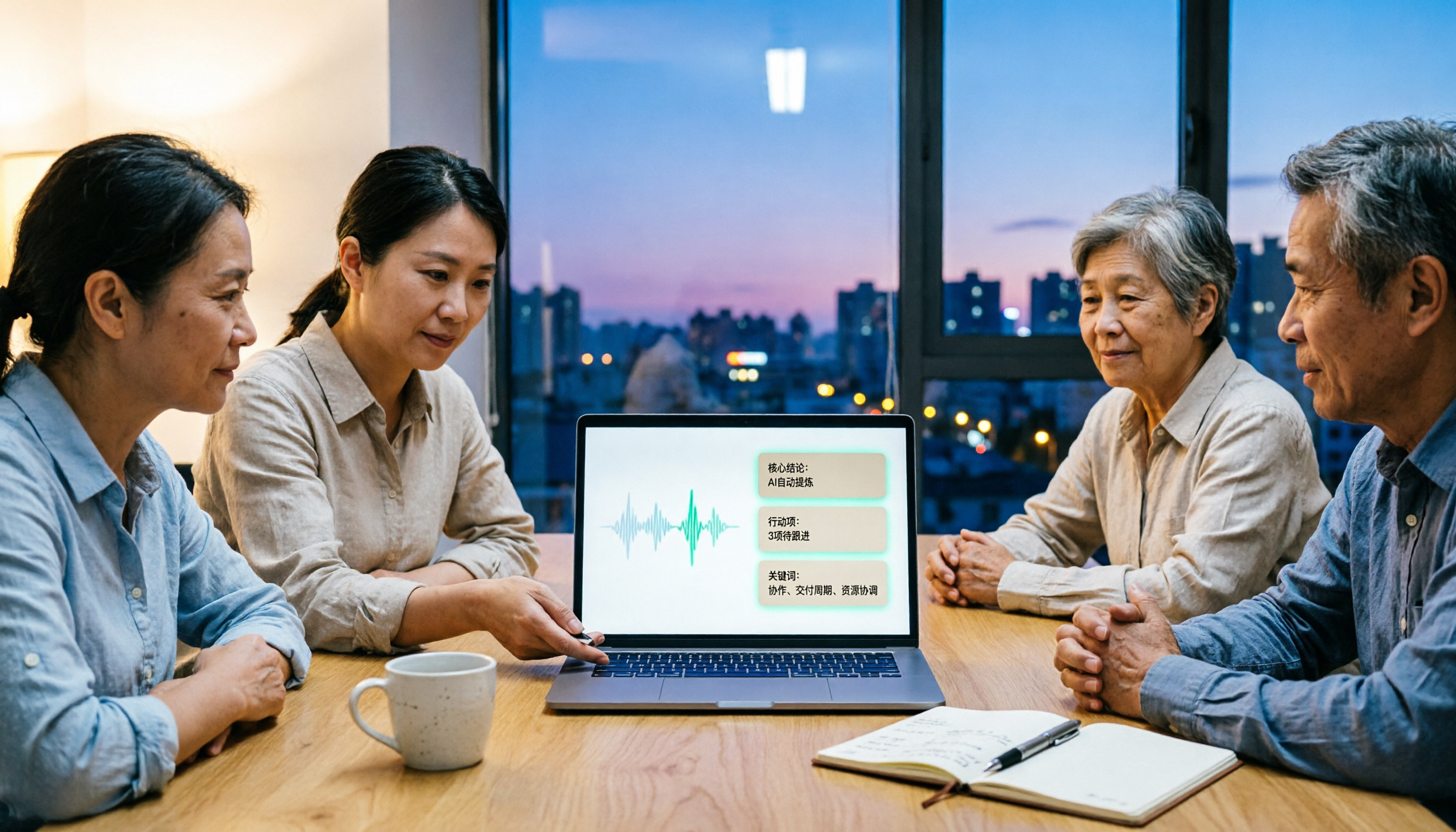
Stop organizing recordings by hand
Upload audio or video and automatically get a transcript, summary, and action items
MyEdit lets you edit the transcript after transcription, add timestamps, and export as text or subtitle files. This is practical for meeting minutes or course notes.
Tinrec’s strength isn’t subtitles but the post-transcription workflow. You can ask follow-up questions about the meeting, extract action items, generate reports or minutes, and even export to Notion, Google Docs, OneNote, and more.
→ In this dimension, choose cSubtitle for subtitle files and Tinrec for meeting follow-ups.
Dimension 5: Real Costs for Regular Users
Google Cloud Speech-to-Text is usage-based, which makes monthly cost estimation tricky for non-developers. Unless you have an engineering background, I wouldn’t recommend it as a first choice for the average person.
MyEdit’s subscription price is relatively affordable among these tools, and free credits can cover a decent amount of transcription. cSubtitle lets you try without an account first, then decide if you want to pay.
Tinrec’s personal plan includes a free tier, weekly pass, Pro monthly, and annual plans; team plans are per-seat. If you’re just organizing your own recordings, there’s no rush to jump to a team plan.
→ In this dimension, individual users can start with MyEdit’s free credits or cSubtitle’s no-account trial for the lowest cost.
What Are Their Unique Strengths?
MyEdit
- Noise reduction and voice enhancement before transcription help with average-quality recordings.
- Supports 9 languages, so it’s handy for occasional English or Japanese transcription.
- The transcript editing interface is clear, making it easy to fine-tune content.
cSubtitle
- No account needed to upload, so beginners face almost no barriers.
- Get text, Word, and subtitle files in one go, saving time on repeated processing.
- Punctuation and paragraph handling for Mandarin is very practical.
Yating
- Very friendly for Taiwanese Mandarin, with a natural in-app recording transcription experience.
- Ideal for people on the go who want to capture ideas or interviews anytime.
Tinrec
- Goes beyond transcription to organize summaries, chapters, and action items—great for meeting minutes.
- Store historical meetings in one place for later search or Q&A.
- The desktop version can capture system audio directly without needing a meeting bot.
Google Cloud Speech-to-Text
- Supports over 85 languages and dialects, suitable for teams with development needs.
- Can integrate with other Google Cloud AI services for high flexibility.
Summary: Who Should You Choose?
- If you only occasionally need to convert recordings to Chinese transcripts and don’t want to spend much time on setup → cSubtitle or MyEdit are both great.
- If your recordings are usually noisy and you want to clean them up before transcribing → MyEdit is more convenient.
- If you need transcripts and subtitle files in one go → cSubtitle is a straightforward choice.
- If you often do interviews or course notes and want to handle them quickly on your phone → give Yating a try.
- If your focus is meeting minutes, summaries, action items, and team data organization rather than just transcripts → Tinrec fits better.
- If you’re a developer looking to integrate speech-to-text into your own projects → Google Cloud Speech-to-Text is a solid technical option.
In a nutshell: In 2026, you no longer need to manually transcribe. First, decide whether you need a “transcript,” “subtitle files,” or “meeting notes,” then start with a free plan—you’ll usually find a tool that works well enough.
FAQ
Are free speech-to-text tools accurate?
With clear recordings, normal speaking volume, and minimal background noise, most tools achieve over 90% accuracy. If audio quality is poor or multiple people speak at once, errors increase—so it’s best to apply noise reduction first.
Is it safe to upload recordings for transcription? Any privacy concerns?
Before using any online tool, check its privacy policy, especially if the content involves client data, medical, or legal matters. Get consent from participants when necessary and avoid uploading highly confidential audio.
Which tool is best for Taiwanese Mandarin?
Yating and cSubtitle both handle Taiwanese Mandarin well. MyEdit also offers Chinese transcription, but results are more stable if you clean up the audio first.
Can I convert video directly to text?
Yes. Both cSubtitle and MyEdit support video uploads like MP4 or MOV, and you can download text or subtitle files after transcription.
Do these tools automatically add punctuation?
Most do. cSubtitle automatically adds punctuation and paragraph breaks, and MyEdit provides an editing interface for fine-tuning.
Is there a better tool for meeting minutes?
Consider Tinrec. It doesn’t just transcribe; it also generates summaries, chapters, and action items, and supports follow-up Q&A and export to other tools—closer to a complete meeting minutes workflow.
References
Turn every recording into actionable outcomes
Get 60 free transcription minutes when you sign in. No credit card required.
Related Reading
You might also like

2026 AI Meeting Recorder Comparison: 5 Tools Tested for Chinese Transcription, Free Tiers, and Post-Meeting Organization
Starting from real student use cases, this comparison focuses on what AI meeting recorders often get wrong: it's not about who transcribes fastest, but who can turn transcripts into summaries, action items, and searchable data. The main tool tested is Tinrec, breaking down what it can do, five core capabilities, campus and team scenarios, five must-check points before buying, and whether the free tier is enough for students.

Tinrec vs Notta 2026: 5-Factor Comparison — Which Is Better for Chinese Meeting Notes?
Most people install an AI meeting notes app only to get a raw transcript. This article breaks down 5 buying factors, tests Tinrec's bot-free recording, AI Q&A, and team knowledge retention workflow, and briefly reviews Notta, Otter.ai, and PLAUD for their best-fit scenarios.

5 Free AI Meeting Notes Apps Tested in 2026: Which Free Tier Actually Works?
Is a free AI meeting notes app enough? This article starts from the decision point of 'how many meetings do you have per month' and compares the free plan limits of Tinrec, Notta, Otter.ai, TurboScribe, and PLAUD. It breaks down four key criteria: per-recording limit, online meeting support, post-meeting output, and team data ownership, helping you choose the right tool without spending money.

2026 AI Meeting Notes Showdown: Tinrec vs Plaud Note — Which Saves More Time?
The meeting ends, but the pain begins. We tested Tinrec and Plaud Note across five dimensions — audio capture, post-meeting organization, Chinese recognition, team collaboration, and pricing — to help you decide which tool truly saves time on replaying recordings and typing notes.

Tinrec vs Notta 2026: 5-Dimension Comparison — Which Free AI Meeting Notes Tool Is Right for You?
How to choose free AI meeting notes software? This article starts with common pitfalls and compares Tinrec and Notta across 5 dimensions: free quota structure, audio capture methods, post-meeting output, Chinese recognition, and data ownership. It also covers free options like Otter.ai and Granola, plus 4 tips to avoid common mistakes.

5 AI Meeting Note Platforms Tested in 2026: How to Calculate Costs Without Wasting Money
The cost gap between AI meeting note platforms often isn't about the monthly fee, but about billing units, free allowances, and seat rules. This article starts from the actual billing logic of five options, breaks down the difference between real-time recording and file import, the gap between annual and monthly payments, and explains why Tinrec's team plan is suitable for teams that want to retain meeting data.

2026 AI Meeting Notes App Comparison: Free Tiers and Post-Meeting Workflows Tested
Struggling with meeting notes isn't about writing skills—it's about lacking time to re-listen to recordings. This hands-on comparison of AI meeting note apps covers free tiers, summary quality, post-meeting organization, and team collaboration, using Tinrec as the primary example to show whether free versions are sufficient and when to upgrade.
4 AI Meeting Note Tools Tested for 2026: Which Free Version Is Actually Enough?
There are plenty of free AI meeting note tools, but their free tiers vary widely. This article tests Tinrec, Notta, Otter.ai, and PLAUD from the perspective of whether the free version can last a month, comparing recording methods, post-meeting outputs, and limitations to help you find the one that truly works for you.

4 AI Meeting Note Methods Compared in 2026: Which Saves More Time—Online Transcripts or Summaries?
Still re-listening to recordings and typing meeting notes after meetings? This article compares four common AI meeting note methods—transcripts, summaries, action items, and AI Q&A—and explains why viewing online saves the most time. It also demonstrates Tinrec's actual workflow, team plan permissions, seats, and pricing.