

Turn recordings into transcripts and summaries in minutes
Upload audio or video for multilingual transcription, AI notes, and action items
How to Choose a Meeting Recording Tool? First, Clarify Whether You Need to 'Record' or 'Use'
Most people searching for meeting recording recommendations get stuck on a key question: do you just want to capture audio, or do you want to walk away with usable meeting notes, action items, and key takeaways?
These two goals require completely different tools.
If you only need to preserve audio, a voice recorder or a phone recording app will do. But if you have weekly meetings and need to organize notes, track decisions, and follow up on action items, simply "recording" creates more cleanup work.
Take Tinrec, for example. It's not just a recording tool—it converts meeting recordings into transcripts, AI summaries, chapters, action items, and searchable meeting data. This difference in positioning directly impacts your choice.
What Can Meeting Recording Tools Do for You?
Let's look at three common use cases.
Use Case 1: Get Meeting Minutes Within 5 Minutes of the Meeting Ending
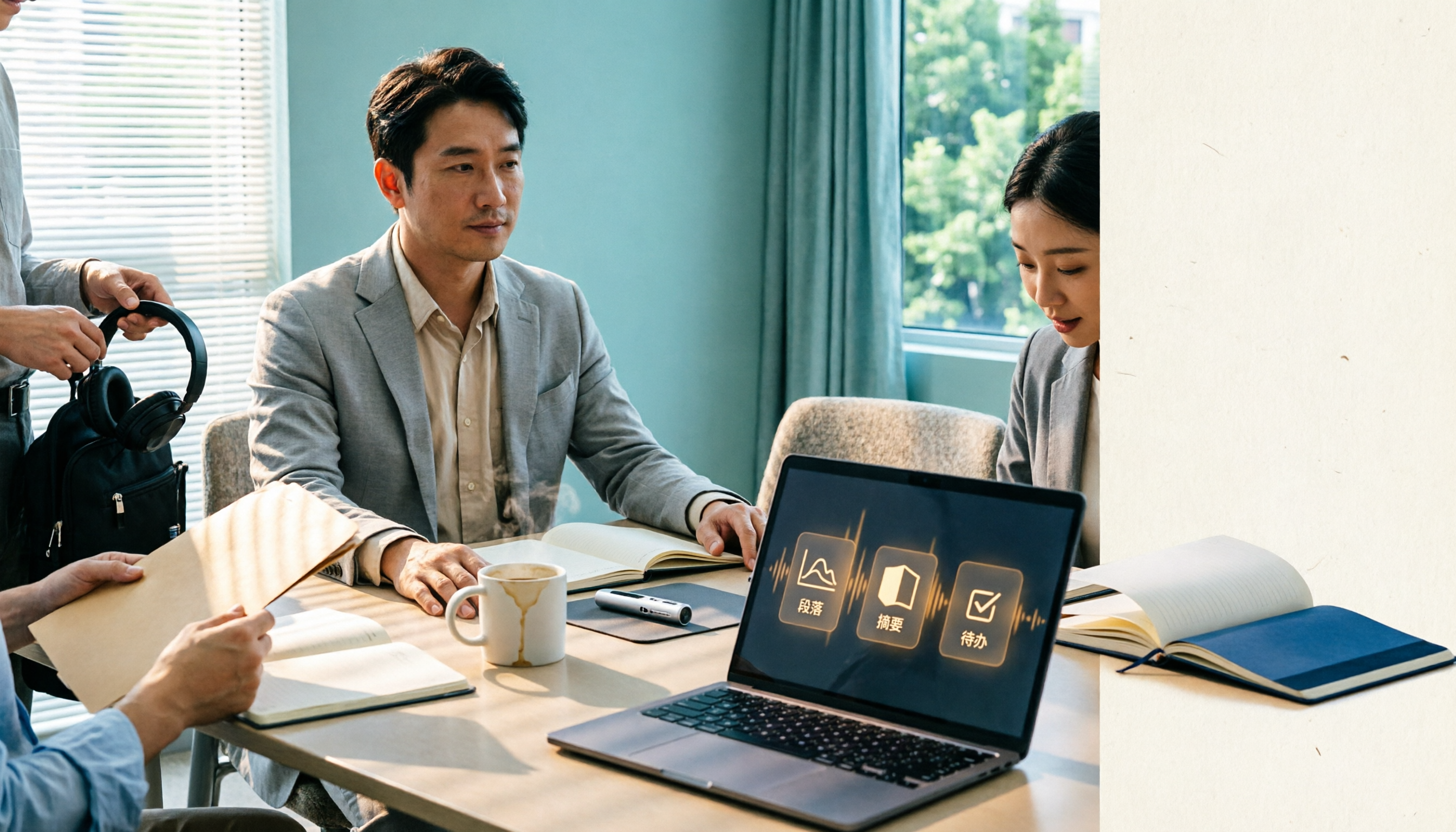
The traditional approach is a two-hour meeting followed by an hour of note-taking. A more efficient approach: generate a transcript while recording, and by the time the meeting ends, the AI has already organized the summary, conclusions, and action items.
Tinrec transcribes as it records. The desktop app captures your computer's system audio directly, so there's no need to invite a meeting bot to join Zoom, Google Meet, or Microsoft Teams.
Use Case 2: Turn Historical Recordings into Searchable Data
Many meeting recordings sit in folders, never to be opened again. Tinrec lets you upload audio and video files, then search the content, ask questions about key points, and turn conclusions into reports or tables.
Use Case 3: Keep Meeting Data Centralized for Team Collaboration
With Tinrec's team plan, you get a dedicated workspace where meeting data belongs to the team. Members can access historical meeting notes, and admins can manage seats, monitor usage, and review audit logs. When a member leaves, the data doesn't disappear with their personal account.
What Are the Core Capabilities of Meeting Recording Tools?
1. Bot-Free Online Meeting Recording
Tinrec's desktop app captures your computer's system audio directly, so you don't need to invite an extra bot to your meetings. This is especially useful for teams that don't want an unfamiliar participant in the room.
Note: This doesn't mean Tinrec automatically joins all calendar meetings. The correct understanding is that you actively open the desktop app to start recording, and the meeting audio gets captured.
2. Real-Time Transcription and Translation
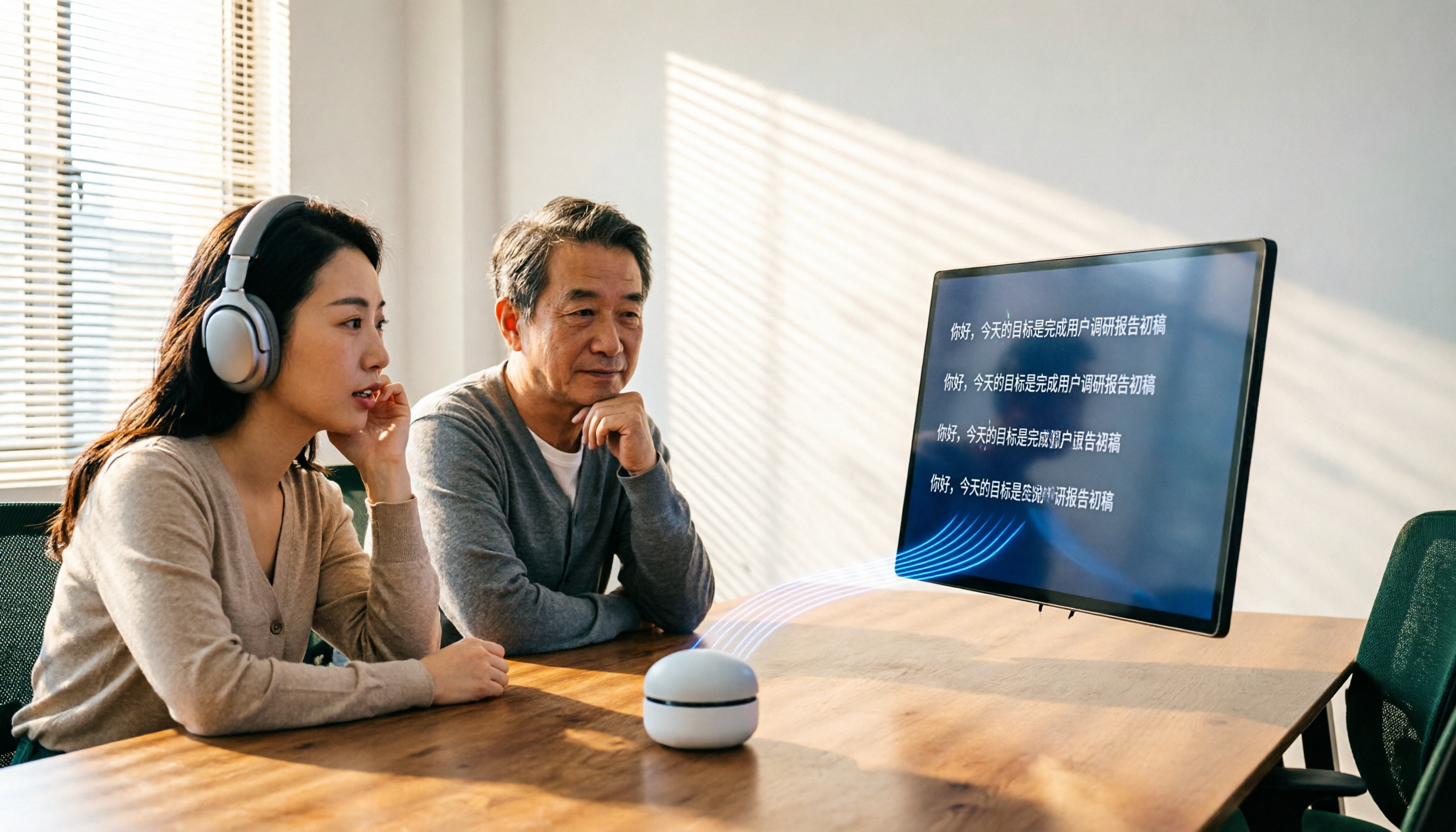
You can see the text appear in real time as you record—no waiting until the meeting ends. Tinrec also supports real-time translation, letting you switch between original text, translated text, or a side-by-side bilingual view. This is particularly helpful for cross-language meetings.
3. AI Summaries, Chapters, and Action Item Extraction
Tinrec doesn't just convert audio to text. It automatically organizes summaries, splits content into chapters, highlights key points, and extracts action items from the discussion. Who's responsible for what and deadlines are visible as soon as the meeting ends.
4. AI Q&A and Follow-Up Content Generation
After transcription, you can ask Tinrec questions like, "Who mentioned the budget?" or "What were the client's main concerns?" You can also generate meeting minutes, reports, or tables—ideal for deliverables after the meeting.
5. Multi-Format Export and Third-Party Integrations
Organized meeting content can be exported to Notion, Google Docs, OneNote, Dropbox, and more. This means meeting outcomes flow into your existing workflow instead of staying trapped in another closed app.
Real-World Scenarios: How to Use Tinrec
Scenario 1: Online Project Meetings
Open the Tinrec desktop app, select "Record System Audio," and the transcript generates in real time. When the meeting ends, the summary and action items are already organized—just paste the action items into your project management tool.
Stop organizing recordings by hand
Upload audio or video and automatically get a transcript, summary, and action items
Scenario 2: Client Interviews and Requirements Gathering
Sales or customer success teams can use Tinrec to record interviews, then search for specific client needs mentioned during the conversation. Use AI Q&A to confirm commitments. This is far more efficient than re-listening to an hour of audio.
Scenario 3: Classroom and Lecture Notes
Students or researchers can record with the mobile app, search for specific topics after transcription, and export notes as documents. Tinrec's Chinese transcription and multilingual support also work well for mixed Chinese-English courses.
Scenario 4: Building a Team Knowledge Base
In a team workspace, all members share meeting data. New members can review past meeting notes and decision context without relying on verbal handoffs from senior colleagues.
4 Things to Watch When Choosing a Meeting Recording Tool
1. Does It Actually Help You Organize After Recording?
Recording is just the first step. Tinrec's value lies in the summaries, action items, Q&A, and export features that come after transcription. If a tool only gives you a transcript, you're still doing the cleanup yourself.
2. Does Online Meeting Recording Require a Bot?
Some tools work by having a bot join the meeting as a participant. Tinrec takes a bot-free desktop recording approach, capturing your computer's system audio directly. This feels more natural for teams that don't want to invite extra participants.
3. Performance with Chinese and Multilingual Content
If you regularly handle Chinese meetings, mixed Chinese-English content, or cross-language meetings, hands-on testing is more valuable than reading spec sheets. Tinrec supports Chinese, Traditional Chinese, and multilingual transcription, plus real-time translation and bilingual viewing.
4. Individual Use vs. Team Collaboration Needs
If you're the only user, the personal plan is enough. But if meeting data needs to be shared, tracked, and managed across a team, look for tools that offer team workspaces, member management, seats, and usage analytics. Tinrec's team plan bundles these governance features into one space.
Frequently Asked Questions
What's the difference between a meeting recording tool and a regular voice recorder?
A regular voice recorder mainly captures audio, leaving the cleanup to you. AI meeting recording tools like Tinrec go further by converting audio into text, summaries, action items, and supporting Q&A and export.
Can Tinrec record Zoom or Teams meetings?
Yes. Tinrec's desktop app records online meetings by capturing your computer's system audio—no need to invite a meeting bot. You just need to actively open the desktop app to start recording.
Can meeting recording accuracy be guaranteed?
We don't recommend judging by a fixed percentage. Actual results depend on recording quality, background noise, accents, overlapping speech, and technical jargon. Tinrec can significantly reduce manual cleanup, but for critical content, we still recommend cross-referencing the transcript with the original recording.
Is the free plan enough?
If you're a light user, start with the free plan to experience the basic quotas for recording, import, summarization, and transcription. For short-term intensive meetings or interviews, consider a weekly pass. For long-term, consistent use, evaluate the Pro plan.
What happens to meeting data when a team member leaves?
It doesn't disappear. In the team plan, meeting data belongs to the team. When a member is removed, exits, or loses their seat, their team resources must be transferred to another active member. Data doesn't leave with the personal account.
What should I keep in mind when using a meeting recording tool?
Recording and transcription involve other people's voices and personal data. Follow local laws and obtain consent from participants when required.
Conclusion
The key to meeting recording recommendations isn't finding the device that "records the longest" or "has the most storage." It's finding a tool that turns meeting content into usable data.
If you have more than three meetings a week and don't want to spend time organizing notes afterward, give Tinrec a try. The free plan offers basic quotas—experience the workflow of recording-to-text, AI summaries, and action item extraction, then decide whether to upgrade to Pro or Team. Meeting recordings shouldn't just be archives; they should tell you what to do next.
References
- Meeting Recording - PChome 24h Shopping
- [2025 Selection] 5 Recommended Voice Recorders! Long Recording Time, Large Capacity, Great for Meetings, Study, and Evidence Collection!
- Expert-Monitored Top 10 Voice Recorder Rankings | mybest
- 2025 Most Complete Meeting Recording Guide: 6 Free Tools Recommended - EaseUS
- Meeting Recording Top 10 Recommendations - November 2026 Full Range - Songguo Shopping
Turn every recording into actionable outcomes
Get 60 free transcription minutes when you sign in. No credit card required.
Related Reading
You might also like

2026 Comparison of 2 Free Audio-to-Text Tools: How to Choose Between Plaud and Tinrec Free Tiers?
People searching for "free Plaud recording files" fall into two groups: those who already own a Plaud device and want to know how the 300 minutes are calculated, and those who haven't bought hardware and just want to turn recordings into free transcripts. This article first breaks down the actual scope and limitations of Plaud's free plan, then explains what Tinrec's free version can do without buying a device, along with buying checkpoints and FAQs.
2026 Comparison of 3 Free AI Transcription Solutions: Quotas, Summaries, and Team Collaboration Explained
Is free audio transcription enough? Based on real experience from a mid-level manager with 15 meetings per week, this article compares three free approaches: AI recording hardware, pure transcription services, and meeting note tools like Tinrec. It breaks down differences in free quotas, summary capabilities, action item extraction, and team data retention, and provides 5 purchase decision points and FAQs to help you decide where to spend your free quota.

2026 AI Voice Recorder Comparison: PLAUD vs Tinrec — Which One Should You Choose?
PLAUD is a hardware-based portable AI voice recorder, while Tinrec is a software-based AI meeting notes tool that requires no extra device. This comparison covers hardware needs, online meeting capture, post-meeting organization, legacy audio files, team collaboration, and pricing structure to help you decide which approach fits your workflow.
2026 Recording-to-Text Tools Compared: PLAUD Online, Otter, and Tinrec — Which Should You Choose?
Can you use PLAUD's online recording version? This article starts from real-world pain points and compares PLAUD, Otter.ai, Notta, and Tinrec on online meeting recording, Chinese transcription, post-meeting organization, and team collaboration. It also highlights key buying factors and common pitfalls to help you choose a tool you'll actually use long-term.

Which Recording Tool Is Better? 2026 Hands-On Comparison of PLAUD and Tinrec 2 Options, Conclusion First
Should you buy PLAUD Note Pro/NotePin? This article compares PLAUD recording hardware and Tinrec instant listening recording across 5 dimensions: hardware cost, online meeting audio capture, post-meeting organization, team collaboration, and quota fees. It concludes directly with 'who should buy which one.'

The Complete 2026 iPhone Recording Guide: 3 Accessibility Settings That Turn Recordings into Searchable Meeting Notes
Start with three iPhone accessibility settings—Shortcuts, Back Tap, and the Action button—to reduce 'start recording' to a single action. Then tackle the real pain point: how to turn recorded audio into meeting notes that are searchable, queryable, and easy to hand off. We break down the differences between built-in Voice Memos, PLAUD, Notta, and Tinrec, with buying advice.

2026 Comparison of 4 iPhone Transcription Apps: Built-in Transcripts vs. AI Tools—Which Saves More Time?
Many people think iPhone transcription requires third-party apps or that the built-in Voice Memos is sufficient. This article debunks common myths, compares iPhone's built-in transcription, Granola, PLAUD Note, and Tinrec, and provides buying criteria, pitfalls to avoid, and practical workflows to help you decide which solution fits meetings, interviews, and team collaboration.

Voice Recorder vs iPhone: 5 Key Comparisons for Meeting Notes in 2026
Voice recorder or iPhone? This guide compares them across 5 dimensions—audio quality, long-recording stability, transcription efficiency, post-meeting workflow, and cost—and explains how AI tools like Tinrec fill the gaps, helping you choose the right setup for your meeting style.

2026 Recording Solutions Compared: Voice Recorder vs iPhone — The Real Difference Isn't Hardware, It's Post-Meeting Organization
Should you buy a voice recorder? Is iPhone recording good enough? Based on my own hands-on testing, this article breaks down 4 key buying factors and compares iPhone Voice Memos, dedicated voice recorders, PLAUD Note, Notta, and Tinrec (秒聽錄音) in terms of audio capture, transcription, post-meeting organization, and team collaboration. It also includes a pitfalls guide and a ready-to-use starter checklist.